
Over 3,300 fires are reported in American commercial buildings every year, putting millions of dollars in property at risk. For Houston property managers, fire alarm monitoring offers more than just peace of mind. It is the foundation for meeting stringent safety codes, minimizing losses, and upholding tenant trust. Discover how smart monitoring systems can safeguard your commercial assets and streamline compliance with local and national fire safety laws.
Table of Contents
- Fire Alarm Monitoring Explained For Businesses
- Types Of Fire Alarm Monitoring Systems
- How Professional Monitoring Works
- Texas Laws And Safety Code Compliance
- Risks And Costs For Commercial Properties
- Alternatives And Common Pitfalls To Avoid
Key Takeaways
| Point | Details |
|---|---|
| Importance of Fire Alarm Monitoring | Fire alarm monitoring provides essential protection against fire emergencies, minimizing damage and enhancing safety compliance. |
| Types of Systems | Businesses should evaluate fire alarm systems, choosing between conventional, addressable, or hybrid options to match their specific safety needs. |
| Professional Monitoring Benefits | 24/7 professional monitoring ensures accurate signal verification and rapid emergency response, reducing the risk of false alarms. |
| Compliance with Regulations | Adhering to Texas fire safety laws is crucial; regular inspections and maintenance can protect against legal liabilities and enhance safety. |
Fire Alarm Monitoring Explained for Businesses
Fire alarm monitoring represents a sophisticated safety strategy that goes far beyond simple detection. For Houston businesses, these systems are critical defensive technologies designed to provide rapid, comprehensive protection against potential fire emergencies. Fire alarm systems fundamentally operate through interconnected components that detect, analyze, and respond to potential fire threats in commercial environments.
The core functionality of fire alarm monitoring involves three primary elements: detection devices, control panels, and notification systems. Detection devices like smoke detectors, heat sensors, and manual pull stations continuously scan the environment for signs of fire. When an anomaly is identified, the central control panel immediately evaluates the signal and determines the appropriate response. Notification systems then activate, which might include local alarms, strobe lights, and automated communications to local fire departments, ensuring swift and coordinated emergency intervention.
Businesses benefit from fire alarm monitoring through multiple layers of protection. Beyond immediate life safety, these systems help minimize property damage, reduce insurance costs, and demonstrate compliance with local safety regulations. Modern monitoring solutions provide real-time tracking, remote access capabilities, and comprehensive reporting that allows business owners to maintain continuous awareness of their facility’s safety status. The technology transforms fire protection from a passive defense mechanism into an active, intelligent safety network.
Pro tip: Schedule quarterly professional inspections of your fire alarm monitoring system to ensure all components function optimally and maintain peak performance.
Types of Fire Alarm Monitoring Systems
Fire alarm monitoring systems are not one-size-fits-all solutions, but rather a sophisticated range of technologies designed to meet diverse commercial safety needs. Fire alarm system architectures can be broadly categorized into three primary types: conventional, addressable, and hybrid systems, each offering unique capabilities for businesses in Houston and beyond.
Conventional fire alarm systems represent the most basic monitoring approach, where multiple detectors are grouped into zones. When a detector in a specific zone triggers an alarm, the control panel indicates the general area of the potential fire. These systems are typically more affordable but provide less precise location information. Addressable systems, by contrast, offer granular detection capabilities. Each sensor and device has a unique electronic address, allowing the control panel to pinpoint the exact location of a potential fire with remarkable precision. This technology enables faster, more targeted emergency responses.

Moreover, fire alarm monitoring systems can be classified by their communication and supervision methods. According to the National Fire Sprinkler Association, there are three primary monitoring service types: central station services, which involve professional monitoring by external security companies; proprietary systems, where monitoring occurs within the organization; and remote supervising station services that provide continuous off-site monitoring and rapid emergency notification.
Pro tip: Consult with a fire safety professional to determine which monitoring system configuration best matches your specific business’s size, layout, and risk profile.
Here’s a comparison of main fire alarm monitoring system types:
| System Type | Detection Precision | Typical Application | Cost Consideration |
|---|---|---|---|
| Conventional | Identifies zone only | Small offices, basic layouts | Lower upfront investment |
| Addressable | Pinpoints exact device | Large, complex facilities | Higher upfront investment |
| Hybrid | Combines both approaches | Modular, expanding properties | Moderate to high investment |
How Professional Monitoring Works
Professional fire alarm monitoring transforms basic detection systems into comprehensive safety networks that provide round-the-clock protection for businesses. Fire alarm system supervision involves a sophisticated process of continuous electronic communication, signal verification, and rapid emergency response coordination that goes far beyond traditional alarm mechanisms.
The core workflow begins when a fire detection device identifies a potential threat. Instantly, the system transmits an electronic signal to a central monitoring station staffed by trained professionals who are available 24/7. These experts follow strict verification protocols to determine the legitimacy of the alarm. Unlike automated systems that might generate false alerts, professional monitoring involves a nuanced approach of cross-checking signals, consulting predefined emergency contact lists, and making critical decisions about dispatching first responders.
According to the National Fire Sprinkler Association, professional monitoring services are governed by rigorous NFPA 72 standards that mandate specific communication protocols. These standards ensure that monitoring stations maintain multiple communication pathways, including cellular, internet, and landline connections, to guarantee uninterrupted signal transmission. The system is designed with redundant communication channels, meaning if one transmission method fails, another instantly takes over, providing an ironclad safety net for commercial properties.
Pro tip: Request a comprehensive communication backup strategy from your fire alarm monitoring provider to ensure multiple fail-safe transmission methods are in place.
Texas Laws and Safety Code Compliance
Fire alarm monitoring in Texas is governed by a comprehensive framework of legal requirements designed to ensure public safety and system reliability. Texas Insurance Code compliance establishes rigorous standards that businesses must meet when installing and maintaining fire alarm systems, with particular emphasis on professional licensing, technical specifications, and ongoing system verification.
The regulatory landscape involves multiple layers of oversight, primarily administered by the Texas Department of Insurance and aligned with national fire protection standards. Commercial properties must adhere to specific guidelines that mandate professional licensing for technicians, detailed installation protocols, and regular system inspections. These regulations require businesses to employ certified professionals who understand the intricate technical requirements and can demonstrate compliance with both state and national fire safety codes.
Texas Administrative Code provisions outline precise requirements for fire alarm system registration, maintenance, and monitoring. The legal framework goes beyond simple installation, requiring businesses to maintain comprehensive documentation, undergo periodic professional inspections, and ensure that all fire alarm monitoring systems meet the exacting standards set forth by the National Fire Protection Association (NFPA 72). Failure to comply can result in significant penalties, potential legal liability, and most critically, compromised safety for employees and property.
Pro tip: Schedule an annual comprehensive compliance review with a certified fire safety professional to ensure your fire alarm system meets all current Texas regulatory requirements.
Risks and Costs for Commercial Properties
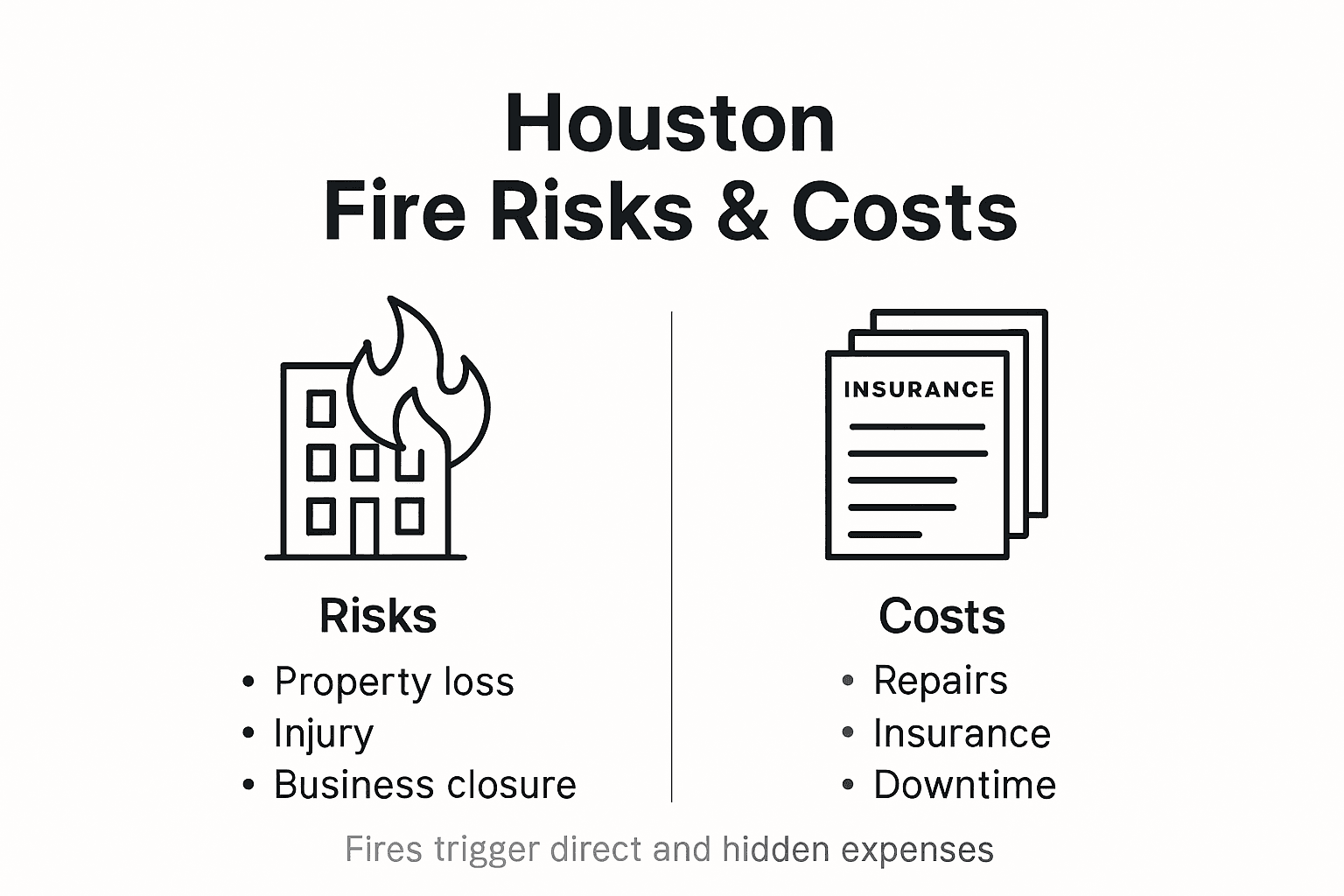
Commercial fire risks represent a substantial financial threat that extends far beyond the immediate damage of flames, encompassing potential business interruption, lost productivity, and long-term economic consequences. The financial landscape of fire-related losses is complex, with even a single incident capable of generating hundreds of thousands of dollars in damages and potential operational shutdowns.
The National Fire Protection Association’s annual research reveals staggering statistics about fire-related property damage. Commercial properties face multifaceted risks that include direct property destruction, equipment replacement, potential legal liabilities, and significant business interruption expenses. Fire loss data indicates that businesses without comprehensive fire alarm monitoring are exponentially more vulnerable to catastrophic financial losses, with potential damages ranging from partial property destruction to complete operational collapse.
Beyond immediate financial impacts, fire incidents can trigger cascading economic consequences for businesses. Insurance premiums may increase dramatically after a fire, potential customers might lose confidence in the business’s reliability, and regulatory compliance challenges can emerge. The indirect costs often surpass the direct property damage, making proactive fire alarm monitoring not just a safety measure, but a critical financial risk management strategy. Small to medium-sized businesses are particularly susceptible, with a single unmitigated fire incident potentially threatening their entire operational existence.
Pro tip: Conduct a comprehensive risk assessment that quantifies potential fire-related financial losses to justify investment in advanced fire alarm monitoring systems.
Alternatives and Common Pitfalls to Avoid
Fire alarm notification strategies require nuanced understanding beyond traditional detection methods. Many businesses mistakenly believe that basic smoke detectors or standalone alarm systems provide comprehensive protection, when in reality, these approaches often leave critical safety gaps that can compromise employee security and property protection.
Businesses frequently encounter significant pitfalls when implementing fire safety systems. NFPA research highlights that relying solely on sprinkler systems or manual fire extinguishers is inadequate. Alternative approaches like standalone heat sensors, manual alarm stations, or non-monitored systems create dangerous vulnerabilities. These methods lack real-time monitoring, fail to provide immediate emergency notifications, and do not guarantee swift intervention during critical moments.
Comprehensive fire protection demands a holistic approach that integrates multiple safety technologies. Common mistakes include outdated system components, insufficient coverage areas, lack of regular maintenance, and failure to incorporate accessibility features for individuals with disabilities. Businesses must recognize that effective fire protection is not about implementing a single solution, but creating a layered, interconnected safety network that provides rapid detection, instant communication, and coordinated emergency response across all potential risk zones.
Common pitfalls and how to avoid them in fire safety systems:
| Pitfall | Risk Introduced | Prevention Strategy |
|---|---|---|
| Outdated equipment | Reduced detection reliability | Schedule technology upgrades |
| Insufficient coverage | Missed fire or delayed response | Conduct thorough risk assessment |
| Lack of accessibility features | Inadequate warning for all users | Integrate ADA-compliant notifications |
| Infrequent maintenance | Increased false alarms or failure | Implement regular inspection routine |
Pro tip: Conduct an annual comprehensive fire safety audit that evaluates your current system’s total coverage, technological integration, and compliance with the most recent safety standards.
Ensure Your Houston Business is Protected with Trusted Fire Alarm Monitoring
Every Houston business faces the challenge of protecting employees and property from devastating fire risks. The article highlights vital concerns like detection precision, professional monitoring, and compliance with Texas fire safety laws. These pain points demand a partner who understands how to deliver advanced, reliable fire alarm monitoring systems designed specifically for your unique facility and risk profile.
At Reliable Fire Protection, we specialize in expert fire safety solutions that go beyond basic detection. Our certified team ensures your fire alarm systems meet all state regulations while offering real-time monitoring and rapid emergency response to minimize damage and safeguard lives. Whether you need an addressable, conventional, or hybrid system, we tailor each setup for maximum coverage and seamless integration.
Take the next step to eliminate uncertainty and protect your business from costly fire incidents before they happen.

Protect your business and employees today by contacting Reliable Fire Protection for a free consultation. Visit Reliable Fire Protection now or learn more about how our fire alarm solutions keep Houston businesses safe and compliant.
Frequently Asked Questions
What is fire alarm monitoring and why is it important for businesses?
Fire alarm monitoring is a safety system that detects potential fire threats through interconnected components, ensuring rapid response and protection for businesses. It minimizes property damage, reduces insurance costs, and enhances compliance with safety regulations.
What are the different types of fire alarm monitoring systems?
The main types of fire alarm monitoring systems are conventional, addressable, and hybrid systems. Conventional systems group detectors into zones, while addressable systems allow for precise identification of the exact location of an alarm. Hybrid systems combine features of both for versatile applications.
How does professional fire alarm monitoring enhance safety?
Professional monitoring involves continuous electronic communication with trained staff who verify alarms before dispatching first responders. This prevents false alarms and ensures timely response, significantly enhancing safety during fire emergencies.
What should businesses consider for fire alarm monitoring compliance?
Businesses must comply with state regulations, which include employing certified professionals for installation and maintenance, conducting periodic inspections, and maintaining comprehensive documentation to ensure that their fire alarm systems meet safety standards.