TL;DR:
- Running a commercial property in Upper Kirby requires installing purpose-built fire alarm systems that meet strict code standards. A properly maintained, integrated system improves safety, compliance, and reduces liability risks beyond basic detectors. Regular inspections, tailored system choices, and proactive upgrades ensure maximum protection for occupants and assets.
Running a commercial property in Upper Kirby means juggling a lot of responsibilities, but fire safety sits at the top of that list for good reason. A single smoke detector mounted in the hallway is not a fire alarm system, and it certainly does not satisfy the commercial code requirements that apply to your facility. Property managers and business owners in the Greenway Upper Kirby district need purpose-built, professionally installed fire alarm systems that detect threats faster, alert occupants reliably, and keep you on the right side of Houston’s fire safety regulations. This article walks you through exactly what you need to know.
Table of Contents
- Why your facility needs a specialized fire alarm system
- Types of fire alarm systems: Comparing your options
- Installation and maintenance: Local insights for Upper Kirby
- Integrating fire protection: Alarms, sprinklers, and suppression systems
- What most overlook about fire safety in Greenway Upper Kirby
- Take the next step: Secure your Greenway Upper Kirby property
- Frequently asked questions
Key Takeaways
| Point | Details |
|---|---|
| Legal compliance required | Non-residential properties in Upper Kirby must install and maintain certified fire alarm systems to meet local codes. |
| Choose the right system | Compare conventional, addressable, and wireless alarms to match your building’s unique needs. |
| Regular maintenance matters | Routine professional inspection and upkeep ensure your system works when it counts. |
| Integrate for safety | Maximize fire protection by connecting alarms to sprinklers, suppression systems, and even fire-retardant materials. |
Why your facility needs a specialized fire alarm system
The Greenway Upper Kirby corridor is a dense mix of office towers, retail spaces, medical suites, and mixed-use developments. Each of those building types carries its own fire risk profile, occupancy load, and code requirement. A residential smoke detector simply cannot handle that complexity.
“Specialized fire alarm systems are required for commercial code compliance and enhanced safety in commercial settings.”
Houston follows the International Fire Code (IFC) and NFPA 72, the National Fire Alarm and Signaling Code. Both standards require that commercial facilities install systems capable of early detection, occupant notification, and automatic communication with monitoring centers. Meeting those requirements is not optional. Failing an inspection can result in fines, forced closure, and, most critically, a facility that puts lives at risk during an actual fire.
Here is what separates a compliant commercial system from a basic detector:
- Zoned or addressable detection that covers every room, corridor, and mechanical space
- Audible and visual notification devices (horns and strobes) that meet ADA requirements for hearing-impaired occupants
- Central monitoring integration so the fire department is notified automatically
- Manual pull stations positioned near exits per code
- Battery backup that keeps the system running during a power outage
Working with local fire protection experts who know the Greenway Upper Kirby district matters more than many property managers realize. Local specialists understand which inspectors cover the area, what documentation the city expects, and which building configurations create recurring compliance headaches. That knowledge saves time and prevents costly surprises.
Pro Tip: Request a copy of your current fire alarm system’s inspection report before signing any new lease or taking over property management. Inherited systems are often outdated or non-compliant, and you become responsible the moment you take over.
Liability is the other side of this equation. If a fire causes injury or property damage and investigators find that your alarm system was inadequate or improperly maintained, your insurance coverage can be voided and you can face personal liability. The cost of a properly installed system is a fraction of that exposure.
Types of fire alarm systems: Comparing your options
Once you understand why a specialized system is necessary, the next question is which type fits your facility. The options for alarm systems available today range from straightforward conventional panels to sophisticated smart systems, and various system types are suited for different building sizes and operational needs.
| System type | Best for | Detection speed | Pinpoints location | Maintenance complexity |
|---|---|---|---|---|
| Conventional | Small, single-zone buildings | Moderate | Zone only | Low |
| Addressable | Mid to large multi-zone facilities | Fast | Exact device | Moderate |
| Wireless/smart | Historic buildings, retrofits | Fast | Exact device | Low to moderate |
| Hybrid | Complex or phased renovations | Fast | Zone or exact | Moderate |
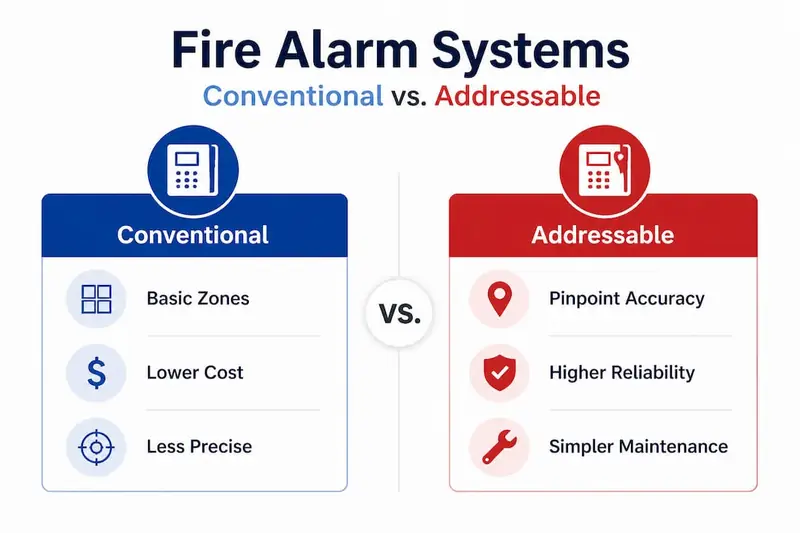
Conventional systems divide a building into circuits called zones. When a detector triggers, the panel tells you which zone is affected but not which specific device fired. These systems work well for small offices or single-tenant retail spaces where the zone itself narrows the search quickly.
Addressable systems are the standard for most commercial properties in Upper Kirby. Every detector, pull station, and notification device has a unique address. When something triggers, the panel displays the exact device location. That specificity speeds up evacuation decisions and reduces the time firefighters spend searching for the source. For a multi-floor office building or a medical facility with dozens of rooms, this precision is essential.
Wireless and smart systems have improved dramatically over the past several years. They use radio frequency communication instead of hardwired runs, which makes them ideal for historic buildings where running conduit would damage original architecture, or for tenant buildouts where disruption needs to be minimal. Smart systems can also push alerts to facility managers’ phones and integrate with building management software.
Here are the key factors to evaluate when choosing your system:
- Square footage and floor count of the facility
- Occupancy type (office, retail, medical, restaurant, warehouse)
- Existing infrastructure and whether rewiring is feasible
- Budget for both installation and ongoing maintenance
- Integration requirements with sprinklers, access control, or HVAC
Reliable installation services should include a site walk before any proposal is written. Any contractor who quotes a system without visiting the property is guessing, and guessing with fire safety is not acceptable.
Installation and maintenance: Local insights for Upper Kirby
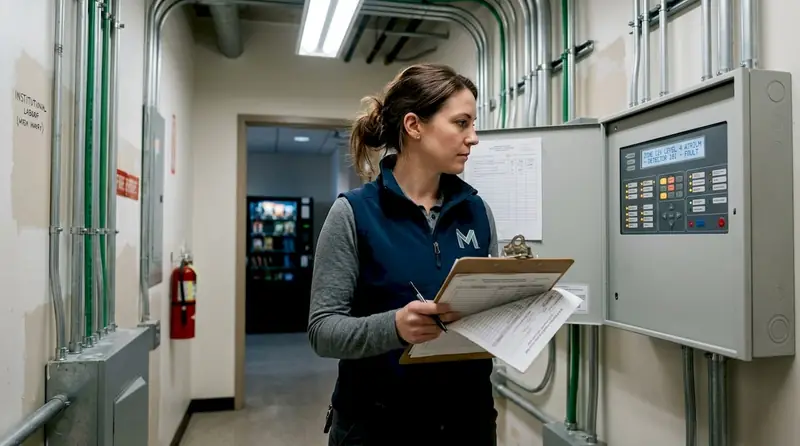
Choosing the right system is only half the job. Proper installation and consistent maintenance determine whether that system actually performs when it matters. Regular maintenance is critical for optimal fire alarm performance and legal compliance, and skipping it is one of the most common mistakes commercial property managers make.
Here is how a professional installation process should unfold:
- Site assessment and code review. A certified technician surveys the building, identifies all occupancy zones, reviews local code requirements, and maps out device placement.
- System design and permit filing. Engineering drawings are prepared and submitted to the Houston Fire Department for plan review. Work cannot begin until permits are approved.
- Rough-in wiring or wireless device placement. Conduit runs or wireless transmitters are installed before walls are closed. This stage requires coordination with other trades if construction is ongoing.
- Device installation. Detectors, pull stations, horns, strobes, and the main control panel are installed and connected.
- Programming and testing. Every device is tested individually and as a system. The panel is programmed with device addresses, zone labels, and monitoring center credentials.
- Final inspection. A city inspector verifies the installation against the approved drawings and issues a certificate of occupancy or compliance.
| Maintenance task | Recommended frequency | Why it matters |
|---|---|---|
| Full system inspection | Annually (minimum) | Required by NFPA 72 and city code |
| Detector sensitivity test | Annually | Identifies dirty or failing sensors |
| Battery replacement | Every 3 to 5 years | Ensures backup power reliability |
| Pull station test | Semi-annually | Confirms manual activation works |
| Monitoring center verification | Quarterly | Confirms signal transmission is active |
Scheduling routine inspections with a certified provider keeps you compliant and surfaces problems before they become failures. High-traffic commercial buildings in Upper Kirby, particularly those with restaurant kitchens or medical equipment, should consider quarterly checks rather than waiting for the annual minimum.
One often-overlooked detail is sprinkler integration. If your fire alarm panel is connected to your sprinkler system, both need to be tested together to confirm the interface works correctly. Testing them in isolation misses the most critical scenario: what happens when both activate simultaneously.
Pro Tip: Keep a maintenance log in a physical binder on-site, not just in a digital system. Inspectors often ask to see documentation on the spot, and a printed log with signatures is faster to produce than pulling records from a cloud account during an inspection.
Integrating fire protection: Alarms, sprinklers, and suppression systems
A fire alarm system is your first line of detection and notification. But true facility protection means building layers around that core system. Combining fire alarm, sprinkler, and suppression systems maximizes safety across the full range of threats a commercial property faces.
Here is how an integrated system works in practice during an actual emergency:
- A smoke or heat detector activates and sends a signal to the fire alarm control panel.
- The panel triggers audible and visual notification devices throughout the building, initiating evacuation.
- Simultaneously, the panel signals the monitoring center, which contacts the Houston Fire Department.
- If the fire reaches a threshold temperature, the sprinkler head nearest the heat source activates independently, applying water directly to the fire.
- In facilities with special hazards (server rooms, commercial kitchens, paint storage), a suppression system discharges a clean agent or chemical suppression agent that extinguishes the fire without water damage.
Each layer handles a different scenario. Alarms protect people. Sprinklers control fire spread. Suppression systems address specific hazards where water would cause additional damage or be ineffective.
For Greenway Upper Kirby properties, consider these integration priorities:
- Office buildings: Alarm plus sprinkler is the baseline. Add clean agent suppression for data rooms.
- Restaurants: Alarm plus kitchen hood suppression is mandatory. Sprinklers cover dining and back-of-house areas.
- Medical facilities: Alarm plus sprinkler with pre-action systems in areas with sensitive equipment.
- Retail: Alarm plus sprinkler covers most scenarios. High-value inventory areas may warrant additional suppression.
Pairing your alarm system with reliable sprinkler solutions and purpose-designed suppression systems creates a coordinated response rather than isolated components that may not communicate with each other. Beyond active systems, some facilities also benefit from incorporating fire-retardant materials in furnishings and window treatments, adding a passive layer of protection that slows fire spread before active systems engage.
Pro Tip: When upgrading or expanding your facility, always notify your fire protection contractor before construction begins. Structural changes, new walls, and HVAC modifications can create blind spots in your existing detection coverage that only a re-survey will catch.
What most overlook about fire safety in Greenway Upper Kirby
Here is the uncomfortable reality: passing a fire inspection does not mean your building is safe. It means your building met the minimum standard required on the day of the inspection. Those are two very different things, and conflating them is a mistake we see repeatedly.
Building codes are written to be universally applicable. They cannot account for the specific tenant mix in your building, the unusual layout of a converted historic property, or the fact that your facility sits adjacent to a restaurant with a commercial kitchen that creates a disproportionate ignition risk. Codes set a floor, not a ceiling.
Greenway Upper Kirby’s property landscape is genuinely diverse. A mid-rise office building, a ground-floor urgent care clinic, and a boutique hotel all face different fire scenarios even if they sit on the same block. A one-size-fits-all system installed to the minimum code standard will protect each of those buildings differently, and not always well enough.
The facilities that come through fire events with minimal damage and zero casualties share a common trait: they invested in real-world protection strategies that went beyond what the inspector required. They installed addressable systems when conventional would have technically passed. They scheduled quarterly maintenance when annual was all that was mandated. They integrated suppression in areas where the code only required detection.
Proactive upgrades also have a financial logic that often gets ignored. Insurance carriers increasingly reward facilities with advanced, well-maintained fire protection systems through lower premiums and broader coverage. The payback period on an upgraded system can be shorter than most property managers expect when you factor in insurance savings alongside avoided liability exposure.
The lesson is straightforward: treat code compliance as your starting point, not your finish line.
Take the next step: Secure your Greenway Upper Kirby property
Your facility deserves more than a checkbox approach to fire safety. At Reliable Fire Protection, we work with property managers and business owners across Greenway Upper Kirby to design, install, and maintain fire alarm systems that go beyond minimum code and actually protect the people and assets inside your building.
Whether you are starting from scratch, upgrading an outdated system, or simply trying to understand what you currently have, our certified technicians are ready to walk your property and give you a clear, honest assessment. If you want to understand how alarm systems work before your consultation, we have resources ready for you. When you are ready to explore the full range of fire safety solutions we offer, from detection to suppression, you will find everything in one place. Contact us today to schedule your free site assessment and take the first real step toward comprehensive protection.
Frequently asked questions
What are the legal fire alarm system requirements for businesses in Upper Kirby?
Businesses must install a code-compliant system maintained by certified professionals, covering detection, notification, and monitoring. Basic residential detectors do not satisfy commercial code under NFPA 72 or the International Fire Code.
How often should a commercial fire alarm system be inspected?
Annual inspections are the minimum required by code, but high-traffic or high-risk facilities such as restaurants and medical offices should schedule quarterly checks to catch issues before they become compliance failures.
Should I integrate sprinklers and suppression equipment with my fire alarms?
Yes. Integrated systems allow your alarm, sprinklers, and suppression equipment to work as a coordinated unit, speeding emergency response and reducing damage across a wider range of fire scenarios.
What’s the difference between conventional and addressable fire alarm systems?
Conventional systems identify which zone triggered an alarm, while addressable systems pinpoint the exact device that activated, giving emergency responders precise location data and significantly reducing response time in larger facilities.
Recommended
- fire alarm system greenway upper kirby tx – Resources – Reliable Fire Protection
- fire suppression system greenway upper kirby tx – Resources – Reliable Fire Protection
- Fire Alarm System in Greenway | Upper Kirby, Houston
- Top Fire Protection Company in Greenway | Upper Kirby Houston
- Complete Guide to Home Security Basics
- Fire Alarm System University Place TX
- Fire Alarm System Services in Bellaire, TX