Every year, commercial properties across American cities like Houston face significant risks from unexpected fire incidents. With evolving fire codes and stricter insurance requirements, upgrading sprinkler systems has become a top priority for property managers aiming to avoid compliance headaches and potential property loss. Sprinkler-controlled fires are stopped by just two or fewer heads in about 61% of cases, highlighting the value of precision technology in safeguarding investments and keeping tenants safe.
Table of Contents
- Sprinkler Systems Defined And Common Misconceptions
- Types Of Sprinkler Systems For Commercial Buildings
- How Sprinkler Systems Detect And Suppress Fires
- Houston Fire Codes And Compliance Requirements
- Risks, Costs, And Maintenance Responsibilities
Key Takeaways
| Point | Details |
|---|---|
| Understanding System Activation | Fire sprinkler systems activate based on heat, not smoke, with typically only one or two heads operating during a fire. |
| System Types for Commercial Use | Different configurations like Wet Pipe and Dry Pipe systems are tailored for specific environments, enhancing fire safety in various commercial settings. |
| Compliance with Fire Codes | Property managers must adhere to local fire safety regulations, including annual inspections and documentation for compliance. |
| Importance of Maintenance | Regular maintenance of fire sprinkler systems is crucial for reliability, reducing risks of malfunction and improving safety outcomes. |
Sprinkler Systems Defined and Common Misconceptions
Modern fire sprinkler systems represent sophisticated automated safety mechanisms designed to rapidly detect and suppress fires in commercial and residential properties. These precision engineered networks utilize heat-sensitive components strategically placed throughout buildings to provide immediate fire protection. Fire suppression technologies have been refined over 140 years, transforming how property managers approach fire safety.
Contrary to popular belief, sprinkler systems do not activate uniformly during fire incidents. Each sprinkler head operates independently, responding only when surrounding temperatures reach critical thresholds. This targeted approach means that typically only one or two sprinkler heads activate during an actual fire, minimizing potential water damage while effectively controlling flame spread. Statistical evidence reveals that approximately 61% of sprinkler-controlled fires are successfully stopped by just two or fewer sprinklers, demonstrating remarkable precision and efficiency.
Several persistent misconceptions continue to circulate about sprinkler system functionality. Many people mistakenly believe that smoke triggers sprinkler activation or that all sprinkler heads will discharge simultaneously during an emergency. In reality, these systems rely exclusively on heat detection, with each sprinkler head containing a heat-sensitive element calibrated to respond only when surrounding temperatures reach dangerous levels. Insurance data confirms an incredibly low failure rate, with approximately one sprinkler head malfunctioning per 16 million installed units annually.
Pro Tip: Professional Assessment: Have a certified fire protection specialist conduct a comprehensive evaluation of your property’s sprinkler system configuration to ensure optimal coverage and compliance with local Houston safety regulations.
Types of Sprinkler Systems for Commercial Buildings
Commercial buildings require specialized fire protection systems tailored to their unique environmental conditions and risk profiles. Fire safety technologies offer four primary sprinkler system configurations, each designed to address specific fire suppression challenges in different commercial settings. Understanding these systems helps property managers select the most appropriate protection strategy for their specific building infrastructure.
The first category, Wet Pipe Systems, represents the most common sprinkler configuration. These systems maintain water directly in the pipes, enabling immediate discharge when heat activates a sprinkler head. They are ideal for heated indoor environments with consistent temperatures, such as office buildings, retail spaces, and manufacturing facilities. Wet pipe systems offer rapid response and straightforward maintenance, making them a preferred choice for many commercial applications.
Alternative sprinkler configurations include Dry Pipe Systems, which store compressed air or nitrogen in the pipes and release water only after detecting sufficient heat. These systems are critical for unheated spaces like parking garages, refrigerated warehouses, and outdoor structures where pipe freezing might occur. Pre-Action Systems provide an additional layer of protection by requiring a separate detection mechanism to open water valves before discharge, reducing accidental water release. Deluge Systems, characterized by open sprinkler heads, simultaneously discharge water across an entire zone when triggered, making them essential for high-risk areas like aircraft hangars and chemical storage facilities.
Pro Tip: System Selection: Consult a certified fire protection engineer to conduct a comprehensive risk assessment and recommend the most appropriate sprinkler system configuration for your specific commercial building’s unique environmental and operational requirements.
Here’s a quick comparison of the four primary sprinkler system types used in commercial environments:
| System Type | Best Use Case | Activation Method | Key Advantage |
|---|---|---|---|
| Wet Pipe | Heated indoor spaces | Direct heat triggers head | Fastest response time |
| Dry Pipe | Unheated or cold areas | Air released, then water | Prevents frozen pipes |
| Pre-Action | Sensitive, valuable zones | Dual detection | Reduces accidental leaks |
| Deluge | High-hazard environments | All heads discharge | Immediate area coverage |
How Sprinkler Systems Detect and Suppress Fires
Fire detection and suppression represent complex technological processes involving precision engineering and sophisticated thermal response mechanisms. Fire prevention technologies utilize advanced heat-sensitive components strategically designed to identify and neutralize potential fire threats with remarkable efficiency. Modern sprinkler systems function as intelligent guardians, continuously monitoring environmental conditions to ensure rapid and targeted fire intervention.
The core detection mechanism relies on specialized thermal elements integrated within each sprinkler head. These components, typically consisting of fusible links or glass bulbs, are calibrated to activate at precise temperature ranges between 135 and 165 degrees Fahrenheit. When surrounding temperatures reach these critical thresholds, the thermal element rapidly triggers the sprinkler head, releasing water directly onto the fire source. This targeted approach ensures that only the sprinkler heads closest to the actual fire zone activate, minimizing potential water damage while maximizing fire suppression effectiveness.
Beyond individual sprinkler head functionality, these systems incorporate multiple layers of protection to enhance overall fire safety. Different sprinkler configurations enable customized responses based on specific environmental conditions, such as wet pipe systems for heated indoor spaces and dry pipe systems for areas susceptible to freezing temperatures. The intelligent design allows for immediate, localized fire intervention, often containing or extinguishing fires before they can spread significantly, thereby protecting property and potentially saving lives through rapid, automated response mechanisms.
Pro Tip: Annual Inspection: Schedule a professional fire protection assessment annually to ensure your sprinkler system’s thermal elements remain calibrated and all components function at optimal performance levels.
Houston Fire Codes and Compliance Requirements
Fire safety regulations in Houston represent a complex network of municipal, state, and national standards designed to protect commercial and residential properties from potential fire hazards. Fire suppression system solutions must adhere to stringent guidelines established by the Houston Fire Department, the Texas State Fire Marshal’s Office, and the National Fire Protection Association (NFPA), ensuring comprehensive safety protocols across diverse building types and occupancy classifications.
The International Fire Code (IFC) and National Fire Protection Association (NFPA) Standards form the cornerstone of Houston’s fire safety compliance framework. Commercial properties must meet specific requirements for sprinkler system design, installation, maintenance, and periodic inspections. These regulations mandate precise specifications for water supply capacity, sprinkler head spacing, hydraulic calculations, and system performance under various potential fire scenarios. Building owners must demonstrate full compliance through detailed documentation, professional certifications, and regular third-party safety assessments.
Key compliance requirements include mandatory annual inspections, comprehensive system testing, and immediate repairs for any detected system deficiencies. Different occupancy classifications such as healthcare facilities, educational institutions, industrial complexes, and commercial offices have unique fire safety standards. Building managers must navigate these nuanced requirements, ensuring their fire protection systems not only meet minimum legal standards but also provide optimal protection for occupants and property. Failure to comply can result in substantial financial penalties, potential legal liability, and increased insurance premiums.
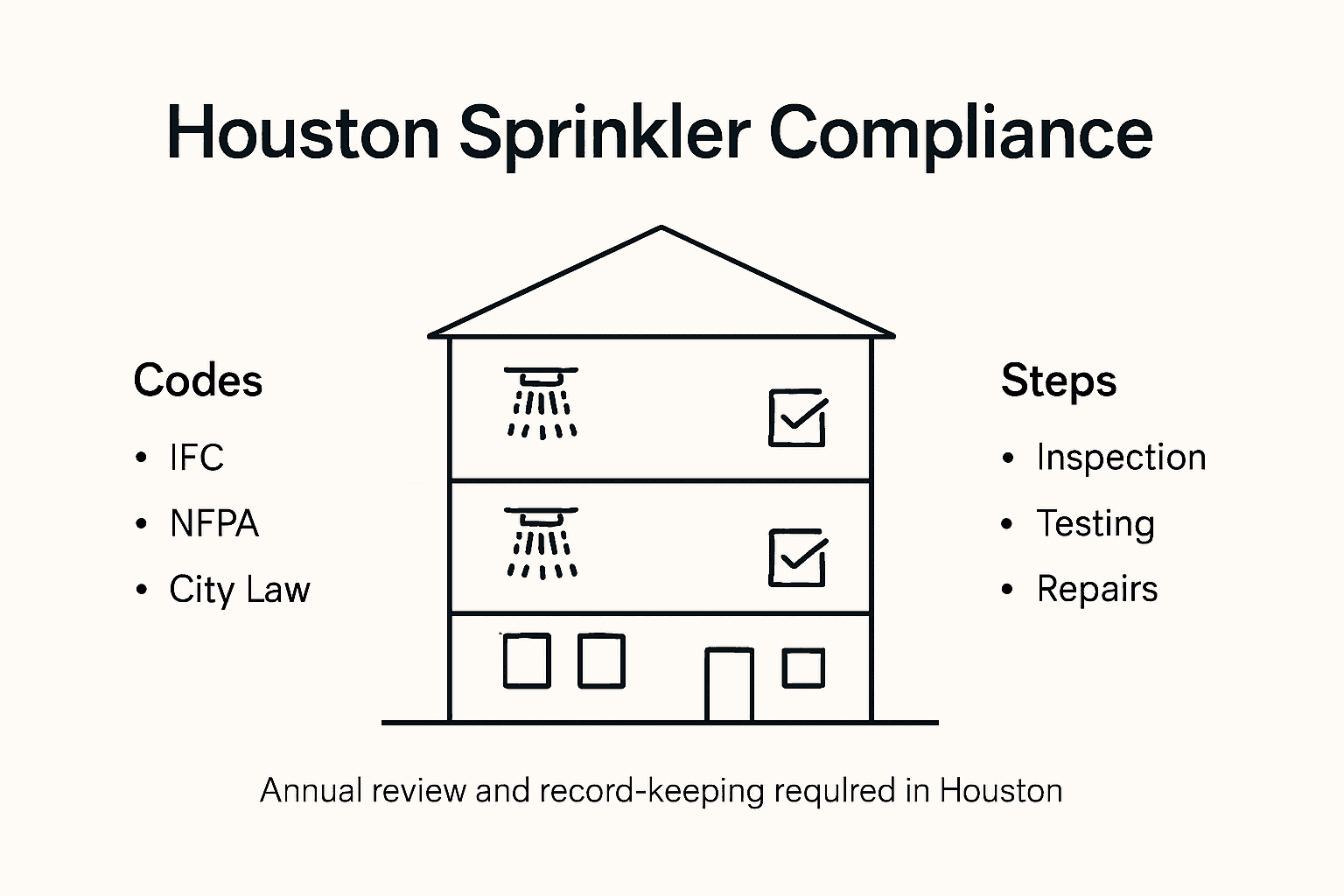
Pro Tip: Compliance Documentation: Maintain a comprehensive digital and physical record of all fire safety inspections, system modifications, and maintenance activities to streamline future compliance verifications and demonstrate proactive safety management.
The following table summarizes major fire code compliance steps for Houston property managers:
| Compliance Area | Core Requirement | Risk if Ignored |
|---|---|---|
| Inspection Frequency | Annual, by licensed professionals | Non-compliance fines |
| Maintenance Records | Digital and physical documentation | Issues during audits |
| Occupancy Standards | Customized by building type | Safety and insurance penalties |
| Deficiency Response | Immediate repair of failures | Increased liability |
Risks, Costs, and Maintenance Responsibilities
Understanding the financial and operational implications of fire sprinkler systems requires a comprehensive evaluation of potential risks, installation costs, and ongoing maintenance requirements. Economic analysis tools help property managers make informed decisions about fire protection investments by providing detailed cost-benefit assessments tailored to specific building characteristics and risk profiles.
Statistical evidence demonstrates the substantial safety benefits of sprinkler system investments. Research indicates that properties with sprinkler systems experience an 87% reduction in fatality rates, with 96% of fires successfully contained within their original room of origin. While initial installation costs can range from $1 to $2 per square foot for commercial properties, the long-term financial benefits include significantly reduced property damage, potential insurance premium reductions, and enhanced occupant safety. These systems typically require two professional maintenance visits annually, with average maintenance costs ranging between $500 and $1,000 depending on system complexity and building size.
Maintenance responsibilities encompass multiple critical components, including comprehensive system inspections, hydraulic testing, component replacement, and documentation management. Building managers must develop proactive maintenance strategies that include quarterly visual inspections, annual professional assessments, and immediate repair of any detected system deficiencies. Potential risks of inadequate maintenance include system failure during critical moments, potential legal liability, increased insurance costs, and compromised safety for building occupants. Comprehensive maintenance programs should integrate digital tracking systems, professional certifications, and regular performance evaluations to ensure continuous operational readiness.
Pro Tip: Preventative Budgeting: Allocate a dedicated annual budget for sprinkler system maintenance and set aside emergency funds for unexpected repairs to ensure consistent system reliability and compliance.
Ensure Houston Fire Code Compliance with Expert Sprinkler Solutions
Navigating Houston’s strict fire safety regulations can feel overwhelming, especially when precise sprinkler system installation and maintenance are critical to protecting your property and occupants. The complex requirements for annual inspections, compliance documentation, and specialized sprinkler configurations mean there is no room for error. Avoid costly penalties, liability risks, and compromised safety by partnering with true local experts who understand Houston’s unique fire codes inside and out.
At Reliable Fire Protection, we specialize in comprehensive sprinkler system design, installation, and maintenance tailored to Houston commercial and residential needs. Our certified professionals ensure your fire protection systems meet all local regulations including NFPA standards while delivering top-notch performance. Whether you need a full wet pipe installation or a specialized pre-action system, we offer transparent quotes and fast service. Start your path to full compliance and ultimate safety today by requesting a free consultation through our fire protection services. Don’t wait until an inspection uncovers costly deficiencies — secure peace of mind now.
Frequently Asked Questions
What are the different types of sprinkler systems used in commercial buildings?
The four main types of sprinkler systems include Wet Pipe Systems, Dry Pipe Systems, Pre-Action Systems, and Deluge Systems. Wet Pipe Systems are commonly used for heated indoor environments, while Dry Pipe Systems are ideal for unheated areas. Pre-Action Systems provide dual detection for sensitive areas, and Deluge Systems are suited for high-hazard environments where immediate coverage is necessary.
How do sprinkler systems detect fires?
Sprinkler systems detect fires using heat-sensitive components within each sprinkler head, such as fusible links or glass bulbs. These components are calibrated to activate at specific temperature ranges, typically between 135 and 165 degrees Fahrenheit, ensuring that only the nearest sprinkler heads to the fire activate to minimize water damage.
What are the compliance requirements for sprinkler systems in Houston?
Compliance requirements include annual inspections by licensed professionals, maintenance of detailed records, and adherence to specifications outlined by the International Fire Code and the National Fire Protection Association. Building owners must document compliance, conduct regular system assessments, and respond immediately to any deficiencies.
What could happen if a sprinkler system is not properly maintained?
Inadequate maintenance can lead to system failure during emergencies, resulting in increased potential legal liability and safety risks for occupants. Additionally, improper maintenance may lead to higher insurance costs and significant property damage if a fire occurs without effective suppression.