
TL;DR:
- Proactive sprinkler maintenance saves water, reduces repairs, and ensures compliance in Houston.
- Essential tools, parts, and documentation streamline routine inspections and troubleshooting.
- Continuous improvement from maintenance records helps prevent recurring issues and optimize system performance.
Unexpected water bills, surprise system failures, and compliance notices from the city are the kinds of problems that keep Houston property managers up at night. A neglected sprinkler system is rarely obvious until it becomes expensive. Neglected systems result in 70% more repairs and significant water waste, which adds up fast across commercial properties or multi-unit residential buildings. This guide gives you a practical, step-by-step maintenance workflow built specifically for Houston’s climate and compliance requirements. Follow it, and you will cut costs, protect your property, and stay ahead of inspections.
Table of Contents
- Why a proactive sprinkler maintenance workflow matters
- Get ready: Tools, parts, and documentation for system maintenance
- Step-by-step: Execute your sprinkler system maintenance workflow
- Troubleshooting, validation, and workflow optimization
- A smarter workflow: What Houston managers often overlook
- Protect your property with expert sprinkler system support
- Frequently asked questions
Key Takeaways
| Point | Details |
|---|---|
| Proactive maintenance saves money | A repeatable workflow reduces costly repairs and water waste compared to reactive fixes. |
| Preparation sets the foundation | Having the right tools, parts, and records organized ensures efficient, safe maintenance. |
| Step-by-step routine is key | Following a clear workflow for checks, adjustments, and documentation guarantees better results. |
| Continuous improvement matters | Analyzing patterns and optimizing your process maximizes reliability and compliance. |
Why a proactive sprinkler maintenance workflow matters
Reactive maintenance is the most expensive kind. You wait for something to break, then scramble to fix it under pressure, often paying emergency labor rates and dealing with water damage in the meantime. A structured workflow flips that equation entirely.
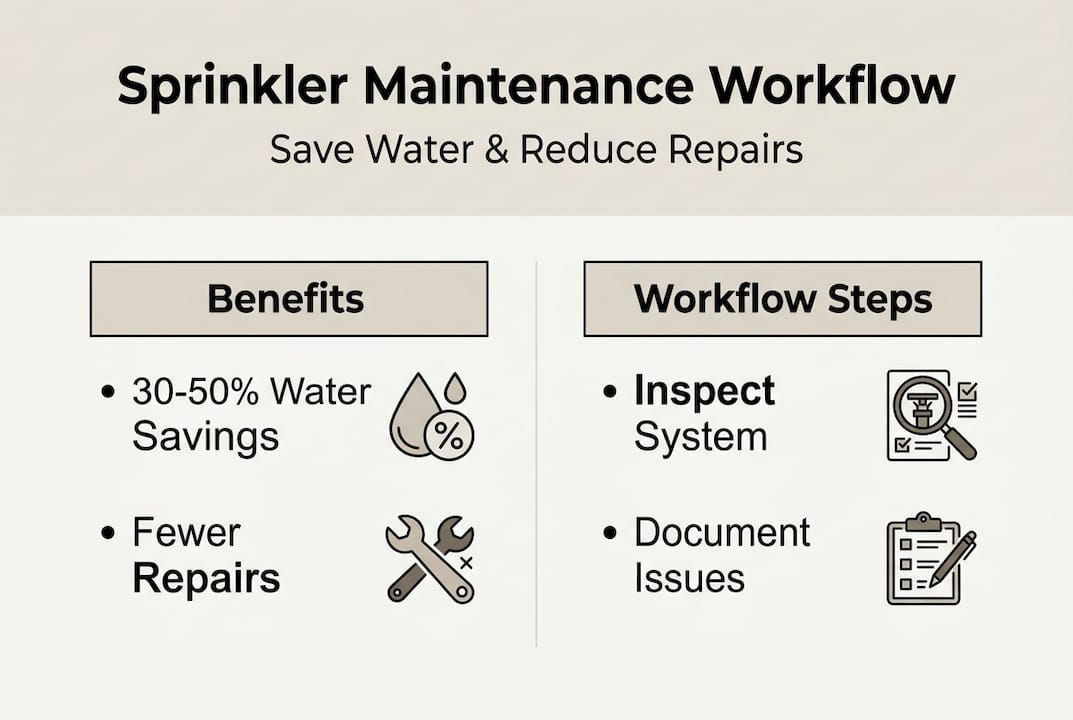
The data backs this up. Proper maintenance saves 30 to 50% water and reduces the need for repairs by up to 70% compared to systems that receive no routine attention. For Houston property owners managing large landscaped areas or multi-zone commercial systems, those numbers translate directly into thousands of dollars saved each year.
Houston’s heat and humidity create a unique maintenance environment. Sprinkler heads clog faster, rubber gaskets degrade quicker, and controller settings that worked in April may cause overwatering by July. Without a scheduled workflow, these small issues compound into major failures.
Here is what a proactive approach protects you from:
- Water waste and inflated utility bills from leaking lines or misaligned heads
- Compliance violations under local water conservation ordinances
- Costly emergency repairs caused by undetected pressure problems
- Liability exposure if fire suppression sprinklers are part of your system and go uninspected
- Tenant or occupant complaints from dry patches, flooding, or system outages
Following sprinkler maintenance tips tailored to Houston properties gives you a clear path to avoiding every one of these risks. And if you are unsure where your current system stands, a structured inspection guide is the fastest way to find out.
Proactivity is not just about fixing problems before they escalate. It is about building a system that runs efficiently season after season, requiring less of your time and budget with every passing year.
Get ready: Tools, parts, and documentation for system maintenance
A maintenance workflow only runs smoothly when everything you need is already on hand. Showing up to a zone inspection without the right tools wastes time and forces you to make a second trip. Preparation is where most property managers lose efficiency, and it is the easiest place to gain it back.
Essential tools to have ready:
- Pressure gauge (to test static and operating pressure at each zone)
- Catch cans or tuna cans (for measuring sprinkler output uniformity)
- Flat-head and Phillips screwdrivers
- Rotor adjustment tool or small screwdriver for head tuning
- Pipe tape and a small wrench for minor fittings
Replacement parts to keep in stock:
- Spare nozzles in the sizes used across your property
- Replacement rotor and pop-up heads
- Rubber gaskets and o-rings in common sizes
- Smart controller batteries or backup power source
- Valve diaphragm kits for your zone valves
Documentation you must have accessible:
- Original system plan or as-built drawing showing zone layouts
- Past inspection and maintenance records
- Controller programming schedule with seasonal adjustments
- Manufacturer specs for heads, valves, and controllers
| Document | Why you need it |
|---|---|
| System plan | Locate zones and pipes without guessing |
| Inspection records | Track recurring issues and prove compliance |
| Controller schedule | Verify settings match current seasonal needs |
| Manufacturer specs | Confirm correct pressure and flow ranges |
Pro Tip: Use color-coded storage bins, one per zone or system type, to organize spare parts. Label each bin clearly. When you find a broken head in Zone 3, you grab the Zone 3 bin and get the job done without sorting through a jumbled parts drawer.
This level of organization also supports your workflow guide documentation, making it easy to log what was replaced, when, and where.

Step-by-step: Execute your sprinkler system maintenance workflow
With your tools and documents ready, you can move through the workflow efficiently. Follow this sequence every time to ensure nothing gets skipped.
- Shut down the system and relieve pressure. Turn off the water supply at the main valve before opening any lines or heads. This protects you and prevents accidental flooding.
- Inspect the main valve and backflow preventer. Look for leaks, corrosion, or signs of wear. These components protect your water supply and are often required by local code.
- Walk each zone with the system running. Activate one zone at a time and physically walk the area. Look for broken heads, clogged nozzles, sunken rotors, and dry or flooded spots.
- Clean or replace clogged filters and nozzles. Remove debris from inline filters and flush them. Swap out any nozzle that shows visible damage or sprays an irregular pattern.
- Test coverage with catch cans. Place cans at multiple points within a zone, run the system for 15 minutes, then measure the water collected. Catch-can testing quantifies efficiency and reveals uneven distribution that visual inspection misses.
- Adjust or replace sprinkler heads. Use your rotor tool to correct arc and radius. Replace any head that cannot be adjusted to deliver the correct pattern.
- Check and update controller settings. Confirm run times match the current season. Houston summers may require 20 to 30% more runtime than spring schedules.
- Log everything. Record what you inspected, what you replaced, and any zones that need follow-up. File this in your compliance folder.
Safety note: Always relieve system pressure before opening any lines, valves, or head housings. Pressurized water lines can cause serious injury if opened without depressurizing first.
Pro Tip: Upgrading to a smart controller can save 8,800 gallons per year per household or property by automatically adjusting run times based on weather data. For commercial properties, the savings scale significantly.
Refer to the inspection guide for zone-specific checklists, and use the step-by-step workflow to stay aligned with compliance requirements for Houston properties.
Troubleshooting, validation, and workflow optimization
Even a well-executed maintenance cycle will surface problems. Knowing how to diagnose them quickly keeps your workflow moving instead of stalling.
The three most common issues in Houston properties:
- Pressure fluctuations caused by municipal supply changes or failing pressure regulators
- Uneven spray patterns from worn nozzles, tilted heads, or obstructions from plant growth
- Controller drift where seasonal adjustments were never made after a storm or seasonal change
When catch-can results show more than a 25% variation between collection points in the same zone, you have a uniformity problem. Start by checking nozzle condition and head spacing before assuming a pressure issue. Low pressure often shows up as short throw distance. High pressure causes misting, which wastes water and does not penetrate the root zone effectively.
| Feature | Traditional spray heads | Drip or smart systems |
|---|---|---|
| Water efficiency | Moderate | High (up to 90% efficient) |
| Maintenance frequency | Higher | Lower |
| Upfront cost | Lower | Higher |
| Best use case | Turf areas | Beds, shrubs, trees |
| Compliance risk | Higher in drought conditions | Lower |
Switching to drip irrigation boosts efficiency up to 90%, making it worth considering for any planted bed or shrub area on your property. Smart controllers add another layer by pulling real-time weather data and skipping cycles after rain events.
Once you have addressed immediate issues, use your maintenance records to look for patterns. If Zone 4 always has a clogged filter after summer, that tells you something about debris load in that area. Fixing the root cause, perhaps adding a filter screen or adjusting head placement, saves you from repeating the same repair every season.
Review your compliance checklist after each cycle to confirm your documentation is complete and your system meets current Houston standards.
A smarter workflow: What Houston managers often overlook
Most property managers treat maintenance as a task to complete, not a system to improve. They finish the checklist, file the paperwork, and move on. That mindset produces average results at best.
What separates genuinely well-maintained properties from the rest is pattern recognition. When you track not just what was fixed but where problems keep appearing, you start to see the real story your system is telling. A zone that repeatedly develops low pressure is not just a maintenance problem. It is a design problem, a soil problem, or a root intrusion problem waiting to be named.
We have seen Houston properties cut their annual repair costs by 40% simply by shifting from a checklist mindset to a continuous improvement mindset. Each maintenance cycle becomes a data collection event. Each repair log becomes a diagnostic tool.
The expert workflow perspective we recommend is not about doing more work. It is about doing smarter work. Review your records after every cycle, ask why problems recurred, and make one targeted improvement before the next season. That habit, repeated consistently, builds a sprinkler system that practically manages itself.
Protect your property with expert sprinkler system support
You now have a proven workflow to keep your sprinkler system efficient, compliant, and cost-effective. But even the best workflow has limits when system complexity, aging infrastructure, or Houston’s regulatory environment demands professional eyes.

Reliable Fire Protection works with Houston property owners and managers to deliver expert inspections, targeted maintenance support, and system upgrades that protect both your investment and your compliance standing. Whether you need help building out your full workflow support, want a professional Houston inspection guide applied to your property, or are ready to explore our complete range of fire safety solutions, we are ready to help. Reach out today for a free quote and put local expertise to work for your property.
Frequently asked questions
How often should sprinkler systems be inspected in Houston’s climate?
A thorough inspection and tune-up should happen at least once per year, with mid-season checks on key components. Houston’s heat accelerates wear, and tune-ups reduce waste while keeping water savings in the 30 to 50% range.
What are the most common causes of sprinkler system failure?
Clogged filters, broken heads, leaks, and controller malfunctions top the list, especially when routine maintenance is skipped. Neglect leads to 70% more repairs, wasted water, and unexpected breakdowns at the worst possible times.
Can upgrading to smart controllers or drip irrigation really save money?
Yes, and the numbers are clear. Smart controllers save 8,800 gallons per year per property, and drip systems deliver 30 to 70% better efficiency than traditional spray heads over the same coverage area.
Is detailed maintenance documentation necessary for compliance?
Absolutely. Clear records of inspections and repairs demonstrate compliance if your property is audited and protect you from fines or liability claims tied to system failures.
Recommended
- Sprinkler System Inspection Guide for Houston Properties
- Fire Suppression Systems Workflow for Safe Properties
- How to Install Fire Sprinklers for Safe Commercial Spaces
- Master Fire Sprinkler System Workflow for Compliance
- Fire Alarm System University Place TX
- Fire Alarm System Services in Bellaire, TX