
TL;DR:
- Upgrading fire systems in Houston is legally required due to NFPA codes and city permits.
- Proper assessment, planning, and professional execution prevent costly delays and non-compliance.
- Well-maintained fire systems significantly reduce fire risk, insurance costs, and protect building occupants.
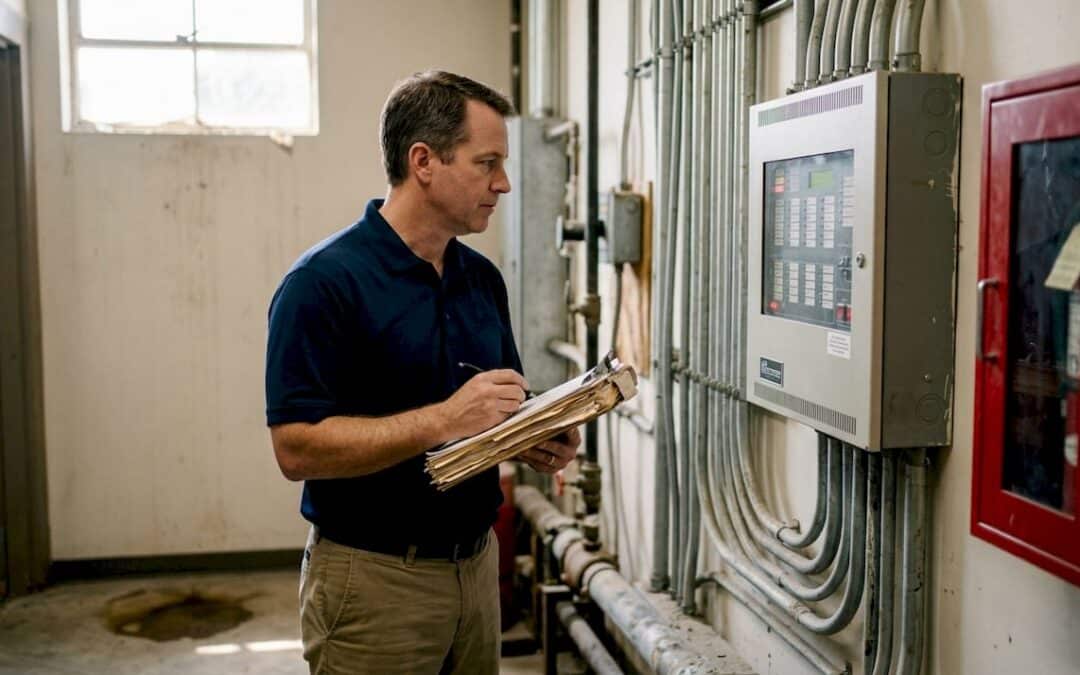
A fire breaks out at 2 a.m. in a Houston commercial building. The sprinkler heads are original equipment from 1998. The alarm panel fails to notify the monitoring station. When investigators review the ITM (Inspection, Testing, Maintenance) records, they find gaps going back three years. The result: $2.4 million in property damage and a citation from the city. This scenario plays out more often than most property owners realize. Upgrading your fire system is not optional in Houston. It is a legal requirement tied to NFPA codes, city permits, and AHJ (Authority Having Jurisdiction) approvals. This guide walks you through every phase: assessment, planning, execution, testing, and final inspection.
Table of Contents
- Assessing your current fire system and compliance needs
- Permits, planning, and finding the right upgrade team
- Executing the fire system upgrade: From components to controls
- Testing, inspection, and documentation for Houston compliance
- A fresh perspective: More than compliance—system upgrades as risk management
- Get expert help for your next Houston fire system upgrade
- Frequently asked questions
Key Takeaways
| Point | Details |
|---|---|
| No grandfathering allowed | All Houston fire systems must comply with the latest NFPA codes regardless of age. |
| Permits are critical | Upgrades require proper permitting and professional oversight to be legal and effective. |
| Testing prevents costly failures | Annual and quarterly tests avoid liability, false alarms, and help prevent over 50% of fire losses. |
| Documentation is compliance | Thorough ITM records are essential to pass Houston inspections and avoid legal penalties. |
| Upgrades mean real risk reduction | Proactive modernization cuts fire risk, property damage, and disruption for owners. |
Assessing your current fire system and compliance needs
Before you spend a dollar on new equipment, you need to know exactly what you have and what the law requires. Most property owners skip this step and end up paying for upgrades twice because the first round missed critical gaps.
What triggers a mandatory upgrade?
Three situations force your hand:
- Building renovations or additions: Any structural change that affects occupancy, use, or square footage typically requires a full system review.
- Equipment age: Sprinkler heads older than 25 years, alarm panels past their service life, and detection devices that no longer meet current sensitivity standards all require replacement.
- Regulatory changes: NFPA editions are updated regularly. No grandfathering exists under current NFPA codes, meaning your system must meet the edition currently adopted by Houston, regardless of when it was installed.
That last point surprises many property owners. The assumption that an older system is “grandfathered in” is one of the most expensive misconceptions in fire safety.
What NFPA 25 and NFPA 72 require
NFPA 25 governs water-based suppression systems (sprinklers, standpipes). NFPA 72 governs fire alarm and detection systems. Both require documented ITM records, and both are enforced in Houston. Reviewing your system maintenance requirements before scheduling any work helps you avoid surprises during the permit phase.
Pro Tip: Keep your ITM records organized in a single binder or digital folder. Inspectors will ask for them immediately, and missing records are the fastest path to a failed inspection.
Common gaps found during assessment
| System component | Common deficiency | Risk level |
|---|---|---|
| Sprinkler heads | Corrosion, paint overspray, wrong temperature rating | High |
| Alarm panel | Outdated firmware, missing zones | High |
| Smoke detectors | Expired sensitivity, wrong placement | Medium |
| Notification devices | Insufficient decibel output | Medium |
| Wiring | Exposed conduit, improper gauge | High |
Properly maintained systems reduce fire deaths and property loss by more than 50%. That statistic alone should motivate a thorough assessment before any upgrade begins. Reviewing your current setup against industry fire safety standards gives you a clear benchmark for what needs to change.
Permits, planning, and finding the right upgrade team
Once you’ve identified compliance gaps and system status, it’s time to tackle Houston’s permitting and planning requirements. Skipping or rushing this phase is the single biggest cause of project delays and budget overruns.
Why permits matter and who approves them
In Houston, the AHJ (Authority Having Jurisdiction) reviews and approves all fire system permits. This is typically the Houston Fire Department’s Fire Prevention Bureau. No licensed contractor can legally begin work without an approved permit in hand. Permits protect you legally, ensure the work meets code, and create the paper trail you need for future inspections.
Obtaining permits and hiring licensed contractors are core steps in any compliant upgrade, not optional add-ons.
What to prepare before applying
- Gather all existing ITM records and inspection reports.
- Locate original as-built drawings and system plans.
- Document all deficiencies identified during your assessment.
- Identify the scope of work (partial upgrade vs. full replacement).
- Confirm the current NFPA edition adopted by the city.
Reviewing the permit and installation steps for Houston sprinkler systems gives you a practical checklist to work from before your first contractor meeting.
DIY planning vs. professional consultation
| Factor | DIY planning | Professional consultation |
|---|---|---|
| Code accuracy | Risk of errors | Verified against current editions |
| Permit approval speed | Slower, revisions likely | Faster, fewer rejections |
| Design liability | Owner bears full risk | Licensed designer assumes liability |
| Cost | Lower upfront | Higher upfront, lower total cost |
The table above makes the case clearly. Professional consultation costs more at the start, but it almost always saves money by preventing change orders and permit rejections.
Pro Tip: Engage your licensed contractor during the design phase, not after. Early involvement catches conflicts between new equipment and existing infrastructure before they become expensive problems on the job site.
Executing the fire system upgrade: From components to controls
With your team and permits in place, you’re ready for the hands-on phase of upgrading the fire system. This is where careful sequencing matters most.
Before work begins
Schedule planned downtime during low-occupancy hours. Notify all building occupants, your monitoring station, and the local fire department before any system is taken offline. Failure to notify can trigger false emergency responses and fines.
The upgrade sequence
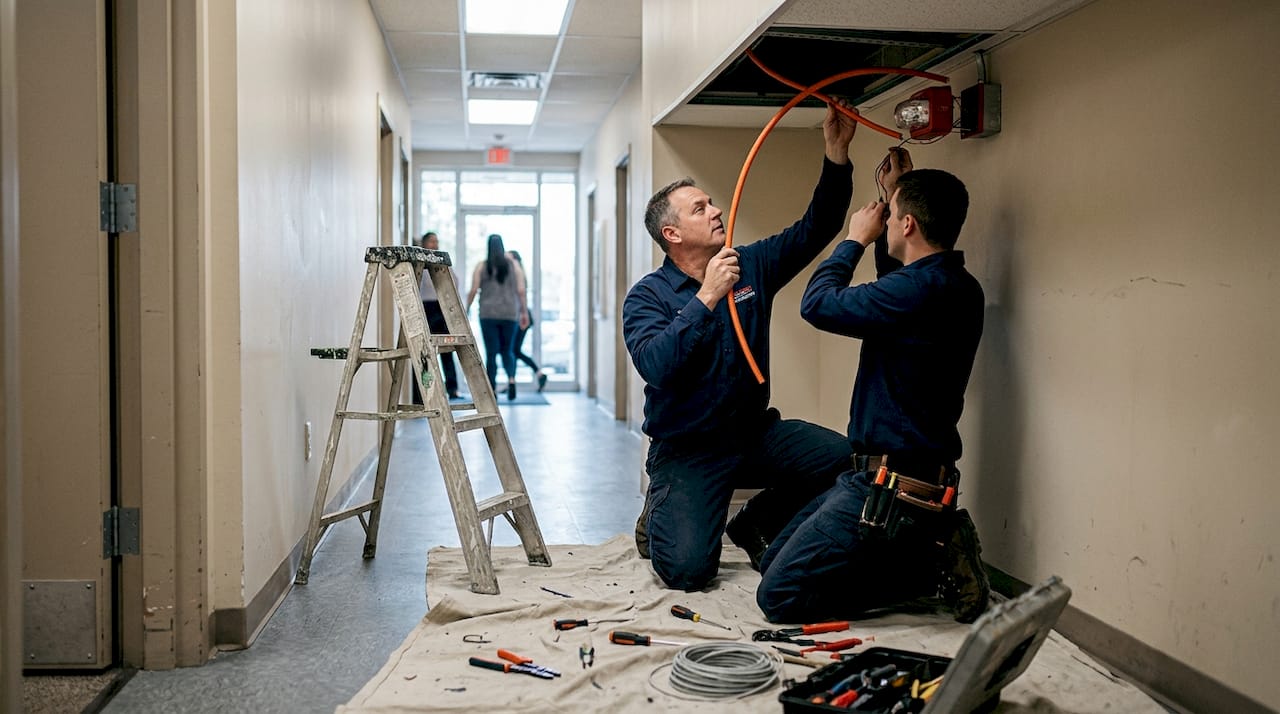
- Isolate the system: Shut off water supply to sprinkler zones. Secure all electrical sources to alarm and detection panels.
- Drain and depressurize: Drain water from affected sprinkler zones. Confirm pressure gauges read zero before opening any pipe.
- Replace sprinkler heads: Install correct temperature-rated, listed heads per the approved design drawings.
- Upgrade alarm panels: Swap outdated panels for current addressable systems. Addressable panels identify the exact device that triggered an alarm, which speeds up emergency response.
- Install detectors and notification devices: Place smoke and heat detectors per NFPA 72 spacing requirements. Verify notification device output meets decibel and visual requirements.
- Rewire as needed: Replace any wiring that does not meet current code. Use correct conduit and gauge throughout.
Only licensed fire protection professionals should disable, isolate, or reconnect any fire suppression or alarm system. Unlicensed work voids permits, creates liability, and puts occupants at serious risk.
After each component is installed, test it individually before moving to the next. This step-by-step approach, outlined in detail in the fire detection system setup process, prevents compounding errors that are hard to trace later.
Once all components are in place, restore water pressure and power. Conduct initial function checks: confirm each zone activates correctly, alarm signals reach the monitoring station, and flow switches respond as designed. The full sprinkler upgrade workflow covers each of these steps in greater technical detail.
Isolating, replacing, and testing components in the correct sequence is what separates a compliant upgrade from one that fails inspection.
Testing, inspection, and documentation for Houston compliance
A properly installed system is not legal or effective until it passes tests, official inspections, and precise documentation. This is the phase most property owners underestimate.
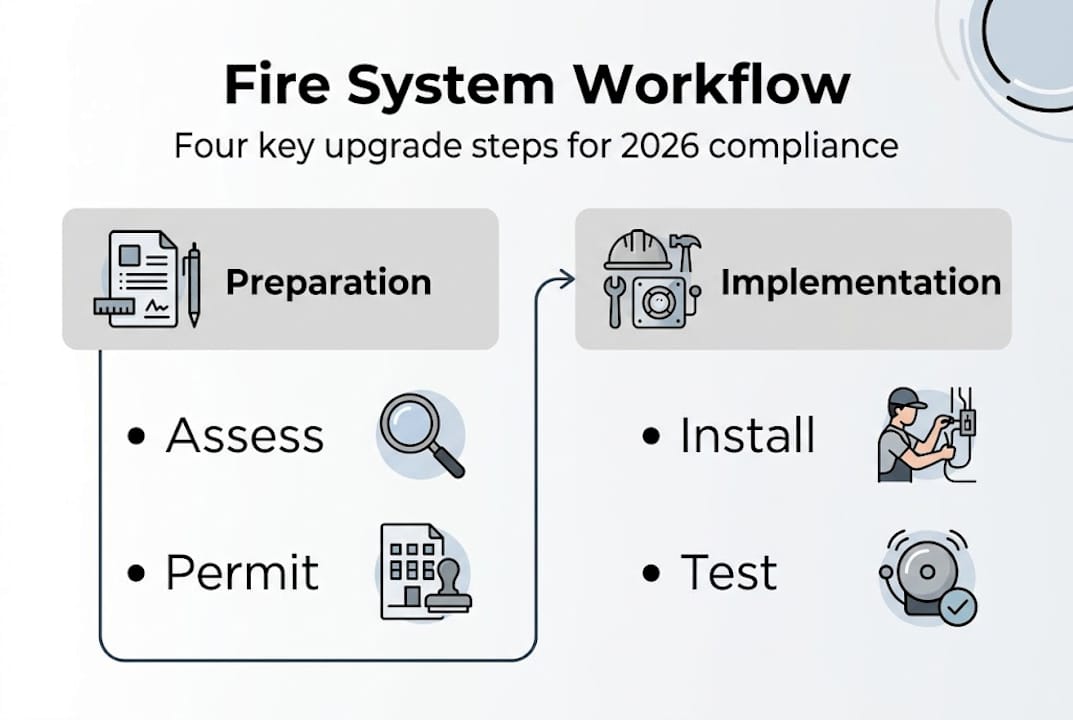
Final testing steps
- Flow tests: Confirm water flows at the correct pressure and volume through each zone.
- Sensitivity tests: Verify smoke and heat detectors respond within listed parameters.
- Signal verification: Confirm alarm signals transmit correctly to the monitoring station and the fire department.
- Notification device output: Measure decibel levels and strobe timing in all occupied areas.
Annual testing per NFPA 72 and quarterly testing per NFPA 25 are required after installation, and AHJ inspection must be completed before the system is returned to full service.
Testing schedule by device type
| Device | Test frequency | Standard |
|---|---|---|
| Smoke detectors | Annual | NFPA 72 |
| Heat detectors | Annual | NFPA 72 |
| Sprinkler valves | Quarterly | NFPA 25 |
| Main drain | Annual | NFPA 25 |
| Notification devices | Annual | NFPA 72 |
| Flow switches | Semiannual | NFPA 25 |
Common post-upgrade inspection findings
- Missing or incomplete ITM records from the upgrade period
- Sprinkler heads installed with incorrect temperature ratings
- Alarm zones not properly labeled on the panel
- Notification devices failing minimum decibel output
- Wiring not secured per code in mechanical rooms
Proper NFPA 72 maintenance prevents roughly 2.9 million false alarms per year nationally. False alarms cost money, erode occupant trust, and can result in fines from the fire department. Using a fire alarm system checklist before your AHJ inspection reduces the chance of a failed visit. Ongoing alarm maintenance tips keep your system performing between formal inspections.
A fresh perspective: More than compliance—system upgrades as risk management
Most property owners approach fire system upgrades the same way they approach tax filing: get it done, check the box, move on. That mindset is understandable, but it leaves serious value on the table.
Think about what a well-maintained fire system actually does for your business. It reduces insurance premiums. It minimizes the risk of costly operational shutdowns. It builds trust with tenants, employees, and customers who rely on you to keep the building safe. Properly maintained systems cut fire deaths and property loss by more than 50%, which translates directly into lower risk exposure for your property.
The smarter approach is to treat upgrades as a scheduled business continuity investment, not a reaction to a citation or a failed inspection. Property owners who schedule preemptive upgrades on a rolling five-year plan spend less overall, face fewer emergency repairs, and almost never fail an AHJ inspection.
Pro Tip: Build your upgrade schedule into your annual budget as a fixed line item. Pair it with ongoing system maintenance contracts so nothing falls through the cracks between major upgrades.
The ROI is real. Lower premiums, fewer disruptions, and a building that occupants actually feel safe in—that is what a proactive upgrade strategy delivers.
Get expert help for your next Houston fire system upgrade
If this workflow has made one thing clear, it’s that fire system upgrades involve more moving parts than most property owners expect. Permits, sequencing, testing, documentation—each phase has real consequences if handled incorrectly.
The Reliable Fire Protection team handles every phase of the upgrade process for Houston property owners and facility managers. From initial assessment through AHJ inspection, our licensed professionals keep your project on schedule and on code. Start by reviewing fire alarm system basics or the full sprinkler system workflow to see how our process aligns with your property’s needs. Contact us today for a free consultation.
Frequently asked questions
What triggers a mandatory fire system upgrade in Houston?
Upgrades are required after building renovations, when systems become outdated, or when regulations change. No grandfathering exists under current NFPA codes, so your system must meet the edition currently adopted by the city.
How often should fire system components be tested after an upgrade?
Most alarm devices require annual testing under NFPA 72, while sprinkler valves are tested quarterly and main drains annually per NFPA 25.
Does a new fire system lower insurance costs?
Yes. Properly maintained systems reduce fire deaths and property loss by more than 50%, which insurers recognize through lower premium calculations.
What is the typical timeline for a fire system upgrade?
Depending on building size and scope, most upgrades take several days to a few weeks, including permitting, installation, testing, and AHJ inspection.
Why are ITM records so important for inspection and compliance?
Incomplete or missing ITM records are the leading cause of failed inspections in Houston. Inspectors require a full documented history before approving any upgraded system for service.
Recommended
- Master Fire Sprinkler System Workflow for Compliance
- Fire System Maintenance: Ensuring Houston Compliance
- Fire Suppression System Setup Guide: Complete Installation Steps
- Step-by-Step Fire Detection System Setup Guide
- Electrical system assessment for safer homes: 2026 guide
- Fire Alarm System University Place TX
- Fire Alarm System Services in Bellaire, TX