
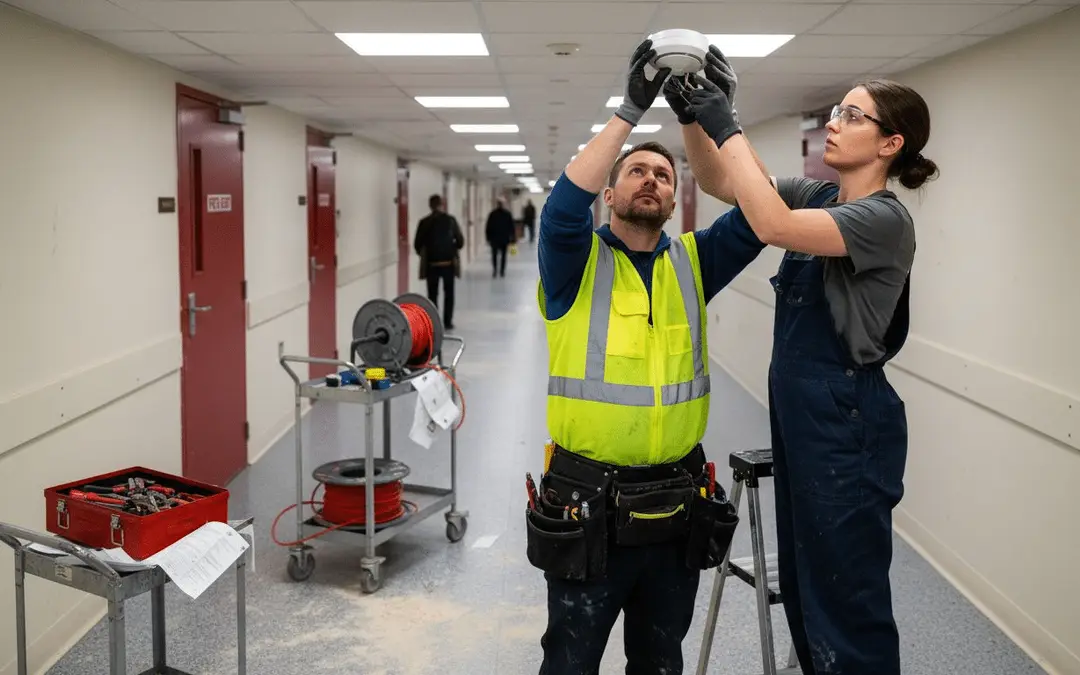
Facing fire safety challenges in Houston can leave business owners and property managers uneasy about protecting people and assets. Local regulations and real risks demand an approach that’s both thorough and tailored to each property’s needs. With smart steps like comprehensive risk assessment and strategic equipment selection, you can build a fire detection system that not only meets Houston standards but gives you confidence your property is truly protected.
Table of Contents
- Step 1: Assess Property For Fire Risks And Coverage Needs
- Step 2: Select Proper Fire Detection Equipment And Layout
- Step 3: Install Fire Detection Devices And Wiring
- Step 4: Configure Control Panels And System Integration
- Step 5: Test And Verify Full System Compliance
Quick Summary
| Essential Insight | Detailed Explanation |
|---|---|
| 1. Conduct a Thorough Risk Assessment | Evaluate your property’s unique fire risks to develop an effective fire protection strategy. |
| 2. Choose the Right Detection Equipment | Select smoke alarms based on their technology to ensure appropriate coverage for different fire types. |
| 3. Strategically Install Fire Detection Devices | Properly position detectors to cover all areas, especially near potential fire hazards. |
| 4. Configure Control Panel Effectively | A well-set control panel integrates devices for coordinated alarms and monitoring. |
| 5. Perform Comprehensive Testing for Compliance | Verify that all components function correctly and meet safety standards through thorough testing. |
Step 1: Assess Property for Fire Risks and Coverage Needs
Before installing a fire detection system, you must thoroughly understand the unique fire risks specific to your Houston property. This critical first step involves conducting a comprehensive evaluation that pinpoints potential vulnerabilities and determines the appropriate protection strategy.
Start by performing a systematic risk assessment using several key approaches. First, examine your property’s structural characteristics and surrounding environment. This means carefully inspecting building materials, electrical systems, heating equipment, and potential fire hazards. Pay special attention to areas with higher risk of ignition, such as kitchens, electrical rooms, storage areas with flammable materials, and spaces with complex machinery.
Key Risk Assessment Components:
- Building construction materials
- Electrical system configuration
- Heating and cooling equipment
- Proximity to potential fire sources
- Vegetation and external environmental factors
To enhance your assessment, utilize professional wildfire risk mapping tools which can provide detailed insights into environmental fire risks. These interactive resources help identify specific vulnerabilities and exposure levels unique to your property’s location.
Remember that a thorough risk assessment isn’t just about identifying potential problems—it’s about creating a strategic plan for comprehensive fire protection. Document every potential risk and hazard you discover, as this information will directly inform your fire detection system design.
A comprehensive risk assessment is the foundation of effective fire protection, turning potential vulnerabilities into strategic safety opportunities.
Professional tip: Conduct your risk assessment during different times of day and seasons to capture a complete picture of potential fire hazards.
Step 2: Select Proper Fire Detection Equipment and Layout
Choosing the right fire detection equipment is critical for ensuring comprehensive safety coverage for your Houston property. Your selection must balance technological capabilities, building-specific requirements, and strategic placement to maximize early detection and minimize potential damage.
Begin by understanding the different types of smoke alarms available. Smoke alarm selection varies based on detection technology, with three primary types: ionization, photoelectric, and combination alarms. Ionization alarms detect fast-flaming fires quickly, while photoelectric alarms excel at identifying smoldering fires. Combination alarms provide the most comprehensive protection by integrating both technologies.
Key Equipment Selection Criteria:
- Detection technology type
- Coverage area requirements
- Building layout complexity
- Power source options
- Interconnectivity capabilities
- Compliance with local safety regulations
When planning your equipment layout, focus on strategic placement. Install detectors in key areas such as bedrooms, hallways, living spaces, and near potential fire hazards like kitchens and electrical panels. Ensure complete coverage by placing alarms on every level of your property, including basements and attics.
Proper fire detection equipment placement is not just about quantity, but strategic positioning that provides comprehensive protection.
Consider additional factors like battery backup, wireless interconnectivity, and smart monitoring features that can enhance your overall fire safety system. Some advanced systems offer remote notifications and integration with smartphone apps, providing real-time alerts and increased peace of mind.
Pro tip: Test your fire detection equipment monthly and replace batteries annually to ensure consistent and reliable performance.
Step 3: Install Fire Detection Devices and Wiring
Installing your fire detection system requires precision, careful planning, and strict adherence to safety standards. This critical step transforms your comprehensive risk assessment and equipment selection into a functional safety network that protects your property and its occupants.
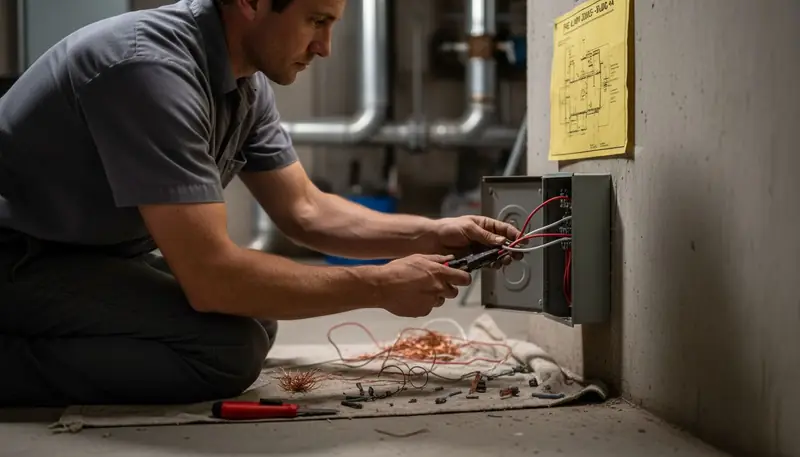
Begin by preparing your installation area and gathering the necessary tools. Wiring options must meet specific survivability requirements to ensure the system remains operational during emergency conditions. This means using fire-rated cables and following NFPA 72 guidelines for pathway protection.
Key Installation Considerations:
- Cable routing and pathway protection
- Electrical circuit compatibility
- Device mounting locations
- Power supply requirements
- Signal transmission reliability
- Compliance with local building codes
Pay close attention to device placement and interconnectivity. Install smoke detectors on ceilings or high wall locations, maintaining recommended distances from corners and potential interference sources. For maximum protection, use interconnected devices that communicate with each other, ensuring a comprehensive alarm system that triggers simultaneously across all units.
Proper installation is not just about placing devices, but creating an integrated network of protection.
Ensure all wiring connections are secure, properly insulated, and protected from potential electrical interference. Test each device individually and then as part of the entire system to verify complete functionality. Consider consulting a professional fire protection technician to validate your installation meets all required safety standards.
Pro tip: Document every step of your installation process, including device locations, wiring paths, and testing results, to maintain a comprehensive record for future maintenance and inspections.
Step 4: Configure Control Panels and System Integration
Configuring your fire detection system’s control panel represents the critical nerve center that transforms individual devices into a coordinated safety network. This complex process requires meticulous attention to detail and a comprehensive understanding of system-wide communication protocols.
System integration requires careful design and implementation to ensure seamless communication between fire alarm components and building management systems. Begin by thoroughly reviewing the control panel’s programming interface and understanding its configuration capabilities, including zones, notification circuits, and emergency response protocols.
Key Configuration Components:
- Alarm zone mapping
- Notification appliance settings
- Emergency communication protocols
- Supervision and monitoring functions
- Network and interconnectivity parameters
- Response time calibration
Ensure that your control panel can support comprehensive monitoring across all installed detection devices. This means configuring specific response parameters for different areas of your property, establishing clear communication pathways, and setting up redundant notification mechanisms to guarantee maximum safety coverage.
A well-configured control panel transforms individual detection devices into an intelligent, responsive safety ecosystem.
Pay special attention to system supervision features that allow continuous monitoring of device status, wiring integrity, and potential system vulnerabilities. Test each configured setting systematically, verifying that notifications trigger correctly and that the system responds precisely as programmed.
Pro tip: Create a detailed documentation map of your control panel’s configuration settings, including zone assignments and communication protocols, to simplify future maintenance and troubleshooting efforts.
Step 5: Test and Verify Full System Compliance
Testing your fire detection system represents the final critical step in ensuring comprehensive safety protection for your property. This comprehensive verification process will validate that every component functions precisely as designed and meets all required safety standards.
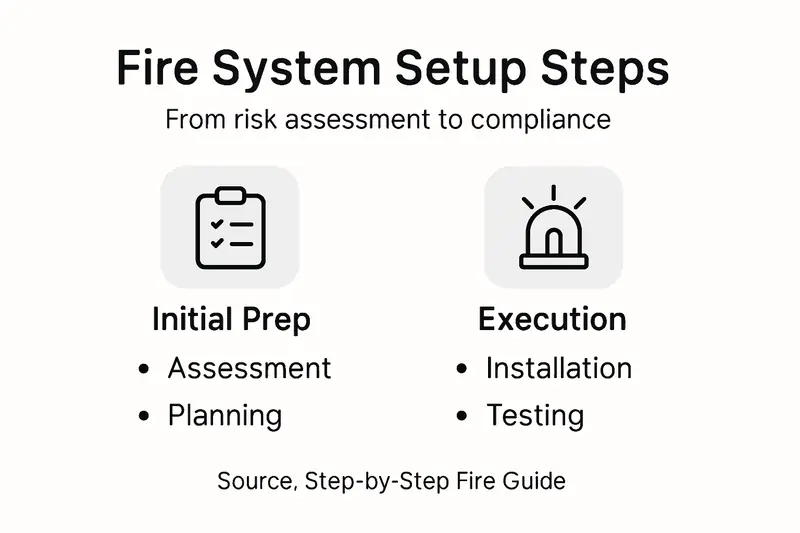
Functional testing requires systematic verification protocols to confirm each detection device and control panel operates correctly. Begin by creating a detailed test plan that covers every system component, including smoke detectors, notification appliances, control panels, and communication pathways.
Key System Compliance Testing Elements:
- Device-level functional testing
- Communication pathway verification
- Notification system response validation
- Control panel configuration checks
- Emergency scenario simulation
- Documentation and record keeping
Conduct comprehensive tests that simulate multiple emergency scenarios. This means triggering alarms from different zones, verifying notification sequences, checking communication reliability, and ensuring that all interconnected devices respond precisely as programmed. Pay special attention to response times, signal transmission accuracy, and complete system coordination.
Thorough testing transforms your fire detection system from a collection of devices into a reliable safety network.
Maintain meticulous documentation throughout the testing process. Record every test result, noting any deviations or potential improvements. This documentation serves as critical evidence of system compliance and provides a valuable reference for future maintenance and inspections.
Pro tip: Create a comprehensive testing checklist that includes time stamps, specific test conditions, and detailed observations to streamline future system verification processes.
This table summarizes essential actions for each step in fire detection system setup:
| Step | Primary Objective | Key Action | Outcome |
|---|---|---|---|
| Assess Risks | Identify fire vulnerabilities | Inspect property and hazards | Custom protection strategy |
| Select Equipment | Ensure comprehensive coverage | Choose appropriate devices | Suitable, reliable detection |
| Install Devices & Wiring | Build safety infrastructure | Mount and connect devices | Integrated protection system |
| Configure Panels | Enable system coordination | Set up control panel zones | Centralized safety network |
| Test Compliance | Validate full system function | Simulate emergencies, record | Verified system performance |
Secure Your Property with Expert Fire Detection Solutions Today
Installing a fire detection system requires careful assessment, precise installation, and thorough testing to safeguard your Houston property. If you want to avoid the stress of managing complex equipment choices and system configurations, rely on professionals who understand every detail from risk assessment to full system compliance. With so much at stake, waiting could leave your property and loved ones vulnerable.
Take control of your fire safety now by partnering with Reliable Fire Protection, Houston’s trusted experts in advanced fire detection and suppression systems. We specialize in delivering tailored solutions that address your unique fire risks and ensure your equipment meets all safety regulations. Explore our comprehensive Fire Protection services and experience peace of mind knowing your property is protected by certified professionals who care.
Visit us at Reliable Fire Protection to request your free quote and start your fire safety upgrade today.
Frequently Asked Questions
How do I assess fire risks before setting up a fire detection system?
Before setting up a fire detection system, conduct a thorough risk assessment of your property. Inspect structural features, electrical systems, heating equipment, and areas with potential fire hazards to identify vulnerabilities and create a protection plan.
What types of fire detection equipment should I consider for my property?
Consider the various types of smoke alarms available, such as ionization, photoelectric, and combination alarms. Choose the appropriate devices based on your property’s specific fire risks and coverage area needs to ensure reliable detection.
How do I properly install fire detection devices and wiring?
To install fire detection devices, prepare your installation area and follow safety standards closely. Use fire-rated cables and ensure that detectors are strategically placed in high-risk areas and interconnected for maximum coverage.
What should I include when configuring the control panel of my fire detection system?
When configuring your control panel, focus on mapping alarm zones, setting notification appliance settings, and establishing emergency communication protocols. Ensure that all installed devices are monitored and that redundancy is built into your notification mechanisms.
How can I verify that my fire detection system is fully compliant and functional?
To verify your fire detection system’s compliance, conduct systematic testing of each device and communication pathways. Simulate emergency scenarios and document the results to confirm that all components function as intended and meet safety standards.