
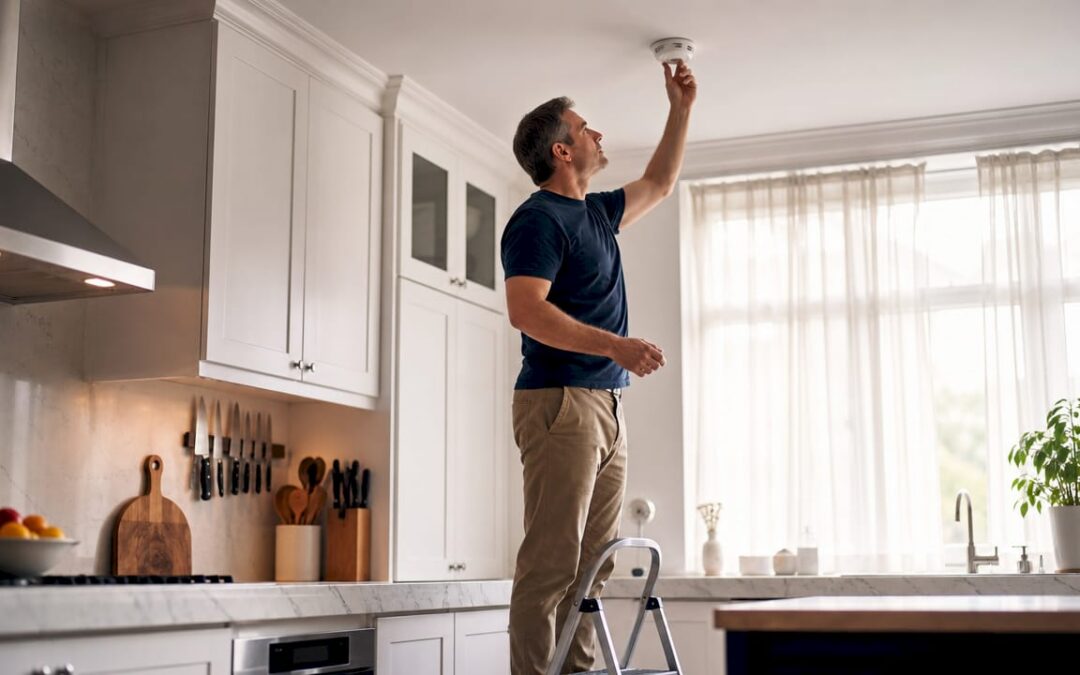
TL;DR:
- A working smoke detector can reduce the risk of dying in a home fire by 50 percent. The best detectors in 2025 feature dual sensors, sealed 10-year batteries, and carbon monoxide detection to maximize safety. Proper placement, regular testing, and replacement every 10 years are essential for reliable fire protection.
A working smoke detector cuts your risk of dying in a home fire by 50%. That single fact makes choosing the right alarm one of the most important home safety decisions you will make. The best smoke detectors 2025 combine dual-sensor technology, sealed 10-year lithium batteries, and carbon monoxide detection to give you the broadest possible protection. This guide breaks down what to look for, which detector types perform best, and how to keep your alarms working for the full decade they are designed to last.
1. What features make the best smoke detectors in 2025?
The most reliable residential fire detectors share four core features: dual sensors, long-life batteries, CO detection, and independent safety certification. Each one addresses a specific failure point that cheaper or older alarms leave open.
- Dual sensors. Ionization and photoelectric sensors detect different fire types. Ionization sensors respond faster to fast-flaming fires. Photoelectric sensors catch slow, smoldering fires earlier. A single-sensor unit misses one category entirely.
- Sealed 10-year batteries. Sealed lithium batteries eliminate the risk of a dead battery going unnoticed. Most alarm failures happen because a homeowner removed the battery and never replaced it.
- Carbon monoxide detection. CO is odorless and colorless, which means you cannot detect it without a sensor. Combination smoke and CO alarms cover both hazards with one device.
- UL 217 or ETL certification. Independent certifications confirm the alarm meets recognized safety standards. Never buy an alarm without one of these marks.
Pro Tip: Check the back of the alarm’s packaging for the UL or ETL mark before you buy. A low price without certification is not a bargain.
2. Sensor types compared: which technology fits your home?
Not every detector uses the same technology, and the differences matter more than most homeowners realize.
| Sensor type | Best for | Weakness |
|---|---|---|
| Ionization only | Fast, flaming fires (kitchen grease fires) | Slow to detect smoldering fires |
| Photoelectric only | Smoldering fires (electrical fires in walls) | Slower on fast-flaming fires |
| Dual sensor (both) | All fire types | Slightly higher cost |
| Combination smoke + CO | All fire types plus CO hazards | Highest upfront cost |
Dual-sensor units are the clear choice for most homes. The cost difference between a single-sensor and a dual-sensor alarm is small. The protection difference is not.
3. Battery-powered vs. hardwired: choosing your power source
Power source affects both installation cost and long-term reliability. Each option has a clear use case.
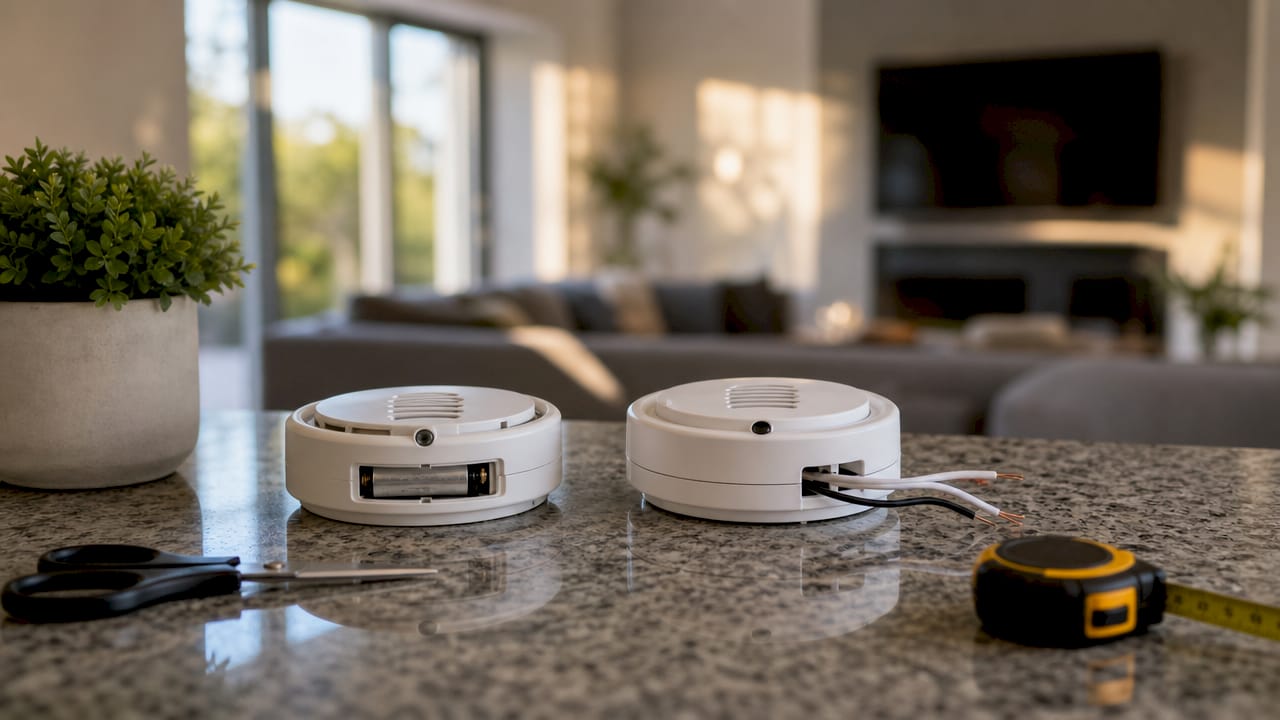
Battery-powered with sealed 10-year lithium batteries work in any room without electrical access. They are the easiest to install and the most practical for renters who cannot modify wiring. The sealed battery means you will never need to open the unit for a replacement during its lifespan.
Hardwired alarms with battery backup connect directly to your home’s electrical system. They never run out of power during normal operation. The battery backup keeps them running during a power outage, which is exactly when fires from candles or generators are most likely. These are the standard choice for new construction and major renovations.
The practical answer for most homeowners: use hardwired alarms where wiring already exists, and fill gaps with sealed-battery units in areas without electrical access.
4. Smart smoke detectors: useful addition, not a replacement
Smart smoke detectors send alerts to your phone, identify which room triggered the alarm, and integrate with home automation systems. Those features are genuinely useful. They are not a substitute for traditional audible alarms.
Wi-Fi limitations and app reliability issues create failure modes that standard alarms do not have. A 5 GHz-only router, a dead phone battery, or a server outage can all block a smart alert from reaching you. The alarm’s physical siren is always on, regardless of your Wi-Fi status.
Smart detectors work best as a supplement to a full set of traditional alarms throughout the home. Place a smart detector in a high-risk area like the kitchen or garage for remote monitoring. Keep standard certified alarms in every bedroom and on every level. That combination gives you both notification flexibility and guaranteed audible coverage.
Pro Tip: If you travel frequently, a smart detector in your home lets you alert a neighbor or contact emergency services remotely. Just do not let that feature replace the alarms your family depends on while they sleep.
5. Top smoke detector categories for 2025 homes
The market breaks down into four practical categories. Each fits a different homeowner situation.
- Budget sealed-battery dual-sensor alarms. These cost under $30 and meet UL 217 standards. They cover both fire types and eliminate battery maintenance. This is the right choice for renters or anyone furnishing a first home.
- Midrange combination smoke and CO alarms. Priced between $30 and $60, these add carbon monoxide detection to dual-sensor coverage. Homes with gas appliances, attached garages, or fireplaces need CO detection. This category covers the majority of American households.
- Premium smart combination alarms. These run $60 and above and add app alerts, voice location announcements, and interconnection with other smart devices. Voice alerts that say “Fire. Smoke detected in the kitchen” give sleeping occupants faster orientation than a standard beep. Worth the cost for larger homes or households with elderly residents.
- Interconnected alarm systems. When one alarm triggers, all alarms in the home sound simultaneously. This feature is critical in larger homes where a bedroom alarm might not be audible from a basement fire. Both hardwired and wireless interconnected systems are available.
Every category above should carry UL 217 or ETL certification. That requirement is non-negotiable regardless of price point.
6. How to install and maintain your smoke detectors
Correct placement and consistent maintenance determine whether your alarms actually protect you when a fire starts.
- Install on every level of the home. Place at least one alarm on each floor, including the basement. A fire starting in the basement needs to trigger an alarm near the bedrooms above.
- Install inside every bedroom and outside sleeping areas. Closed doors muffle alarms significantly. A detector inside the bedroom gives sleeping occupants the fastest possible warning.
- Mount on the ceiling or high on a wall. Smoke rises. Ceiling mounting puts the sensor where smoke concentrates first. If wall-mounting, place the alarm 4–12 inches from the ceiling.
- Keep alarms away from kitchens and bathrooms. Steam and cooking smoke trigger nuisance alarms. Mount kitchen alarms at least 10 feet from cooking appliances.
- Test every alarm monthly. Regular testing is the single most effective maintenance step you can take. Press the test button and confirm the siren sounds. Document the date.
- Replace the entire unit every 10 years. Sensor degradation makes older detectors unreliable even when the battery is fine. Check the manufacture date printed on the back of each alarm.
- Vacuum the alarm annually. Dust buildup inside the sensor chamber reduces sensitivity. A quick pass with a vacuum attachment keeps the sensor clear.
Consistent alarm maintenance practices can cut failure rates by around 30% in regional safety programs. That number reflects what happens when homeowners treat testing as a routine, not an afterthought.
Key takeaways
The most effective home smoke detector setup combines dual-sensor technology, sealed 10-year batteries, and CO detection, backed by monthly testing and full replacement every 10 years.
| Point | Details |
|---|---|
| Dual sensors are non-negotiable | Ionization and photoelectric sensors together detect both fast-flaming and smoldering fires. |
| Sealed batteries prevent silent failures | 10-year lithium batteries remove the risk of a dead battery going unnoticed for months. |
| CO detection belongs in every home | Combination alarms protect against carbon monoxide, which is undetectable by human senses. |
| Smart alarms supplement, not replace | Use smart detectors alongside certified traditional alarms, not instead of them. |
| Replace units every 10 years | Sensor degradation makes older alarms unreliable regardless of battery status. |
What I have learned after years in fire safety
The most common mistake homeowners make is treating smoke detector selection as a one-time purchase decision. They buy whatever is on sale, install it, and forget about it for a decade. That approach leaves real gaps.
The alarms that prioritize UL 217 certification and dual-sensor coverage consistently outperform everything else in independent testing. Certification is not a marketing label. It means the alarm was tested against a specific failure standard and passed. That distinction matters at 2 a.m. when a fire starts in your garage.
I am genuinely skeptical of households that rely entirely on smart detectors. The connectivity features are appealing, but I have seen too many cases where a router upgrade or an app update broke the notification chain. The physical siren is the only alert that works every time, without conditions. Smart features are a bonus. The siren is the product.
My practical recommendation: buy dual-sensor combination alarms with sealed 10-year batteries for every bedroom and level of your home. Add a smart detector in the kitchen or garage if remote monitoring matters to you. Test every alarm on the first of each month. Write the manufacture date on a piece of tape and stick it to each unit so you know exactly when replacement is due. That system costs less than $200 for most homes and requires about five minutes of attention per month.
The fire alarm system checklist approach works for residential settings too. Treat your home alarms with the same discipline a property manager applies to a commercial building. Your family deserves at least that level of attention.
— Results
Fire protection resources from Reliable-fire-protection
Smoke detectors are your first line of defense, but they work best as part of a complete fire safety plan.
Reliable fire protection provides Houston homeowners and property owners with expert guidance on how fire alarm systems work, from basic detector placement to fully integrated alarm networks. Understanding how detection, notification, and suppression connect gives you a clearer picture of what your home actually needs. If you want to go beyond individual alarms and build a complete safety setup, Reliable-fire-protection’s team is available to walk you through your options and answer questions specific to your property.
FAQ
What is the best type of smoke detector for a bedroom?
A dual-sensor alarm with both ionization and photoelectric sensors gives the broadest fire detection coverage in a bedroom. Add CO detection if the bedroom is near an attached garage or gas appliances.
How often should I replace my smoke detectors?
Replace every smoke detector every 10 years from its manufacture date. Sensor degradation reduces reliability even when the battery and siren still function normally.
Are smart smoke detectors worth buying?
Smart smoke detectors add useful remote alerts but should never replace traditional certified alarms. Wi-Fi outages and app failures can block notifications, so audible alarms remain the reliable foundation.
Where should smoke detectors be placed in a home?
Install at least one alarm on every level, inside every bedroom, and outside sleeping areas. Mount on the ceiling or 4–12 inches from the ceiling on a wall, and keep alarms at least 10 feet from cooking appliances.
What certifications should I look for on a smoke detector?
Look for UL 217 or ETL certification marks on the packaging. These confirm the alarm passed independent safety testing against recognized standards.