
TL;DR:
- Fire suppression systems provide rapid fire control, saving lives and reducing property damage by up to 66 percent.
- They ensure ongoing compliance, protect operational continuity, and can lower insurance premiums through proper maintenance and installation.
Fire can destroy a commercial building in minutes. For business owners and facility managers, that’s not a hypothetical risk. It’s a liability that touches insurance costs, regulatory compliance, employee safety, and operational continuity all at once. Understanding the full advantages of fire suppression systems helps you make smarter decisions about protecting your property before an incident forces the decision for you. This article breaks down the most important benefits, compares system types, and gives you the practical context to act with confidence.
Key takeaways
| Point | Details |
|---|---|
| Rapid suppression saves lives | Sprinkler systems limit fire growth before responders arrive, sharply reducing fatalities and injuries. |
| Significant property damage reduction | Properly installed systems reduce property damage by 50 to 66% compared to unprotected buildings. |
| Compliance is ongoing, not one-time | NFPA 25 requires regular inspection and testing for the life of the building, not just at installation. |
| System design must match your hazard class | A system engineered for the wrong occupancy type fails to deliver intended safety outcomes. |
| Newer technologies expand your options | Clean agent, dry chemical, and acoustic systems serve environments where water damage would be unacceptable. |
1. The core advantages of fire suppression systems: speed and containment
The single biggest thing a fire suppression system does is buy time. Time for occupants to evacuate. Time before structural damage becomes irreparable. Time before a small fire becomes a catastrophic one.
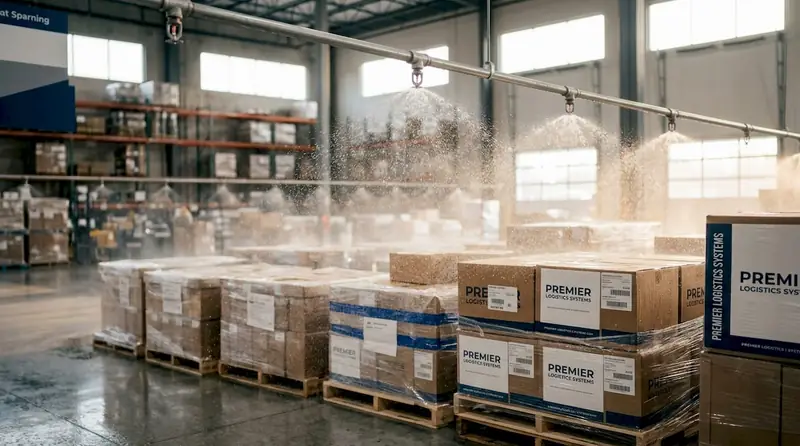
Automatic sprinkler systems are heat-activated, which means they respond to a fire before anyone calls 911. NIST research confirms that sprinklers can extinguish or hold a fire in check before fire department arrival, directly reducing fatalities and economic losses. That early intervention is where the real safety value lies.
The containment numbers are striking. In 94% of U.S. structure fires with sprinkler systems active, fire spread remained confined to the room of origin. Without sprinklers, that figure drops to 70%. The difference between a contained fire and a total loss often comes down to whether suppression activated in the first two to three minutes.
Key operational benefits of rapid response include:
- Reduced smoke and toxic gas accumulation, giving occupants more time to exit safely
- Lower heat release rates, which protect structural elements longer
- Faster post-incident recovery because suppression limits the burn area
- Reduced fatality risk: sprinklers lower the chance of fire death by 87% where they function properly
Pro Tip: If your facility has high occupant density, such as a warehouse, hotel, or assembly space, prioritize fast-response sprinkler heads. These activate at lower temperatures and reduce the window between ignition and suppression.
2. Property protection and the financial case for suppression
Beyond life safety, the economic argument for installing a suppression system is one of the strongest in facilities management. Fire losses cost billions annually across the commercial sector, and much of that loss is preventable.
Sprinkler systems reduce property damage by 50 to 66% when properly installed and matched to the hazard class of the building. That reduction translates directly into lower insurance claims, smaller recovery costs, and in many cases, meaningfully lower annual premiums.
| Financial impact area | Without suppression | With suppression |
|---|---|---|
| Property damage severity | High: fire spreads beyond origin | Reduced 50 to 66% on average |
| Insurance claim size | Large loss events more common | Dramatically lower claim severity |
| Premium costs | Standard or elevated rate | Discounted rate from most carriers |
| Business interruption duration | Weeks to months | Days to weeks in most cases |
The cost-benefit math becomes even clearer when you factor in business interruption. A fire that destroys inventory, equipment, or server infrastructure doesn’t just cost what burned. It costs every day your facility is offline. Suppression systems that limit a fire to its room of origin dramatically shorten recovery timelines.
One important caveat: mismatched or poorly maintained systems undermine every one of these benefits. A system installed without proper hazard-class engineering can fail to control a fire or cause unnecessary water damage. The quality of the design and the consistency of maintenance matter as much as the decision to install.
Pro Tip: Ask your insurer directly about premium credits for suppression systems before installation. Many carriers offer 5 to 15% discounts on commercial property policies for fully sprinklered buildings, and some require suppression for certain occupancy types to qualify for coverage at all.
3. Compliance, regulatory standing, and operational continuity
Installing a fire suppression system is not purely a safety decision. It’s a legal and operational one. Most commercial occupancies are governed by a layered set of codes that define when systems are required, how they must be designed, and what ongoing maintenance is mandatory.
The primary standards you need to understand include:
- NFPA 13: The standard for the installation of sprinkler systems in commercial and industrial buildings
- NFPA 25: Governs inspection, testing, and maintenance for the life of the system, not just at installation
- NFPA 24: Covers fire service mains and private water supplies
- IPC (International Plumbing Code): Applies to the domestic water portions of combination systems
Combination fire and domestic water lines fall under dual regulatory frameworks, requiring building owners to manage compliance across both the plumbing and fire protection codes simultaneously. That complexity is one reason many facility managers rely on specialized fire protection contractors rather than general maintenance staff.
Ongoing NFPA 25 inspection requirements make it clear that ownership of a suppression system is a long-term commitment. Quarterly, annual, and five-year inspection cycles must be documented. Failure to maintain records creates regulatory exposure even if the system itself works. A well-documented maintenance program, supported by a licensed contractor, keeps your facility in good standing and reduces the risk of coverage disputes after a loss.
Compliant systems also reduce business interruption risk. When a fire occurs in a properly protected building, local fire marshals and insurance adjusters have a clear record of system performance. That documentation speeds up the claims process and helps get operations restarted faster.
4. Specialized suppression technologies for sensitive environments
Standard sprinkler systems work exceptionally well for most commercial spaces. But some facilities require a different approach entirely. Server rooms, pharmaceutical labs, art storage facilities, and industrial environments with flammable chemicals all pose challenges where water or residue from traditional agents would cause as much damage as the fire itself.
This is where specialized fire prevention systems deliver advantages that sprinklers simply cannot.
Clean agent systems use gases like FM-200 or Novec 1230 to suppress fires without leaving residue, without depleting oxygen to dangerous levels, and without damaging sensitive electronics or records. They discharge in seconds and are safe for occupied spaces, which makes them ideal for data centers and control rooms.
Dry chemical systems are standard in commercial kitchens and areas with flammable liquids. They work by interrupting the chemical reaction that sustains a fire, making them highly effective against Class B and Class C fires.
Acoustic suppression is an emerging technology worth watching. California fire agencies are currently evaluating a NASA-inspired acoustic backpack that suppresses ignition using sound waves, with no water, foam, or chemical discharge. While currently designed for portable field use, the underlying technology signals a direction the industry is moving toward for environments where zero-residue suppression is critical.
Selecting the right technology requires matching your suppression agent to the specific fire risks and operational sensitivities present in each zone of your facility. A suppression system evaluation done zone-by-zone often reveals that no single system type is optimal for an entire building.
5. Comparing suppression system types: what works where
Choosing between system types is one of the most consequential decisions in fire safety planning. The following comparison gives you a practical baseline for that conversation with your contractor.
| System type | Best application | Key advantage | Main limitation |
|---|---|---|---|
| Wet pipe sprinkler | Most commercial occupancies | Fastest activation, lowest maintenance | Not suitable for freezing environments |
| Dry pipe sprinkler | Unheated warehouses, parking structures | Works in cold environments | Slower activation than wet pipe |
| Clean agent | Server rooms, labs, archives | No residue, safe for occupied spaces | Higher installation cost |
| Dry chemical | Kitchens, flammable liquid areas | Effective against Class B and C fires | Cleanup required after discharge |
| Pre-action system | Data centers, museums | Two-step activation reduces accidental discharge | More complex installation and maintenance |
A few practical points worth noting:
- Wet pipe systems are the default choice for most climate-controlled commercial spaces because they activate fastest and require the least maintenance
- Dry pipe systems are the right call for any space that routinely drops below 40°F
- Clean agent systems require hazard-specific engineering to calculate correct agent concentration for total flooding in a sealed space
- Pre-action systems carry higher upfront costs but significantly lower the risk of water damage from accidental discharge, which matters in irreplaceable-asset environments
The role of suppression systems in your specific facility depends on what you’re protecting, not just where you’re located. A mixed-use commercial building may need wet pipe in the office areas, a pre-action system in the server room, and a dry chemical hood in the kitchen. That kind of layered approach is normal and often required by code.
Pro Tip: When reviewing your system installation plan, ask your contractor to map each system type to the hazard class and occupancy category for every zone. This documentation serves double duty: it satisfies code requirements and gives you a clear reference for maintenance scheduling.
What I’ve learned after years of watching facilities get this wrong
I’ve seen facility managers make the same mistake repeatedly: they treat fire suppression as a one-time installation project rather than an ongoing operational system. The system gets installed, passes inspection, and then goes untouched for five years until the next scheduled test. By that point, a corroded valve or a compromised sprinkler head has quietly eroded the protection they paid for.
The other misconception I see often is that any licensed contractor can install any system type. Clean agent systems in particular require precise room-sealing calculations and agent concentration engineering. If the room isn’t properly sealed or the concentration is miscalculated, the system discharges and the fire keeps burning. That’s not a hypothetical. It happens.
My practical advice: treat suppression as part of your fire system maintenance calendar the same way you treat HVAC servicing. Schedule it. Document it. Use a contractor who specializes in fire systems, not a general mechanical contractor who handles fire protection as a side service.
The importance of fire suppression comes down to one truth that often gets lost in the technical detail: these systems protect people first and property second. When you start from that priority, the decisions about investment, maintenance, and system selection become much clearer.
— Reliable Fire Protection
Protect your Houston facility with the right suppression system
At Reliable Fire Protection, we work with Houston business owners and facility managers to design, install, and maintain suppression systems that meet code requirements and actually perform when it matters. Whether you’re protecting a warehouse, a restaurant kitchen, a data center, or a multi-use commercial property, we match the system to your specific occupancy type and risk profile.
Our team handles everything from initial hazard assessment and design to installation, documentation, and ongoing NFPA 25 inspection cycles. We’re local, certified, and built around the kind of responsive service that Houston facilities depend on. If you want to understand which system is right for your property, reach out for a free consultation and we’ll walk you through your options without the sales pressure.
Visit our sprinkler compliance workflow resource to see exactly what a properly maintained system program looks like from installation through annual testing.
FAQ
How do fire suppression systems reduce property damage?
Sprinkler and suppression systems activate within minutes of ignition, limiting fire spread and reducing property damage by 50 to 66% compared to unprotected buildings. Early suppression also shortens post-fire recovery time significantly.
What maintenance does a fire suppression system require?
NFPA 25 mandates quarterly, annual, and five-year inspection and testing cycles for the life of the building. Maintenance records must be documented and retained to support regulatory compliance and insurance claims.
Can a suppression system lower my insurance premiums?
Yes. Insurers recognize that sprinklered buildings carry dramatically lower large-loss risk, and most commercial carriers offer meaningful premium discounts for fully protected properties. Ask your broker about occupancy-specific credits.
What type of suppression system is best for a server room?
Clean agent systems using FM-200 or Novec 1230 are the standard choice for server rooms and data centers. They suppress fires without water or residue and are safe to discharge in occupied spaces, protecting equipment and data simultaneously.
Are fire suppression systems required by code for all commercial buildings?
Requirements vary by occupancy type, building size, and local jurisdiction, but most new commercial construction and many renovation projects trigger sprinkler installation requirements under NFPA 13. A licensed fire protection contractor can confirm what applies to your specific building.
Recommended
- Fire suppression systems: what Houston businesses need
- Fire Suppression Systems Workflow for Safe Properties
- How Fire Protection System Help Businesses Save Money
- How to Select Suppression Systems for Houston Properties
- Fire Alarm System University Place TX
- Fire Alarm System Services in Bellaire, TX