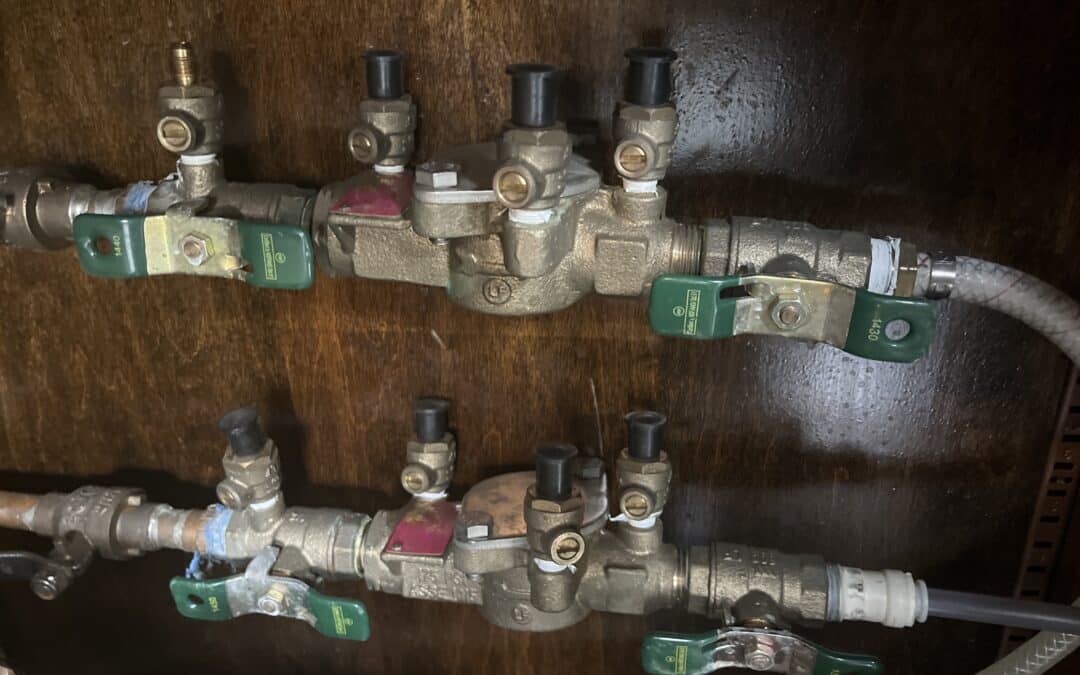
Most American homeowners and business owners underestimate how quickly water contamination from backflow can occur. The American Backflow Prevention Association reports that contamination incidents happen in both residential and commercial settings, not just in factories or industrial sites. Understanding the reality behind backflow and the common misconceptions about prevention is essential for anyone who relies on public water. This guide provides facts and practical tips for safeguarding your property against these hidden risks.
Table of Contents
- Backflow Prevention Defined and Common Misconceptions
- How Backflow Prevention Devices Work
- Types of Backflow Preventers Explained
- Houston Laws and Compliance Requirements
- Risks of Poor Backflow Prevention
- Choosing and Maintaining the Right System
Key Takeaways
| Point | Details |
|---|---|
| Understanding Backflow | Backflow is a significant water safety issue that can occur in various environments, including residential areas, due to sudden pressure changes. Regular inspections and proper devices are essential for prevention. |
| Types of Backflow Preventers | Different backflow preventers serve unique protection levels and applications, from basic residential needs to complex commercial systems. Choosing the right type is crucial for optimal safety. |
| Houston Compliance | Houston mandates stringent regulations for backflow prevention, requiring annual testing and maintenance to ensure public health safety. Adhering to these guidelines is vital for compliance and safety. |
| Risk Mitigation Strategies | Identifying potential risks and maintaining a rigorous inspection schedule can prevent contamination and protect public drinking water systems. A comprehensive maintenance plan is key to ensuring system reliability. |
Backflow Prevention Defined and Common Misconceptions
Backflow represents a critical yet often misunderstood water system phenomenon where contaminated water flows backward into clean water supplies. The American Backflow Prevention Association confirms this process can occur unexpectedly, threatening public drinking water safety across residential and commercial environments.
Contrary to popular belief, backflow is not exclusive to industrial settings. It can happen anywhere water pressure dynamics shift unexpectedly, such as during municipal water main breaks, sudden pressure drops, or system maintenance. The risk extends beyond massive infrastructure – individual homes and small businesses remain equally vulnerable to potential contamination.
Key Elements of Backflow Dynamics:
- Caused by sudden pressure differential in water systems
- Can introduce chemicals, debris, or hazardous materials into potable water
- Potentially occurs in residential, commercial, and municipal settings
- Requires specialized prevention equipment and regular monitoring
Water system experts at the American Institute of Chemical Engineers note that understanding backflow mechanisms is essential for preventing dangerous cross-connections between clean and potentially contaminated water sources. The primary drivers involve complex hydraulic pressures that can momentarily reverse water flow direction.
Pro Tip – Water System Protection: Conduct an annual professional inspection of your backflow prevention devices to ensure they remain functional and compliant with local safety regulations.
How Backflow Prevention Devices Work
Backflow prevention devices represent sophisticated engineering solutions designed to protect water systems from potential contamination. Municipal water safety experts confirm these mechanisms operate by creating a precise one-way water flow system that prevents dangerous reverse water movement.
The fundamental mechanics of these devices rely on complex pressure management techniques. Inspection professionals note that backflow preventers utilize multiple strategies to maintain water integrity, including mechanical check valves, air gaps, and specialized pressure differential systems. These technologies work simultaneously to block potentially contaminated water from entering clean water supplies.
Key Functional Components of Backflow Prevention Devices:
- Mechanical check valves that close automatically during pressure changes
- Pressure differential sensors
- Physical barriers preventing reverse water flow
- Redundant safety mechanisms for comprehensive protection
These devices function across multiple settings, from residential plumbing systems to large municipal water infrastructures. Their design allows water to flow normally under standard conditions while instantly blocking any potential backward water movement that could introduce hazardous materials into potable water systems.
Pro Tip – Device Performance: Schedule professional calibration and testing of your backflow prevention devices at least annually to ensure optimal performance and compliance with local water safety regulations.
Types of Backflow Preventers Explained
Backflow prevention devices represent a critical line of defense in protecting water systems from potential contamination. Municipal water safety guidelines outline several specialized types designed to address different levels of contamination risks and system configurations.
Primary Backflow Preventer Categories:
- Atmospheric Vacuum Breakers (AVB): Simplest design, used in low-risk residential applications
- Pressure Vacuum Breakers (PVB): Provide enhanced protection against backsiphonage
- Reduced Pressure Zone Assemblies (RPZ): Highest level of contamination protection
- Double Check Valve Assemblies (DCVA): Ideal for moderate contamination risk environments
Water system experts note that each backflow preventer type serves a unique purpose based on specific environmental and systemic requirements. The Reduced Pressure Zone (RPZ) assembly stands out as the most comprehensive protection mechanism, capable of preventing both backsiphonage and backpressure scenarios across complex water distribution networks.
The selection of an appropriate backflow preventer depends on multiple factors including water system design, potential contamination sources, local regulations, and specific usage requirements. Professional assessment remains crucial in determining the most suitable device for any given water infrastructure.
Here’s a quick comparison of common backflow preventer types and their best-use scenarios:
| Device Type | Protection Level | Best For |
|---|---|---|
| Atmospheric Vacuum Breaker | Basic, backsiphonage | Lawn sprinklers, hose bibbs |
| Pressure Vacuum Breaker | Enhanced, backsiphonage | Irrigation systems, pools |
| Double Check Valve Assembly | Moderate, backpressure | Commercial, fire sprinklers |
| Reduced Pressure Zone Assembly | Highest, all situations | Hospitals, labs, high risk |
Pro Tip – Device Selection: Consult a certified water safety professional to conduct a comprehensive risk assessment before selecting and installing your backflow prevention system.
Houston Laws and Compliance Requirements
Water safety regulations in Houston represent a comprehensive framework designed to protect public health through rigorous backflow prevention standards. City of Houston Public Works mandates strict requirements for commercial and industrial facilities to install and maintain specialized backflow prevention assemblies.
Key Compliance Requirements:
- Annual testing by certified professional testers
- Installation of approved backflow prevention devices
- Detailed documentation of inspection and maintenance records
- Adherence to specific installation standards
- Regular reporting to municipal water safety authorities
The Texas Commission on Environmental Quality (TCEQ) establishes comprehensive cross-connection control programs that extend beyond municipal boundaries. These regulations require systematic approaches to preventing potential water contamination, focusing on proactive protection strategies for public water systems throughout the region.
Commercial property owners, industrial facilities, and institutional campuses must navigate a complex landscape of regulatory requirements. Compliance involves not just installing appropriate backflow prevention devices, but also maintaining detailed records, scheduling regular professional inspections, and demonstrating ongoing commitment to water system safety.
Pro Tip – Regulatory Navigation: Work with a certified backflow prevention specialist who understands local Houston and Texas state regulations to ensure full compliance and avoid potential legal complications.
Risks of Poor Backflow Prevention
Water contamination represents a critical threat when backflow prevention systems fail to function correctly. Inadequate protection can transform seemingly safe water infrastructure into potential public health hazards, introducing dangerous chemicals, pathogens, and toxic substances into drinking water supplies.
Primary Contamination Risks:
- Bacterial and viral infections
- Chemical poisoning from industrial pollutants
- Heavy metal infiltration
- Agricultural chemical contamination
- Potential long-term health complications
The consequences of compromised backflow prevention extend far beyond immediate health risks. Residential, commercial, and municipal water systems can experience catastrophic contamination events that may require extensive remediation, potentially costing thousands of dollars in infrastructure repairs and medical treatments.
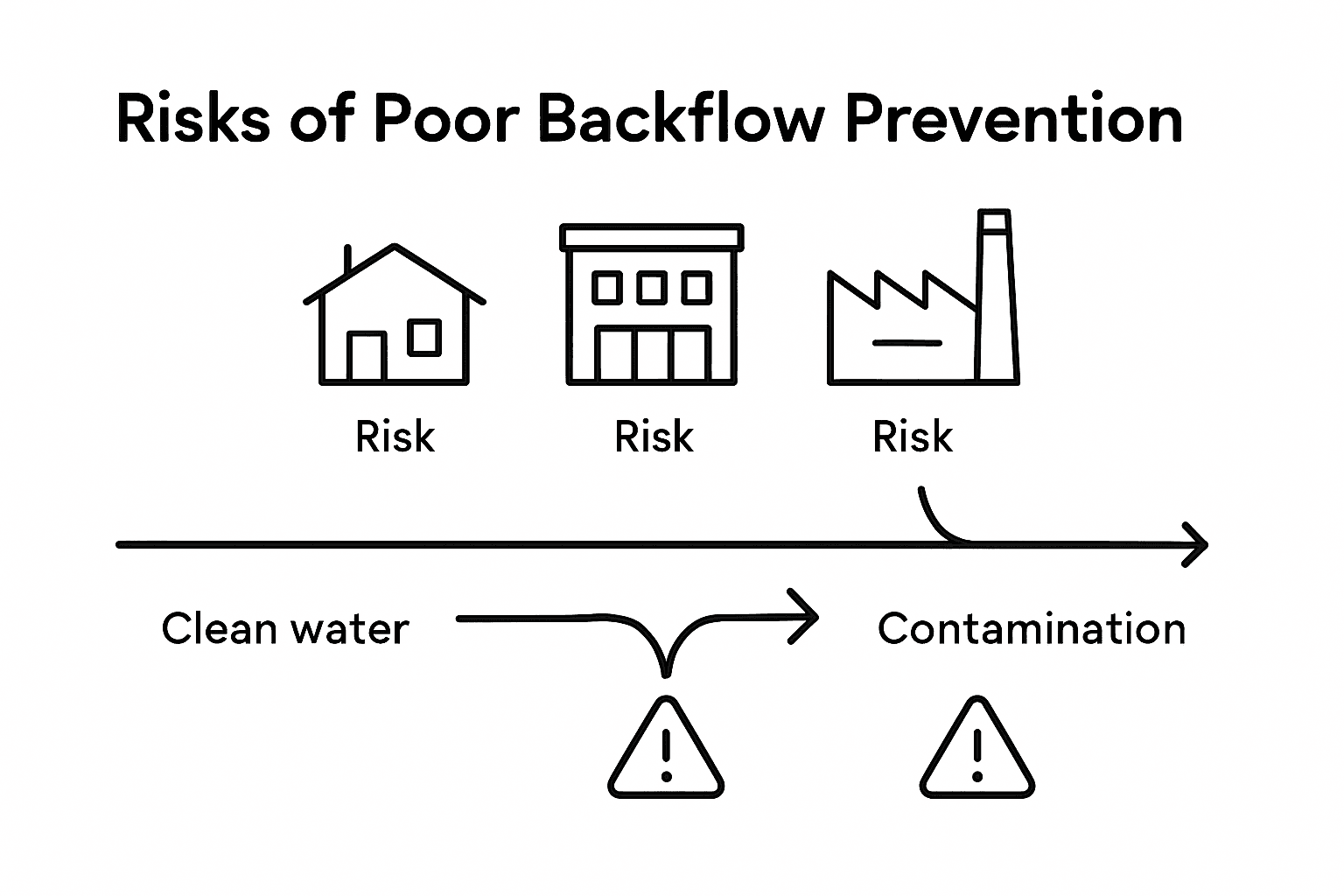
Complex water distribution networks create multiple potential vulnerability points where backflow can introduce serious contaminants. Pressure fluctuations, unexpected system changes, and aging infrastructure can rapidly transform a seemingly secure water system into a dangerous environment. Backflow prevention services become crucial in mitigating these systemic risks and protecting public health infrastructure.
Pro Tip – Risk Mitigation: Schedule comprehensive professional water system assessments annually to identify and address potential backflow vulnerabilities before they become critical safety threats.
Choosing and Maintaining the Right System
Backflow prevention systems require strategic selection and meticulous maintenance to ensure optimal water safety performance. Municipal water safety guidelines emphasize that choosing the appropriate device involves comprehensive evaluation of facility-specific risk factors, local regulatory requirements, and potential contamination sources.
Critical Selection Criteria:
- Hazard level assessment of specific water system
- Facility type and intended usage
- Local regulatory compliance requirements
- Potential contamination vulnerability points
- Budget and long-term maintenance considerations
Professional inspection experts recommend implementing a proactive maintenance strategy that goes beyond basic installation. This approach involves systematic annual testing, comprehensive professional evaluations, and continuous monitoring of backflow prevention device performance across residential, commercial, and industrial water systems.
Successful backflow prevention requires understanding the unique characteristics of your water infrastructure. Different environments demand specialized devices tailored to specific pressure dynamics, potential contamination risks, and system complexity. Property owners must collaborate with certified water safety professionals who can conduct thorough risk assessments and recommend precisely matched prevention solutions.
Pro Tip – System Optimization: Develop a detailed maintenance log tracking all inspections, tests, and device modifications to create a comprehensive historical record of your backflow prevention system’s performance.
This summary highlights key considerations for choosing and maintaining a backflow prevention system:
| Selection Factor | Why It Matters | Impact on Water Safety |
|---|---|---|
| Local Regulations | Ensures legal compliance | Avoids fines, legal issues |
| Risk Assessment | Identifies contamination risks | Proper device selection |
| Maintenance Schedule | Prevents equipment failure | Sustained safe water delivery |
| Professional Involvement | Expert guidance and testing | Reliable system performance |
Protect Houston’s Water Safety with Expert Backflow Prevention Solutions
Backflow prevention is essential to protecting your home or business from costly water contamination and health risks. If you are concerned about hazards like backsiphonage or pressure backflow disrupting your water system, Reliable Fire Protection offers certified expertise in installing and maintaining advanced backflow preventers tailored to Houston’s strict regulations. Their specialists understand the critical importance of mechanical check valves, pressure differential sensors, and comprehensive system maintenance needed to keep your water safe and compliant.
Ensure your property’s water remains safe and compliant today by partnering with Reliable Fire Protection. Don’t risk fines or dangerous water contamination when you can rely on family-owned, Houston-based professionals who promptly respond to your needs. Visit Reliable Fire Protection now to schedule a free consultation and protect what matters most with trusted backflow prevention services.
Frequently Asked Questions
What is backflow and why is it a concern for water safety?
Backflow is the unintended reverse flow of contaminated water into clean water supplies, posing a serious risk to public health and drinking water quality.
How do backflow prevention devices work?
Backflow prevention devices create a one-way flow system using mechanical check valves and pressure management techniques to block contaminated water from entering clean water supplies.
What are the different types of backflow preventers and their applications?
The main types of backflow preventers include Atmospheric Vacuum Breakers (AVB), Pressure Vacuum Breakers (PVB), Double Check Valve Assemblies (DCVA), and Reduced Pressure Zone Assemblies (RPZ), each suited for different levels of contamination risk and system configurations.
What are the compliance requirements for backflow prevention in Houston?
Houston mandates annual testing by certified professionals, installation of approved devices, maintenance records, adherence to specific installation standards, and regular reporting to municipal water safety authorities.