

TL;DR:
- False fire alarms are mostly caused by nuisance triggers like cooking smoke, steam, and dust. Regular inspections, proper detector placement, and staff training can significantly reduce false activations. Managing alarm triggers and maintaining the system protect property budgets, tenant trust, and safety.
What Causes False Fire Alarms? Houston Property Guide
False fire alarms are far more common than most property owners realize. According to the National Fire Incident Reporting System, nuisance alarms outnumber real fire events at a staggering ratio. For Houston property managers, that means emergency responders showing up for smoke from a toaster, fire department fees landing on your desk, and tenants losing trust in the system protecting them. The good news is that most false alarms have identifiable, preventable causes. This guide walks you through exactly what triggers them, what they cost you, and how to stop them from disrupting your building operations.
Table of Contents
- Defining false and unwanted fire alarms
- Top causes of false fire alarms in Houston properties
- The financial and operational impact of false alarms
- How to prevent false alarms: Best practices for Houston properties
- Our perspective: The overlooked solution for reducing false alarms
- Get reliable fire alarm solutions for your Houston property
- Frequently asked questions
Key Takeaways
| Point | Details |
|---|---|
| Nuisance alarms dominate | Most false fire alarms in Houston are due to non-hazardous conditions like steam, dust, or human error. |
| Regular maintenance cuts risks | NFPA 72-compliant inspections and upkeep are your best defense against unwanted fire alarm activations. |
| Financial impact is real | Frequent false alarms lead to costly fines, lost productivity, and tenant distrust. |
| Root causes are preventable | Most triggers can be fixed through routine checks, staff training, and targeted system upgrades. |
| Behavior and environment matter | Changes in building use or renovations often lead to spikes in false alarms without proper follow-up audits. |
Defining false and unwanted fire alarms
Now that you know false alarms outnumber real fires, let’s clarify what these alarms actually mean. Not every unwanted activation is the same, and understanding the distinctions helps you target the right fix.
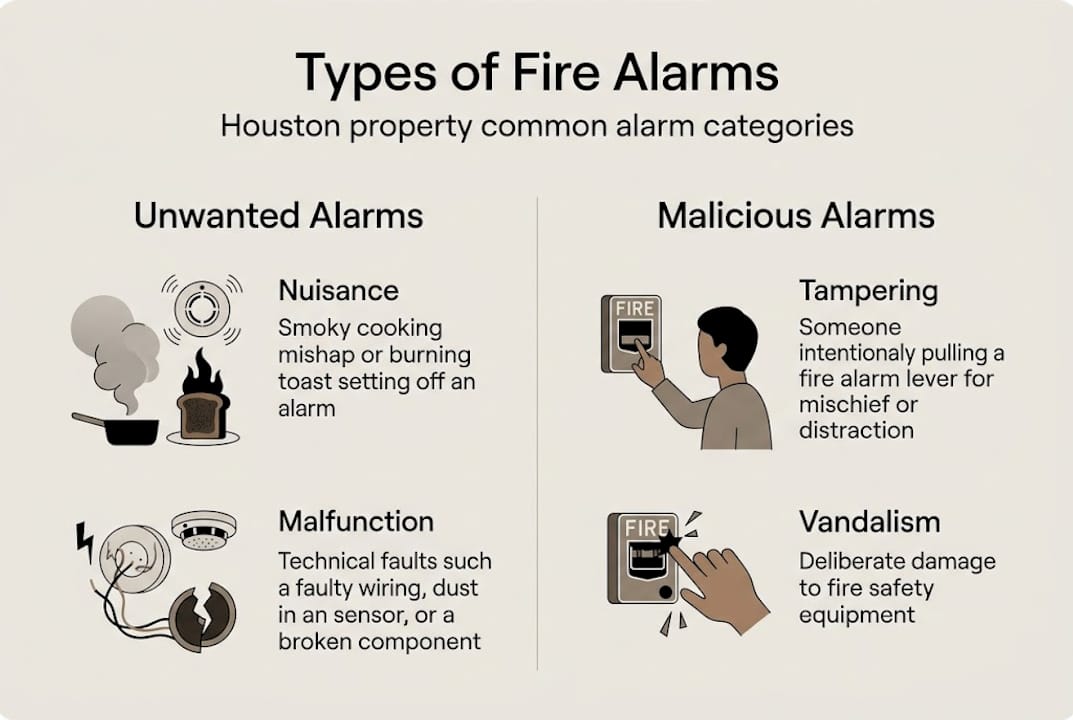
The National Fire Protection Association (NFPA) draws a clear line between alarm types. NFPA defines unwanted alarms as activations that do not result from actual hazardous conditions, and breaks them into four categories: malicious, nuisance, unintentional, and unknown. Each type calls for a different response strategy.
Here is a quick breakdown of what each category looks like in practice:
| Alarm Type | Definition | Common Example |
|---|---|---|
| Malicious | Deliberate, unauthorized activation | Pull station vandalism |
| Nuisance | Environmental trigger, no real threat | Cooking smoke, steam |
| Unintentional | Equipment malfunction or human error | Accidental sprinkler activation |
| Unknown | Cause cannot be determined | Aging panel without clear cause |
For Houston property managers, the nuisance category causes the most headaches. These are the everyday triggers that generate alarm fatigue, which is the gradual tendency for occupants to ignore alarms because they fire so often without a real emergency. When alarm fatigue sets in, real fires become far more dangerous because people hesitate before evacuating.
“When occupants stop trusting the alarm, the system designed to save their lives becomes background noise. That is the most dangerous outcome of repeated false activations.”
Key facts property owners should know:
- Nuisance alarms are the most frequent category reported to fire departments nationwide.
- A single multi-tenant building can rack up dozens of false activations per year.
- Fire departments in major Texas cities, including Houston, track repeat-offender addresses.
- Your building’s alarm history can directly affect your insurance classifications.
A thorough inspection guide for Houston properties can help you understand where your current system stands and which alarm types you are most at risk for given your building’s age, occupancy type, and detector technology.
Getting the terminology right also matters when you file incident reports or communicate with the Houston Fire Department. Using the correct category, nuisance versus unintentional, for example, can affect how your violation record is handled and whether you owe a response fee.
Top causes of false fire alarms in Houston properties
Understanding these definitions, let’s break down what’s really behind most false alarms in Houston. The causes vary widely depending on your building type, but several patterns show up repeatedly across residential and commercial properties.
Nuisance alarms vastly outnumber real fire incidents nationally, and Houston properties reflect that trend. But not all nuisance alarms come from the same source. Some experts emphasize vandalism and human error as the top drivers, while others point to environmental and maintenance factors. In practice, it is usually a combination.
Here is a comparison of the main false alarm categories and what drives them:
| Category | Primary Driver | Risk Level for Houston Properties |
|---|---|---|
| Nuisance | Steam, cooking smoke, dust, mist | High, especially in older buildings |
| Malicious | Vandalism, intentional pull station activation | Medium, higher in public access buildings |
| Unintentional | Equipment aging, improper installation, human error | High after renovations or system upgrades |
The most common specific causes we see in Houston buildings include:
- Cooking smoke and steam near detectors placed too close to kitchens or HVAC vents.
- Construction dust during renovation projects that clogs or confuses smoke sensors.
- High humidity and mist from Houston’s climate or from steam generated in laundry areas or bathrooms.
- Aging detection equipment with sensors that drift out of calibration over years of use.
- Improper detector placement by previous installers who did not follow NFPA 72 spacing requirements.
- Vandalism of pull stations in multi-tenant buildings, parking garages, or public hallways.
- Human error during testing when staff activates the system without notifying the monitoring center first.
Houston’s heat and humidity add a layer of risk that many northern cities do not face. Moisture can settle inside detector housings, causing ionization-type detectors to read particles in the air as smoke. Buildings near industrial corridors may also see elevated particulate levels drifting indoors. Those factors, combined with aging infrastructure in many Midtown and Montrose properties, make false alarm management especially important here.
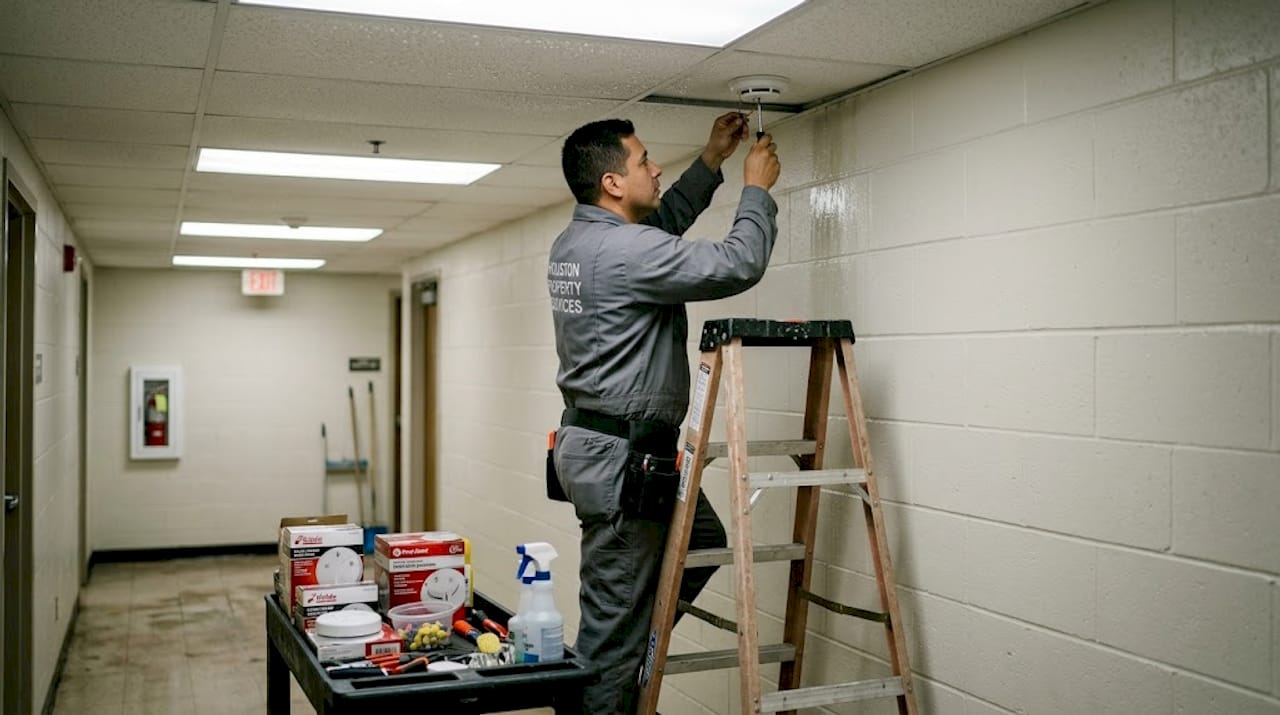
Following solid fire alarm maintenance tips can catch many of these issues before they cause an unwanted activation. And if you are wondering why fire alarms matter beyond code compliance, the connection between system reliability and occupant safety is direct.
Pro Tip: Keep a simple incident log for every false alarm in your building. Record the time, location, probable cause, and the action taken. After three to four incidents, patterns usually emerge that point to a specific detector, zone, or staff behavior that needs to change.
The financial and operational impact of false alarms
Once causes are identified, it’s essential to understand why false alarms aren’t just an inconvenience. The costs, both direct and indirect, add up faster than most property managers expect.
$500 to over $1,000 per fire department response is a realistic range for false alarm fees in many Texas jurisdictions. Houston’s false alarm ordinance allows the city to charge property owners for repeated emergency responses when the activations are deemed preventable. After a certain number of incidents within a calendar year, the fines escalate and the city may require proof of corrective action before the fee schedule resets.
Direct financial costs from false alarms typically include:
- Fire department response fees that increase with each repeat incident.
- Emergency technician call-out charges to silence, inspect, and reset a triggered system.
- Insurance premium increases when your building’s alarm history signals poor maintenance.
- Potential code violation fines if inspections reveal underlying system deficiencies.
The indirect costs are just as real, even if they are harder to see on a balance sheet. Consider a mid-rise apartment building in the Medical Center area. A single false alarm at 2 a.m. wakes every resident, forces an evacuation, and generates dozens of noise complaints. Multiply that by several incidents per year and tenant turnover starts to climb. Prospective renters and commercial tenants research buildings before signing leases, and a pattern of false alarms signals a poorly managed property.
For commercial properties, the business interruption angle is especially serious. A restaurant evacuated during a Friday dinner service loses real revenue in real time. An office building cleared during a deadline crunch costs tenants billable hours. Those experiences shape the perception of your property management team, and that perception affects renewals.
“The cost of a false alarm is never just the fine. It’s every conversation with an upset tenant, every hour of lost productivity, and every moment your building’s reputation absorbs another hit.”
The importance of fire alarms goes beyond compliance. A well-maintained system that only activates when there is a real threat is an asset. A system that cries wolf regularly is a liability in every measurable way.
Insurance carriers are paying closer attention to alarm histories as well. Some commercial property policies now factor in verified false alarm rates when underwriting renewals. A building with six or more false activations per year may face a surcharge or exclusion that a building with zero incidents simply avoids. Staying ahead of this trend by managing your system proactively makes financial sense, not just safety sense.
How to prevent false alarms: Best practices for Houston properties
With the costs laid out, let’s turn to practical steps you can take now to minimize false alarms. Prevention is not complicated, but it does require consistency.
The first step is understanding what standards apply to your building. Regular NFPA 72 inspections are the single most agreed-upon method for catching conditions that lead to false alarms before they become incidents. NFPA 72 is the National Fire Alarm and Signaling Code, and it defines inspection, testing, and maintenance frequencies for every component in your system.
Here is a practical checklist for property managers:
- Schedule annual inspections with a licensed fire alarm contractor who follows NFPA 72 requirements.
- Clean detector housings at least twice per year, especially in dusty or humid environments like Houston.
- Verify detector placement against NFPA spacing guidelines, particularly after any wall or ceiling changes.
- Test all pull stations during scheduled drills and immediately report any signs of tampering or damage.
- Train staff on what triggers false alarms and how to notify the monitoring center before testing.
- Review your monitoring contract to confirm notification procedures are up to date with current staff contacts.
- Inspect kitchen exhaust systems regularly, since grease buildup near detectors is a frequent trigger. Solid kitchen hood inspection advice applies directly to commercial properties with food service areas.
Beyond inspections, the environment around your detectors matters. Relocating a smoke detector just a few feet away from an HVAC vent or kitchen exhaust can eliminate a chronic nuisance trigger. That simple fix costs almost nothing compared to a single fire department response fee.
Pro Tip: After any renovation, even a minor one involving drywall, painting, or HVAC work, schedule a dedicated fire alarm review before reoccupying the space. Construction dust and changed airflow patterns are two of the most reliable ways to trigger a wave of false alarms in the weeks following building work.
You can also reference a detailed fire alarm system checklist tailored for commercial safety, and explore maintenance strategies to reduce false alarms that have helped Texas properties cut failure rates significantly.
Detector technology upgrades are worth considering for older buildings. Modern multi-criteria detectors analyze multiple inputs simultaneously, such as heat, smoke density, and carbon monoxide levels, before triggering. That layered analysis significantly reduces accidental activations from steam or dust while still catching actual fire conditions quickly.
Our perspective: The overlooked solution for reducing false alarms
Having learned the best-practice steps, here is our expert take on what truly shifts the needle for Houston owners and managers.
Most fire safety guides focus on scheduled inspections and equipment upgrades. Those matter enormously. But in our experience working with Houston properties across every building type, the interventions that make the biggest and fastest difference are the ones that almost no safety checklist mentions: tenant and staff communication, and one-off post-renovation audits.
False alarms are rarely random. They tend to cluster around specific behaviors, cooking at unusual hours, propping open doors near detectors, using aerosol sprays near sensors, or failing to notify the monitoring center before running tests. A fifteen-minute staff briefing that explains exactly what triggers the system, and what not to do near detectors, can cut nuisance alarms in half for some properties. That is not an exaggeration.
Post-renovation audits are equally undervalued. Building modifications change air circulation, introduce particulates, and sometimes physically relocate detectors without anyone updating the system documentation. A targeted review of advanced detector technologies after any significant work helps catch mismatches between your environment and your detection equipment before they cause problems.
The uncomfortable truth is that false alarms are often treated as an equipment problem when they are just as frequently a people and process problem. Fixing the technology without addressing the behavior around it is only half the solution.
Get reliable fire alarm solutions for your Houston property
False alarms drain budgets, frustrate tenants, and erode the trust your fire safety system needs to function effectively. Knowing the causes is the first step, but acting on that knowledge is what protects your property and your bottom line.

At Reliable Fire Protection, we design, install, and maintain fire alarm systems specifically for Houston’s residential and commercial properties. Our team understands how fire alarm systems work from detection to dispatch, and we tailor every solution to the specific risk profile of your building. Whether you need a full system assessment, a post-renovation audit, or ongoing maintenance support, our certified technicians are ready to help. Explore our full range of Houston fire alarm system resources and reach out today to schedule a consultation. We make reliable protection straightforward.
Frequently asked questions
What is the most common cause of false fire alarms?
Nuisance alarms triggered by steam, dust, or cooking smoke are the most common cause in both residential and commercial properties across the country.
Can regular maintenance really prevent most false alarms?
Yes, routine NFPA 72 inspections and consistent maintenance catch the majority of false alarm conditions before they trigger an unwanted activation.
How do Houston regulations handle repeat false alarms?
Houston issues escalating fines for repeated false alarm responses and may require property owners to document corrective actions before the fee cycle resets.
Is vandalism a significant cause of false alarms?
Malicious activation and vandalism are a meaningful trigger category, particularly in multi-tenant buildings, parking structures, and properties with high public foot traffic.
Are newer detectors less prone to false alarms?
Modern multi-criteria detectors are significantly less likely to misfire when they are properly installed, positioned according to NFPA guidelines, and included in a regular maintenance schedule.