

TL;DR:
- Proper documentation and regular maintenance are crucial for passing Houston fire inspections.
- A comprehensive pre-inspection checklist helps identify and fix hazards before the official visit.
- Cultivating a proactive fire safety culture minimizes last-minute failures and ensures ongoing compliance.
A failed fire inspection does not just mean paperwork. For Houston commercial property owners, it can mean mandatory closure, costly fines, and the kind of reputation damage that lingers well past the inspection date. One restaurant in the Houston Heights district had to shut down for three days after an inspector flagged two blocked exits and an expired extinguisher. That scenario is preventable, and this guide gives you every practical step to make sure it never happens to you. From understanding local code requirements to conducting final walk-throughs with your staff, you will find a clear, actionable roadmap for passing your next fire inspection with confidence.
Table of Contents
- Understand Houston fire inspection requirements
- Create and follow a pre-inspection checklist
- Inspect and maintain fire safety equipment
- Address common inspection failures and finalize preparation
- Beyond the basics: Why a proactive fire safety culture outperforms last-minute prep
- How Reliable Fire Protection supports Houston businesses
- Frequently asked questions
Key Takeaways
| Point | Details |
|---|---|
| Follow Houston codes | Knowing and complying with local fire safety regulations is essential for passing inspections. |
| Use a checklist | A structured pre-inspection checklist prevents overlooked hazards and missed compliance steps. |
| Inspect equipment regularly | Consistent maintenance of alarms, extinguishers, and sprinklers greatly reduces inspection failure risks. |
| Document everything | Keeping accurate logs of fire system checks and repairs streamlines your inspection experience. |
| Engage your staff | Training employees and involving them makes fire safety part of your business’s everyday culture. |
Understand Houston fire inspection requirements
Before you start moving furniture or testing alarms, you need to know exactly what Houston inspectors are looking for. The Houston Fire Department enforces fire safety through the International Fire Code (IFC) as locally adopted, along with Chapter 28 of the City of Houston’s Code of Ordinances. Commercial properties are expected to comply with both the building’s original fire safety permit conditions and any updated code revisions. If your building has changed its occupancy type, added square footage, or undergone renovation, those changes must be reflected in updated permits on file.
Documentation is the first thing many inspectors request before they even walk through your facility. You should have the following ready at all times:
- Current fire system permits for alarms, sprinklers, and suppression systems
- Maintenance records showing recent service dates for all fire safety equipment
- Certificate of occupancy or updated occupancy classification documents
- Fire evacuation plans that reflect the current floor layout
- Contractor service reports from licensed technicians for the past 12 months
According to the Houston fire inspection checklist, fire safety inspection checklist items help Houston property owners meet all compliance requirements by categorizing systems and documentation into an organized format inspectors can verify quickly.
Inspectors typically examine the following systems and areas during a standard commercial visit:
| System type | Inspector focus areas |
|---|---|
| Fire alarm | Control panel status, detector placement, pull station access |
| Sprinkler system | Head clearance, pipe condition, water supply certification |
| Suppression system | Agent levels, nozzle condition, hood coverage in kitchens |
| Fire extinguishers | Service tags, pressure gauge status, mounting locations |
| Emergency exits | Clear path, illuminated signage, functional hardware |
Using a dedicated fire prevention checklist tailored to Houston commercial properties ensures you approach this category by category rather than scrambling on inspection day.
Pro Tip: Scan and store all permits, maintenance logs, and service reports in a shared cloud folder. Give building managers and your fire safety vendor access so documents are retrievable from any device when an inspector arrives unexpectedly.
“A compliant property is not just about having the right equipment. It’s about proving you maintain it.” This is the standard inspectors operate by, and documentation is your proof.
Create and follow a pre-inspection checklist
With requirements in mind, the next stage is making sure your location passes with a thorough checklist. Building a pre-inspection routine turns what feels like a stressful audit into a manageable process. The goal is to catch every issue internally before an inspector does.
A fire safety preparation checklist designed for Houston properties addresses common fire hazards before the official visit, reducing the chance of any surprises during the actual inspection.
Here is a numbered walk-through process that commercial managers have found effective:
- Document review. Gather all permits, contractor service reports, and maintenance logs. Confirm that every fire system has a current record and that no equipment is past its service due date.
- Physical system check. Walk every floor and confirm alarms are mounted correctly, sprinkler heads are unobstructed, extinguishers are visible and pressure gauges are in the green, and suppression system panels show no fault lights.
- Exit pathway audit. Walk every marked exit route from start to finish. Verify no boxes, equipment, or furniture are blocking the path. Check that exit signs are lit and emergency lighting activates when the main power is cut.
- Signage review. Confirm fire extinguisher location signs are posted at eye level and visible from 50 feet. Verify “No Exit” and directional evacuation signs are placed per your approved floor plan.
- Employee readiness check. Brief your staff on where exits are, where extinguishers are mounted, and what the fire alarm sounds like. Inspectors may ask employees questions directly.
- Storage area sweep. Inspect all storage rooms, server rooms, and utility closets for fire code violations, including materials stored within 18 inches of a sprinkler head.
Also check the fire extinguisher checklist for specific inspection criteria on portable extinguishers, because extinguishers are one of the most frequently failed items in Houston commercial inspections.
Several areas tend to be overlooked in typical pre-inspection sweeps:
- Commercial kitchens and hood systems where grease buildup can void suppression system coverage
- Stairwells and loading docks where items are commonly stashed between deliveries
- Electrical rooms where combustible materials are improperly stored near panels
- Rooftop access points that may be blocked or improperly labeled
- Break rooms where portable heaters or overloaded power strips create hidden hazards
Pro Tip: Maintain a maintenance log binder at the front desk or security station. Record every check, no matter how minor. Inspectors view thorough logs as evidence of a safety-conscious operation, which can work in your favor if a borderline issue is found.
Inspect and maintain fire safety equipment
A checklist is only as good as the actual condition of your fire safety equipment. Even the most organized documentation cannot help you if a sprinkler head is corroded or an extinguisher has been discharged and not replaced. Equipment-level readiness is what separates properties that pass from those that face reinspection fees.
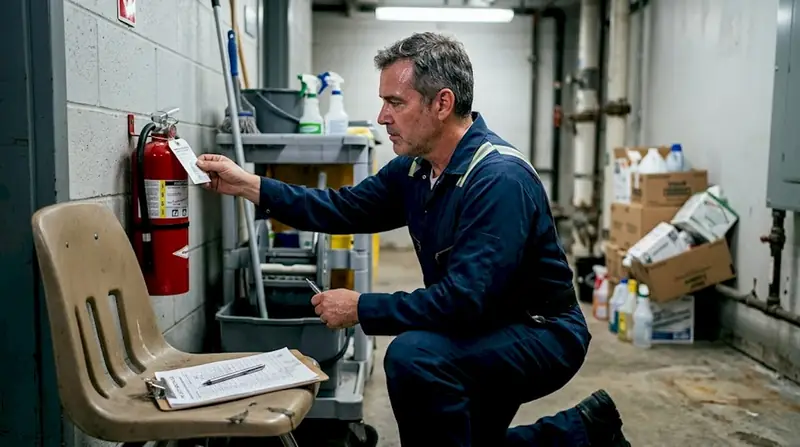
Routine maintenance on fire extinguishers and alarms reduces inspection failures significantly by ensuring small issues are caught before they become violations.
Use this comparison table to track the right inspection frequency by equipment type:
| Equipment type | Monthly self-check | Annual professional inspection | Semi-annual inspection |
|---|---|---|---|
| Fire extinguishers | Yes | Yes | Recommended |
| Fire alarm system | Visual check | Required | Optional for complex systems |
| Sprinkler system | Visual check | Required | Yes (wet and dry systems) |
| Suppression system | Panel review | Required | Yes (kitchen systems) |
| Emergency lighting | Test activation | Yes | Recommended |
Beyond scheduling, know the warning signs that indicate equipment is failing or out of compliance:
- Extinguisher pressure gauge needle in the red (overcharged or undercharged)
- Missing or illegible service tag on any extinguisher
- Sprinkler heads showing corrosion, paint overspray, or physical damage
- Fire alarm panel showing a trouble or supervisory light
- Suppression system nozzles that are blocked or repositioned from original installation
- Exit sign lights that are dim or completely unlit
Warning: Houston Fire Department citations for missing, expired, or non-functional fire equipment are among the most common causes of commercial property reinspection orders. Fines can reach hundreds of dollars per violation, and repeated failures escalate to mandatory shutdowns.
To stay ahead of problems, verify that every piece of equipment carries a current service tag from a licensed contractor. Tags should show the last inspection date and the technician’s certification number. Unobstructed access is equally important: extinguishers need 36 inches of clear space in front of them, and alarm pull stations cannot be blocked by signage, furniture, or displays.
Use a fire alarm inspection guide specific to commercial Houston properties to verify detector placement and control panel compliance. For detailed steps on system-level checks, the fire alarm system checklist covers all seven critical stages that licensed inspectors look for.
When you discover an issue during your self-check, document it immediately. Write down the date, the problem, the location, and the corrective action taken. That paper trail shows inspectors that your team actively manages safety rather than reacting to it.
Address common inspection failures and finalize preparation
With equipment up to code, finish your prep by addressing last inspection weak spots. Even well-managed properties get tripped up by items that seem minor but carry real consequences. Knowing the most common failure points in Houston gives you a final layer of protection before inspection day.
Correcting common hazards such as obstructed exits and improper storage helps ensure a smooth fire inspection and prevents the kinds of citations that delay business operations by days or weeks.
The most frequent reasons Houston commercial properties fail fire inspections include:
- Obstructed exit routes caused by deliveries, temporary storage, or construction materials
- Expired or missing extinguisher service tags on portable units throughout the building
- Improper chemical or material storage near heat sources, electrical panels, or within sprinkler clearance zones
- Non-illuminated or missing exit signs in stairwells or secondary corridors
- Outdated or missing evacuation maps that do not reflect current floor configurations
- Unlicensed system maintenance where a non-certified person performed repairs on alarms or sprinklers
Here is a final numbered double-check process to run through the day before your inspection:
- Revisit documentation. Confirm your permit binder is complete, organized, and accessible at the front of the building.
- Walk every exit route again. Look at exit paths with fresh eyes. Ask a team member who was not involved in the initial sweep to walk each route and flag anything unusual.
- Spot-check equipment tags. Pick five extinguishers at random and verify tags, pressure gauges, and mounting. If any fail, address immediately.
- Test alarm activation. Trigger a test alarm and confirm all zones respond correctly. Note the test in your log.
- Review exterior access. Check that fire department connections (FDC), hydrant access points, and building entry points are free from vehicles or obstructions.
- Confirm employee knowledge. Ask two or three staff members where the nearest extinguisher is and which exit they would use. Gaps in knowledge signal training issues inspectors sometimes note.
A few often-overlooked final touches that make a measurable difference:
- Confirm that fire door self-closers are functional and that doors are not propped open
- Check that battery backup systems for alarms and emergency lights are charged
- Verify that your posted evacuation maps include the current date and match the actual floor layout
- Ensure exterior signage and building numbers are visible so fire responders can locate the building quickly
Also review common fire hazard errors that businesses repeat year after year, and use the practical guidance on how to avoid fire hazards to close out any remaining vulnerabilities before the inspector walks through.
Pro Tip: Schedule a formal staff walk-through the day before inspection. Assign one manager to play the role of the inspector and walk the building with a printed checklist. This exercise consistently surfaces problems that go unnoticed in routine operations.
Beyond the basics: Why a proactive fire safety culture outperforms last-minute prep
Here is what years of working with Houston commercial properties have taught us: the owners who pass every inspection smoothly are not the ones who scramble the week before. They are the ones who treat fire safety as an operational standard year-round, not a seasonal event.
Last-minute preparation is inherently riskier. You cannot fix a corroded sprinkler head, retrain staff, or replace a faulty alarm panel the morning before an inspector arrives. Reactive preparation also creates gaps, because rushed walk-throughs miss things that systematic routines catch.
The properties that consistently pass invest in regular scheduled self-checks tied to their fire safety routines. They involve multiple staff members, not just the building manager, so fire safety knowledge is distributed across the team. They schedule professional equipment reviews on a calendar, not in response to a notice.
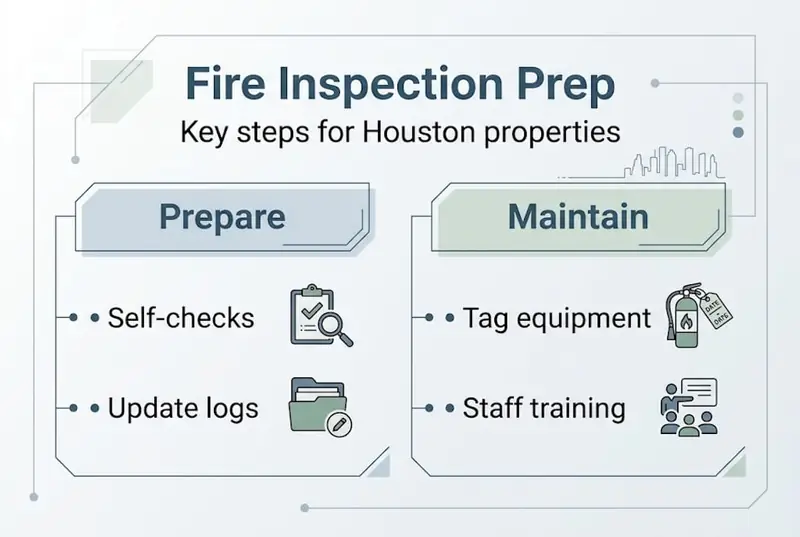
The practical payoff goes beyond inspection scores. Properties with active fire safety cultures experience fewer emergency incidents, lower insurance premiums over time, and faster response when something does go wrong. Inspections become routine confirmation of what the team already knows is working.
How Reliable Fire Protection supports Houston businesses
For those aiming to exceed inspection standards, expert help is available every step of the way.
Reliable Fire Protection works directly with Houston commercial property owners to simplify fire inspection preparation. Whether you need to understand how fire alarm systems work, schedule a professional fire extinguisher inspection, or build out a complete property fire safety checklist tailored to your building, Reliable Fire Protection’s certified team is equipped to handle it. As a family-owned Houston business, we understand the local codes, the inspection process, and the pressure property managers face. Reach out today for a free consultation and take the guesswork out of your next inspection.
Frequently asked questions
What are the most common fire inspection failures in Houston commercial properties?
Blocked exits, expired fire extinguishers, and poor signage are the most frequent issues cited during Houston fire inspections. Reviewing common fire safety habits that lead to violations helps property managers address these before inspection day.
How often should my fire equipment be inspected?
Fire alarms and extinguishers should be checked monthly, while sprinklers and suppression systems need annual or semi-annual professional inspection. Following a structured inspection schedule keeps all equipment within compliance windows year-round.
Do I need to document all fire system checks before inspection?
Yes, keeping a log of all inspections and maintenance is required and speeds up the fire inspection process. A well-organized record, as outlined in resources for creating safety checklists, signals to inspectors that your property is actively managed.
Who can perform fire equipment maintenance in Houston?
Certified professionals must handle inspections of sprinkler, suppression, and alarm systems, while staff can do basic visual checks on extinguishers and exits between professional visits.
How can I prepare staff for a fire inspection?
Train staff on emergency exits, fire extinguisher locations, and relevant inspection procedures before the official visit. A team walk-through the day prior, as highlighted in guidance on avoiding workplace hazards, significantly improves overall inspection readiness.
Recommended
- Fire Alarm Inspection Guide for Safe Houston Properties
- Creating Fire Safety Checklist for Houston Properties
- Annual Fire Safety Inspections: Safeguarding Houston Buildings
- Top fire prevention tips for Houston property owners
- Fire Alarm System University Place TX
- Fire Alarm System Services in Bellaire, TX