
TL;DR:
- Local fire services provide faster emergency response through community knowledge, reducing fire damage significantly.
- They also improve fire prevention, compliance, and insurance outcomes with ongoing relationships and documented records.
Local fire services are defined as community-based fire protection organizations that provide emergency response, prevention programs, and code compliance support within a specific geographic area. The benefits of local fire services extend well beyond putting out fires. Faster response times, neighborhood-specific hazard knowledge, and documented maintenance records all reduce property damage, legal liability, and insurance risk for both homeowners and businesses. NFPA technical standards and International Fire Code requirements apply across roughly 42 states, making professional local fire service partnerships a practical necessity rather than an optional upgrade. Reliable-fire-protection serves Houston-area clients with exactly this kind of grounded, community-level expertise.
How do local fire services reduce fire damage through faster response?
Proximity is the single biggest factor in fire damage reduction. Local fire services provide faster emergency response because they know the terrain, the street layouts, and the access points that outside providers do not. That local knowledge translates directly into minutes saved, and in a structure fire, every minute matters.
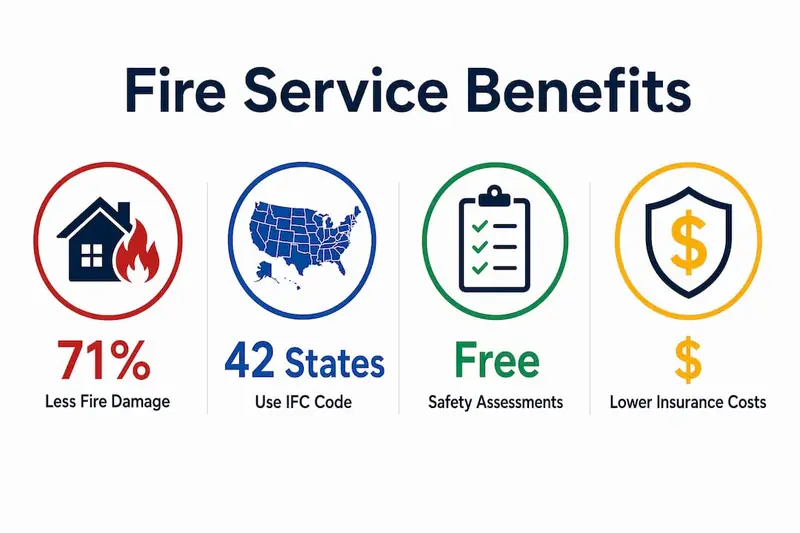
Homes equipped with fire sprinklers already demonstrate what early intervention achieves. Sprinklers control or extinguish fires in 96% of activations, and homes with sprinkler systems experience 71% less fire damage per incident compared to unsprinklered homes. Water damage from sprinklers is also 8 times less severe than damage from fire hoses. Those numbers show that the faster a fire is addressed, the less destruction it causes.
Local firefighters who know your neighborhood can identify the fastest route to your property, recognize pre-existing hazards from prior inspections, and coordinate with utility companies faster than any out-of-area crew. That institutional knowledge is not transferable. It is built over years of community presence.
Local fire teams also benefit from prior inspection records. When a crew has visited a commercial building for a routine check, they already know the floor plan, the sprinkler shutoff locations, and any known hazards. That pre-knowledge reduces the time spent orienting on scene and increases the time spent controlling the fire.
Pro Tip: Report any changes to your building layout, occupancy type, or stored materials to your local fire service provider immediately. Updated records help crews respond more effectively and reduce the risk of surprises during an emergency.
Why does community engagement make local fire departments more effective?

Local fire departments improve community safety through outreach, customized prevention programs, and trusted communication built over time. A national provider cannot replicate the relationship a neighborhood fire station builds through years of school visits, business inspections, and community drills. That relationship creates a two-way flow of information that makes prevention more targeted and more effective.
Community-based fire departments tailor their prevention efforts to the specific risks in their service area. A Houston neighborhood with older wood-frame homes faces different hazards than a commercial corridor with industrial equipment. Local departments recognize those differences and adjust their programs accordingly. You can review common home fire hazard examples to understand what local teams typically flag during residential outreach.
The practical advantages of community engagement include:
- Smoke detector installation programs that target high-risk households, particularly those with elderly residents or young children
- Business fire safety drills coordinated with local fire stations to test evacuation plans under realistic conditions
- Neighborhood risk assessments that identify structural or environmental hazards before they become emergencies
- Public education campaigns on seasonal fire risks, such as outdoor burning restrictions or holiday decoration hazards
- Direct communication channels between property managers and local fire officials for faster permit processing and inspection scheduling
For businesses, this engagement also means faster resolution of code questions. A local fire marshal who knows your property can answer a compliance question in one visit. A remote consultant may require multiple site visits and weeks of back-and-forth.
Pro Tip: Ask your local fire department whether they offer free business fire safety assessments. Many departments provide these at no cost as part of their prevention mandate, and the findings can directly inform your annual safety planning.
How do local fire services support compliance and reduce liability?
Fire code compliance is not a single standard. About 42 states use International Fire Code, and NFPA technical standards apply widely across jurisdictions. On top of those national frameworks, states adopt their own amendments, and local authorities add further requirements. Navigating that layered system without local expertise creates real legal exposure.
Proactive fire safety management reduces liability by demonstrating code compliance and responsible ownership through documented service records. Failure to meet fire codes can result in automatic liability findings even without active negligence. That means a business owner who skipped a required inspection can be held responsible for fire-related damages even if they did not cause the fire directly.
The compliance process for most commercial properties involves four key steps:
- Initial code assessment to identify which national, state, and local standards apply to the specific property type and occupancy
- System installation or upgrade to meet current NFPA and local fire code requirements for alarms, sprinklers, and suppression systems
- Documented inspection and testing on the schedule required by the applicable code, with written records retained for each visit
- Corrective action tracking to close out any deficiencies identified during inspections before the next compliance deadline
Well-documented fire protection systems also aid insurance claims and reduce the risk of claim denials. Poor documentation and non-compliance frequently complicate or void coverage at exactly the moment a property owner needs it most. Local fire service providers maintain centralized, site-specific service histories that close the gaps that often appear when multiple contractors handle the same property over time.
The insurance benefit is concrete. A property with a current inspection certificate, a maintained sprinkler system, and a documented service log presents a lower risk profile to underwriters. That profile typically translates into lower premiums and fewer disputes when a claim is filed. You can also review fire safety equipment options to understand what systems insurers typically require for commercial properties.
What are the practical advantages of ongoing local fire service engagement?
Continuity is an underappreciated advantage of working with a local fire service provider. Local fire protection partners maintain centralized site-specific history, which reduces overlooked compliance gaps that occur when different contractors handle the same building over time. A provider who has serviced your fire alarm system for three years knows its quirks, its upgrade history, and its weak points.
Fire safety training delivered by local fire services enhances employee and resident readiness, helping reduce injuries and claim risks. Training is most effective when it is specific to the building, the occupancy type, and the people who use the space. A local provider can run a drill in your actual facility, not a generic simulation.
The practical benefits of ongoing local engagement include:
- Faster fault resolution because the provider already knows the system configuration and does not need to start from scratch at each visit
- Proactive maintenance scheduling aligned with seasonal risks, such as testing suppression systems before high-risk summer months
- Relationship-based communication that makes it easier to flag concerns, ask questions, and get answers without formal service tickets
- Adaptability to building changes such as renovations, new tenants, or changes in occupancy that affect fire risk and code requirements
For businesses with complex or changing properties, this continuity is especially valuable. A national chain may assign a different technician to each visit. A local provider builds institutional knowledge about your property that compounds over time.
Pro Tip: Schedule a brief annual review with your local fire service provider whenever your building use changes, even for minor renovations. Changes in occupancy load or material storage can trigger new code requirements that your existing systems may not meet.
Key Takeaways
Local fire services deliver measurable safety, compliance, and financial advantages that generic or remote providers cannot replicate, making them the strongest choice for both residential and commercial properties.
| Point | Details |
|---|---|
| Faster response reduces damage | Local crews with terrain knowledge arrive faster, cutting fire damage and casualties significantly. |
| Community programs prevent fires | Tailored outreach, drills, and education reduce fire risk before emergencies occur. |
| Compliance protects against liability | Documented inspections and code adherence prevent automatic liability findings and insurance denials. |
| Continuity improves system reliability | A single local provider builds site-specific knowledge that reduces faults and speeds up repairs. |
| Training increases preparedness | Facility-specific drills by local teams improve evacuation outcomes for employees and residents. |
Why I think most property owners underestimate local fire services
Most property owners treat fire safety as a checkbox. They schedule the annual inspection, file the certificate, and move on. What they miss is the compounding value of a genuine local partnership.
I have seen businesses pay significantly more in insurance premiums and legal fees after a fire incident than they ever would have spent on consistent local fire service engagement. The documentation gap is the most common failure point. A business that used three different contractors over five years often cannot produce a clean service history when an insurer or attorney asks for one. A single local provider eliminates that problem entirely.
The other thing most articles do not say clearly enough: local fire departments are not just responders. They are prevention resources. The fire marshal who inspects your building this year will remember what he saw when he responds to an alarm next year. That memory has real value. It speeds up his assessment, reduces false alarm responses, and builds a working relationship that benefits you in ways that are hard to quantify but very real.
Fire safety is not a product you buy once. It is a relationship you maintain. The communities and businesses that treat it that way consistently come out better on every measure, from property damage to legal exposure to insurance costs. Reliable-fire-protection operates on exactly that model, and the results speak for themselves.
— Results
Reliable-fire-protection: local fire safety expertise for Houston properties
Reliable-fire-protection brings Houston-area homeowners and businesses the kind of grounded, site-specific fire safety support that makes a measurable difference in both compliance and emergency outcomes.
From fire alarm system installation to sprinkler maintenance, suppression systems, and backflow preventers, Reliable-fire-protection covers every layer of fire protection that Houston properties require. The team maintains detailed service records for every client, which supports insurance documentation and code compliance at every inspection cycle. Whether you manage a single-family home or a multi-tenant commercial building, Reliable-fire-protection provides the local expertise and certified service that keeps your property protected and your liability exposure low. Contact Reliable-fire-protection today for a free quote and a clear picture of where your fire safety program stands.
FAQ
What are the main benefits of local fire services?
Local fire services provide faster emergency response, community-specific prevention programs, and documented compliance support. These advantages reduce property damage, legal liability, and insurance costs for both homeowners and businesses.
How does response time affect fire damage?
Faster response directly limits fire spread and structural damage. Homes with sprinkler systems already show 71% less fire damage per incident, and local crews with terrain knowledge arrive faster than out-of-area providers.
Why does fire code compliance matter for businesses?
Failure to meet fire codes can result in automatic liability findings even without active negligence. Documented compliance records also protect against insurance claim denials after a fire incident.
How do local fire departments support fire prevention?
Local departments run tailored outreach programs including smoke detector installation, business drills, and neighborhood risk assessments. These programs address the specific hazards present in a given community rather than applying generic national templates.
What is the advantage of using one local fire service provider consistently?
A single local provider maintains a complete site-specific service history, which reduces compliance gaps and speeds up fault resolution. That continuity is especially valuable for commercial properties that undergo renovations or changes in occupancy over time.