TL;DR:
- Proper fire sprinkler selection in Houston depends on hotel layout, occupancy, water supply, and environment.
- Wet pipe systems are most common, but other types are used for specific zones or conditions.
- Ongoing maintenance and expert guidance are crucial for fire safety compliance and effective protection.
Houston hotels operate under some of the most demanding fire safety requirements in the country. With high guest turnover, complex layouts, kitchens, spas, and event spaces all under one roof, choosing the wrong fire sprinkler system can mean failed inspections, costly retrofits, or worse, a preventable tragedy. Fire code requirements are strict for Houston hotels, and the stakes go beyond fines. This article walks you through the key selection criteria, every major sprinkler system type, a side-by-side comparison, and practical guidance on matching the right system to your specific property.
Table of Contents
- Key criteria for choosing fire sprinkler systems in hotels
- Overview of major hotel fire sprinkler types
- Detailed comparison of fire sprinkler system types
- Situational recommendations: matching sprinkler systems to hotel needs
- The real secret to effective hotel fire sprinkler decisions
- Get expert support for sprinkler selection and compliance
- Frequently asked questions
Key Takeaways
| Point | Details |
|---|---|
| System selection matters | Choosing the right fire sprinkler system ensures both safety and code compliance for Houston hotels. |
| Types fit specific needs | Wet, dry, pre-action, and deluge sprinkler systems each serve different hotel environments and risks. |
| Matching lowers risk | Aligning the sprinkler system with hotel layout and use cases reduces compliance headaches. |
| Maintenance is vital | Even the best sprinkler system needs regular inspection and care to work in emergencies. |
Key criteria for choosing fire sprinkler systems in hotels
Now that you know the importance of the right fire sprinkler system, let’s look at the key criteria you should consider before making a choice.
Selecting a fire sprinkler system for a Houston hotel is not a one-size-fits-all decision. Your property’s layout, age, occupancy classification, and water supply all shape which system will actually perform when it matters. Cutting corners during selection creates gaps that show up during inspections or, far worse, during an actual fire.
Here are the primary criteria every Houston hotel operator should evaluate:
- Regulatory compliance. Houston follows the International Fire Code and NFPA 13 standards for sprinkler installation. Your system must meet local occupancy requirements, and the sprinkler system compliance workflow for hotels is more involved than most operators expect.
- Occupancy type and layout. A 10-story high-rise has different demands than a two-story garden-style property. Room configurations, corridor lengths, and ceiling heights all affect head placement and system design.
- Water supply availability. Adequate water pressure and flow rate are non-negotiable. Your local water utility and a licensed fire protection engineer can confirm whether your supply meets NFPA fire protection guidance minimums.
- Cost and long-term maintenance. Upfront installation cost matters, but so does the ongoing maintenance burden. Some systems require more frequent inspections or specialized parts, which adds to your total cost of ownership.
- Reliability in your specific environment. Areas exposed to freezing temperatures, high humidity, or corrosive chemicals need systems designed for those conditions. Choosing the wrong system for the environment leads to premature failure.
- Scalability and future renovation. If you plan to expand or renovate, your system should accommodate changes without requiring a complete overhaul.
Pro Tip: Engage your local Houston Fire Department and a certified fire protection contractor early in the planning process. Early coordination prevents costly redesigns and speeds up permit approvals. You can also review guidance on choosing a fire sprinkler system before your first consultation.
Overview of major hotel fire sprinkler types
With selection factors in mind, understanding the major fire sprinkler types used in hotels is the next critical step.
There are four main fire sprinkler types used in U.S. hotels, and each one works differently. Knowing how they operate helps you ask the right questions and avoid being oversold on a system your property does not actually need.
- Wet pipe systems. These are the most widely used type. Pipes are filled with pressurized water at all times, so when a sprinkler head activates from heat, water flows immediately. Fast response is their biggest advantage.
- Dry pipe systems. Pipes contain pressurized air or nitrogen instead of water. When a head activates, the air releases and water rushes in. These are used in spaces where pipes could freeze, such as parking garages or unheated storage areas.
- Pre-action systems. These require two separate triggers before water is released: a detection event and a sprinkler head activation. They are ideal for server rooms, art storage, or any area where accidental discharge would cause serious damage.
- Deluge systems. All sprinkler heads are open at once. When the system activates, water floods the entire zone simultaneously. These are reserved for extremely high-risk areas like commercial kitchens or fuel storage.
According to the USFA hotel fire system overview, properly installed and maintained sprinkler systems reduce the risk of death in a hotel fire by more than 80 percent. That statistic alone should frame every decision you make about system selection.
| System type | How it works | Best use in hotels |
|---|---|---|
| Wet pipe | Water-filled pipes, instant discharge | Guest rooms, corridors, lobbies |
| Dry pipe | Air-filled pipes, delayed discharge | Unheated spaces, parking structures |
| Pre-action | Dual-trigger before water release | Server rooms, archives, wine cellars |
| Deluge | All heads open simultaneously | Commercial kitchens, high-risk zones |
Detailed comparison of fire sprinkler system types
After describing the system types, let’s examine how they stack up against each other for real-world hotel needs.
Every system has trade-offs. Understanding those trade-offs in the context of your Houston property helps you make a confident, defensible decision.
Wet pipe systems are ideal in most hotel environments because they are simple, reliable, and cost-effective to install and maintain. The main downside is that they cannot be used in spaces where pipes might freeze or where accidental discharge would be catastrophic.
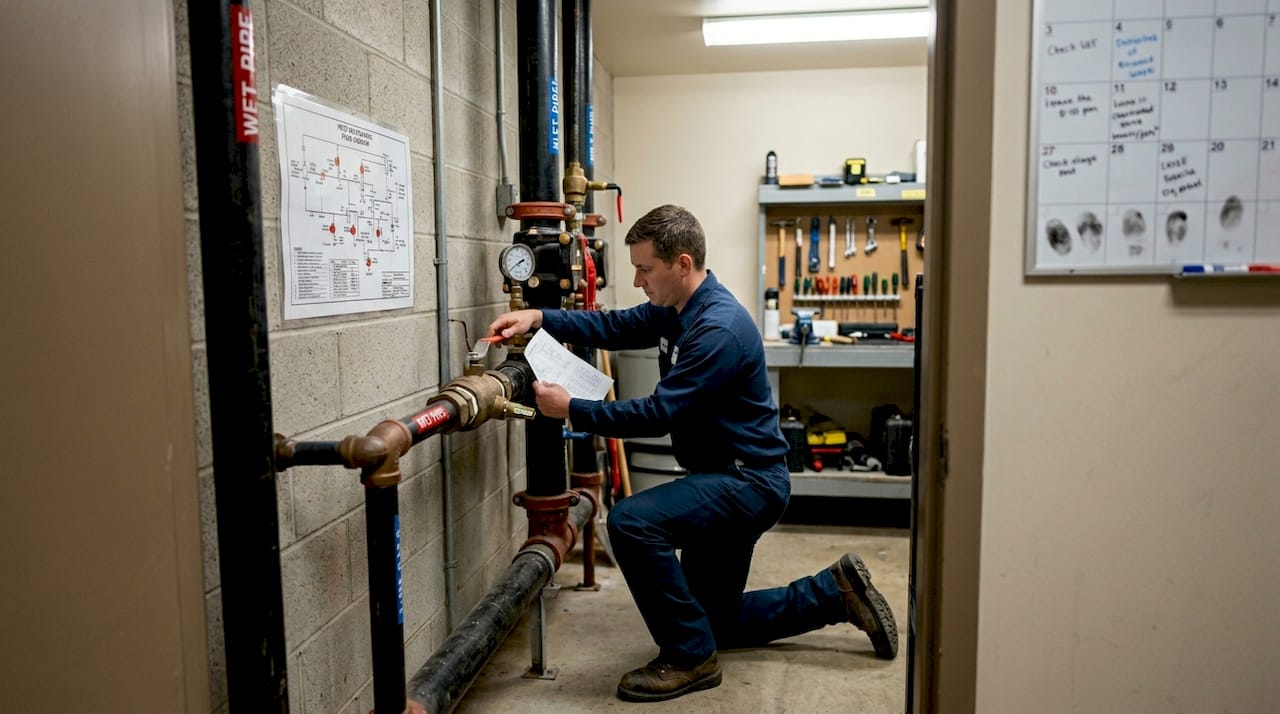
Dry pipe systems solve the freezing problem but introduce a time delay between activation and water delivery. That delay, typically 60 seconds or less, can matter in a fast-moving fire. They also require more maintenance because the air pressure must be monitored continuously.
Pre-action systems offer the highest protection against accidental discharge, which makes them valuable in areas with irreplaceable assets or sensitive electronics. However, they are the most complex to install and maintain, and they carry a higher upfront cost.
Deluge systems are rarely used throughout an entire hotel. They are almost always limited to specific high-hazard zones. Their all-or-nothing activation means significant water damage if triggered unnecessarily.
“For most Houston hotel operators, a wet pipe system covers the majority of the property, with dry pipe or pre-action systems added for specific zones. Mixing system types strategically is standard practice in well-designed hotel fire protection plans.”
| System type | Installation cost | Maintenance level | Compliance fit | Ideal for |
|---|---|---|---|---|
| Wet pipe | Low | Low | Excellent | Most hotel areas |
| Dry pipe | Medium | Medium | Good | Unheated zones |
| Pre-action | High | High | Good | Sensitive areas |
| Deluge | Medium | Medium | Specialized | High-hazard zones |
Review the full system workflow for compliance to understand how each type fits into Houston’s permitting and inspection process.
Situational recommendations: matching sprinkler systems to hotel needs
Once you’ve compared the main system features, the next step is to match specific sprinkler solutions to your hotel’s unique profile.
Proper system matching reduces overall compliance risk and minimizes the chance of costly corrections after installation. Here is how to think through common Houston hotel scenarios:
- New construction hotels. Wet pipe systems throughout the guest floors and corridors, with pre-action systems in server rooms or data closets. Design flexibility is greatest at this stage, so take full advantage.
- Historic or older hotels. Retrofit projects require a careful assessment of existing pipe infrastructure and wall materials. Dry pipe or pre-action systems may be necessary in areas where wet pipe installation would damage historic finishes. Review Houston sprinkler compliance tips specific to retrofit projects.
- High-rise hotels. Gravity and pressure calculations become critical. Wet pipe systems remain standard, but booster pumps and zone controls are typically required to maintain consistent pressure across all floors.
- Garden-style or low-rise properties. These are generally the most straightforward installations. Wet pipe systems work well, and the simpler layout reduces design complexity.
- Hotels with commercial kitchens. Deluge or specialized suppression systems are required in cooking areas. Pairing these with fire detection for hotels creates a layered defense that responds faster and more accurately.
- Properties with spas or pools. High humidity environments can accelerate pipe corrosion. Corrosion-resistant materials and dry pipe configurations in these zones extend system lifespan.
Pro Tip: Pairing your sprinkler system with a modern fire detection network significantly improves response time and reduces false activations. Schedule regular hotel sprinkler inspection reviews to keep both systems working together at peak performance.
The real secret to effective hotel fire sprinkler decisions
Here is something most fire protection articles will not tell you: the system you choose matters less than the commitment you make to maintaining it.
We see this pattern repeatedly across Houston hospitality properties. A hotel invests in a well-designed wet pipe system, passes the initial inspection, and then defers maintenance because budgets tighten or staff turnover disrupts the inspection schedule. Within two or three years, corroded heads, pressure drops, or blocked pipes quietly undermine everything the original installation was supposed to accomplish.
The operators who stay compliant and genuinely protected are not always the ones with the most expensive systems. They are the ones who treat fire protection as an ongoing operational commitment, not a one-time capital expense. They ask their fire protection partner to explain what each inspection finding means, not just sign off on the paperwork.
Cost focus during selection is understandable, but it becomes a liability when it leads to choosing a contractor who disappears after installation. Working with a partner who provides expert selection guidance and stays engaged through the life of the system is what actually keeps guests safe and keeps your property off the wrong side of a compliance audit.
Get expert support for sprinkler selection and compliance
If you want the peace of mind that comes from expert guidance and proven systems, here is the next step.
At Reliable Fire Protection, we work exclusively with Houston-area property owners and operators to design, install, and maintain fire sprinkler systems that meet code and perform in the real world.
Whether you are building new, retrofitting an older property, or simply trying to get ahead of your next inspection, our team can walk you through the full compliance sprinkler workflow and recommend the right system for your specific layout and risk profile. We also provide step-by-step guidance on how to install hotel sprinklers that meet Houston’s current code requirements. Connect with the Houston fire protection experts at Reliable Fire Protection today and get a free assessment for your property.
Frequently asked questions
Which fire sprinkler type is most common in Houston hotels?
Wet pipe systems are the most widely used for hotels because they are simple, cost-effective, and deliver the fastest response when a fire starts.
Do hotel fire codes in Houston require specific sprinkler systems?
Houston fire codes govern sprinkler choice and coverage requirements, but the specific system type depends on your hotel’s occupancy classification, layout, and individual risk factors.
How often should hotel fire sprinkler systems be inspected in Houston?
Visual checks should happen monthly, and annual inspections are standard best practice to confirm code compliance and verify that all components function correctly.
Can older hotels be retrofitted with modern fire sprinkler systems?
Retrofit solutions are available and increasingly recommended for older Houston hotels, though each project requires a detailed assessment to address structural, compliance, and cost considerations.