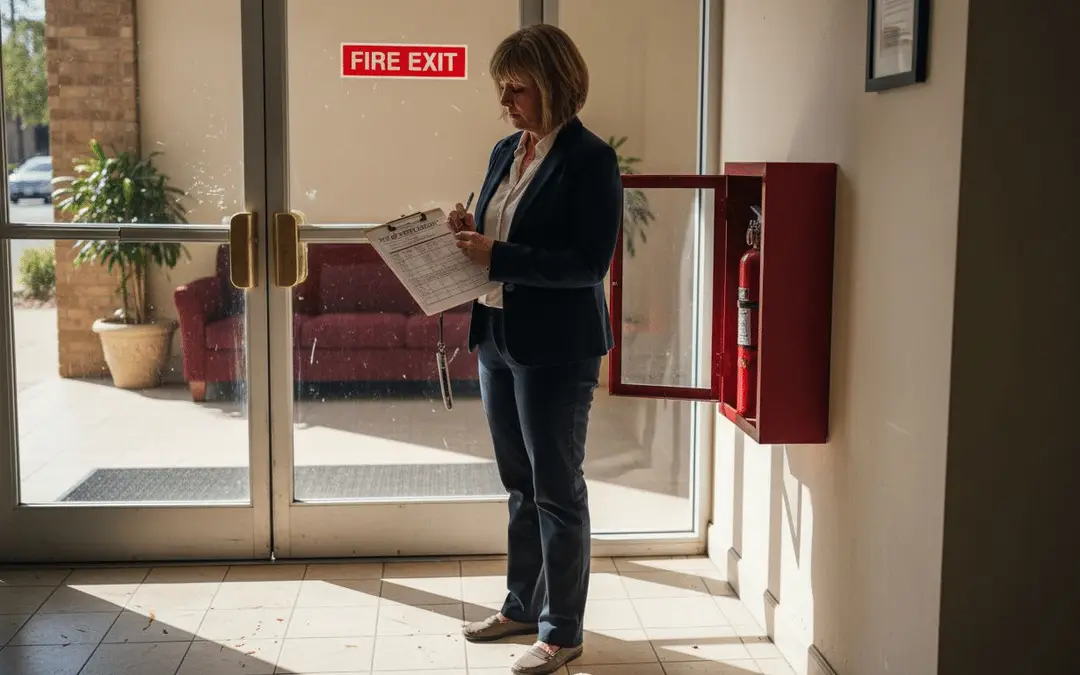
A single overlooked hazard can put your Houston property and everyone inside at serious risk. Houston commercial property managers must navigate multiple regulations and unique fire risks, balancing compliance and tenant safety in every decision. This guide delivers a step-by-step fire safety checklist, drawing from NFPA codes and proven assessment strategies, to help you spot vulnerabilities, select the right systems, and meet local Houston requirements—all while keeping tenant protection front and center.
Table of Contents
- Step 1: Assess Fire Risks In Your Property
- Step 2: Identify Required Equipment And Systems
- Step 3: Draft Customized Checklist Items
- Step 4: Incorporate Local Houston Regulations
- Step 5: Verify Completion And Schedule Reviews
Quick Summary
| Key Point | Explanation |
|---|---|
| 1. Conduct a thorough risk assessment | Evaluate all areas of fire risk to identify hazards and improve safety measures. |
| 2. Select appropriate fire safety equipment | Ensure your property is equipped with the necessary fire safety devices to meet regulations. |
| 3. Create a customized fire safety checklist | Tailor your checklist to address the specific needs and risks of your property for effective management. |
| 4. Adhere to local regulations | Familiarize yourself with Houston’s fire safety codes to ensure compliance and enhance safety. |
| 5. Schedule regular inspections and reviews | Establish a routine for verifying safety measures to maintain ongoing fire protection and compliance. |
Step 1: Assess Fire Risks in Your Property
Effective fire safety starts with a comprehensive risk assessment of your Houston property. Understanding potential hazards helps you develop targeted prevention strategies and protect lives and property from potential fire incidents.
Begin by systematically evaluating key areas of fire risk. Identifying potential fire hazards requires careful examination of multiple property elements:
- Electrical systems: Check for outdated wiring, overloaded circuits, and damaged electrical equipment
- Heating and cooling equipment: Inspect furnaces, space heaters, and air conditioning units for potential malfunctions
- Storage areas: Review how flammable materials are stored, ensuring they’re kept away from heat sources
- Kitchen and cooking spaces: Assess appliance conditions and potential grease fire risks
- Building materials: Evaluate the fire resistance of walls, floors, and structural components
Next, conduct a detailed walkthrough of your property, paying close attention to construction design features that influence fire spread. Look for potential ignition points, examine escape routes, and document any areas requiring immediate attention.
A thorough risk assessment can dramatically reduce the likelihood of catastrophic fire damage.
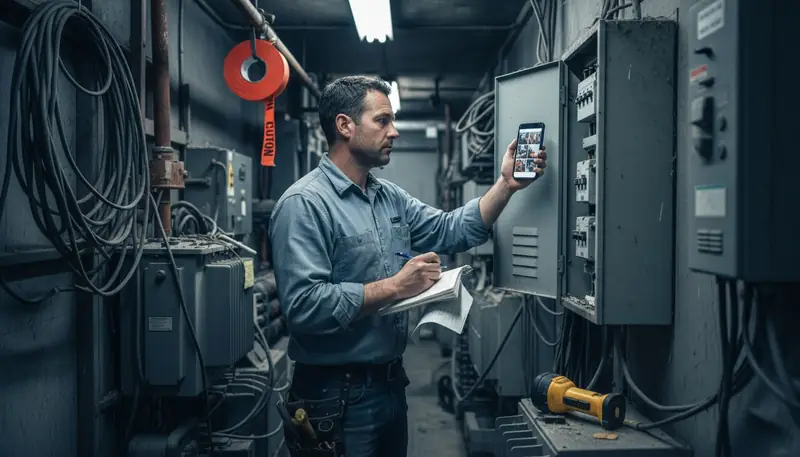
Pro tip: Create a detailed fire risk assessment document with photographs and specific notes about each identified hazard to track and prioritize necessary safety improvements.
Step 2: Identify Required Equipment and Systems
Identifying the right fire safety equipment and systems is crucial for protecting your Houston property from potential fire hazards. Your goal is to ensure comprehensive coverage that meets both legal requirements and best safety practices.
Start by understanding the critical fire protection systems required by professional standards. Every property needs a combination of essential fire safety equipment:
- Fire extinguishers: Place multipurpose units in strategic locations
- Smoke detectors: Install interconnected units on every floor
- Fire alarms: Ensure audible and visible warning systems are functional
- Sprinkler systems: Critical for automatic fire suppression
- Emergency lighting: Provide clear evacuation pathways
Your equipment selection should align with specific fire suppression system requirements based on your property’s size, occupancy type, and potential fire risks. Commercial properties typically require more complex systems than residential buildings.
Here’s how typical fire safety equipment delivers value for property owners:
| Equipment Type | Function | Business Impact |
|---|---|---|
| Fire Extinguishers | Put out small fires quickly | Reduce property damage |
| Smoke Detectors | Early fire detection | Increase occupant safety |
| Fire Alarms | Warn people of danger | Enable faster evacuation |
| Sprinkler Systems | Automatic fire suppression | Minimize operational loss |
| Emergency Lighting | Guide safe evacuation routes | Lower liability risks |
Professional fire safety equipment can mean the difference between minor damage and total property loss.
Pro tip: Schedule annual professional inspections to verify that all fire safety equipment meets current safety codes and functions correctly.
Step 3: Draft Customized Checklist Items
Creating a fire safety checklist isn’t a one-size-fits-all process. Your checklist must be tailored specifically to your Houston property’s unique characteristics, occupancy type, and potential risks.
Begin by developing a comprehensive emergency preparedness strategy that addresses your specific property’s needs. Your customized checklist should include targeted sections that cover multiple aspects of fire safety:
- Property structure: Evaluate building materials, construction type, and potential vulnerabilities
- Occupancy details: Consider number of residents or employees, special needs, and mobility constraints
- High-risk areas: Identify zones with greater fire potential like kitchens, electrical rooms, and storage spaces
- Equipment inventory: Document all existing fire safety equipment and their maintenance status
- Evacuation routes: Map clear and alternative escape paths for different scenarios
Break down your checklist into actionable, specific items that can be easily verified and updated. Each section should include precise criteria for assessment, allowing for systematic and thorough evaluation of your fire safety preparedness.
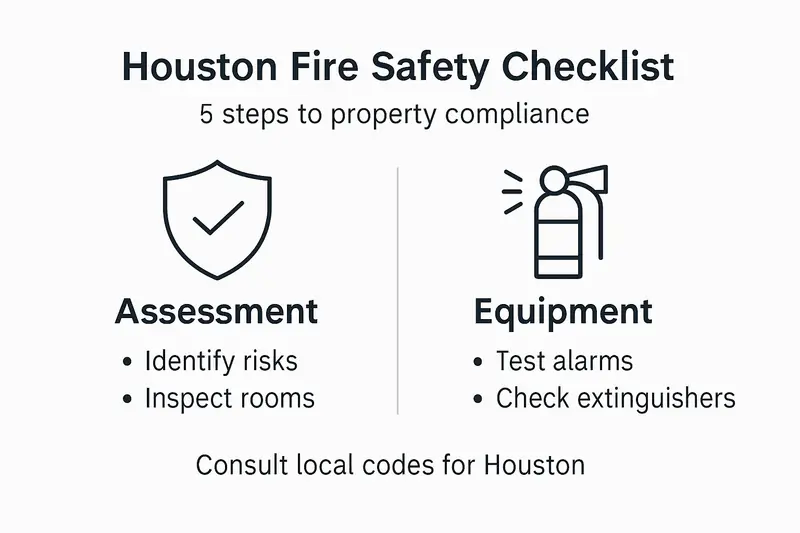
This table summarizes key differences between residential and commercial fire safety checklist requirements:
| Factor | Residential Property | Commercial Property |
|---|---|---|
| Occupancy Type | Families, tenants | Employees, clients, visitors |
| Equipment Complexity | Basic devices preferred | Advanced suppression systems |
| Maintenance Schedule | Annual or bi-annual inspections | More frequent and detailed |
| Regulatory Oversight | Local building codes | Local, state, and federal |
A well-designed checklist transforms fire safety from a theoretical concept into a practical, actionable plan.
Pro tip: Review and update your fire safety checklist at least annually, or immediately after any significant property changes or renovations.
Step 4: Incorporate Local Houston Regulations
Ensuring your fire safety checklist meets Houston’s specific regulatory requirements is crucial for maintaining legal compliance and protecting your property. This step involves diving deep into local and state fire safety standards that directly impact your property management responsibilities.
Start by understanding Houston’s precise permitting and inspection requirements. Your checklist must align with local regulations that cover critical fire safety aspects:
- Permit documentation: Verify all fire-related permits are current and properly filed
- Inspection compliance: Include checkpoints for mandatory city and state fire safety inspections
- Occupancy certificates: Ensure all documentation meets Houston building code standards
- Fire alarm systems: Confirm installations meet local technical specifications
- Emergency exit requirements: Verify evacuation routes comply with Houston municipal codes
Additionally, reference the comprehensive fire protection standards established by the Texas Commission on Fire Protection. These guidelines provide a comprehensive framework for developing a legally compliant fire safety checklist that addresses both local Houston requirements and statewide regulations.
Regulatory compliance is not just a legal requirement, but a critical component of protecting lives and property.
Pro tip: Consult with a local fire safety professional who understands Houston’s specific regulatory landscape to ensure your checklist covers all necessary compliance elements.
Step 5: Verify Completion and Schedule Reviews
The final stage of creating a fire safety checklist involves systematically verifying that all components have been thoroughly completed and establishing a robust schedule for ongoing reviews. This crucial step transforms your checklist from a static document into a dynamic safety management tool.
Implement systematic inspection tracking methods to ensure comprehensive documentation and accountability. Your verification process should include:
- Document review: Confirm all checklist items are completely and accurately filled out
- Evidence collection: Gather photographic or digital proof of completed safety measures
- Deficiency tracking: Create a detailed log of any unresolved items or required improvements
- Compliance validation: Cross-reference checklist items with local Houston regulations
- Archival procedures: Maintain organized records of all safety inspections and reviews
Establish a consistent safety review schedule that ensures regular reassessment of your fire safety preparedness. This approach allows you to proactively identify and address potential risks before they become critical issues.
Consistent verification is the cornerstone of effective fire safety management.
Pro tip: Create digital backups of all inspection documents and set automated reminders for periodic reviews to maintain ongoing fire safety compliance.
Strengthen Your Houston Fire Safety With Expert Support
Creating a robust fire safety checklist for your Houston property involves careful risk assessment, selecting the right equipment, and meeting local regulations. This complex task can leave property owners feeling overwhelmed by compliance demands and safety uncertainties. Reliable Fire Protection understands these challenges and offers tailored solutions that align perfectly with your property’s unique fire safety needs.
Take control of your property’s safety by partnering with a trusted local expert who specializes in Fire Protection. From fire alarm system installation to advanced sprinkler and suppression solutions, we ensure your equipment meets Houston’s strict codes while enhancing your peace of mind. Our family-owned company combines certified expertise with quick emergency responses, giving you confidence that your fire safety checklist is not just completed but implemented effectively.
Don’t wait until inspection time to discover gaps in your fire safety plan. Visit Reliable Fire Protection today and get a free consultation to customize a comprehensive fire protection strategy. Protect lives, property, and your investment by acting now.
Frequently Asked Questions
How can I assess fire risks in my Houston property?
To assess fire risks, conduct a comprehensive walkthrough of your property, focusing on electrical systems, heating equipment, storage areas, kitchens, and building materials. Identify potential hazards and document them for prioritization.
What fire safety equipment should I include in my checklist for Houston properties?
Your fire safety checklist should include essential equipment such as fire extinguishers, smoke detectors, fire alarms, sprinkler systems, and emergency lighting. Ensure these are strategically placed where they can provide maximum protection for your property.
How do I draft a customized fire safety checklist for my property?
To draft a customized checklist, evaluate your property’s structure, occupancy details, high-risk areas, existing equipment, and evacuation routes. Break it down into actionable items for systematic verification and updates.
What local regulations should I incorporate into my fire safety checklist?
Incorporate regulations regarding permits, inspection compliance, occupancy certificates, fire alarm systems, and emergency exit requirements specific to your area. This ensures your checklist aligns with local requirements, enhancing safety and compliance.
How often should I review my fire safety checklist?
You should review your fire safety checklist at least annually or immediately after significant property changes. Schedule routine checks to ensure all safety measures are up to date and any new risks are addressed promptly.
What steps should I take to verify the completion of my fire safety checklist?
To verify completion, review all documented checklist items and gather evidence, such as photographs of completed measures. Track deficiencies and schedule compliance checks to maintain continuous safety standards.
Recommended
- 7 Fire Safety Best Practices for Houston Property Managers
- Why Fire Safety Matters for Houston Properties
- Fire Alarm Inspection Guide for Safe Houston Properties
- Fire Safety Testing Requirements for Houston Properties
- Heating System Repair Process: Step-by-Step for Homeowners
- Fire Alarm System University Place TX
- Fire Alarm System Bellaire TX