
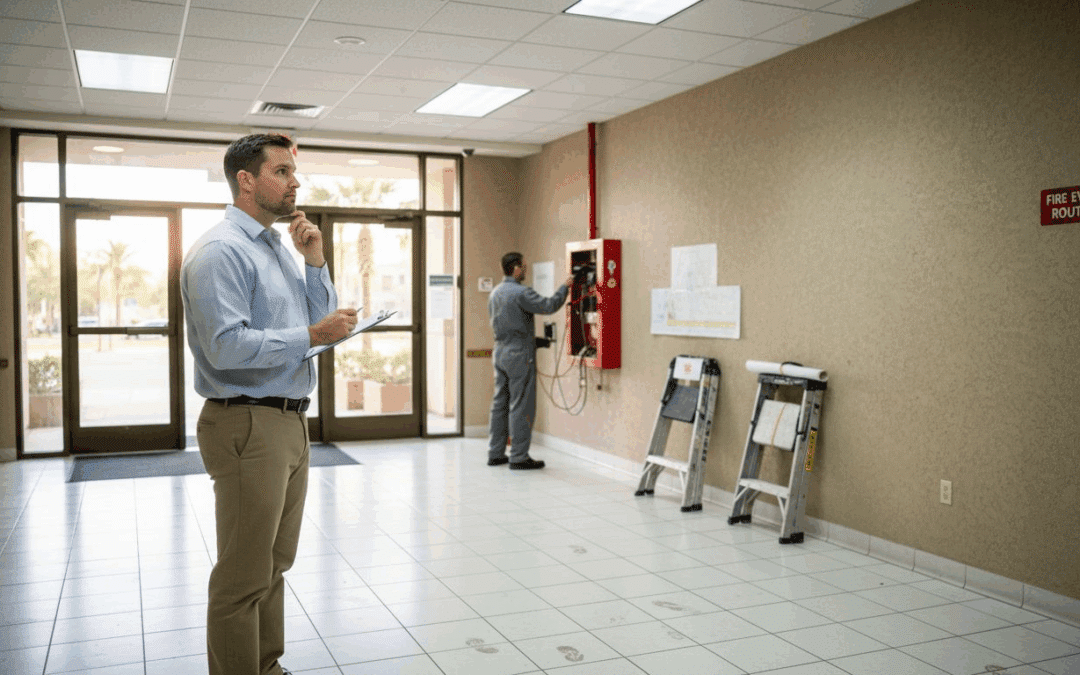
Most American property managers in Houston know that a single missed step during a fire alarm inspection can cost thousands in fines or even jeopardize building safety. With constantly evolving fire codes and strict enforcement, staying compliant is more than just checking boxes—it is safeguarding your investment and your tenants. This guide helps you streamline fire alarm inspections, reduce stress, and prove your commitment to safety at every stage.
Table of Contents
- Step 1: Prepare Your Building For The Fire Alarm Inspection
- Step 2: Gather And Review Fire Alarm System Documentation
- Step 3: Perform A Visual Assessment Of Fire Alarm Components
- Step 4: Test Key Fire Alarm System Functions
- Step 5: Verify Inspection Results And Address Deficiencies
Quick Summary
| Key Point | Explanation |
|---|---|
| 1. Conduct a fire risk assessment | Identify potential fire hazards throughout the building, documenting sources like electrical equipment and storage areas to enhance safety. |
| 2. Ensure fire alarm systems are operational | Test smoke detectors and alarm panels before inspections to confirm their functionality and compliance with safety standards. |
| 3. Organize documentation systematically | Compile maintenance records, inspection reports, and equipment specifications in an easily accessible format to streamline the inspection process. |
| 4. Perform thorough visual inspections | Meticulously examine each fire alarm component for damage or obstructions to ensure optimal performance and compliance with safety regulations. |
| 5. Address deficiencies post-inspection | Create a remediation plan for identified issues and document all corrective actions taken to maintain high safety standards. |
Step 1: Prepare your building for the fire alarm inspection
Fire alarm inspections are critical for maintaining safety and ensuring your Houston property meets regulatory standards. Preparing your building systematically will help you navigate the inspection process smoothly and demonstrate your commitment to safety.
Start by conducting a comprehensive fire safety risk assessment that identifies potential fire hazards. Walk through your entire property and meticulously document fire ignition sources like electrical equipment, storage areas, and combustible materials. Pay special attention to identifying potential risks such as overloaded electrical circuits, improperly stored flammable substances, and blocked emergency exits.
Next, ensure all fire detection and alarm systems are fully operational. Test every smoke detector, fire alarm panel, and notification device well before the inspection. Verify that emergency exit signs are illuminated, fire extinguishers are in their designated locations, and fire lanes remain clear and accessible. Maintaining unobstructed fire lanes and emergency access points is crucial for both inspection compliance and potential emergency response scenarios.
Documentation is key during fire alarm inspections. Organize and have readily available all maintenance records, previous inspection reports, and system upgrade documentation. Prepare a comprehensive folder that demonstrates your proactive approach to fire safety, including training records, recent equipment service logs, and detailed building floor plans highlighting emergency exit routes.
Pro tip: Schedule a preliminary internal walkthrough with your safety team at least two weeks before the official inspection to identify and address any potential issues proactively.
Step 2: Gather and review fire alarm system documentation
Compiling a comprehensive documentation package is essential for a successful fire alarm inspection. Your goal is to create a detailed record that demonstrates your system’s compliance and operational readiness.

Begin by collecting critical fire alarm system documentation including installation drawings, manufacturer specifications, and construction documents. Focus on assembling a complete package that includes color copies of all technical plans, material data sheets, and device specifications. Verify that each document meets the National Fire Protection Association (NFPA) 72 standards and local Houston fire code requirements.
Next, systematically review your documentation to confirm system configuration and equipment details. Create a master checklist that tracks each fire alarm component, its installation date, maintenance history, and current operational status. Pay special attention to manufacturer recommendations and ensure all testing reports are up to date. Cross reference your equipment list with recent inspection logs to identify any potential gaps or areas requiring immediate attention.
Organize your documentation in a logical, easily accessible manner. Use clearly labeled sections with dividers, create digital backups, and ensure key personnel know exactly where these critical documents are stored. Your organized approach will not only streamline the inspection process but also demonstrate your commitment to comprehensive fire safety management.
Pro tip: Create a digital backup of all fire alarm system documentation and store it in a secure cloud location with multiple authorized access points for quick retrieval during inspections.
Compare the benefits of traditional vs. digital documentation for fire alarm inspections:
| Documentation Type | Advantages | Typical Drawbacks |
|---|---|---|
| Physical (Paper) | Easier for on-site review | Easily lost or damaged |
| Digital (Cloud/Files) | Quick access, multiple backups | Needs secure access, tech issues |
| Hybrid (Both) | Redundancy, greater flexibility | Requires managing two systems |
Step 3: Perform a visual assessment of fire alarm components
A thorough visual inspection of your fire alarm system is critical for ensuring optimal performance and identifying potential issues before the official inspection. Your goal is to meticulously examine every component to verify its condition and functionality.
Begin by systematically inspecting all fire alarm system components including control panels, smoke detectors, heat sensors, manual pull stations, and notification devices like strobes and horns. Check each device for visible damage, proper mounting, and clear accessibility. Look for signs of wear, corrosion, or obstruction that might compromise the system’s effectiveness. Ensure all devices are securely fastened and positioned according to manufacturer specifications.
Next, verify compliance with local and national safety standards. Carefully evaluate each component’s installation and environmental suitability to confirm they meet NFPA 72 and Americans with Disabilities Act (ADA) requirements. Document any detected issues such as loose connections, blocked sensors, or damaged wiring. Pay special attention to notification appliances to ensure they provide clear, unobstructed signaling across your entire facility.
Thoroughly document your visual assessment findings. Create a detailed report that includes the location, condition, and any potential concerns for each fire alarm component. Take clear photographs to support your documentation and provide a visual record of the system’s current state.
Here’s a summary of key fire alarm system components and their critical functions:
| Component | Main Function | Typical Issue if Faulty |
|---|---|---|
| Control Panel | Central control of alarm system | Missed alarms, system failure |
| Smoke Detector | Detects smoke from fires | Slow or no fire detection |
| Manual Pull Station | Allows manual alarm activation | Inability to trigger alarm |
| Strobe/Horn Notification | Alerts occupants visually/audibly | Reduced or missed warnings |
| Backup Battery System | Provides power during outages | System downtime during blackout |
Pro tip: Use a standardized checklist and digital camera during your visual assessment to create a comprehensive and consistent documentation process.
Step 4: Test key fire alarm system functions
Testing your fire alarm system thoroughly is crucial to verify its reliability and ensure your Houston property meets all safety standards. This comprehensive testing process will help you identify and address any potential performance issues before the official inspection.
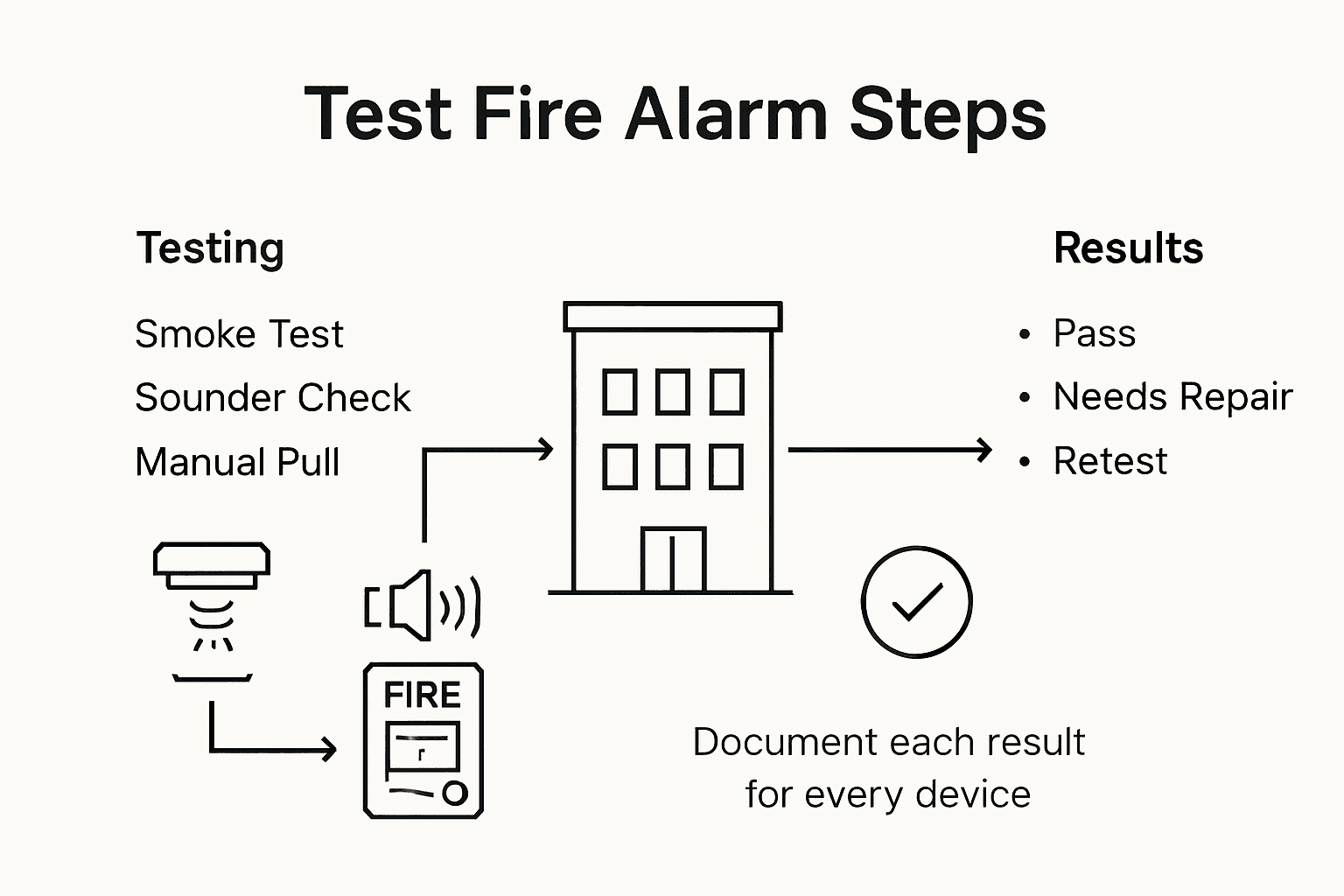
Begin by systematically testing each fire alarm system component according to National Fire Protection Association (NFPA) 72 guidelines. Activate initiating devices such as manual pull stations and smoke detectors to confirm they trigger the alarm system correctly. Verify that notification appliances like strobes and horns activate immediately and provide clear audible and visual signals throughout your facility. Check power supplies and backup battery systems to ensure uninterrupted operation during potential emergency scenarios.
Carefully document the testing process and results for each device. Test smoke detector sensitivity using UL-approved methods, ensuring each sensor responds accurately to potential fire conditions. Verify communication between individual components and the central control panel, paying special attention to device response times and signal clarity. Conduct these tests during off-hours to minimize disruption to your business operations and allow for comprehensive system evaluation.
Review and analyze your testing results critically. Any detected malfunctions or inconsistencies should be immediately documented and addressed. Create a detailed report that includes device location, test procedures, results, and any recommended repairs or adjustments. This documentation will be invaluable during the official fire alarm inspection.
Pro tip: Create a digital spreadsheet to track individual device test results, making it easier to identify patterns and maintain a comprehensive testing history.
Step 5: Verify inspection results and address deficiencies
After conducting your fire alarm system inspection, thoroughly reviewing the results becomes crucial to ensuring your Houston property maintains the highest safety standards. This final step transforms your inspection findings into actionable improvements that protect your building and its occupants.
Carefully review and document all inspection findings using a systematic approach. Classify each identified deficiency by severity level and create a prioritized action plan for corrections. Some issues may require immediate attention while others can be scheduled for future maintenance. Pay close attention to non-compliance areas that could potentially compromise your fire alarm system’s reliability or violate safety regulations.
Develop a comprehensive remediation strategy that addresses each identified issue. Create a detailed follow-up plan with specific corrective actions for every deficiency discovered during the inspection. This might involve replacing faulty devices, clearing obstructed emergency exits, improving equipment accessibility, or updating system configurations. Assign clear responsibilities to your maintenance team and establish realistic timelines for implementing these corrections.
Maintain meticulous documentation throughout the remediation process. Record all actions taken, including dates of repairs, replacement parts used, and verification of system functionality after each correction. This documentation serves as critical evidence of your proactive approach to fire safety and will be invaluable during future inspections.
Pro tip: Create a digital tracking system that allows real time monitoring of deficiency corrections and provides automatic reminders for follow-up inspections.
Ensure Your Houston Property Is Ready for Fire Alarm Inspections with Reliable Fire Protection
Preparing for fire alarm inspections can be overwhelming when you consider risk assessments, testing, and documentation requirements. If you want peace of mind knowing every fire alarm component is inspected, tested, and compliant with Houston safety regulations, Reliable Fire Protection is here to help. We specialize in comprehensive fire safety solutions designed to eliminate your inspection headaches and protect your property and occupants reliably.
Don’t wait until an inspection reveals costly deficiencies or safety risks. Visit Reliable Fire Protection now to access expert fire alarm system services including inspections, testing, and maintenance tailored for Houston homes and businesses. Benefit from our certified team’s prompt response and trusted fire protection expertise. Schedule your free consultation and take the crucial step toward a safer property today.
Frequently Asked Questions
How should I prepare my property for a fire alarm inspection?
To prepare your property for a fire alarm inspection, conduct a thorough fire safety risk assessment and document potential hazards. Check your fire detection systems, test alarms, and ensure all emergency exits are clear. Schedule an internal walkthrough with your safety team at least two weeks in advance to identify issues ahead of time.
What documentation do I need for the fire alarm inspection?
You need to gather installation drawings, maintenance records, and previous inspection reports for your fire alarm system. Organize these documents clearly and ensure they meet local fire code requirements, allowing for easy access during the inspection.
How can I assess the condition of my fire alarm system components?
Perform a detailed visual inspection of all fire alarm components, including smoke detectors and control panels. Document any signs of damage or obstruction, and ensure that all devices are mounted correctly and compliant with safety standards. This detailed assessment will help you pinpoint potential issues.
What steps are involved in testing fire alarm system functions?
Testing your fire alarm system involves systematically activating all components, such as smoke detectors and manual pull stations, to ensure they respond correctly. Include tests for notification devices to confirm they provide clear alarms. Document the results thoroughly to track system performance.
How do I address deficiencies found during the fire alarm inspection?
Create a prioritized action plan based on the deficiencies discovered during the inspection. Develop a remediation strategy that specifies corrective actions, assigns responsibilities to your maintenance team, and sets realistic timelines for corrections.
What should I do after addressing fire alarm system deficiencies?
After addressing deficiencies, maintain meticulous documentation of all repairs and updates made to the fire alarm system. This record serves as evidence of your commitment to safety and will be valuable for future inspections. Continuously monitor the system to ensure ongoing compliance.