

Nearly one in three fire alarm failures stems from poor maintenance, putting Texas homes and businesses at serious risk. This guide walks you through practical steps to test, clean, and document fire alarm upkeep according to Texas regulations. You’ll learn how to prevent failures, stay compliant, and ensure your alarms work when you need them most.
Table of Contents
- What You Need Before You Start Maintaining Fire Alarms
- Step-by-Step Fire Alarm Testing and Inspection Procedures
- Battery and Power Supply Maintenance
- Cleaning and Physical Inspection Techniques
- Compliance with Texas Fire Alarm Regulations and Record Keeping
- Professional Inspection Versus Diy Maintenance: When to Call Experts
- Common Maintenance Mistakes and Troubleshooting
- Expected Results, Outcomes, and Safety Benefits
- Discover Professional Fire Alarm Solutions in Texas
- Frequently Asked Questions About Fire Alarm Maintenance in Texas
Key Takeaways
| Point | Details |
|——-|———||
| Monthly testing and battery replacement are non-negotiable for reliable alarm operation. |
| Proper cleaning every six months reduces false alarms caused by dust by 30%. |
| Texas commercial properties must follow NFPA 72 standards and maintain detailed inspection logs. |
| Professional inspections every 1 to 2 years catch hidden faults DIY methods miss. |
| Accurate documentation supports insurance claims and fire marshal compliance reviews. |
What You Need Before You Start Maintaining Fire Alarms
Gathering the right tools prevents delays and ensures safe, effective maintenance. You need a sturdy ladder rated for your weight, a vacuum cleaner with a soft brush attachment, fresh batteries matching your alarm specifications, and a screwdriver for opening battery compartments. Keep a flashlight handy for inspecting dim areas and a notepad or smartphone app to log maintenance activities.
Familiarity with NFPA 72 maintenance standards and Texas fire code requirements is critical. Residential alarms typically need monthly testing, while commercial systems demand more rigorous schedules. Know whether your alarms are ionization, photoelectric, or dual-sensor models, as cleaning techniques vary. Map all alarm locations in your building before starting work.
Safety comes first when working at heights. Position your ladder on stable, level ground and maintain three points of contact while climbing. Never overreach; move the ladder instead. If you’re uncomfortable with heights or your property has alarms in hard-to-reach areas, consider hiring a professional.
Pro Tip: Create a simple floor plan showing every alarm location and its install date. This map speeds up inspections and helps you track which units need replacement after 10 years.
- Gather ladder, vacuum with brush, batteries, screwdriver, and flashlight
- Review NFPA 72 standards and Texas fire code obligations
- Identify alarm types and mark all locations on a property map
- Practice ladder safety and assess your comfort level with heights
Step-by-Step Fire Alarm Testing and Inspection Procedures
Monthly testing verifies your alarms will sound during an emergency. Press the test button on each unit and listen for a loud, clear alarm. If the sound is weak or absent, replace the battery immediately and retest. NFPA recommends monthly testing of smoke alarms to catch failures before they matter.

Plan an annual comprehensive inspection that includes fire alarm inspection routines beyond basic button tests. Check all interconnected alarms to confirm one triggers the others. Test backup power systems by shutting off circuit breakers temporarily. Document every test with dates, results, and any issues found.
During each monthly test, visually inspect alarms for dust accumulation, physical damage, or loose mounting hardware. Dust buildup on sensors causes false alarms and delayed detection. Tighten any screws securing the alarm to the ceiling or wall. Replace units showing cracks, discoloration, or other damage.
Battery status indicators vary by model. Some alarms chirp when batteries run low, while others display LED warnings. Don’t wait for these signals. Check battery levels monthly using a voltmeter if your alarms lack indicators. Replace batteries before they fail.
Pro Tip: Schedule monthly tests on the same day each month, like the first Sunday. Consistency builds the habit and ensures you never skip a cycle.
- Press the test button on every alarm and verify loud, clear sound
- Check interconnected alarms trigger together as a system
- Inspect for dust, cracks, loose mounts, and battery warnings
- Log test dates, results, and corrective actions taken
- Schedule annual professional inspections for thorough system evaluation
Battery and Power Supply Maintenance
Batteries power standalone alarms and provide backup for wired systems. Replace batteries annually even if they haven’t triggered low-battery alerts. Most failures occur when batteries age beyond their useful life without warning. Mark your calendar for battery replacement day each year.
Wired alarms with battery backup need regular power supply maintenance checks. Test backup batteries by cutting power at the breaker and verifying the alarm still sounds. Restore power immediately after testing. Some systems use sealed rechargeable batteries that last several years but eventually need replacement.
Never mix old and new batteries in the same alarm. Mismatched batteries discharge at different rates, causing premature failure or leakage. Replace all batteries in a unit simultaneously. Use only manufacturer-recommended battery types. Substituting incompatible batteries voids warranties and risks malfunction.
Dispose of old batteries properly at recycling centers. Alkaline batteries can go in household trash in Texas, but rechargeable batteries require special handling. Check local regulations before discarding.
- Replace all batteries annually or immediately when low-battery chirps sound
- Test wired alarm backup batteries by temporarily cutting power
- Use only manufacturer-specified battery types for each alarm model
- Replace all batteries in a unit at once; never mix old and new
- Recycle batteries according to Texas environmental regulations
Cleaning and Physical Inspection Techniques
Dust and debris interfere with smoke sensors, triggering false alarms or delaying detection. Vacuum smoke alarm exteriors every six months using a soft brush attachment. Hold the vacuum nozzle close without touching the alarm. Remove the cover if your model allows and gently vacuum inside.
Never use water, cleaning sprays, or compressed air on fire alarms. Moisture damages electronics, and compressed air forces particles deeper into sensors. If vacuuming doesn’t remove stubborn grime, wipe the exterior with a dry microfiber cloth. Avoid touching sensors directly.
Inspect mounting hardware during cleaning. Smoke and heat rise, so alarms must stay firmly attached to ceilings or high walls. Tighten loose screws immediately. Replace damaged mounting plates before they fail. Check that alarms sit flush against the surface with no gaps.
Common cleaning mistakes include removing alarms without turning off power, using liquid cleaners, and skipping hard-to-reach units. These errors cause damage, electrical shock, or incomplete protection. Follow manufacturer instructions for your specific alarm model.
Pro Tip: Clean alarms right after monthly testing. Combining tasks saves time and ensures you address both maintenance needs consistently.
- Vacuum alarm exteriors every six months with soft brush attachment
- Remove covers per manufacturer instructions and vacuum interior gently
- Wipe exteriors with dry microfiber cloth if needed; never use liquids
- Tighten all mounting screws and replace damaged hardware
- Verify alarms sit flush with no gaps between unit and ceiling
Compliance with Texas Fire Alarm Regulations and Record Keeping
Texas fire codes adopt NFPA 72 standards for fire alarm maintenance. Residential properties need monthly testing and annual inspections. Commercial buildings face stricter requirements including quarterly professional inspections and immediate documentation. Know which category applies to your property.
Detailed maintenance logs protect you during fire marshal inspections and insurance claims. Record every test date, cleaning session, battery replacement, and professional inspection. Note any failures, corrective actions, and follow-up results. Store logs digitally and keep physical copies for at least three years.
Texas fire alarm compliance requirements vary by building type and occupancy. Multi-family residential buildings, offices, and retail spaces need certified inspections. Single-family homes have simpler obligations but still benefit from documentation. Review fire safety compliance tips to understand your specific duties.
Insurance companies often require proof of maintenance before paying fire-related claims. Comprehensive records demonstrate due diligence and may reduce premiums. Fire marshals review logs during inspections and can issue citations for missing documentation.
| Property Type | Testing Frequency | Professional Inspection | Documentation Requirement |
|---|---|---|---|
| Single-family home | Monthly | Annually recommended | Maintain 1-year log |
| Multi-family residential | Monthly | Quarterly | Keep 3-year records |
| Commercial building | Monthly | Quarterly certified | Retain 5-year logs |
| Industrial facility | Weekly | Quarterly certified | Permanent records |
- Follow NFPA 72 standards as adopted by Texas fire codes
- Log all tests, cleanings, and battery changes with dates and results
- Meet commercial inspection schedules and certification requirements
- Prepare maintenance records for fire marshal reviews and insurance audits
Professional Inspection Versus DIY Maintenance: When to Call Experts
Monthly testing and basic cleaning are practical DIY tasks that save money. You can press test buttons, replace batteries, and vacuum alarms without special training. These routine steps catch most common issues and maintain basic functionality.
Professional inspections reveal problems DIY methods miss. Certified technicians test sensor sensitivity, verify electrical connections, check control panels, and inspect wiring integrity. They use specialized equipment to measure alarm response times and ensure full code compliance. Schedule professional fire alarm maintenance tips every one to two years.
Hiring certified Texas technicians reduces liability risks. Professionals carry insurance and warranties covering their work. If an alarm fails after professional maintenance, you have recourse. DIY maintenance leaves you fully responsible for any oversights.
Cost versus safety drives the decision. DIY saves hundreds annually but risks missing critical faults. Professional inspections cost more but provide peace of mind and verified compliance. Balance both approaches: handle monthly tasks yourself and schedule annual expert reviews.
| Maintenance Task | DIY Capability | Professional Advantage |
|---|---|---|
| Monthly test button checks | Easy and cost-effective | Unnecessary expense |
| Battery replacement | Simple with right batteries | Ensures correct type and installation |
| Exterior cleaning | Safe with proper tools | Deep cleaning of sensors |
| Sensor sensitivity testing | Requires special equipment | Calibrated tools and certification |
| Electrical system inspection | Dangerous without training | Licensed and insured expertise |
| Code compliance verification | Requires regulatory knowledge | Guaranteed compliance documentation |
Common Maintenance Mistakes and Troubleshooting
Ignoring low-battery chirps tops the list of maintenance failures. That annoying beep signals your alarm will soon stop working. Replace the battery immediately, not when you get around to it. Delays turn minor inconveniences into life-threatening gaps in protection.
Skipping monthly tests because alarms seem fine leaves you blind to failures. Alarms can malfunction silently, showing no outward signs until you press the test button. Consistent testing catches these hidden problems before emergencies expose them.
Neglecting cleaning invites false alarms and sensor failures. Dust accumulation triggers nuisance alarms that train occupants to ignore warnings. Worse, heavy buildup blocks smoke from reaching sensors, delaying detection during real fires. Vacuum every six months without exception.
Unsafe ladder practices cause injuries during maintenance. Rushing, overreaching, or using damaged ladders leads to falls. Take your time, move the ladder frequently, and ask for help stabilizing it. Your safety matters more than saving a few minutes.
- Never ignore low-battery chirps; replace batteries immediately
- Maintain monthly testing schedules even when alarms seem functional
- Vacuum alarms every six months to prevent dust-related failures
- Follow ladder safety rules to avoid falls and injuries
- Document all maintenance to catch patterns of recurring issues
Expected Results, Outcomes, and Safety Benefits
Properly maintained alarms respond correctly during every monthly test. You should hear loud, clear tones within seconds of pressing test buttons. Weak or absent sounds signal battery or sensor problems needing immediate attention. Aim for 100% test success rates.
Cleaning alarms every six months reduces false alarms caused by dust accumulation by approximately 30%. Fewer false alarms mean occupants take warnings seriously instead of becoming desensitized. This behavioral outcome significantly improves actual emergency response.
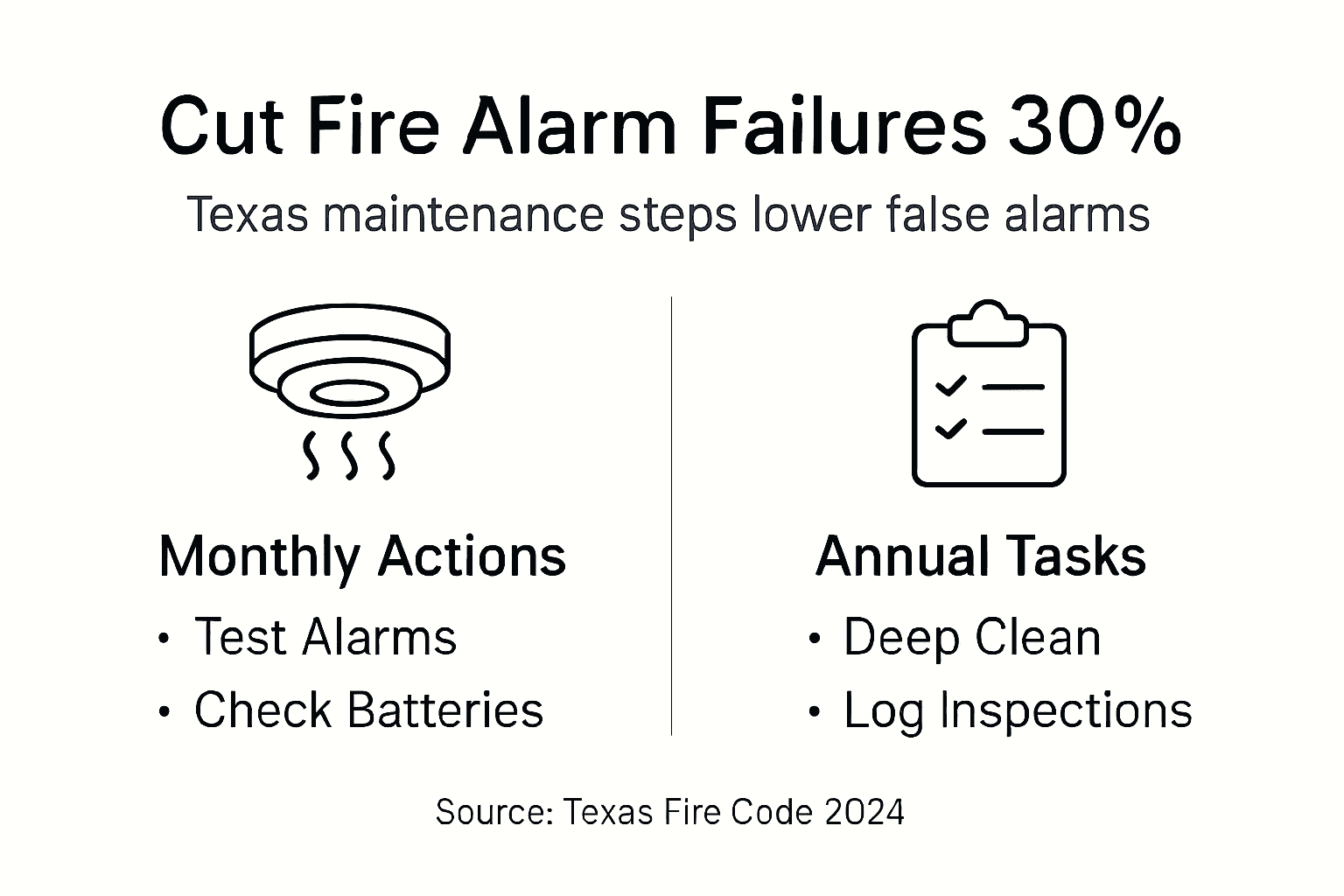
Compliance with maintenance codes benefits insurance premiums and fire marshal inspections. Documented maintenance demonstrates responsible property management. Some insurers offer discounts for verified inspection records. Fire marshals appreciate thorough logs and may reduce scrutiny during reviews.
Well-maintained alarms enhance occupant and property safety dramatically. Early fire detection saves lives by providing crucial escape time. Property damage decreases when fires get caught in early stages. The return on maintenance investment far exceeds the minimal time and cost involved.
“Regular fire alarm maintenance isn’t just about compliance. It’s about ensuring your family, employees, and tenants have the best chance of surviving a fire. Every test, every battery change, every cleaning session contributes to that goal.” — Fire Safety Expert
30% Reduction in False Alarms: Properties that vacuum smoke alarms biannually experience roughly 30% fewer dust-related false alarms compared to those neglecting cleaning.
Discover Professional Fire Alarm Solutions in Texas
Maintaining fire alarms protects lives, but professional support ensures nothing slips through the cracks. Reliable Fire Protection offers expert maintenance, inspection, and compliance services tailored for Texas homes and businesses. Our certified technicians handle everything from routine testing to complex system upgrades.
Understanding how fire alarm systems work helps you make informed decisions about maintenance and upgrades. Whether you need fire alarm system services in Houston or want to explore our full range of fire safety products and services, we provide solutions that fit your property’s needs. Contact us today to schedule an inspection or discuss upgrading your fire protection system.
Frequently Asked Questions About Fire Alarm Maintenance in Texas
How often should I test my fire alarms in Texas?
Test residential alarms monthly by pressing the test button on each unit. Commercial properties require monthly testing plus quarterly professional inspections to meet NFPA 72 standards adopted by Texas fire codes.
What type of batteries should I use in my fire alarms?
Use only manufacturer-recommended battery types listed in your alarm’s manual. Most alarms use 9-volt alkaline batteries, but some require AA lithium or sealed rechargeable batteries. Never substitute incompatible types.
Can I use compressed air to clean my smoke alarms?
No, compressed air forces dust and debris deeper into sensors, causing damage. Use a vacuum cleaner with a soft brush attachment to gently remove dust from alarm exteriors and interiors every six months.
How long should I keep fire alarm maintenance records in Texas?
Residential properties should maintain records for at least one year. Commercial buildings must keep logs for three to five years depending on occupancy type. Longer retention helps with insurance claims and fire marshal reviews.
When should I replace my fire alarms entirely?
Replace all fire alarms every 10 years regardless of apparent functionality. Sensors degrade over time, reducing reliability. Check manufacture dates printed on alarm backs and replace units reaching their expiration.
Do I need professional inspections if I perform monthly DIY maintenance?
Yes, professional inspections every one to two years catch issues DIY methods miss. Technicians test sensor sensitivity, verify electrical connections, and ensure full code compliance using specialized equipment. Combine DIY monthly tasks with annual expert reviews for comprehensive protection.