

Over 60 percent of American commercial property fires involve missing or poorly maintained extinguishers. For Houston business owners and property managers, keeping fire extinguishers ready is about more than meeting regulations—it protects your tenants and customers from real danger. This guide shows you how to approach inspections step by step so your building stays compliant, prepared, and safe every day.
Table of Contents
- Step 1: Gather Required Inspection Tools And Records
- Step 2: Identify And Locate All Extinguishers Onsite
- Step 3: Examine Extinguisher Condition And Labeling
- Step 4: Test Operation And Accessibility Of Extinguishers
- Step 5: Document Inspection Results And Schedule Next Check
Quick Summary
| Key Point | Explanation |
|---|---|
| 1. Gather essential inspection tools | Assemble tools like a flashlight, clipboard, and maintenance records to ensure a thorough fire extinguisher inspection. |
| 2. Document extinguisher locations | Create an inventory of all fire extinguishers, noting their locations and types to enhance compliance and accessibility during emergencies. |
| 3. Conduct a detailed physical inspection | Check for damage, correct pressure, and label visibility to ensure each fire extinguisher is functional and ready for use. |
| 4. Verify accessibility and placement | Ensure extinguishers are unobstructed and correctly mounted to facilitate quick access in case of fire emergencies. |
| 5. Keep accurate inspection records | Document inspection results and schedule future checks to maintain compliance and ensure fire extinguishers remain operational. |
Step 1: Gather required inspection tools and records
Your fire extinguisher inspection starts with assembling the right tools and documentation. Proper preparation means you will conduct a thorough and professional assessment that meets NFPA safety requirements.
First, collect your inspection toolkit. You will need several key items to complete a comprehensive fire extinguisher check: a bright flashlight for detailed visual inspections, a clipboard or digital device for recording observations, official inspection tags or checklists, and a step stool or ladder for accessing wall mounted extinguishers. Make sure you have clear access to current maintenance records for each extinguisher in your facility. These records should document previous inspections, service dates, and any prior maintenance work.
Review your list of extinguishers beforehand to ensure you can locate and inspect each unit systematically. Check that you have access to service histories and can verify the current maintenance status. Your inspection process will involve examining extinguisher seals, checking pressure gauges, verifying proper mounting, and confirming labels are legible.
Pro tip: Create a digital spreadsheet or use a mobile app to track your fire extinguisher inspections, making record keeping faster and more accurate than traditional paper methods.
Step 2: Identify and locate all extinguishers onsite
Tracking and documenting the precise location of every fire extinguisher in your Houston business is critical for safety and compliance. Fire extinguisher placement requirements mandate strategic positioning that ensures quick access during emergencies.
Start by walking through your entire facility and creating a comprehensive inventory. Note each extinguisher’s exact location, including the specific room, area, or section where it is mounted. Pay close attention to recommended mounting heights typically between 3.5 and 5 feet from the floor. Document the type of extinguisher at each location and verify it matches the potential fire risks in that specific area. Take photographs or create a digital map that clearly marks each extinguisher’s position to help your team quickly locate them during an urgent situation.
While mapping your extinguishers, confirm they are mounted in visible and easily accessible spots along standard travel paths. If any extinguishers are potentially obscured by equipment or furniture, install clear signage or use illuminated markers to highlight their presence. Your goal is to create an environment where anyone unfamiliar with the space could quickly identify and retrieve a fire extinguisher if needed.
Pro tip: Color code your digital extinguisher map and create laminated location guides that can be quickly distributed to new employees or emergency responders.
Use this reference to match extinguisher types to location needs:
| Extinguisher Type | Best Location | Typical Fire Risk |
|---|---|---|
| ABC Dry Chemical | Offices, hallways | Electrical, paper, trash |
| CO2 | Server rooms | Electronics, computers |
| Water Mist | Kitchens, cafeterias | Cooking oils, flammable liquids |
| Class D | Workshops, labs | Metal fires |
Step 3: Examine extinguisher condition and labeling
Detailed visual inspection is your first line of defense in ensuring fire extinguisher reliability. Comprehensive inspection protocols require a meticulous approach to checking every aspect of your fire safety equipment.
Begin with a careful exterior examination of each extinguisher. Look for signs of physical damage such as dents, corrosion, or leakage that might compromise the unit’s functionality. Check that all warning labels are clearly legible and facing outward where they can be easily read. Verify the tamper seal is intact and unbroken. Inspect the pressure gauge carefully to confirm it indicates a full charge within the acceptable range. Pay special attention to the discharge hose and nozzle looking for any cracks powder residue or obstructions that could impede operation during an emergency.
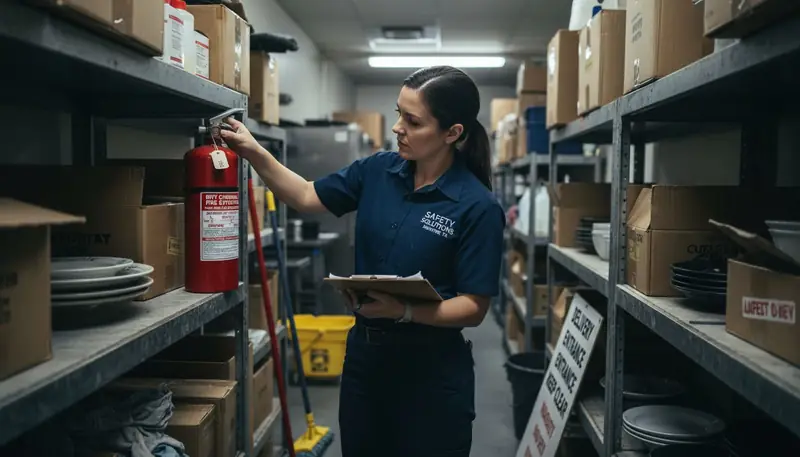
Ensure each extinguisher has its inspection tag or label securely attached and showing the most recent maintenance date. If you notice any signs of damage wear or pressure irregularities document them immediately and arrange for professional service or replacement. Remember that even minor damage can render a fire extinguisher ineffective when you need it most.
Pro tip: Use a bright flashlight and wear clean white gloves during your inspection to help highlight even subtle signs of damage or wear that might be missed with standard visual examination.
Step 4: Test operation and accessibility of extinguishers
Ensuring your fire extinguishers are both accessible and ready for immediate use is crucial for workplace safety. OSHA regulations specify precise requirements for positioning and maintaining these critical emergency devices.
Carefully check that each extinguisher has a completely clear path with no obstructions blocking access. Verify the mounting meets official guidelines by ensuring the extinguisher is positioned between 3.5 and 5 feet from the floor depending on its weight. Confirm there are at least 36 inches of clear space in front of the device and that it is mounted securely with at least 4 inches of clearance above the floor. While performing your accessibility check, test the safety pin to confirm it remains unbroken and can be easily removed. Gently wiggle the extinguisher to ensure it is firmly mounted and will not fall during an emergency.
Pay special attention to visibility by making certain each extinguisher has clear signage and is not hidden behind equipment furniture or storage items. If an extinguisher is difficult to see or reach quickly your employees might lose critical seconds during a fire emergency. Remember that accessibility is not just about physical placement but also about ensuring everyone in your facility knows exactly where these life saving devices are located.
Pro tip: Create a color coded floor map highlighting extinguisher locations and conduct quarterly team walkthroughs to familiarize everyone with their precise positioning.
Step 5: Document inspection results and schedule next check
Precise record keeping is essential for maintaining fire safety compliance and tracking the condition of your fire extinguishers. Monthly inspection documentation requirements provide a critical framework for ensuring workplace safety.
Complete a comprehensive inspection checklist for each fire extinguisher, carefully recording its current condition including pressure status, physical integrity, and accessibility. Sign and date each inspection form with your full name and initials to create an official record. Note any deficiencies discovered during your inspection such as damaged seals compromised pressure levels or potential obstructions. These detailed notes will help you track maintenance needs and demonstrate your commitment to safety protocols. Photograph any areas of concern to provide visual documentation that can be referenced during future inspections or when scheduling professional maintenance.
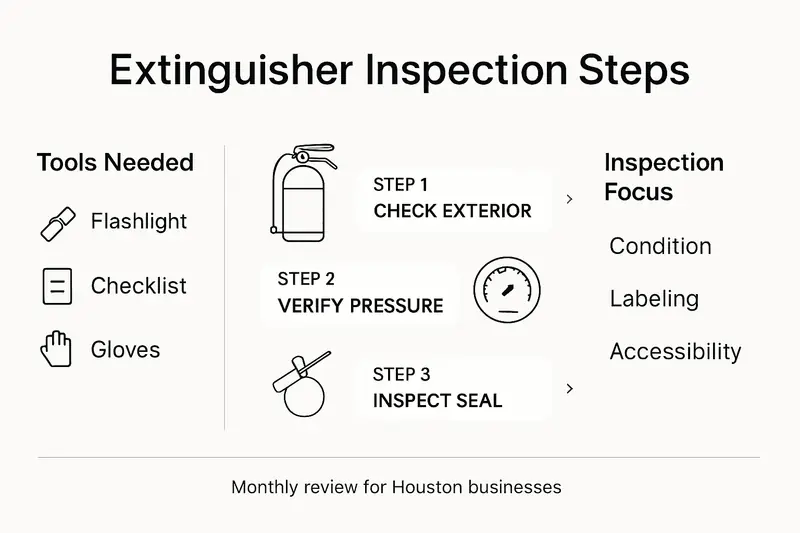
Schedule your next monthly inspection immediately after completing this current review. Mark the date precisely 30 days from now on your maintenance calendar and set a digital reminder to ensure no inspection window is missed. Create a standardized tracking system that allows you to quickly identify which extinguishers have been checked and which require immediate attention. Consistent documentation protects your business by maintaining a verifiable safety record and ensuring all fire protection equipment remains operational.
Pro tip: Digitize your inspection records using cloud based document management systems to create searchable permanent records that can be accessed from anywhere and easily shared with safety regulators.
Here’s a quick summary of inspection steps and their compliance impact:
| Step | Main Action | Compliance Focus | Safety Impact |
|---|---|---|---|
| 1. Gather Tools | Assemble kit, records | NFPA standards | Ensures thorough checks |
| 2. Locate Units | Inventory and map locations | Placement per NFPA | Quick emergency access |
| 3. Inspect Condition | Physical and label checks | Maintenance protocols | Reliable operation |
| 4. Test Accessibility | Confirm clear access, mounting | OSHA positioning | Rapid deployment in fire |
| 5. Document & Schedule | Record results, plan next check | Monthly logs | Continual readiness |
Ensure Your Houston Business Stays Fire Safe with Expert Inspection Support
Properly inspecting and maintaining fire extinguishers is a crucial challenge for many Houston businesses. The pain points discussed in the guide highlight common concerns such as locating every extinguisher, verifying accessibility, checking pressure gauges, and maintaining accurate inspection records. These all require detailed attention to meet NFPA and OSHA compliance and to guarantee reliable operation in emergencies.
At Reliable Fire Protection, we understand how overwhelming managing these safety responsibilities can be. Our experienced team offers comprehensive fire extinguisher services including professional inspections, maintenance, and repairs to keep your equipment in perfect working order. We specialize in helping Houston properties implement effective safety programs that reduce risk and enhance emergency readiness.
Delivering peace of mind is our priority. We combine certified expertise, prompt emergency response, and a commitment to customer care. Visit our fire extinguisher services page to learn about tailored solutions designed for your specific fire safety needs.
Act now to protect your business and employees by scheduling a professional fire extinguisher inspection with Reliable Fire Protection. Don’t wait until a fire emergency reveals vulnerabilities in your safety plan. Contact us today through our website for a free quote and expert guidance.
Frequently Asked Questions
What tools do I need for a fire extinguisher inspection?
To conduct a fire extinguisher inspection, gather a bright flashlight, a clipboard or digital device for recording, official inspection tags or checklists, and a step stool or ladder for accessing mounted extinguishers. Prepare these tools ahead of time to ensure an efficient inspection process.
How do I locate and document all fire extinguishers in my business?
Walk through your facility to create a comprehensive inventory of each fire extinguisher’s exact location, noting the specific room or area. Additionally, take photographs or create a digital map so that all team members can quickly locate each unit in case of an emergency.
What signs should I look for when inspecting the condition of fire extinguishers?
During the inspection, check for physical damage like dents, leaks, and corrosion, and ensure all labels are legible. Verify the pressure gauge is within the acceptable range and ensure the tamper seal remains intact to guarantee operational reliability.
How can I ensure fire extinguishers are easily accessible during an emergency?
Confirm each extinguisher is mounted between 3.5 and 5 feet from the floor and has at least 36 inches of clear space in front of it. Eliminate any obstructions that might hinder access and ensure clear visibility with proper signage.
What should I document after completing a fire extinguisher inspection?
Record each fire extinguisher’s condition, including pressure status, physical integrity, and any deficiencies noted during the inspection. Sign and date each form to create an official record, and take photos of any concerns to reference during future inspections or maintenance.
How often should I schedule fire extinguisher inspections?
Schedule inspections monthly to maintain compliance and ensure readiness. Mark your calendar for next month’s inspection immediately following your current review to avoid missing any critical checks.