
More than 3,000 American commercial property fires are reported each year, leading to costly damages and regulatory headaches. For property managers in Houston, staying ahead of strict fire codes means more than just protecting investments, it directly impacts tenant safety and legal compliance. Understanding the core fire safety system components can help you prioritize upgrades and make smarter decisions for your building’s future.
Table of Contents
- Fire Safety System Components Defined
- Types of Fire Safety Systems In Buildings
- Key Functions And Roles Of Each Component
- Houston Fire Code And Regulatory Standards
- Manager Responsibilities And Common Pitfalls
Key Takeaways
| Point | Details |
|---|---|
| Fire Safety Systems Are Integral | Comprehensive fire safety systems combine detection, suppression, and evacuation techniques to protect occupants and property in buildings. |
| Regular Inspections Are Essential | Annual professional inspections ensure that fire safety components comply with regulations and function correctly. |
| Manager Training Is Critical | Consistent staff training and clear communication about fire safety protocols prevent common oversight errors. |
| Compliance With Local Codes Is Mandatory | Understanding and adhering to Houston’s fire safety regulations is vital to avoid legal liabilities and ensure occupant safety. |
Fire Safety System Components Defined
Fire safety systems represent complex networks of interconnected components designed to detect, alert, suppress, and mitigate fire risks in Houston buildings. Understanding these critical systems means recognizing how multiple protection mechanisms work together to safeguard property and human life.
The primary fire safety system components typically include fire alarms, suppression systems, detection devices, and emergency communication networks. Fire alarms function as the first line of defense, utilizing advanced sensors that can rapidly identify temperature changes, smoke presence, or unusual environmental conditions. Suppression systems complement these alarms by delivering targeted water or chemical agents to interrupt fire progression before significant damage occurs.
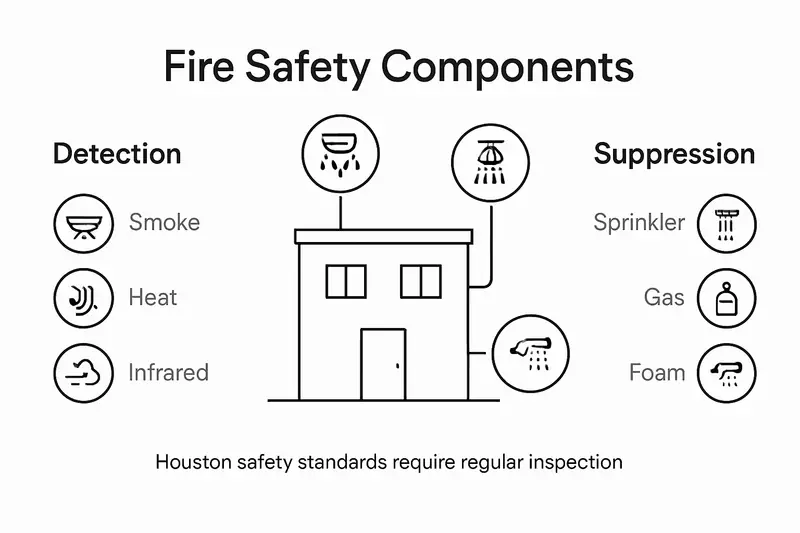
Detection technologies have become increasingly sophisticated, incorporating smoke detectors, heat sensors, and infrared monitoring equipment that can identify potential fire risks with remarkable precision. Commercial buildings in Houston often integrate multiple detection methods, ensuring comprehensive coverage across different zones and potential hazard areas. These systems are designed to provide early warning, allowing building occupants critical evacuation time and enabling rapid emergency response.
Pro tip: Conduct annual professional inspections of your fire safety system components to ensure optimal functionality and compliance with local Houston building safety regulations.
Here is a summary of the core fire safety system components and their benefits:
| Component | Primary Role | Business Impact |
|---|---|---|
| Fire Alarms | Signal early warning | Reduces liability risk |
| Suppression Systems | Actively extinguish fires | Minimizes property damage |
| Detection Devices | Identify fire indicators | Enables faster response |
| Emergency Networks | Guide occupants to safety | Protects human life |
Types of Fire Safety Systems in Buildings
Fire safety systems in buildings are comprehensively designed to address multiple critical functions, from early detection to emergency evacuation. Scientometric research classifies these systems into three primary operational categories: detection, suppression, and evacuation, each playing a crucial role in maintaining building safety and protecting human life.
Detection systems represent the first line of defense, utilizing advanced technologies like smoke detectors, heat sensors, and infrared monitoring equipment. These sophisticated devices can rapidly identify potential fire risks, triggering immediate alerts that enable swift response. Suppression systems complement detection by delivering targeted water or chemical agents designed to interrupt fire progression, preventing extensive property damage and minimizing potential casualties.
Emergency evacuation systems form the final critical component, incorporating communication networks, emergency lighting, and directional signage to guide building occupants to safety during high-stress scenarios. Modern fire safety technologies increasingly leverage building information modeling (BIM) and artificial intelligence to create more responsive and intelligent protection frameworks that can adapt to complex environmental conditions and building layouts.
Pro tip: Consult with professional fire safety engineers to develop a comprehensive system that integrates detection, suppression, and evacuation technologies specific to your building’s unique architectural characteristics.
Key Functions and Roles of Each Component
Fire safety systems comprise multiple specialized components, each with distinct and interconnected operational roles designed to protect building occupants and property. These components work synergistically to create a comprehensive defense mechanism against potential fire hazards, ensuring rapid detection, effective suppression, and safe evacuation.
Detection Components serve as the critical initial warning system, utilizing sophisticated sensors strategically positioned throughout buildings. Smoke detectors, heat sensors, and infrared monitoring devices continuously scan the environment, instantly recognizing temperature anomalies, particulate matter, or unusual thermal patterns. When potential fire risks are identified, these components trigger immediate alarm systems, alerting building occupants and emergency responders to potential dangers before significant damage can occur.
Suppression systems represent the active intervention mechanism, designed to interrupt fire progression through targeted water or chemical agents. These components include automated sprinkler networks, clean agent systems, and portable fire extinguishers, each tailored to address specific fire types and environmental conditions. Sprinkler systems, for instance, can quickly flood a designated area with water, while specialized clean agent systems provide non-destructive fire suppression for sensitive electronic environments like server rooms and data centers.
Pro tip: Schedule comprehensive annual inspections with certified fire safety professionals to ensure each system component is calibrated, functional, and aligned with current safety regulations.
Houston Fire Code and Regulatory Standards
Houston maintains rigorous fire safety regulations that demand meticulous compliance from building owners and managers. The Houston Fire Marshal Office provides comprehensive guidelines detailing specific fire code requirements that encompass everything from administrative provisions to life safety system specifications for commercial and residential structures.
The city’s regulatory framework is built upon the International Fire Code, with unique local amendments that address Houston’s specific urban landscape and potential hazards. Critical components of these standards include mandatory fire protection systems, precise evacuation route requirements, sprinkler installation protocols, and stringent inspection schedules. High-rise buildings face particularly complex regulations, with additional layers of safety requirements designed to protect occupants in dense urban environments.
Building managers must navigate a complex landscape of compliance, ensuring their fire safety systems meet both state and local standards. This involves regular professional assessments, maintaining detailed documentation, and implementing systematic upgrades that align with the latest 2021 Houston Fire Code provisions. Failure to comply can result in significant penalties, potential legal liabilities, and most critically, compromised safety for building occupants.
Pro tip: Consult with a certified fire safety professional who specializes in Houston municipal codes to conduct a comprehensive compliance audit of your building’s fire protection systems.
Manager Responsibilities and Common Pitfalls
Property managers bear significant responsibility for maintaining comprehensive fire safety systems, requiring a multifaceted approach to risk management and regulatory compliance. Fire safety management involves critical responsibilities that extend far beyond basic equipment maintenance, demanding consistent attention to detail and proactive strategic planning.
The most prevalent pitfalls for building managers typically stem from systemic oversight and inadequate documentation. These include neglecting regular system inspections, failing to update emergency protocols, inconsistent staff training, and poor communication about safety procedures. Managers must develop robust documentation systems that track equipment maintenance, record inspection dates, log staff training sessions, and ensure all fire safety components meet current regulatory standards.
Comprehensive fire safety management requires a systematic approach that integrates risk assessment, emergency planning, and continuous education. Building managers must conduct periodic comprehensive evaluations of their fire safety infrastructure, maintain detailed records of all system components, and ensure all personnel understand their specific roles during potential emergency scenarios. This involves not just technical compliance, but creating a culture of safety awareness that permeates every level of building operations.
Pro tip: Create a centralized digital fire safety management system that tracks all inspections, maintenance records, and training documentation to simplify compliance and reduce administrative burden.
Below is a quick reference comparing Houston fire code requirements and common manager oversights:
| Regulatory Focus | Code Expectation | Manager Pitfall Example |
|---|---|---|
| Inspection Frequency | Annual professional inspection | Missed or delayed reviews |
| Documentation Standards | Detailed maintenance records | Incomplete or lost records |
| Staff Training | Consistent protocol updates | Outdated training content |
| System Upgrades | Stay aligned with code changes | Failure to modernize systems |
Enhance Your Houston Building’s Fire Safety with Trusted Professionals
Managing fire safety system components like detection devices, suppression systems, and emergency communications can feel overwhelming. You face challenges such as keeping systems compliant with the Houston Fire Code, ensuring timely inspections, and avoiding common pitfalls like inadequate documentation. At Reliable Fire Protection, we specialize in tailored solutions that address these concerns and provide peace of mind for property managers and building owners.
Our comprehensive services include expert fire alarm installation, sprinkler system setup, and advanced detection technologies designed to protect your property and the lives of occupants. With a family-owned approach and a commitment to customer care, we ensure your fire safety systems not only meet regulatory standards but are maintained for optimal performance.
Don’t wait until it’s too late to safeguard your Houston building. Visit Reliable Fire Protection today to explore our professional fire safety solutions. Request a free quote to start upgrading your fire protection system components now and remain fully compliant with local safety regulations. Take proactive action with our certified team who understands Houston’s unique fire safety challenges.
Frequently Asked Questions
What are the main components of a fire safety system in buildings?
The primary components of a fire safety system include fire alarms, suppression systems, detection devices, and emergency communication networks. Each component plays a crucial role in detecting, alerting, suppressing, and managing fire risks effectively.
How do fire alarms function in a fire safety system?
Fire alarms act as the first line of defense by utilizing advanced sensors to detect temperature changes, smoke, or unusual environmental conditions, triggering immediate alerts to warn occupants and emergency responders.
Why is regular inspection of fire safety systems important?
Regular inspections ensure that all components of the fire safety system are functioning correctly and compliant with safety regulations. This can significantly reduce liability risks and help guarantee the safety of building occupants.
What role do suppression systems play in fire safety?
Suppression systems are designed to actively extinguish fires by delivering targeted water or chemical agents to interrupt the fire’s progression, thereby minimizing property damage and protecting human life.