Not every American commercial property manager realizes that fire code violations in Houston can cost over $6,700 in fines and repairs. For businesses, staying ahead of these risks means more than checking the basics. A smart approach starts with understanding specific building needs, safety standards, and protection strategies tailored for each space. Whether you manage offices or retail sites, this guide reveals how to safeguard investments and maintain full compliance from assessment through system verification.
Table of Contents
- Step 1: Assess Property Needs and Compliance Requirements
- Step 2: Design Fire Suppression System Layout
- Step 3: Gather Necessary Equipment and Materials
- Step 4: Install Fire Suppression System Components
- Step 5: Test and Verify Full System Functionality
Quick Summary
| Essential Insight | Detailed Explanation |
|---|---|
| 1. Assess Your Property Thoroughly | Understand your property’s features and fire risks to create a tailored fire suppression strategy. This includes occupancy type and building materials. |
| 2. Engage Professional Designers | Collaborate with certified fire protection engineers to ensure that the layout optimally protects your commercial space based on its unique characteristics. |
| 3. Source Certified Equipment | Make sure all components used in the fire suppression system meet safety standards. This ensures reliability and effectiveness during emergencies. |
| 4. Document the Installation Process | Maintain a detailed record of each installation step, including photographs. This provides valuable information for future inspections and maintenance. |
| 5. Conduct Comprehensive Testing | Verify the operational readiness of the system through thorough performance testing and coordination with local fire safety authorities to ensure compliance. |
Step 1: Assess Property Needs and Compliance Requirements
Assessing your Houston commercial property’s fire suppression system requirements demands a systematic approach that balances safety regulations with specific building characteristics. Understanding fire protection system standards helps property managers develop comprehensive protection strategies tailored to their unique spaces.
Begin by thoroughly examining your building’s occupancy type, square footage, and potential fire hazards. Different commercial spaces such as warehouses, offices, restaurants, and retail environments have distinct fire suppression requirements. You will need to review specific details like building height, interior construction materials, electrical systems, and potential chemical or equipment-related fire risks. Consulting local Houston fire safety inspectors and reviewing the International Fire Code can help you identify precise requirements for your specific property type.
Documenting your initial assessment involves creating a detailed inventory of existing fire safety infrastructure, potential vulnerabilities, and recommended system upgrades. This documentation serves as a critical baseline for developing a robust fire suppression strategy and will be essential when obtaining necessary permits and insurance approvals.
Pro Tip: Always maintain digital and physical copies of your fire safety assessment documentation in multiple secure locations to ensure quick access during inspections or emergency planning.
Step 2: Design Fire Suppression System Layout
Designing an effective fire suppression system layout requires precision engineering and strategic planning tailored to your specific commercial property. Fire suppression system design demands careful consideration of multiple technical and safety factors that will protect your Houston property.
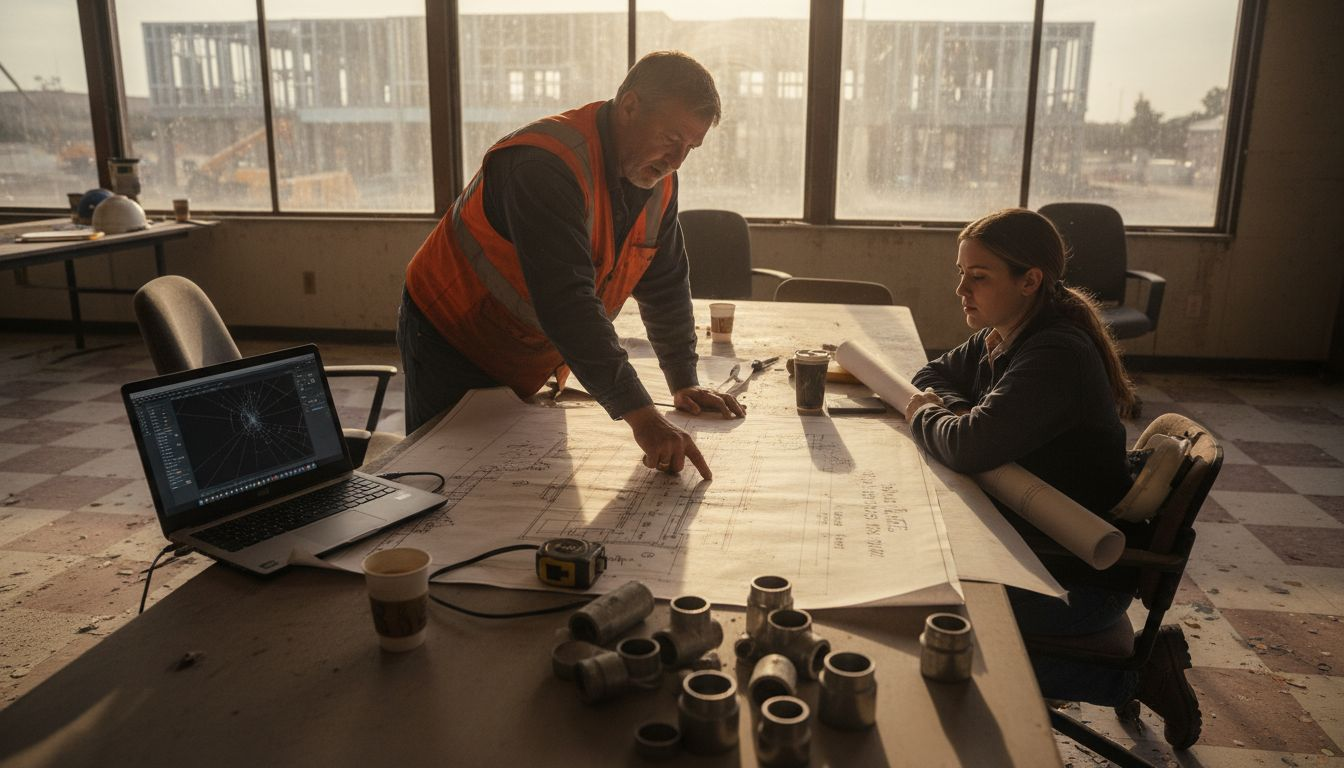
Your layout process begins with conducting a comprehensive site survey to map out critical infrastructure zones, identifying precise locations for sprinkler heads, detection devices, and suppression system components. You will need to analyze building blueprints, evaluate ceiling heights, assess potential obstruction zones, and determine the most effective placement of water delivery systems. Different areas like storage rooms, electrical spaces, and open office environments require unique suppression approaches considering factors such as potential fire classifications, heat sensitivity, and equipment proximity.
Successful system design involves creating a detailed schematic that accounts for hydraulic calculations, pipe routing, water pressure requirements, and compatibility with existing building systems. Professional designers typically use advanced modeling software to simulate potential fire scenarios and optimize suppression coverage, ensuring every square foot of your commercial space receives comprehensive protection.
Pro Tip: Collaborate directly with certified fire protection engineers who can provide specialized insights specific to your property’s unique architectural and operational characteristics.
Step 3: Gather Necessary Equipment and Materials
Preparing for a fire suppression system installation requires meticulous selection of high quality certified equipment that meets rigorous safety standards. Your equipment procurement process will be critical to ensuring the effectiveness and reliability of your fire protection infrastructure.
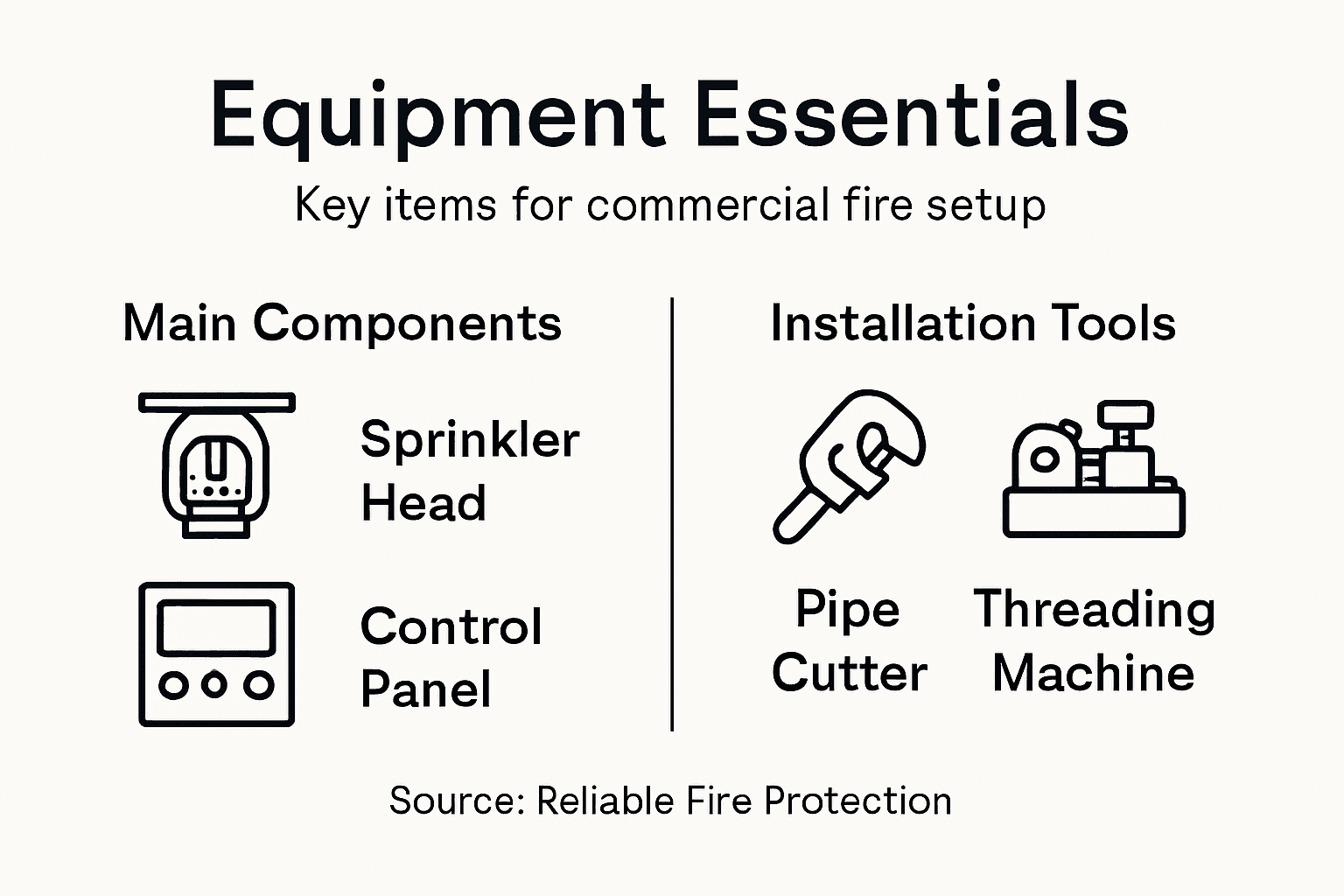
Your materials list should include specialized components such as UL-listed sprinkler heads, approved piping systems, control valves, pressure gauges, hangers, pipe supports, and fire department connection assemblies. You will need to carefully match each component to your specific building requirements, considering factors like pipe diameter, material composition, temperature ratings, and compatibility with existing building systems. Professional installers typically recommend sourcing materials from manufacturers that provide comprehensive documentation and compliance certifications specific to commercial fire protection applications.
Additionally, you should acquire specialized installation tools including pipe cutters, threading machines, hydraulic testing equipment, pressure testing kits, and calibration instruments. Ensure all materials are purchased from reputable suppliers who can provide manufacturer warranties, technical support documentation, and compliance certificates that meet local Houston fire safety regulations.
Pro Tip: Always purchase a 10% surplus of critical components to account for potential installation challenges or future maintenance requirements.
Step 4: Install Fire Suppression System Components
Installing fire suppression system components requires precision engineering and strict adherence to professional installation guidelines. Your installation process will involve carefully implementing each component according to your meticulously designed system layout and local safety regulations.
Begin by preparing the installation area and marking precise mounting locations for pipes, sprinkler heads, and control valves. Use specialized mounting hardware and follow manufacturer specifications for spacing and alignment. Professional installers recommend working systematically through your building zone by zone, ensuring each section receives proper attention. Critical steps include securing pipe supports, threading pipe sections, applying appropriate sealants, and verifying alignment to prevent potential system failures.
The installation process requires careful coordination between different system elements. You will need to connect piping systems, install sprinkler heads with correct temperature ratings, mount control valves at strategic points, and integrate fire department connection assemblies. Every connection must be pressure tested and validated to guarantee system integrity. Professional contractors typically employ advanced testing equipment to confirm each component functions correctly and meets stringent safety standards.
Pro Tip: Document every installation step with photographs and detailed notes to create a comprehensive record for future maintenance and potential insurance inspections.
Step 5: Test and Verify Full System Functionality
Testing your fire suppression system requires comprehensive evaluation to ensure complete operational readiness. The verification process goes beyond simple visual inspection and demands systematic testing of every critical component and interconnected system element.
Begin your testing protocol by conducting a comprehensive hydraulic performance assessment. This involves pressurizing the entire piping network to validate water flow rates, pressure consistency, and potential leak points. You will need specialized testing equipment to measure system performance across different zones of your commercial property. Professional technicians typically perform multiple pressure tests at different stages verify that each sprinkler head functions correctly under simulated emergency conditions. Critical steps include checking valve operations, confirming alarm activations, and ensuring water delivery mechanisms respond precisely as designed.
The final verification stage requires detailed documentation and coordination with local fire safety authorities. You must generate comprehensive testing reports that demonstrate complete system compliance with Houston fire safety regulations. This documentation should include precise measurements of system performance, detailed logs of every test conducted, and certification that all components meet or exceed required safety standards. Professional fire protection engineers will review these documents to confirm the system meets all necessary operational requirements.
Pro Tip: Schedule annual professional recertification tests to maintain your fire suppression system’s optimal performance and insurance compliance.
Below is a comparison of common fire suppression challenges and mitigation strategies:
| Challenge | Typical Cause | Best Practice Solution |
|---|---|---|
| Inadequate Coverage | Poor layout design | Use advanced modeling tools |
| Regulatory Gaps | Lack of code review | Consult local inspectors regularly |
| Material Failure | Low quality components | Source only certified equipment |
| Data Loss | Incomplete documentation | Store digital and physical copies |
Here is a summary of key fire suppression system planning steps and their focus:
| Step | Main Focus | Critical Outcome |
|---|---|---|
| Assess Property Needs | Identify risks and compliance | Establish baseline strategy |
| Design System Layout | Engineer tailored coverage | Optimize fire protection |
| Gather Equipment | Acquire certified materials | Ensure safety and reliability |
| Install Components | Execute precise installation | Achieve operational integrity |
| Test and Verify | Validate system performance | Meet regulatory standards |
Protect Your Houston Business with Expert Fire Suppression Solutions
Installing a commercial fire suppression system requires careful planning, precise design, and certified equipment to meet strict safety standards. If you are concerned about assessing your property needs or ensuring your system installation and testing process is flawless, you are not alone. Many Houston property owners face challenges like inadequate coverage, regulatory compliance, and equipment reliability. Understanding these pain points from our comprehensive guide means you know the value of working with trusted professionals.
At Reliable Fire Protection, we specialize in tailored fire suppression system installations and maintenance specific to Houston’s commercial buildings. Our experienced team ensures every step — from the initial assessment to final testing — follows the highest standards so you can have peace of mind. Learn more about our comprehensive services on our Fire Protection page and discover how our certified equipment and expert installation protect your property and assets.
Don’t wait until it is too late. Contact Reliable Fire Protection today to schedule a free quote and secure your Houston property with a professional fire suppression system designed to meet local codes and safeguard your business. Visit https://reliable-fire-protection.com for more details and prompt, reliable service.
Frequently Asked Questions
What are the initial steps to assess my property’s fire suppression needs?
To assess your property’s fire suppression needs, begin by examining your building’s occupancy type, size, and potential fire hazards. Document these details and review local safety regulations to create a baseline for your fire suppression strategy.
How can I effectively design a fire suppression system layout?
Effectively design a fire suppression system layout by conducting a comprehensive site survey, mapping out critical infrastructure, and identifying optimal locations for sprinklers and detection devices. Use advanced modeling tools to ensure that all areas of your property receive adequate coverage.
What equipment is necessary for installing a fire suppression system?
Essential equipment for installing a fire suppression system includes UL-listed sprinkler heads, approved piping systems, control valves, and pressure gauges. Ensure you acquire high-quality certified materials to guarantee the reliability of your fire protection infrastructure.
How should I verify the functionality of my fire suppression system?
Verify the functionality of your fire suppression system by conducting a hydraulic performance assessment, pressure testing every component, and checking that all systems interact correctly. Document the results to confirm compliance with local safety standards.
What are common challenges when setting up a fire suppression system, and how can I mitigate them?
Common challenges include inadequate coverage due to poor layout and material failures from low-quality components. Mitigate these issues by consulting local inspectors regularly and sourcing only certified materials for your installation.
How often should I schedule professional recertification tests for my fire suppression system?
Schedule professional recertification tests for your fire suppression system annually to maintain optimal performance and meet insurance compliance. This proactive approach helps ensure that your system operates effectively in an emergency.