
TL;DR:
- Proper maintenance of backflow preventers is essential, including routine visual inspections, valve exercising, debris control, and annual certified testing. Regular inspections detect early issues like corrosion, leaks, or pressure drops, preventing costly repairs and ensuring water safety. Scheduling professional testing ahead of deadlines and maintaining detailed logs significantly reduce compliance risks and property health hazards.
A backflow preventer is a mechanical assembly that stops contaminated water from reversing into a clean supply line. Knowing how to maintain backflow preventers is the difference between a compliant, functional water system and a public health violation. These devices protect drinking water from fertilizers, chemicals, and sewage that can enter the supply during pressure drops or back-siphonage events. Proper upkeep covers four core disciplines: routine visual inspections, shutoff valve exercising, debris control, and annual certified testing. Skipping any one of these creates compounding risk, not just for water quality, but for regulatory penalties and costly emergency repairs.
How to maintain backflow preventers with routine visual inspections
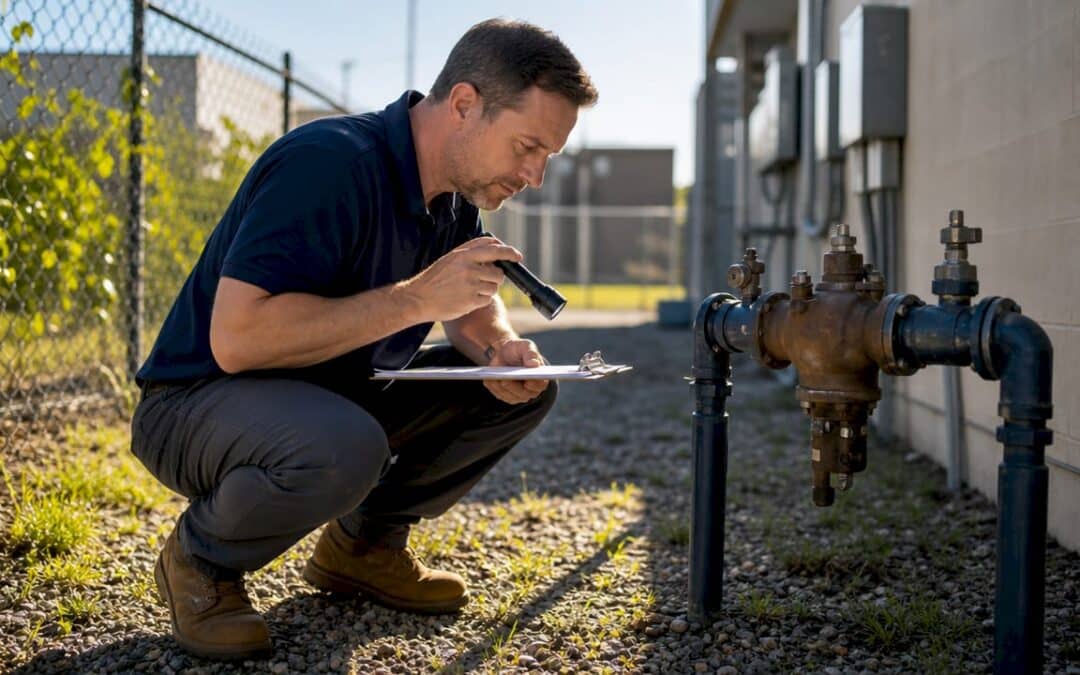
Visual inspections are mandated monthly for commercial properties and quarterly for residential sites. That frequency exists because early-stage problems like minor corrosion, small drips, or debris accumulation are invisible to anyone who only checks once a year. Catching these issues early costs almost nothing to fix. Ignoring them until the annual test often means a failed certification, emergency repair fees, and a compliance notice from your utility.
During each inspection, focus on these observable conditions:
- Leaks and drips: Any moisture around the body, test cocks, or relief valve discharge port signals a seal or check valve problem.
- Corrosion and rust: Surface rust on the body or fittings accelerates under Houston’s humidity and can compromise structural integrity faster than in drier climates.
- Water discoloration or odor: Rusty or cloudy water at nearby fixtures, or a sulfur smell, points to contamination already entering the supply side.
- Pressure changes: Unexplained drops in water pressure at fixtures downstream of the device suggest the assembly is not holding differential pressure correctly.
- Physical accessibility: Maintain at least 1 foot of clear space around the device so certified testers can reach test cocks and valves without obstruction.
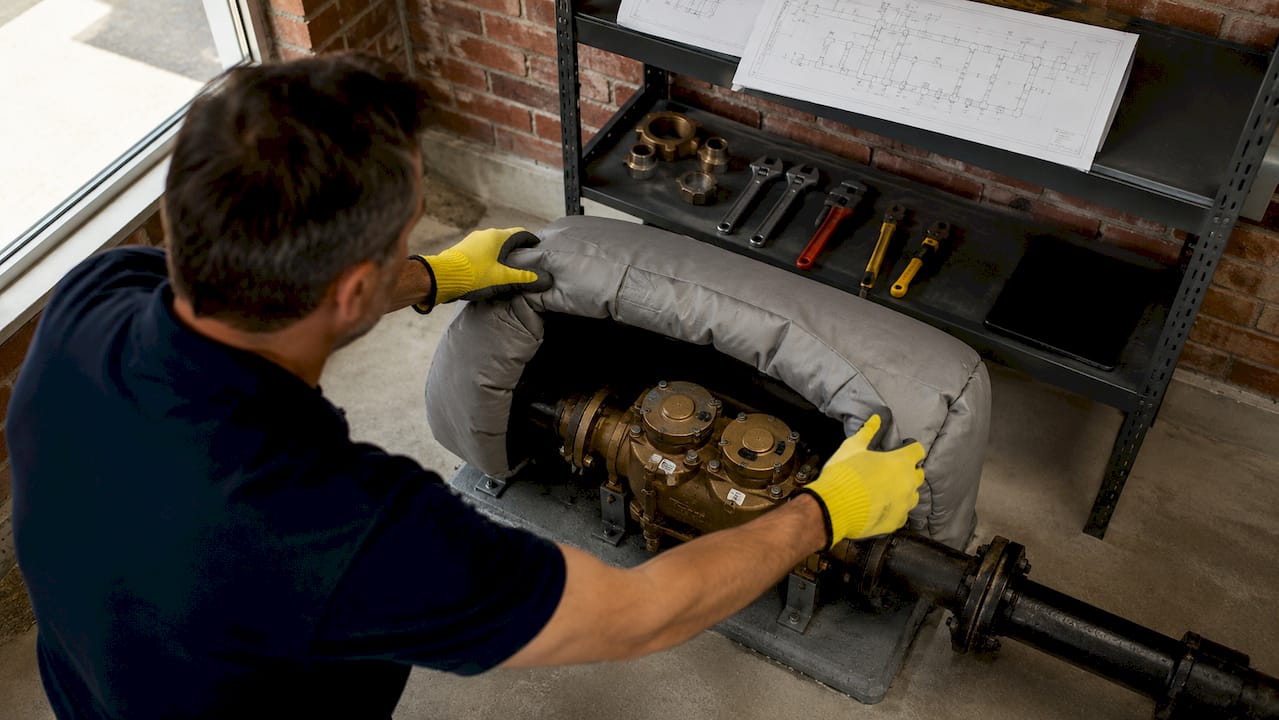
Environmental protection matters as much as the inspection itself. Purpose-built insulated covers protect devices from freezing temperatures and UV degradation. Plastic bags or improvised wraps trap moisture and accelerate corrosion instead of preventing it. Never open or adjust internal components during a visual check. Internal components are precise and sensitive, and unauthorized disassembly by non-professionals creates compliance failures and water safety risks.
Pro Tip: Log every inspection with a date, the name of the person who conducted it, and any observations. This record becomes your first line of defense if a utility questions your compliance history.
How to exercise shutoff valves and control debris
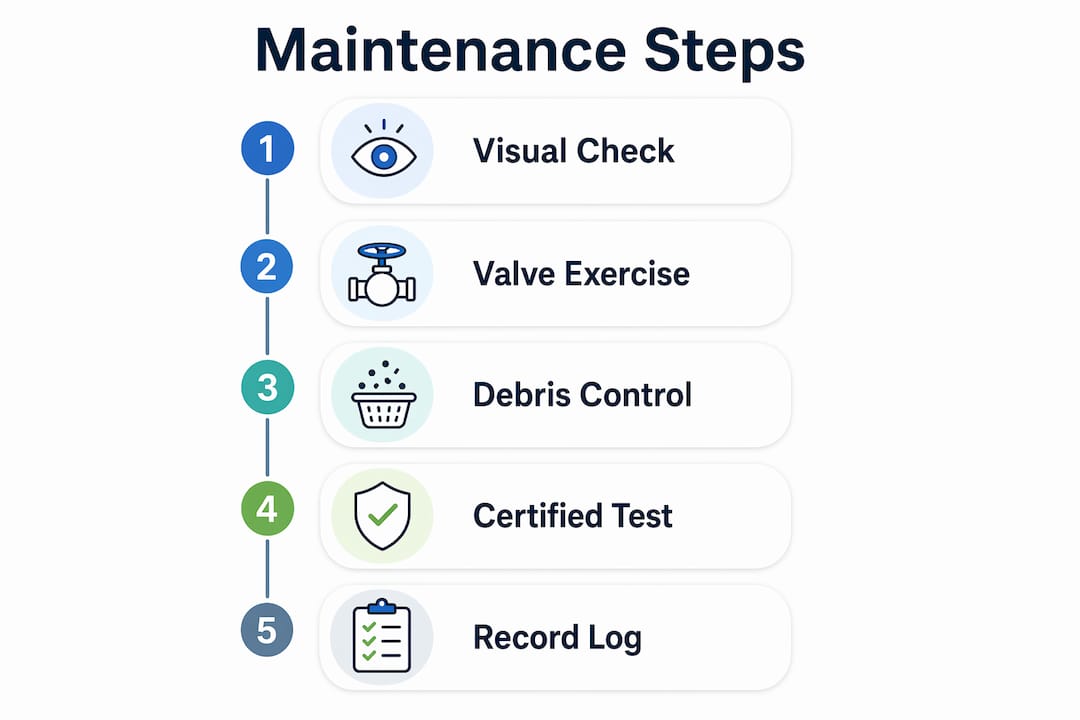
Shutoff valves on backflow preventers seize when they sit unused for extended periods. A seized valve during an annual test is one of the most common and entirely preventable causes of test failure. Periodic valve operation keeps internal seals lubricated and confirms the valve will respond when a certified tester needs it.
Follow this sequence for safe valve exercising:
- Identify both shutoff valves on the assembly. Most reduced pressure zone (RPZ) assemblies have an upstream and a downstream shutoff valve.
- Turn the upstream valve slowly from fully open to fully closed. Use steady, even pressure. The valve should move without resistance.
- Return it to the fully open position before moving to the downstream valve. Repeat the same motion.
- Stop immediately if a valve resists. Forcing a stuck valve strips the stem or cracks the body. Call a certified technician to free it with proper tools and lubricants.
- Document the exercise date and note any stiffness or unusual resistance for the technician’s reference.
Debris control is the second half of this discipline, and it is frequently overlooked. Sand, pipe scale, and sediment are the primary causes of check valve sealing failure. After any plumbing work upstream of the device, flush the lines thoroughly before restoring normal flow. Install a strainer on the upstream side if your property has older galvanized piping or a history of sediment issues. Clean or replace strainer screens seasonally, particularly after summer irrigation season in Texas when particulate load in supply lines tends to increase.
Pro Tip: Schedule valve exercising every three to four months rather than waiting for the annual test. Pair it with your quarterly visual inspection to keep both tasks on the same calendar event.
What certified annual testing and repair procedures require
Annual certified performance testing is a legal requirement in virtually every U.S. jurisdiction, not an optional best practice. A certified tester uses calibrated differential pressure gauges to verify that the device meets the specific thresholds set by the manufacturer and local code. Visual inspections confirm what you can see. Certified testing confirms what you cannot: whether the check valves are holding pressure, whether the relief valve opens at the correct differential, and whether the shutoff valves pass or fail under controlled conditions.
Here is what a standard certified test covers:
- First check valve: Tested for differential pressure closure. Must hold above the minimum threshold specified by the device manufacturer.
- Second check valve: Tested independently for the same pressure criteria.
- Relief valve: Verified to open at the correct differential pressure between the two check valves. A relief valve that opens too early or not at all signals internal wear.
- Shutoff valves: Confirmed to close fully and hold position during the test sequence.
| Test Component | What It Confirms | Failure Consequence |
|---|---|---|
| First check valve | Holds minimum differential pressure | Device fails; repair and retest required |
| Second check valve | Independent pressure seal integrity | Device fails; repair and retest required |
| Relief valve | Opens at correct differential | Contamination risk; immediate repair needed |
| Shutoff valves | Full closure and hold | Test cannot proceed; valve repair required |
Test reports are legal documents that most utilities require submission of within 30 days of the test date. Missing that deadline triggers compliance notices and, in some jurisdictions, civil penalties or service interruption. When repairs are needed, use only manufacturer-approved parts for worn checks, springs, and seals. Retest the device fully after any repair before submitting the certification. Schedule testing 30 to 60 days before your compliance deadline. That window gives you time to address sticky valves, minor leaks, or corrosion without scrambling at the last minute.
Signs of backflow issues and when to call a professional
Certain symptoms demand immediate professional attention, not a scheduled inspection. Recognizing these signs of backflow issues early prevents contamination from reaching occupants or tenants.
Watch for these red flags:
- Sudden pressure drops at fixtures throughout the building, especially when no other plumbing work is occurring.
- Visible leaks or persistent drips around the assembly body, test cocks, or relief valve discharge port.
- Rusty or cloudy water at taps served by the affected supply line.
- Foul odors including sulfur or chemical smells coming from hot or cold water fixtures.
- Relief valve discharge that runs continuously or activates frequently, indicating the device is working against abnormal pressure conditions.
If you observe water discoloration, unusual odors, or continuous relief valve discharge, stop using that water supply for drinking or cooking immediately and contact a certified backflow technician. These symptoms indicate potential contamination already present in the line.
The combination of routine visual checks with professional annual testing significantly reduces the likelihood of reaching this emergency stage. Properties that skip monthly or quarterly inspections are far more likely to discover problems only when they have already escalated into a health risk or a compliance failure. Backflow preventer maintenance is not reactive work. It is a scheduled, documented program that keeps emergencies from happening in the first place.
Key takeaways
Effective backflow preventer maintenance requires monthly or quarterly visual inspections, regular valve exercising, debris control, and annual certified testing submitted within jurisdiction deadlines.
| Point | Details |
|---|---|
| Inspection frequency | Commercial sites require monthly checks; residential sites require quarterly inspections. |
| Valve exercising | Operate shutoff valves from fully open to fully closed every three to four months to prevent seizure. |
| Debris control | Flush lines after plumbing work and install upstream strainers to prevent check valve sealing failure. |
| Annual certified testing | Use calibrated gauges and manufacturer-approved parts; submit test reports within 30 days of testing. |
| Proactive scheduling | Book certified testing 30 to 60 days before compliance deadlines to allow time for repairs. |
What I’ve learned from years of backflow maintenance calls
The most consistent pattern I see across commercial properties is the “install and forget” mindset. A backflow preventer gets installed, passes its first test, and then disappears from the maintenance calendar until a utility notice arrives. By that point, the shutoff valves are seized, the relief valve is weeping, and the property is looking at a failed test plus emergency repair costs that dwarf what a simple maintenance program would have cost over three years.
The second oversight is record keeping. Most property managers can tell you when the last test was done, but very few can produce a complete log of visual inspections, valve exercises, and repair histories. That documentation is not just good practice. It is your proof of due diligence if a contamination event is ever investigated. I strongly recommend a shared digital log, whether in a property management platform or a simple spreadsheet, that every maintenance team member can update after each inspection.
The third thing I want to emphasize: combining visual inspections with professional testing is not redundant. They catch completely different failure modes. Visual checks catch physical deterioration, environmental damage, and accessibility problems. Certified testing catches internal pressure failures that look perfectly fine from the outside. You need both, every time, on schedule.
— Reliable-fire-protection
Protect your property with professional backflow services
Reliable-fire-protection provides certified backflow preventer testing, repair, and maintenance services for commercial and residential properties across Houston and surrounding neighborhoods. Their certified technicians use calibrated equipment, submit test reports on your behalf, and flag issues before they become compliance violations.
Whether you need a one-time annual test or a proactive backflow maintenance agreement that covers inspections, valve exercising, and priority repair scheduling, Reliable-fire-protection builds programs around your compliance calendar. Their team also services connected fire safety systems including sprinkler system inspections, giving you a single point of contact for building-wide water safety compliance. Contact Reliable-fire-protection today for a free consultation and customized maintenance plan.
FAQ
What is the required frequency for backflow preventer testing?
Most jurisdictions require annual certified testing by a licensed professional. Commercial properties also require monthly visual inspections, while residential sites require quarterly checks.
Can I perform backflow preventer maintenance myself?
Visual inspections and valve exercising are tasks property managers and maintenance personnel can handle. Internal repairs and certified testing must be performed by a licensed backflow technician using calibrated equipment.
What happens if I miss the annual backflow test deadline?
Unsubmitted test reports trigger compliance notices from your utility and can result in civil penalties or water service interruption in many jurisdictions.
How do I know if my backflow preventer has failed?
Key warning signs include sudden pressure drops, visible leaks around the assembly, rusty or cloudy water, foul odors at fixtures, and continuous relief valve discharge. Any of these symptoms requires immediate professional evaluation.
How long does a backflow preventer last with proper maintenance?
A well-maintained device typically lasts 10 to 15 years. Regular inspections, valve exercising, debris control, and timely replacement of worn seals and springs using manufacturer-approved parts extend service life and reduce the risk of unexpected failure.