

TL;DR:
- A pre-action sprinkler system keeps water out of pipes until fire detection confirms a fire, reducing accidental discharge risks. It operates through a dual-trigger process involving fire detection and sprinkler head activation, offering enhanced protection for sensitive environments like data centers and museums. Regular maintenance and proper system design are crucial to ensuring reliable fire suppression and asset safety.
A pre-action sprinkler system is a fire suppression system that holds water out of its pipes until a fire detection device confirms a fire, requiring two separate triggers before water ever reaches a sprinkler head. This dual-activation design makes it fundamentally different from standard wet pipe systems, where water sits in the pipes at all times and discharges the moment a sprinkler head opens. For building owners managing data centers, museums, archival storage, or laboratories, that distinction is not a minor technical detail. It is the difference between a controlled fire response and a catastrophic water damage event that destroys irreplaceable assets.
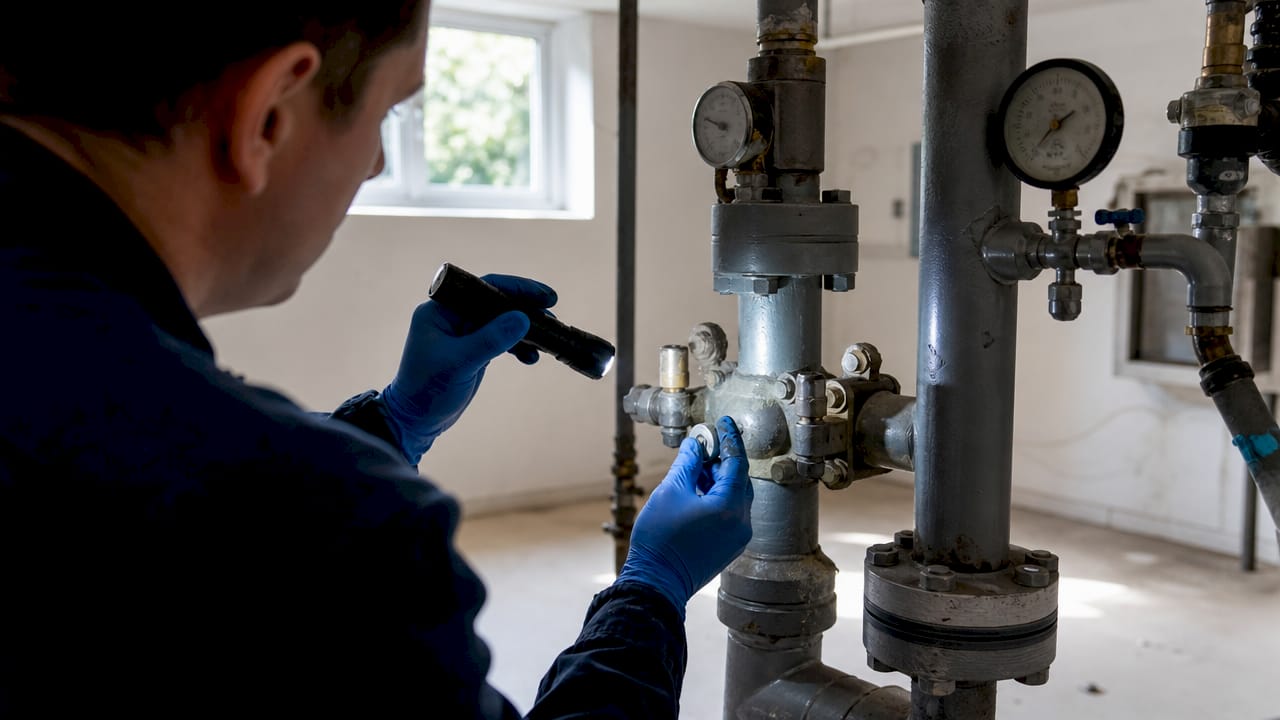
What is a pre-action sprinkler system and how does it differ from wet pipe?
A pre-action fire sprinkler system combines the dry pipe format with an electronic detection layer, creating a two-stage gate before water is released. Standard wet pipe systems keep pressurized water in the pipes continuously, which means a single faulty sprinkler head or a mechanical failure can flood a room with no fire present. Dry pipe systems hold air or nitrogen in the pipes instead of water, but they still discharge automatically once a head opens. The pre-action sprinkler system adds a third layer: a pre-action valve that only opens when a fire detection device, such as a smoke detector or heat sensor, sends a confirmed signal.
The pipes in a pre-action system are kept dry until detection triggers the valve, at which point water fills the pipes but still does not discharge until individual sprinkler heads are activated by heat. This means two independent failures or events must occur simultaneously for water to reach your floor. For a facility manager responsible for a server room or a museum gallery, that extra layer of protection is worth the added system complexity.
How does a pre-action sprinkler work step by step?
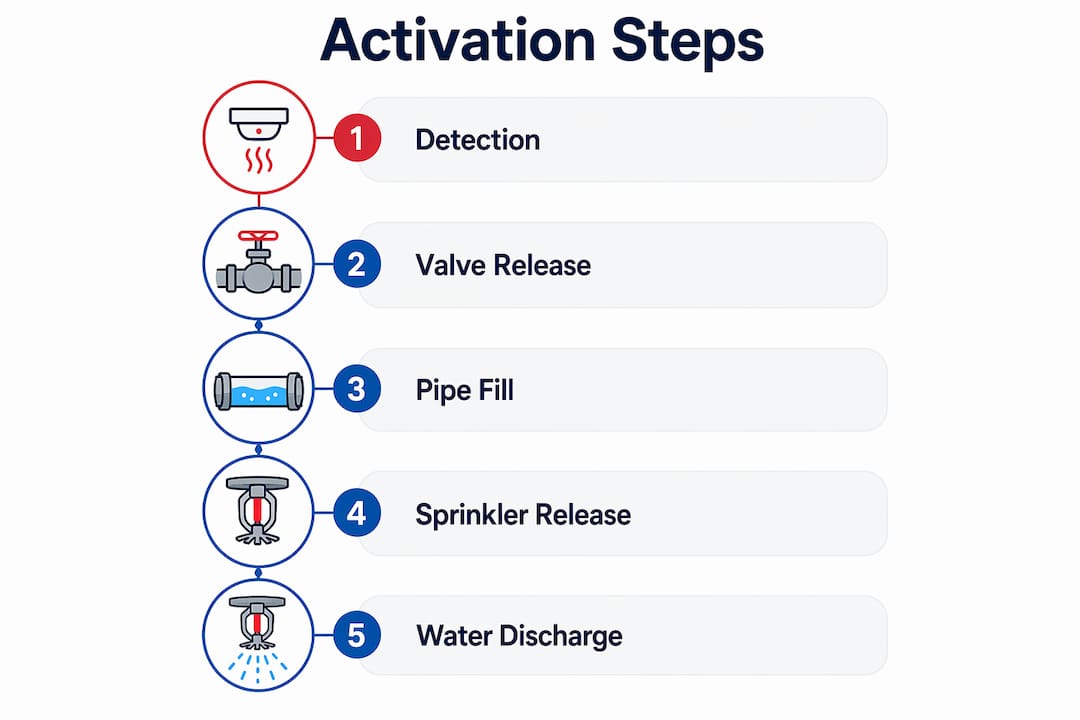
Understanding the activation sequence helps you evaluate whether this system fits your building’s risk profile. The process follows a clear order that separates detection from discharge.
- Fire detection activates the pre-action valve. Smoke detectors, heat detectors, or flame sensors connected to the control panel detect a fire condition and send a signal to open the pre-action valve. Water enters the previously dry pipes.
- Pipes fill with water but remain closed. At this stage, water is pressurized throughout the piping network, but no water exits the system. Sprinkler heads remain sealed.
- Heat activates individual sprinkler heads. Each sprinkler head contains a heat-sensitive element, typically a glass bulb filled with liquid, that bursts at a set temperature. Only heads in the immediate fire zone open.
- Water discharges only at activated heads. Unlike a deluge system that opens all heads simultaneously, a pre-action fire sprinkler releases water only where the fire is actually burning.
- Control panels and monitoring sensors log the event. The two-step activation process is recorded, and alarms notify occupants and emergency services.
This sequence is why pre-action systems dramatically reduce accidental discharge. A broken sprinkler head alone cannot flood the room because the detection system has not opened the valve. A faulty detector alone cannot flood the room because no sprinkler head has opened.
Pro Tip: Ask your fire protection contractor to walk you through a simulated activation test before the system goes live. Watching the valve sequence in real time reveals whether your detection and mechanical components are properly synchronized.
What are the types of pre-action systems and how do they differ?
Pre-action systems are categorized into three types based on their interlock logic. Choosing the right type depends on how much protection against accidental discharge your environment requires versus how fast you need the system to respond.
| System type | Activation requirement | Best use case |
|---|---|---|
| Single-interlock | Fire detection signal only | Cold storage, parking structures |
| Double-interlock | Detection signal plus sprinkler head opening | Data centers, museums, cleanrooms |
| Non-interlock | Either detection or sprinkler head opening | General commercial buildings |
Single-interlock systems open the pre-action valve when the detection system alone signals a fire. The sprinkler heads then discharge independently by heat. This type responds faster than double-interlock but offers less protection against accidental valve opening caused by a faulty detector.
Double-interlock systems require both a detection signal and a sprinkler head opening before water discharges. This is the most conservative design. Double-interlock systems provide the highest protection against accidental water release, which is why they are the standard choice for data centers and archival facilities. The trade-off is a slightly slower response time and greater system complexity.
Non-interlock systems open the valve when either condition is met, making them the fastest to respond but the most susceptible to accidental discharge. They are rarely chosen for sensitive environments.
For most facility managers protecting high-value assets, the double-interlock configuration is the right answer. The added complexity is manageable with proper maintenance, and the protection it provides against false activation is unmatched.
What are the key benefits and practical uses of pre-action sprinkler systems?
The core advantage of a pre-action sprinkler system is protection against two threats simultaneously: fire and water damage. For environments where both risks are equally serious, no other suppression technology offers the same balance.
Pre-action systems are ideal for data centers, museums, cleanrooms, and archival storage facilities, where a single accidental discharge could destroy millions of dollars in equipment or irreplaceable records. A wet pipe system in a server room is essentially a loaded weapon pointed at your infrastructure. A pre-action system keeps the safety on until a real fire is confirmed.
Key benefits include:
- Accidental discharge prevention. The dual-trigger requirement means a single point of failure cannot release water. This protects against mechanical failures, physical damage to sprinkler heads, and false alarms from cooking fumes or steam.
- Reduced corrosion risk. Because pipes are normally dry or filled with nitrogen rather than water, internal corrosion is significantly slower. Nitrogen pressurization reduces corrosion compared to compressed air, extending system lifespan and reducing maintenance costs over time.
- Early fire detection integration. The system requires a functioning detection network, which means you get early warning of fire conditions even before suppression begins. This integration with smoke and heat detectors aligns with NFPA 72 requirements and gives occupants more evacuation time.
- Minimized operational downtime. A false alarm in a wet pipe system can shut down operations for hours while water is cleaned up. A pre-action system eliminates that scenario entirely.
- Targeted suppression. Water discharges only at the heads nearest the fire, limiting water spread and collateral damage to surrounding equipment or materials.
Pro Tip: If your facility uses server racks or archival shelving, map the sprinkler head locations against your most critical assets during the design phase. Positioning heads to minimize direct discharge onto irreplaceable equipment is a detail that pays off in a real event.
You can review how suppression systems protect businesses to see how these benefits apply across different commercial environments.
How to approach installation and maintenance of pre-action sprinkler systems
Installation of a pre-action sprinkler system is not a project for a general contractor. It requires a licensed fire protection engineer who designs the system to comply with NFPA 13 for installation and NFPA 25 for ongoing inspection and testing. Cutting corners on design or installation creates liability exposure and, more critically, a system that may fail when you need it most.
Key installation and maintenance considerations:
- System design must integrate detection and suppression. The pre-action valve controller must be wired to your fire alarm control panel, which must comply with NFPA 72. A detection system that is not properly integrated with the suppression valve defeats the entire purpose of the pre-action design.
- Choose nitrogen over compressed air for pipe pressurization. Compressed air contains moisture and oxygen, both of which accelerate internal pipe corrosion. Nitrogen is inert and dry, making it the preferred choice for long-term system reliability.
- Schedule quarterly inspections of detection devices. System complexity introduces operational risks when detection devices are not maintained. A failed smoke detector does not just reduce fire safety. In a single-interlock or double-interlock system, it can prevent the valve from opening during an actual fire.
- Test the pre-action valve annually. The valve is the heart of the system. Annual full-flow testing confirms it opens correctly under simulated fire conditions and resets properly afterward.
- Document every inspection and test. NFPA 25 requires written records of all inspections, tests, and maintenance activities. These records protect you during insurance claims and regulatory audits.
| Maintenance task | Frequency | Standard reference |
|---|---|---|
| Visual inspection of sprinkler heads | Monthly | NFPA 25 |
| Detection device testing | Quarterly | NFPA 72 |
| Pre-action valve full-flow test | Annually | NFPA 25 |
| Nitrogen pressure check | Semi-annually | Manufacturer spec |
| Full system trip test | Every 3 years | NFPA 25 |
A well-maintained pre-action system is one of the most reliable fire protection tools available. A neglected one is a liability. The fire detection system setup process is directly tied to how well your pre-action valve performs under real conditions.
Key takeaways
A pre-action sprinkler system is the correct choice for any facility where accidental water discharge poses a risk equal to or greater than fire damage itself.
| Point | Details |
|---|---|
| Dual-trigger activation | Water discharges only after both detection and heat activation occur, preventing accidental flooding. |
| Three system types | Single-interlock, double-interlock, and non-interlock each offer different response speeds and protection levels. |
| Best environments | Data centers, museums, archival storage, and cleanrooms benefit most from pre-action protection. |
| Nitrogen pressurization | Using nitrogen instead of compressed air reduces pipe corrosion and extends system lifespan. |
| Code compliance | Installation must follow NFPA 13 and ongoing maintenance must meet NFPA 25 requirements. |
What I’ve learned from watching pre-action systems succeed and fail in the field
After years of working with building owners and facility managers across Houston, the pattern I see most often is this: facilities that invest in pre-action systems for the right reasons get exceptional results, and facilities that install them without understanding the maintenance commitment end up with a false sense of security.
The biggest misconception I encounter is that a pre-action system is simply a “safer wet pipe system.” It is not. It is a fundamentally different technology that treats fire detection and water suppression as two separate but connected systems. Safety engineers emphasize treating pre-action systems as integrated mechanical and detection solutions, where sensor reliability is as critical as water supply pressure. That framing is exactly right.
What I tell every facility manager who asks me about pre-action systems is this: your detection network is not a bonus feature. It is half the system. If your smoke detectors are outdated, poorly placed, or on an inspection schedule that gets skipped, your pre-action valve may not open when you need it. The mechanical side of the system gets attention because it is visible. The detection side gets neglected because it sits quietly in the ceiling. That imbalance is where most system failures originate.
The other thing worth saying plainly: fire protection expertise warns that over-complexity in pre-action systems can introduce operational risks. A double-interlock system in a small office building is overkill. Matching the system type to the actual risk profile of your facility is not just a cost decision. It is a safety decision. Choose the right tool for the environment, maintain both halves of the system with equal discipline, and a pre-action system will protect your facility for decades.
— Reliable-fire-protection
Protect your facility with the right fire suppression system
Choosing and maintaining a pre-action sprinkler system requires expertise that goes beyond reading a code manual. Reliable-fire-protection designs, installs, and services pre-action systems for commercial facilities across Houston, from server rooms and medical labs to museums and cold storage warehouses.
Whether you need a new system designed to NFPA 13 standards, an existing system brought into NFPA 25 compliance, or a full integration of your fire alarm and sprinkler systems, Reliable fire protection delivers certified expertise with local response times. You can also explore professional sprinkler installation for commercial spaces to understand what a properly executed project looks like from design through commissioning. Contact Reliable-fire-protection today for a free consultation and site assessment.
FAQ
What is a pre-action sprinkler system in simple terms?
A pre-action sprinkler system is a fire suppression system that keeps water out of its pipes until a fire detector confirms a fire, then requires a sprinkler head to open before water actually discharges. This two-step process prevents accidental flooding in sensitive environments.
How does a pre-action sprinkler differ from a wet pipe system?
A wet pipe system holds pressurized water in its pipes at all times and discharges immediately when any sprinkler head opens. A pre-action system keeps pipes dry until fire detection triggers the valve, adding a critical layer of protection against accidental discharge.
Where are pre-action sprinkler systems most commonly used?
Pre-action systems are most commonly installed in data centers, museums, archival storage facilities, cleanrooms, and laboratories, where water damage from a false alarm or mechanical failure would be as destructive as a fire.
What maintenance does a pre-action sprinkler system require?
Pre-action systems require monthly visual inspections of sprinkler heads, quarterly testing of detection devices per NFPA 72, annual pre-action valve testing per NFPA 25, and semi-annual nitrogen pressure checks. Neglecting the detection component is the most common cause of system failure.
Which type of pre-action system is best for a data center?
A double-interlock pre-action system is the standard choice for data centers because it requires both a detection signal and a sprinkler head activation before water discharges, providing the highest protection against accidental water release in a critical environment.