
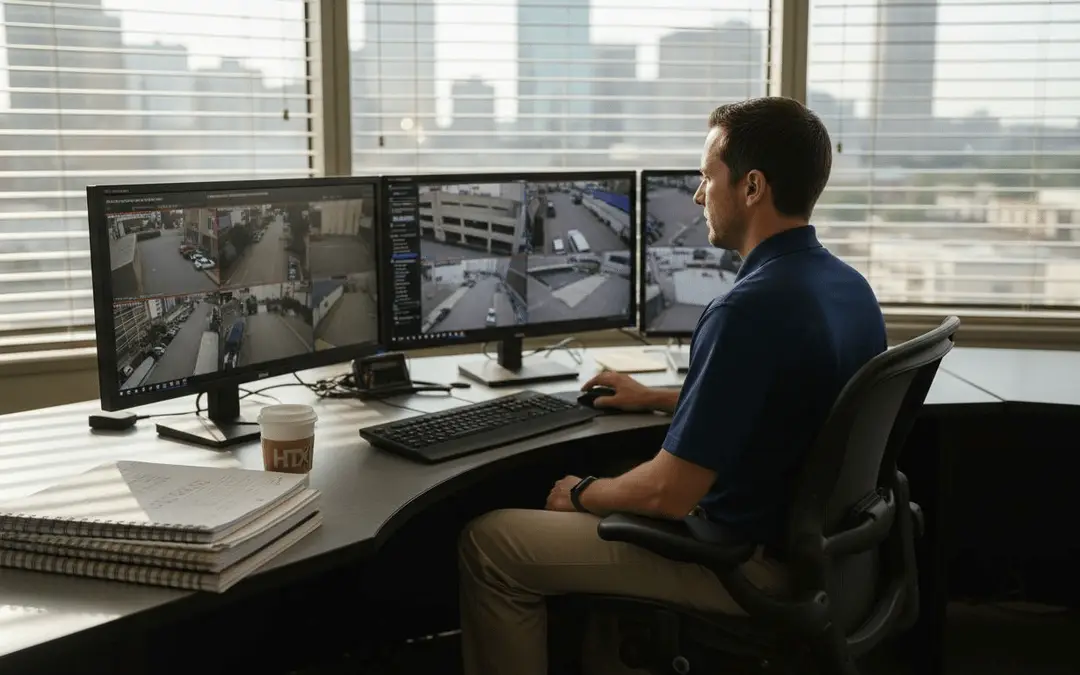
Managing a commercial property in Houston comes with unique pressures, especially when tenant safety and city compliance are on the line. False assumptions about alarm monitoring can leave properties vulnerable, yet professional alarm monitoring systems provide more than just noise—they offer continuous, intelligent protection and rapid emergency response. Understanding the key features and regulatory requirements of advanced fire alarm monitoring helps property managers minimize risk, meet safety codes, and prioritize their tenants’ well-being.
Table of Contents
- Alarm Monitoring Defined and Common Myths
- Types of Fire Alarm Monitoring Systems
- How Alarm Monitoring Services Work
- Houston Regulations and Legal Compliance
- Risks, Costs, and Choosing a Provider
Key Takeaways
| Point | Details |
|---|---|
| Understanding Alarm Monitoring | Alarm monitoring encompasses sophisticated systems that provide real-time security through continuous surveillance and rapid emergency response. |
| Fire Alarm Systems Types | Commercial properties should choose between Conventional, Addressable, or Hybrid fire alarm systems based on their specific coverage and scalability needs. |
| Importance of Compliance | Ensuring compliance with local regulations in Houston is crucial to avoid penalties and enhance the effectiveness of alarm monitoring systems. |
| Evaluating Service Providers | When selecting an alarm monitoring provider, consider factors such as response time, technological capabilities, and pricing to ensure optimal solutions for your property. |
Alarm Monitoring Defined and Common Myths
Alarm monitoring represents a sophisticated technological approach to ensuring safety and security for commercial properties in Houston. At its core, this system involves continuous electronic surveillance of critical infrastructure and environmental conditions. Operational technology security frameworks define these systems as programmable devices that interact with physical environments by tracking and reporting potential risks or anomalies.
Understanding alarm monitoring requires debunking several prevalent misconceptions about how these systems actually function. Many property managers mistakenly believe that alarm monitoring is a passive, one-dimensional process. In reality, these systems represent complex networks of sensors, communication protocols, and rapid response mechanisms designed to provide real-time protection.
Key characteristics of professional alarm monitoring include:
- Continuous 24/7 surveillance of designated areas
- Instantaneous detection of potential security breaches
- Automatic notification to designated emergency contacts
- Integration with local law enforcement and fire departments
- Advanced sensor technologies that can distinguish between routine and critical events
Myths vs. Reality about alarm monitoring often stem from misunderstandings about the system’s capabilities. Contrary to popular belief, these are not simply loud noise-makers, but intelligent systems that:
- Provide granular, detailed incident reporting
- Enable remote management and monitoring
- Offer comprehensive data logging for future analysis
- Minimize human error in emergency response scenarios
Professional alarm monitoring transforms reactive security approaches into proactive safety management strategies.
Pro tip: Always verify your alarm monitoring system’s specific capabilities and ensure it meets local Houston commercial property safety regulations.
Types of Fire Alarm Monitoring Systems
Fire alarm monitoring systems are sophisticated technological solutions designed to protect commercial properties in Houston by providing comprehensive safety detection and response capabilities. Fire alarm system technologies encompass a range of specialized approaches that enable rapid identification and communication of potential emergency situations.
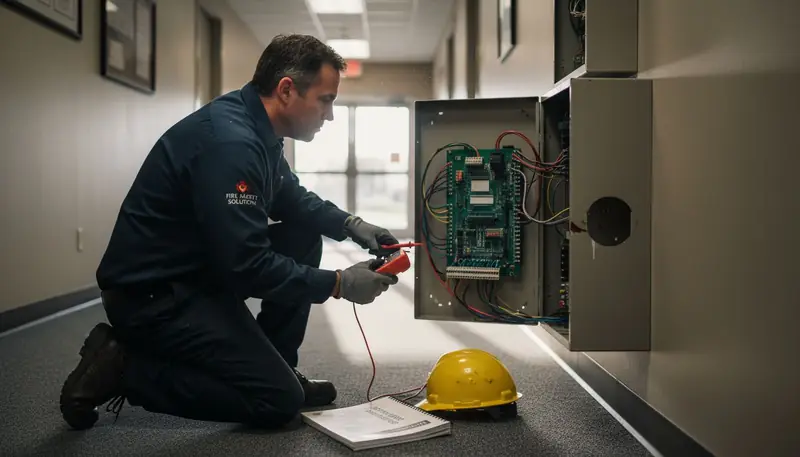
Commercial properties typically utilize two primary categories of fire alarm monitoring systems: conventional and addressable systems. Conventional systems divide buildings into zones, with multiple detectors connected to each zone, while addressable systems provide more granular, device-specific information about potential fire risks.
Key types of fire alarm monitoring systems include:
- Conventional Fire Alarm Systems
- Divide building into multiple detection zones
- Less expensive initial installation
- Suitable for smaller commercial spaces
- Limited precise location tracking
- Addressable Fire Alarm Systems
- Pinpoint exact location of potential fire
- Individual device monitoring
- More sophisticated reporting capabilities
- Ideal for large, complex commercial buildings
- Hybrid Fire Alarm Systems
- Combine features of conventional and addressable technologies
- Flexible configuration options
- Scalable for different property sizes
Detection technologies within these systems vary significantly. Comprehensive design guidelines highlight multiple sensor types that can be integrated into fire monitoring systems:
Here’s a quick comparison of major fire alarm monitoring system types to help property managers choose the best fit:
| System Type | Coverage Level | Scalability | Ideal Property Size |
|---|---|---|---|
| Conventional | Zone-based monitoring | Limited expansion | Small commercial spaces |
| Addressable | Device-specific tracking | Highly scalable | Large, complex buildings |
| Hybrid | Zone & device monitoring | Flexible configuration | Medium to large properties |
- Smoke Detectors
- Photoelectric sensors
- Ionization sensors
- Dual-sensor technologies
- Heat Detectors
- Fixed temperature sensors
- Rate-of-rise temperature sensors
- Carbon Monoxide Detectors
- Electrochemical sensors
- Biomimetic sensors
Advanced fire alarm monitoring transforms potential catastrophic events into manageable, quickly addressed situations.
Pro tip: Consult with a professional fire safety expert to determine the most appropriate monitoring system for your specific Houston commercial property requirements.
How Alarm Monitoring Services Work
Professional alarm monitoring services represent a sophisticated technological approach to ensuring comprehensive safety for commercial properties in Houston. These systems create an intricate network of sensors, communication protocols, and rapid response mechanisms designed to detect and address potential emergency situations quickly and efficiently.
The core functionality of alarm monitoring services involves a complex, multi-step process that transforms detected incidents into actionable emergency responses. When a sensor triggers an alarm, the system immediately transmits a signal to a central monitoring station staffed by trained professionals who assess the situation and determine the appropriate course of action.
Key components of alarm monitoring services include:
- Signal Detection
- Advanced sensors monitor multiple environmental conditions
- Instant recognition of potential safety threats
- Comprehensive coverage across different risk categories
- Communication Protocols
- Rapid transmission of alarm data
- Secure, encrypted communication channels
- Multiple backup communication methods
- Emergency Response Coordination
- Immediate verification of alarm conditions
- Direct communication with local emergency services
- Prioritized dispatch based on threat assessment
The verification process is critical in preventing unnecessary emergency dispatches. Monitoring professionals follow a structured protocol to confirm the legitimacy of an alarm:
- Initial Signal Received
- Cross-Reference Sensor Data
- Contact Property Designated Contacts
- Dispatch Emergency Services if Confirmed
Effective alarm monitoring transforms potential risks into manageable, controlled emergency responses.
Detection Technologies play a crucial role in modern alarm monitoring. Consumer research highlights that these systems utilize various sensor technologies to ensure comprehensive protection:
- Smoke and heat sensors
- Motion detection systems
- Glass break detectors
- Carbon monoxide monitors
- Environmental condition trackers
Pro tip: Regularly test and maintain your alarm monitoring system to ensure optimal performance and reliability in critical moments.
Houston Regulations and Legal Compliance
Fire alarm monitoring in Houston involves a complex landscape of regulatory requirements designed to ensure public safety and minimize unnecessary emergency responses. Houston Burglar Alarm Administration enforces strict regulations under Chapter 11, Article III of the Houston Code of Ordinances, establishing comprehensive guidelines for commercial alarm systems.
Commercial property managers must navigate multiple compliance requirements to maintain legal alarm monitoring operations. The regulatory framework focuses on reducing false alarms, ensuring proper system installation, and maintaining accurate permit documentation for all alarm systems deployed within city limits.
Key regulatory compliance requirements include:
- Permit Acquisition
- Mandatory for all commercial alarm systems
- Annual renewal required
- Specific documentation demonstrating system specifications
- False Alarm Prevention
- Limits on number of false alarm dispatches
- Potential financial penalties for excessive false alarms
- Required verification protocols
- System Installation Standards
- Compliance with local fire and safety codes
- Professional certification of installation
- Regular maintenance and inspection requirements
The Houston Permitting Center outlines specific obligations for commercial property managers:
- Obtain proper alarm system permits
- Maintain updated emergency contact information
- Implement verified alarm response procedures
- Conduct regular system maintenance
- Demonstrate compliance during municipal inspections
Effective legal compliance transforms alarm monitoring from a potential liability to a proactive safety strategy.
Penalties for non-compliance can be significant, potentially including:
- Substantial financial fines
- Suspension of alarm monitoring privileges
- Potential legal liability for emergency response costs
- Increased insurance premiums
Pro tip: Consult with a local fire safety compliance expert to ensure your alarm monitoring system meets all current Houston regulatory requirements.
Risks, Costs, and Choosing a Provider
Selecting an alarm monitoring service requires careful evaluation of potential risks, financial investments, and comprehensive service offerings. Security system costs involve multiple factors that commercial property managers must consider to ensure optimal protection and financial efficiency.
The financial landscape of alarm monitoring encompasses several critical components beyond basic monthly fees. Equipment purchases, installation expenses, contract terms, and potential long-term commitments significantly impact the total cost of maintaining a professional monitoring system for Houston commercial properties.
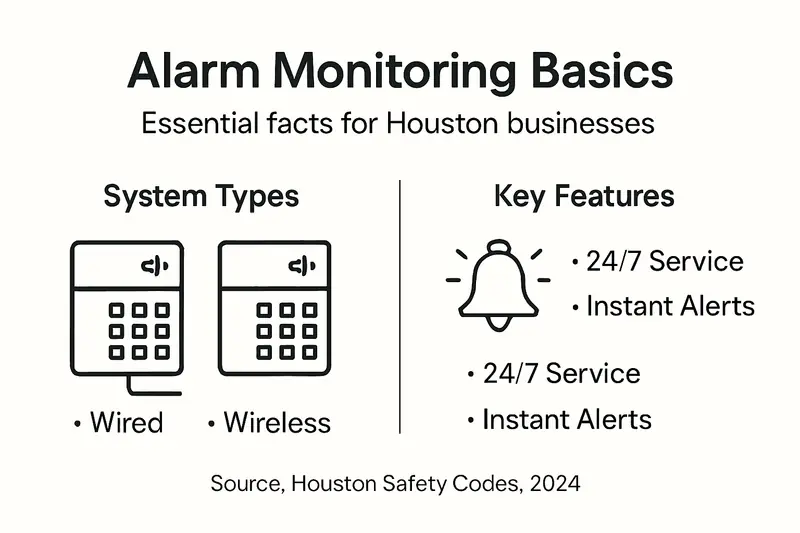
Key cost considerations include:
Use this table to understand the typical costs and risk benefits associated with alarm monitoring in Houston commercial settings:
| Expense Area | Typical Cost Range | Business Impact | Risk Mitigation Benefit |
|---|---|---|---|
| Equipment | $500 – $5,000 | One-time investment | Enhanced security |
| Installation | $300 – $2,000 | Professional setup | Regulatory compliance |
| Monthly Monitoring | $20 – $100 | Ongoing operational expense | Faster emergency response |
| Maintenance | $100 – $500/year | Preserves system reliability | Reduces false alarm risk |
- Initial Investment
- Equipment purchase costs
- Professional installation fees
- Initial system configuration expenses
- Ongoing Expenses
- Monthly monitoring fees
- Maintenance and service contracts
- Potential upgrade costs
- Technology refresh expenses
- Risk Mitigation Factors
- Potential insurance premium reductions
- Liability protection
- False alarm penalty avoidance
- Enhanced property security
When evaluating potential alarm monitoring providers, commercial property managers should assess multiple critical factors:
- Response Time Reliability
- Technological Capabilities
- Comprehensive Service Offerings
- Local Regulatory Compliance
- Customer Support Quality
Professional alarm monitoring transforms risk management from reactive protection to proactive safety strategy.
Monitoring plan structures typically offer different service tiers with varying features:
- Basic Monitoring
- Standard emergency response
- Limited feature set
- Lower monthly costs
- Advanced Monitoring
- Comprehensive emergency tracking
- Multiple communication channels
- Enhanced reporting capabilities
- Higher monthly investment
Potential Risks of Inadequate Monitoring:
- Increased property vulnerability
- Higher insurance premiums
- Potential legal liability
- Compromised tenant safety
Pro tip: Request detailed cost breakdowns and service level agreements from multiple providers to ensure comprehensive understanding of monitoring capabilities and associated expenses.
Strengthen Your Houston Property Safety with Expert Alarm Monitoring Solutions
The article highlights the critical importance of reliable alarm monitoring to protect Houston commercial properties from fire and security risks. It points out common challenges like false alarms, regulatory compliance, and the need for rapid emergency response. These pain points demand advanced fire alarm systems and professional monitoring services that ensure continuous 24/7 surveillance, instantaneous threat detection, and strict adherence to Houston’s safety regulations.
At Reliable Fire Protection, we specialize in providing tailored fire alarm monitoring solutions designed to meet these exact challenges. Our certified experts help you choose from conventional, addressable, or hybrid systems and integrate advanced sensors that transform your property’s safety. With family-owned dedication and stellar client support, we guarantee your peace of mind through prompt emergency response and compliance with Houston codes.
Take action now to protect your property and tenants by exploring our comprehensive offerings and getting a free quote. Discover how expert alarm monitoring can turn potential risks into manageable, controlled situations.
Free Quotes and Fire Safety Services
Advanced Fire Alarm Systems
Fire Suppression and Compliance Expertise
Secure your Houston commercial property today by partnering with Reliable Fire Protection. Visit our website or contact us to schedule your consultation and start protecting what matters most.
Frequently Asked Questions
What is alarm monitoring?
Alarm monitoring involves continuous electronic surveillance of commercial properties to ensure safety by detecting and responding to potential risks in real time.
How does alarm monitoring improve safety in commercial properties?
Alarm monitoring integrates advanced sensor technologies that provide instant detection of security breaches and enable automatic notifications to emergency contacts, enhancing overall property safety.
What are the different types of fire alarm monitoring systems available?
The main types of fire alarm monitoring systems include conventional systems that monitor zones, addressable systems that track specific devices, and hybrid systems that combine features of both.
How do I ensure my alarm monitoring system complies with local regulations?
To comply with local regulations, ensure you obtain proper permits, maintain updated emergency contact information, and conduct regular system maintenance as recommended by local authorities.