
Choosing a fire protection company is more than a box to check for property managers in Houston. The difference between a certified provider and an uncertified one can have real consequences for resident safety and regulatory compliance. When your building’s safety depends on decisions you make, understanding the role of fire protection company certification is crucial for reducing risk and ensuring every system works as intended.
Table of Contents
- Defining Fire Protection Company Certification
- Certifying Authorities And Regulatory Bodies
- Certification Process And Required Qualifications
- Legal Requirements For Houston Property Managers
- Common Compliance Risks And How To Avoid Them
Key Takeaways
| Point | Details |
|---|---|
| Understanding Certification Importance | Fire protection company certification validates that professionals possess the necessary knowledge and skills, directly impacting building safety and liability. |
| Check for Credible Certifications | Always verify that fire protection technicians hold current certifications from recognized organizations like NFPA and that equipment meets UL or FM standards. |
| Adhere to Local Regulations | Property managers must ensure fire protection systems are compliant with local Houston codes and maintained according to NFPA standards to avoid legal liability. |
| Prevent Compliance Risks | Regularly review compliance documentation and schedules to ensure all fire protection equipment is tested and verified, preventing costly violations. |
Defining Fire Protection Company Certification
Fire protection company certification isn’t just a badge on the wall. It’s a standardized validation that a company’s personnel possess the knowledge, skills, and competency to design, install, inspect, and maintain fire protection systems that actually work when lives depend on them. As a property manager, you need to understand what these certifications mean because they directly impact your liability, your building’s safety performance, and whether your property meets Houston’s regulatory requirements.
At its core, fire protection company certification validates that professionals understand fire safety codes, system operation, life safety principles, and the technical details required to keep your building protected. The National Fire Protection Association (NFPA) offers several certifications for fire protection professionals, including Certified Fire Protection Specialist and Certified Fire Inspector credentials. These certifications require demonstrating competence in their respective areas, which means the technician working on your system has passed rigorous exams and met specific experience requirements. When you hire a certified fire protection company, you’re essentially hiring professionals who have proven they know what they’re doing according to industry standards.
Beyond individual NFPA certifications, many reputable fire protection companies pursue organizational certifications like ISO 9001 and ISO 45001. ISO certifications for quality management demonstrate that a company maintains consistent processes, prioritizes occupational health and safety, and commits to regulatory compliance across all their work. These company-level certifications show customers that the organization has systems in place to ensure reliability and effectiveness. For multi-family residential buildings like yours, this matters because it means the company doesn’t just rely on individual employee knowledge, but has institutional practices that support quality on every single job.
When you’re evaluating fire protection companies in Houston, look for certifications that match your specific needs. Your building might need companies certified in fire alarm system installation, sprinkler system design, fire suppression, or all three. Understanding fire protection industry standards helps you ask the right questions during your selection process. Don’t just take their word for it, either. Ask to see current certification documentation and verify credentials through the issuing organizations.
Pro tip: Request certification documentation upfront and verify credentials directly with NFPA or ISO before signing any service agreements. This simple step protects your building and documents your due diligence as a property manager.
Certifying Authorities and Regulatory Bodies
Fire protection in Houston doesn’t operate in a vacuum. Multiple authoritative organizations work together to establish standards, certify companies and professionals, and ensure that the systems protecting your residents actually meet national safety requirements. Understanding who these certifying authorities are helps you verify that any fire protection company you hire has legitimate credentials from recognized organizations.
The National Fire Protection Association (NFPA) stands as the primary standard-setting organization for fire safety across the United States. The NFPA maintains over 300 codes and standards that guide how fire protection systems should be designed, installed, inspected, and maintained. When a fire protection professional holds an NFPA certification like Certified Fire Protection Specialist, it means they’ve studied these standards and demonstrated competency through rigorous examination. The NFPA certifications are recognized nationally and internationally, making them the gold standard in the industry. For property managers in Houston, this matters because NFPA standards directly inform local building codes and inspection requirements that your property must meet.
Beyond NFPA, third-party testing and certification organizations play a critical role in verifying that fire protection equipment and systems actually work. UL (Underwriters Laboratories) conducts factory equipment certifications and in-service testing to ensure fire apparatus and equipment comply with NFPA standards before they’re installed in buildings. Similarly, FM Global provides product testing and approval for fire protection equipment. These organizations essentially serve as independent validators, meaning when equipment carries UL or FM Global certification marks, you know it has passed rigorous safety testing. When evaluating fire protection companies, ask whether they install UL certified fire safety equipment because this adds another layer of assurance that components meet national safety requirements.
In Texas, the State Fire Marshal’s office and local Houston Fire Department officials work alongside these national organizations to enforce compliance at the local level. Your building’s fire protection systems must meet codes that reference NFPA standards, and inspectors verify compliance using those same standards. Think of it this way: NFPA creates the standards, UL and FM Global test the equipment, and local authorities verify your building follows the rules. When you hire a certified fire protection company, you’re hiring professionals who understand all three layers of this system.
Here’s a quick comparison of major fire protection certifying authorities and what they oversee:
| Authority | Scope of Certification | Common Credentials Issued |
|---|---|---|
| NFPA | Codes and professional roles | CFPS, Certified Fire Inspector |
| UL (Underwriters Labs) | Product testing and equipment | UL Listed Equipment certifications |
| FM Global | Fire safety product approval | FM Approved Equipment marks |
| State Fire Marshal | Contractor and company licensing | State Fire Protection Licenses |
Pro tip: When requesting quotes from fire protection companies, specifically ask which certifications their personnel hold and whether their equipment carries UL or FM Global markings. This single question reveals whether they understand quality standards and work with verified, tested equipment.
Certification Process and Required Qualifications
Getting certified as a fire protection professional isn’t something you do overnight. The process involves meeting strict education and experience requirements, then passing a challenging examination. Understanding what goes into earning these credentials helps you evaluate whether a fire protection company’s team actually has the depth of knowledge your building needs.

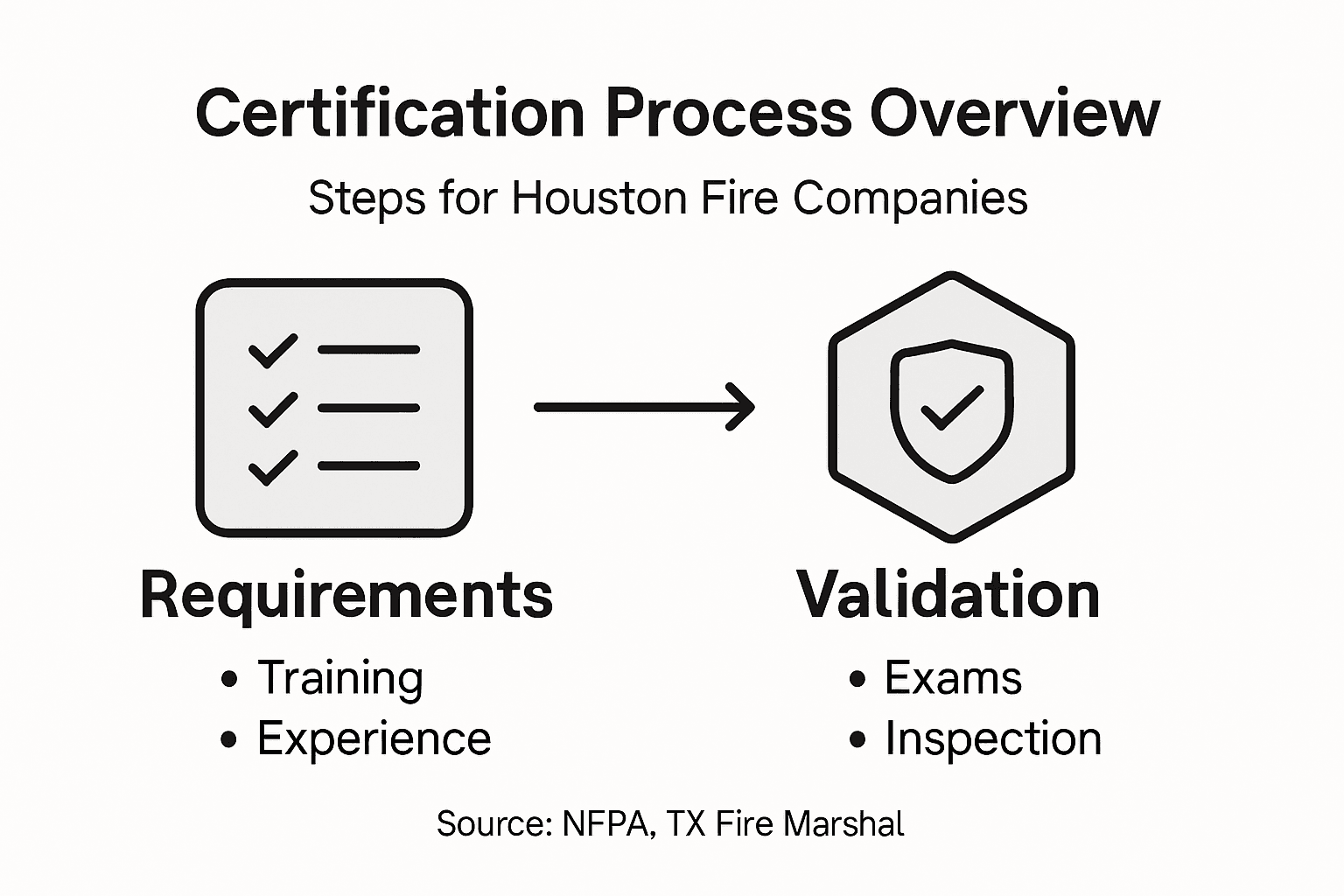
For certifications like Certified Fire Protection Specialist (CFPS), candidates must first meet specific education and experience prerequisites. This typically means having years of hands-on fire protection work combined with formal education in fire science, engineering, or related fields. The exact requirements vary depending on the certification level, but the foundation is always the same: you can’t just study for a test and pass. You need real experience working with fire protection systems, understanding how they operate, troubleshooting problems, and maintaining compliance with codes. Once you’ve accumulated enough experience, you can apply to take the certification exam. The CFPS certification process requires demonstrating knowledge of fire prevention principles, safety systems design, codes and regulations, and effective fire protection management across different building types.
The examination itself is rigorous and based on the Fire Protection Handbook, a comprehensive resource covering everything from sprinkler system design to fire alarm theory to emergency response planning. Candidates spend months preparing, studying codes, practicing problems, and reviewing real-world scenarios. This isn’t a multiple-choice quiz you can guess your way through. The exam tests whether professionals truly understand fire protection concepts at a depth that matters when lives are on the line. When you hire a company where technicians hold CFPS or similar NFPA certifications, you’re hiring people who have invested years into mastering their field and passed an examination designed to validate real competency.
Beyond individual certifications, companies also pursue organizational certifications that demonstrate institutional commitment to quality and compliance. These company-level certifications require documenting procedures, training programs, equipment maintenance schedules, and quality assurance processes. A fire protection company that maintains both individual employee certifications and organizational quality certifications is showing you they take credentials seriously at every level. When evaluating potential service providers for your multi-family building, ask about both the certifications their individual employees hold and what organizational certifications the company itself maintains.
Pro tip: Request proof of current certifications from individual technicians and ask when their certifications expire. Many professionals let certifications lapse, so verifying active status confirms they’re staying current with industry standards and continuing education requirements.
Legal Requirements for Houston Property Managers
As a property manager in Houston, you’re not just managing buildings. You’re managing legal obligations that carry real consequences if you fall short. Texas and local Houston regulations require property managers to ensure fire protection systems are properly installed, maintained, and certified by licensed contractors. Failing to meet these requirements exposes your property, your residents, and yourself to serious liability issues.
Fire protection contractors operating in Houston must hold proper state and local licenses to legally perform installation, maintenance, inspection, and certification work on fire suppression systems. This isn’t optional. When you hire a fire protection company, you need to verify they hold the required licenses to operate in Texas. Fire protection contractor licensing requirements vary depending on the specific services they provide. Some contractors are licensed for installation only, others for inspection and maintenance, and some hold comprehensive licenses covering all aspects. Your responsibility as a property manager includes verifying that any company you contract with holds the appropriate licenses for the work they’ll perform on your building. This protects you because if unlicensed contractors cause problems, you could face penalties or liability claims.
Beyond contractor licensing, your building must comply with NFPA codes and standards that Houston has adopted into its local fire safety regulations. NFPA codes and standards set specific requirements for fire alarm systems, sprinkler systems, fire suppression equipment, and emergency procedures. Your property must undergo regular inspections, testing, and maintenance to demonstrate compliance with these codes. This isn’t something you do once and forget about. It’s an ongoing obligation that requires documented proof of inspections and maintenance activities. Failure to observe these codes results in penalties, failed inspections, code violations, and increased liability if a fire occurs and your systems didn’t meet standards.
Houston’s Fire Department conducts inspections to verify compliance, and property managers bear the responsibility for ensuring systems meet code requirements. When systems fail inspection because of inadequate maintenance or non-compliant equipment, you face correction notices, fines, and potential loss of occupancy permits. The stakes are high. Document everything: contractor licenses, inspection reports, maintenance records, and system certifications. When evaluating fire protection companies, prioritize those that maintain detailed compliance documentation and understand the specific NFPA standards your building must meet.
Pro tip: Maintain a compliance file with copies of all contractor licenses, inspection certificates, maintenance logs, and NFPA code references applicable to your building. Present this file during Fire Department inspections to demonstrate your diligence in meeting legal requirements.
Common Compliance Risks and How to Avoid Them
Compliance failures don’t happen because property managers ignore the rules. They happen because managers don’t realize a risk exists until an inspector flags it or, worse, until a system fails. Understanding the most common compliance pitfalls gives you a chance to catch and fix problems before they become serious liability issues. The good news is that most risks are preventable with proper attention and the right partners.
One major compliance risk that catches property managers off guard is installing or maintaining non-listed or non-approved fire protection equipment. This happens more often than you’d think. A contractor buys cheaper components that aren’t UL listed or FM approved, installs them, and everything works fine until an inspector arrives. UL listing and FM approval certifications are critical requirements under NFPA 13 standards for sprinkler systems and other fire protection equipment. Using non-certified components creates a compliance violation that can result in failed inspections, forced system replacements, and voided insurance coverage. When evaluating fire protection companies, specifically ask whether all equipment they install carries current UL or FM Global approvals. Request documentation proving certification status before work begins.
Another critical risk stems from inadequate or irregular testing, inspection, and certification schedules. Many property managers believe that one inspection satisfies the requirement, then they move on. Fire protection systems require ongoing maintenance and testing on strict schedules. Sprinkler systems need annual inspections. Fire alarms require quarterly testing. Backflow preventers need certification annually. Failing to maintain these schedules creates gaps in compliance documentation and leaves your building vulnerable. When an inspector asks for records and you can’t produce them, you’ve created a violation. Regular system testing and documentation keeps systems ready and maintains regulatory compliance. Use certified service providers who maintain automated scheduling reminders so you never miss a required test or inspection.
A third risk involves hiring contractors without verifying their qualifications or insurance. An uncertified contractor who causes damage to your system leaves you responsible for repairs and liability claims. Before signing any agreement, verify the contractor holds appropriate state and local licenses, ask about their insurance coverage, and check references from other property managers they’ve served. Create a simple tracking system for all fire protection service dates, contractors used, and inspection results. This documentation proves you’re actively managing compliance and protects you during Fire Department inspections.
Review this summary of common compliance risks and tips to avoid them:
| Compliance Risk | How It Happens | Prevention Strategy |
|---|---|---|
| Non-listed fire equipment installed | Use of components lacking UL or FM mark | Request and confirm certification docs |
| Irregular testing/inspection | Missed or infrequent system checks | Set reminders, use certified providers |
| Unqualified contractors | Failed verification of licenses/insurance | Verify credentials and insurance proof |
Pro tip: Schedule a quarterly compliance review where you check all testing and inspection records, verify certification dates, and confirm upcoming maintenance is scheduled. This 30-minute review prevents expensive compliance violations and demonstrates due diligence to regulators.
Ensure Your Houston Property Meets Fire Protection Certification Standards Today
Navigating the complex world of fire protection certifications in Houston can be overwhelming. You need a trusted partner who understands NFPA standards, UL equipment requirements, and local regulatory obligations to protect your multi-family or commercial property effectively. With challenges like verifying contractor credentials, ensuring equipment compliance, and maintaining ongoing inspections, choosing a certified fire protection company is not just smart it is essential for your safety and peace of mind.
Reliable Fire Protection specializes in helping Houston property managers and building owners meet these exact challenges. Our team holds the certifications and licenses that prove our expertise in sprinkler installation, fire alarm systems, suppression solutions, and more. We also use only UL listed and FM approved equipment to guarantee compliance and reliability. When you partner with us, you gain a certified, family-owned company committed to your property’s safety and legal compliance.
Start securing your building’s fire protection systems now by exploring our full suite of services at Fire Protection – Reliable Fire Protection.
Don’t wait for a compliance inspection to highlight costly issues. Visit https://reliable-fire-protection.com or contact us today to request a free quote and experience the confidence that comes with professional certification and proven expertise.
Frequently Asked Questions
What is fire protection company certification?
Fire protection company certification validates that professionals possess the knowledge and skills to design, install, inspect, and maintain fire protection systems, ensuring they meet safety standards and legal requirements.
Who are the certifying bodies for fire protection professionals?
Key certifying bodies include the National Fire Protection Association (NFPA), Underwriters Laboratories (UL), and FM Global. These organizations set standards and validate that both individuals and their equipment meet safety criteria.
How do I verify a fire protection company’s credentials?
You can verify a fire protection company’s credentials by asking for their certification documentation and checking the status with issuing organizations like NFPA or UL to ensure their certifications are current and valid.
What qualifications are needed to obtain fire protection certifications?
To obtain certifications such as Certified Fire Protection Specialist (CFPS), candidates typically need relevant education and hands-on experience, followed by passing a rigorous examination that tests their knowledge of fire protection principles and codes.
Recommended
- Fire Safety Testing Requirements for Houston Properties
- What Is a Fire Inspection and Why Compliance Matters
- Top 5 Fire Protection Services in 2026 for Houston’s Safety Needs
- Fire Protection Industry Standards for Houston Properties
- Fire Alarm System University Place TX
- Fire Alarm System Bellaire TX