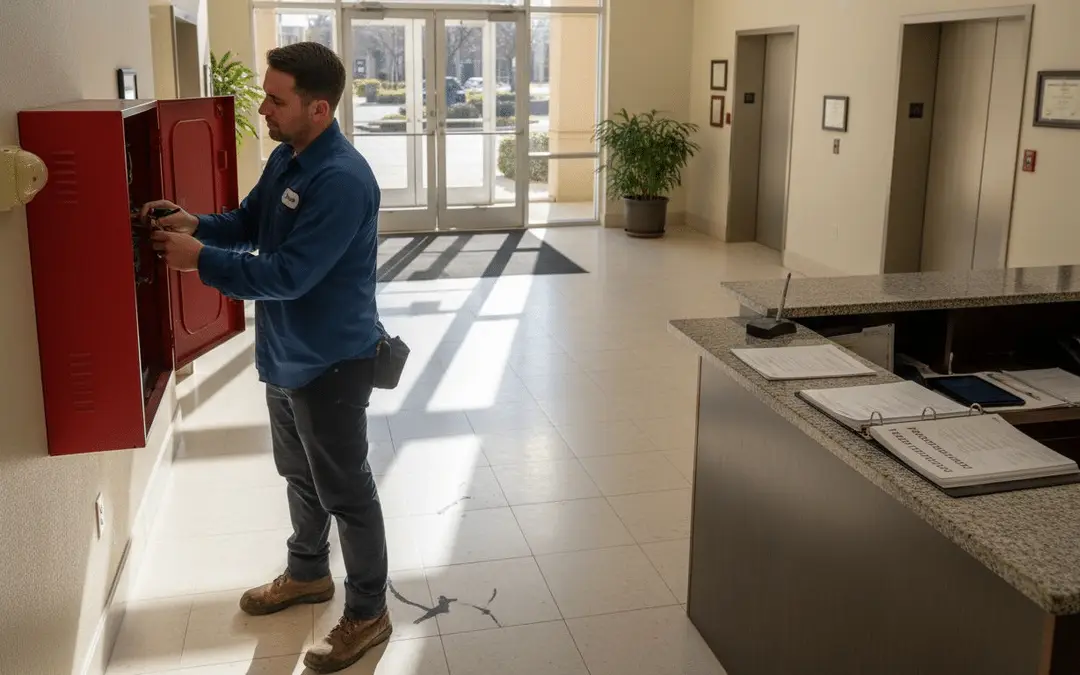
Over 3,800 fires occur in American commercial properties each year, making rigorous fire safety testing a non-negotiable priority for Houston property managers. With evolving local and national codes shaping compliance, even a small oversight could put tenant safety and legal standing at risk. This guide breaks down the critical testing requirements and standards every Houston manager must master to protect buildings and stay confidently compliant.
Table of Contents
- Understanding Fire Safety Testing Requirements
- Types of Fire Protection Systems Tested
- Mandatory Testing Intervals and Procedures
- Houston and National Code Compliance Laws
- Common Testing Mistakes and How to Avoid Them
Key Takeaways
| Point | Details |
|---|---|
| Importance of Fire Safety Testing | Fire safety testing is essential for ensuring buildings are protected against fire hazards and comply with safety standards. |
| Comprehensive Testing Protocols | Effective testing evaluates not only individual components but also the integration of entire fire protection systems. |
| Adherence to Compliance Laws | Staying updated with local and national fire codes is crucial for avoiding legal repercussions and ensuring safety standards. |
| Prevention of Common Mistakes | Documenting testing procedures accurately and using qualified technicians are key to maintaining robust fire protection systems. |
Understanding Fire Safety Testing Requirements
Fire safety testing is a critical process that ensures buildings and properties maintain optimal protection against potential fire hazards. Fire tests determine whether fire protection products comply with mandated safety standards, providing comprehensive evaluations of building materials, systems, and components under potential fire conditions.
These rigorous assessments cover multiple critical aspects of fire protection, including:
- Fire resistance ratings
- Surface burning characteristics
- Smoke production measurements
- Structural integrity during fire exposure
Property managers in Houston must recognize that fire safety testing goes beyond simple compliance. Fire protection frameworks established by organizations like the National Fire Protection Association (NFPA) provide comprehensive guidelines that help identify potential vulnerabilities before they become life-threatening risks. These evaluations examine both active systems like fire alarms and sprinklers, and passive protection elements such as fire-rated doors and wall assemblies.
Understanding the scope of fire safety testing requires recognizing its multifaceted nature. Testing protocols assess not just individual components but how entire fire protection systems interact during emergency scenarios. This holistic approach ensures that when a fire occurs, each element functions precisely as designed to protect occupants and minimize potential property damage.
Pro tip: Schedule comprehensive fire safety tests annually and maintain detailed documentation to demonstrate ongoing compliance and system reliability.
Types of Fire Protection Systems Tested
Property managers in Houston must understand the diverse range of fire protection systems tested to ensure comprehensive safety. These critical systems represent multiple lines of defense against potential fire emergencies, each designed to detect, suppress, or mitigate fire risks in different scenarios.
The primary categories of fire protection systems tested include:
- Water-based Systems
- Fire sprinkler systems
- Fire pumps
- Wet pipe systems
- Dry pipe systems
- Detection Systems
- Fire alarm networks
- Smoke detectors
- Heat sensors
- Specialized Suppression Systems
- Gaseous agent systems
- Chemical suppression systems
Fire suppression systems are categorized based on their specific methods of extinguishing or controlling fires, with each type undergoing rigorous testing to guarantee maximum effectiveness. Wet pipe sprinkler systems remain most common in residential and commercial settings, while dry pipe systems provide essential protection in environments prone to freezing temperatures.
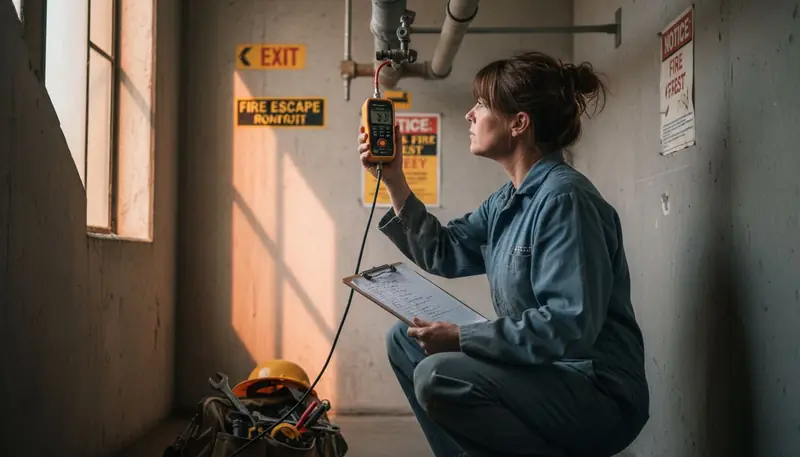
Advanced testing protocols evaluate not just individual components but the entire system’s integrated performance. Technicians assess response times, activation mechanisms, coverage areas, and compatibility between different fire protection elements. This comprehensive approach ensures that when an emergency occurs, each system will function precisely as designed to protect occupants and minimize potential property damage.
Pro tip: Request detailed documentation and testing records for each fire protection system to maintain a comprehensive understanding of your property’s safety infrastructure.
Mandatory Testing Intervals and Procedures
The Houston Fire Code establishes critical requirements for fire protection system testing and maintenance, outlining specific protocols that property managers must follow to ensure comprehensive safety compliance. These mandates dictate not just what systems need testing, but precisely when and how comprehensive evaluations must be conducted.
Key testing intervals vary based on specific system types and building characteristics:
- Fire Alarm Systems: Quarterly and annual comprehensive tests
- Sprinkler Systems: Annual full system inspections
- Fire Pumps:
- Diesel pumps: Weekly operational checks
- Electric pumps: Monthly performance evaluations
- Suppression Systems: Semi-annual functional assessments
NFPA standards require rigorous pump testing procedures that go beyond simple manual starts, emphasizing automatic activation triggered by pressure drops. These protocols ensure that when an emergency occurs, every component functions exactly as designed. Technicians must document each test meticulously, recording response times, activation mechanisms, and any potential system vulnerabilities.
Property managers should recognize that mandatory testing is more than a regulatory checkbox. These systematic evaluations represent a critical investment in occupant safety, identifying potential weaknesses before they can compromise building protection. Each test provides an opportunity to validate system integrity, update maintenance records, and demonstrate proactive risk management.
Pro tip: Develop a comprehensive testing calendar that tracks all fire protection system inspection dates, ensuring no critical evaluation is overlooked or delayed.
Houston and National Code Compliance Laws
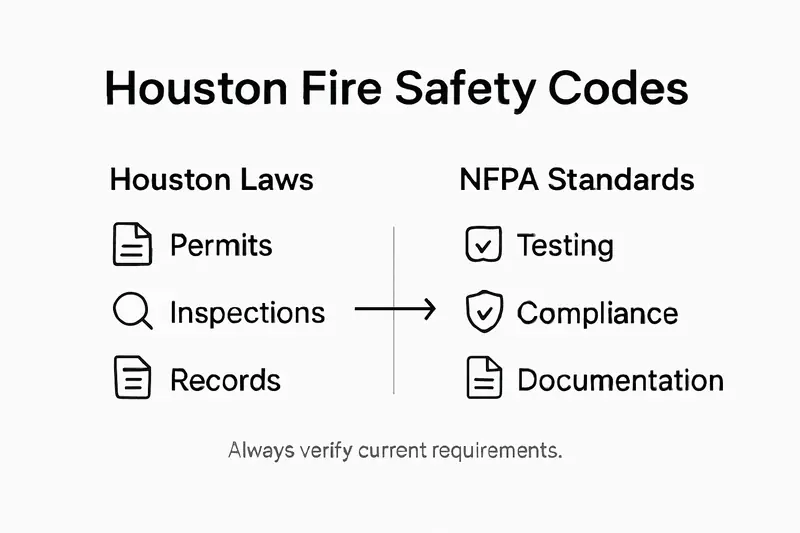
Houston’s Fire Code carefully adopts and modifies the International Fire Code, establishing a comprehensive framework for fire protection and life safety systems. This local regulatory approach ensures that building safety standards are not just nationally recognized, but tailored to the specific needs and risks of the Houston metropolitan area.
Key compliance requirements encompass multiple critical areas:
- Design Standards
- Precise system installation specifications
- Mandatory documentation protocols
- Permit acquisition requirements
- Inspection Protocols
- Regular comprehensive evaluations
- Performance verification procedures
- Documented maintenance records
- Testing Mandates
- System functionality assessments
- Periodic performance validation
- Compliance verification processes
NFPA standards provide the foundational guidelines for fire safety regulations, with specific codes like NFPA 13 for sprinkler systems and NFPA 72 for fire alarm systems widely adopted across the United States. These nationally recognized standards ensure that local jurisdictions maintain consistent, high-quality fire protection protocols, creating a unified approach to safety that transcends individual municipal boundaries.
Property managers and building owners must understand that code compliance is not a static requirement but a dynamic process. Regulations evolve to address emerging technologies, new fire risks, and lessons learned from past incidents. Staying informed about both local Houston fire codes and national standards is crucial for maintaining optimal building safety and avoiding potential legal and financial penalties.
Here’s how Houston and national fire safety codes differ and align:
| Aspect | Houston Fire Code | National NFPA Standards |
|---|---|---|
| Regulatory Authority | Local city government | National professional body |
| Standard Basis | Adopts International Fire Code | Develops NFPA codes (e.g., 13, 72) |
| Adaptation | Customizes for local risks | Applies general best practices |
| Enforcement | Local inspectors and fire marshals | Reference for local authorities |
| Update Frequency | Changes per city council | Regularly revised by NFPA committees |
Pro tip: Schedule annual reviews with a certified fire protection professional to ensure your property remains fully compliant with the latest Houston and national fire safety regulations.
Common Testing Mistakes and How to Avoid Them
Fire safety testing mistakes can compromise entire building protection systems, creating potentially catastrophic risks for property managers and occupants. Understanding these common pitfalls is crucial for maintaining reliable fire protection infrastructure in Houston properties.
Most frequent testing mistakes include:
- Documentation Errors
- Incomplete inspection records
- Missing maintenance logs
- Inconsistent reporting
- Technical Oversights
- Skipping sensitivity tests
- Inadequate functional evaluations
- Neglecting manufacturer specifications
- Compliance Failures
- Ignoring updated code requirements
- Using unqualified inspection personnel
- Postponing required system upgrades
Fire safety research institutes emphasize the critical importance of comprehensive testing protocols that go beyond surface-level inspections. Successful testing requires a systematic approach that includes detailed documentation, thorough functional assessments, and strict adherence to both manufacturer guidelines and local regulatory standards. Property managers must recognize that each test represents an opportunity to identify potential vulnerabilities before they become critical safety risks.
Effective testing is not just about checking boxes but understanding the intricate interactions between different fire protection systems. Technicians must approach each inspection with a holistic view, recognizing that even minor oversights can compromise the entire safety infrastructure. This means looking beyond basic functionality to assess system integration, response times, and potential performance limitations.
Use this quick reference to avoid frequent fire safety testing mistakes:
| Mistake Category | Impact | Best Prevention Practice |
|---|---|---|
| Documentation Errors | Invalid compliance proof | Digital, centralized test logs |
| Technical Oversights | System failures in emergencies | Assign certified technicians |
| Compliance Failures | Legal and financial penalties | Schedule annual code reviews |
Pro tip: Develop a comprehensive testing checklist that covers every aspect of your fire protection systems, and always have tests performed by certified professionals with specific expertise in Houston fire safety regulations.
Ensure Your Houston Property Meets All Fire Safety Testing Requirements with Trusted Experts
Navigating the complex fire safety testing requirements for Houston properties can feel overwhelming. Between mandatory testing intervals, adherence to local and national codes, and the need to avoid costly mistakes, property managers need a partner who understands the challenges and delivers reliable solutions. At Reliable Fire Protection, we specialize in comprehensive fire protection services designed specifically to help Houston residential and commercial properties stay safe and fully compliant.
Don’t leave fire safety to chance. Our certified team is equipped to handle everything from fire alarm system inspections to sprinkler installation and suppression system maintenance. Benefit from our expert knowledge of Houston’s fire codes and the latest NFPA standards. Visit our Fire Protection category to learn more about our tailored services. Contact us today at Reliable Fire Protection for a free consultation and secure the peace of mind that comes with knowing your property’s fire safety systems are tested correctly, reliably documented, and ready to perform in an emergency.
Frequently Asked Questions
What are the key components of fire safety testing for properties?
Fire safety testing evaluates essential aspects such as fire resistance ratings, surface burning characteristics, smoke production measurements, and structural integrity during fire exposure to ensure comprehensive safety.
How often should fire protection systems be tested?
Testing intervals vary by system type: fire alarm systems require quarterly and annual tests, sprinkler systems need annual inspections, while fire pumps and suppression systems have specific weekly, monthly, or semi-annual testing requirements.
What common mistakes should be avoided in fire safety testing?
Common mistakes include documentation errors (incomplete inspection records), technical oversights (neglecting manufacturer specifications), and compliance failures (ignoring updated code requirements). Avoiding these can ensure effective fire safety protocols.
How do local Houston Fire Code requirements differ from national NFPA standards?
Houston Fire Code adapts and modifies the International Fire Code to address local risks, while NFPA provides foundational national safety standards. Compliance requires understanding both local adaptations and national guidelines.
Recommended
- Fire Alarm Inspection Guide for Safe Houston Properties
- 7 Must-Have Fire Safety Equipment Tips for Houston Managers
- Fire Extinguisher Inspection Workflow for Houston Compliance
- Fire Safety System Components for Houston Buildings
- Fire Protection Company Cinco Ranch TX
- Fire Alarm System Services Cinco Ranch TX