
TL;DR:
- Retrofitting fire protection enhances occupant safety, legal compliance, and insurance benefits in existing buildings. Delaying upgrades raises the risk of fire, legal penalties, and higher future costs, making proactive planning essential. Proper project management and ownership of firestopping and design responsibilities ensure effective, occupancy-friendly fire safety improvements.
Fire protection retrofitting is defined as the process of installing or upgrading fire safety systems in existing buildings to meet modern codes and protect occupants from fire risk. Property owners and facility managers who delay this work face consequences that go far beyond regulatory fines. The importance of fire protection retrofitting spans life safety, asset preservation, and legal compliance. This guide covers the key benefits of retrofitting fire safety, the technologies involved, the real costs, and how to plan a successful project using examples like the Marco Polo high-rise retrofit and 2026 code requirements.
Why retrofit fire protection in your building?
Retrofitting fire protection delivers measurable improvements across four areas: occupant safety, regulatory compliance, financial risk, and insurance costs. Each of these carries real weight for property owners and facility managers making budget decisions.
Occupant and responder safety is the most direct benefit. Modern sprinkler systems control fires effectively when retrofitted into residential and commercial properties, reducing the window for fire spread and giving occupants more time to evacuate. This matters most in buildings constructed before current fire codes were adopted.
Compliance with current fire codes protects you from fines, forced closures, and liability exposure. Fire safety regulations have tightened significantly, and buildings that were compliant a decade ago may now fall short of 2026 standards. Retrofitting closes that gap before an inspector or an incident forces your hand.
Financial risk reduction is where many owners underestimate the case for retrofitting. The cost of inaction extends beyond fines to loss of life, housing instability, and property collapse. These outcomes carry legal, reputational, and financial consequences that dwarf the cost of a retrofit project. Industry experts consistently note that upfront retrofit costs are overstated while the risks of inaction are greatly underappreciated.
Insurance premium benefits are a practical financial incentive. Insurers price risk, and a building with updated fire suppression and detection systems represents lower risk. Many carriers offer reduced premiums or improved coverage terms for properties with certified, modern fire protection.
- Reduced liability exposure from code compliance
- Lower insurance premiums with certified systems
- Preserved or increased asset value
- Reduced business interruption risk from fire events
- Demonstrated duty of care to occupants and regulators
Pro Tip: Request a written fire risk assessment before contacting your insurer. Documented improvements to your fire protection systems give you a concrete basis for negotiating better premium rates.
How retrofitted systems enhance safety and meet current regulations
Older buildings carry fire risks that are not obvious until something goes wrong. Outdated wiring and fire systems in aging structures are leading causes of fire, and retrofitting replaces these vulnerabilities with modern, compliant technologies. Understanding where those gaps exist helps you prioritize which upgrades matter most.
Common vulnerabilities in older buildings
Aging electrical wiring is the most frequent culprit in building fires, particularly in structures built before the 1980s. Beyond wiring, older buildings often lack sprinkler coverage in key areas, use combustible construction materials that modern codes restrict, and have floor plans that allow fire to travel unchecked between compartments.
Firestopping is a specific vulnerability that receives less attention than it deserves. Firestopping defects are common in existing buildings because responsibility for sealing penetrations often falls between contractors, leaving gaps around pipes, cables, and ducts that allow fire and smoke to bypass compartment walls. These unsealed penetrations compromise the entire fire compartmentation strategy of a building.
Technologies that close the gaps
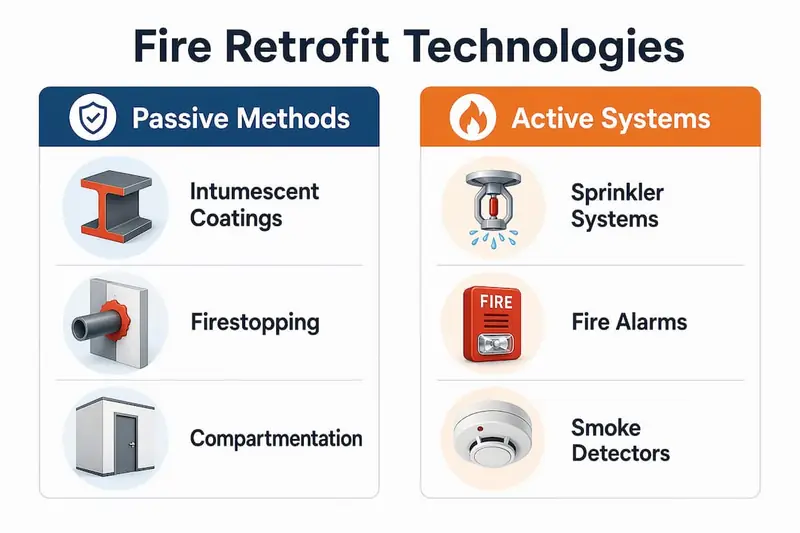
Modern fire protection retrofits draw on several proven technologies:
- Fire sprinkler systems: Wet pipe, dry pipe, and pre-action systems can be installed in occupied buildings using phased construction. Sprinklers remain the most effective single technology for controlling fire spread.
- Advanced fire detection and alarm systems: Addressable alarm panels, multi-sensor detectors, and voice evacuation systems provide faster, more accurate alerts than older single-zone systems. Advanced fire detectors improve both detection speed and false alarm reduction.
- Intumescent fireproofing: Applied to structural steel, intumescent coatings expand under heat to insulate steel members and delay structural failure. This is particularly important for buildings where exposed steel was not originally protected to current standards.
- Firestopping and compartmentation upgrades: Sealing penetrations with rated materials and installing fire doors restores the compartmentation that prevents fire from traveling through a building.
Pro Tip: When specifying firestopping products, require UL-listed assemblies and confirm that the installer has experience with the specific penetration type. Generic sealant applied to a cable tray penetration is not a compliant firestop.
Improved fire safety design coordination, including early collaboration with firestopping manufacturers and use of third-party certifications, is now becoming standard practice to prevent the legacy defects that plague older buildings.
What challenges arise when retrofitting existing buildings?
Retrofitting an occupied building is more complex than new construction. Access, disruption, cost, and technical constraints all require careful planning. Setting realistic expectations before you start prevents budget overruns and project delays.
Key challenges to plan for
- Access in occupied buildings: Running new pipe, conduit, or ductwork through finished walls and ceilings requires cutting, patching, and repainting. In occupied residential buildings, this means coordinating access to individual units, which adds time and communication overhead.
- Cost and timeline variability: Structural fireproofing retrofits typically take 5 to 12 weeks and cost between $17,000 and $50,000 depending on building condition and size. These figures do not include engineering assessments, which add $1,000 to $5,000, or inspections, which add one to two weeks to the schedule.
- Structural and engineering limitations: Some buildings have structural configurations that complicate pipe routing or require additional engineering review before fireproofing can be applied. Discovering these constraints mid-project is expensive.
- Coordination with occupants: Phased construction, where work proceeds floor by floor or zone by zone, reduces displacement and keeps buildings operational. The Marco Polo high-rise retrofit demonstrated that extensive retrofits can be completed with all residents in place when phased construction and clear communication are used.
- Surface preparation failures: Intumescent coatings applied on rusty or dirty surfaces fail prematurely. Proper surface preparation constitutes around 80% of retrofit success, yet it is the step most frequently cut when budgets tighten.
| Challenge | Impact | Mitigation |
|---|---|---|
| Occupied building access | Delays and occupant disruption | Phased construction, advance scheduling |
| Surface prep failures | Premature coating failure | Thorough cleaning and rust removal before application |
| Engineering surprises | Cost overruns | Pre-project structural assessment |
| Inspection delays | Extended timeline | Schedule inspections early in project planning |
Pro Tip: Build a 15% contingency into your retrofit budget specifically for surface preparation and engineering surprises. These two line items are where most projects exceed their original estimates.
What methods and technologies are used in fire protection retrofitting?
The right retrofit method depends on your building type, occupancy, and the specific fire risks you are addressing. Each technology has a distinct application, cost profile, and construction impact.
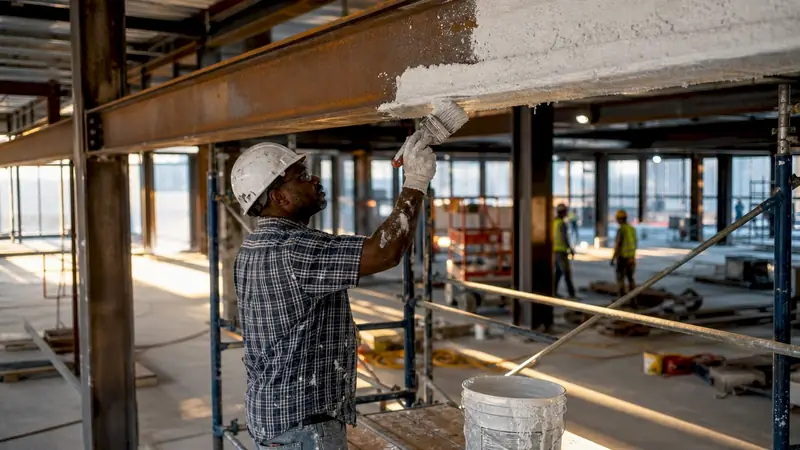
Intumescent fireproofing protects structural steel by expanding when exposed to heat, forming an insulating char layer that delays steel failure. It is applied as a paint-like coating and is preferred in occupied buildings because it produces minimal dust and disruption compared to spray-applied fireproofing. The tradeoff is cost: intumescent products are more expensive per square foot than cementitious alternatives.
Fire sprinkler system installation and upgrades cover the widest range of building types. Wet pipe systems are standard for heated spaces. Dry pipe systems serve unheated areas like parking garages. Pre-action systems protect data centers and archives where accidental discharge would cause significant damage. Upgrading an existing system often means replacing heads, adding coverage to previously unprotected areas, or increasing water supply capacity.
Advanced detection and alarm systems are the fastest-evolving category in fire protection. Addressable systems identify the exact device that triggered an alarm, cutting response time and reducing false evacuations. Multi-criteria detectors that sense both smoke and heat reduce nuisance alarms in kitchens and mechanical rooms.
Firestopping and compartmentation work is often the most overlooked retrofit category. It does not involve visible equipment, but it is the mechanism that keeps a fire contained to its compartment of origin. Penetration seals, fire-rated joint systems, and fire door upgrades all contribute to compartmentation integrity.
| Technology | Best application | Relative cost | Construction disruption |
|---|---|---|---|
| Intumescent fireproofing | Exposed structural steel | High | Low |
| Wet pipe sprinklers | Occupied heated spaces | Moderate | Moderate |
| Addressable alarm systems | All building types | Moderate | Low |
| Firestopping upgrades | All penetrations and joints | Low to moderate | Low |
How to plan and implement a successful retrofit project
A successful fire protection retrofit starts before any contractor sets foot on site. The planning phase determines whether the project finishes on time, within budget, and with systems that actually pass inspection.
- Commission a professional fire risk assessment before scoping any work. A qualified fire protection engineer identifies the specific gaps in your current system and prioritizes upgrades by risk level. This assessment costs far less than discovering compliance failures during an inspection.
- Verify fire rating requirements and specify UL-listed assemblies. Every component in a rated assembly, from the firestop sealant to the sprinkler head, must be listed for the specific application. Substituting unlisted products voids the assembly rating and creates liability.
- Schedule work to minimize disruption. For occupied buildings, work in phases and communicate timelines to occupants at least two weeks in advance. The fire safety guide for high-rise buildings provides specific scheduling frameworks for complex occupied retrofits.
- Build inspections into the project schedule from day one. Engineering assessments and inspections costing $1,000 to $5,000 are not optional extras. They are the mechanism by which your retrofit earns its compliance certification.
- Assign clear firestopping responsibility. The gap in firestopping design responsibility is a documented cause of defects in existing buildings. Name a single party, whether the general contractor or a specialist subcontractor, who owns every penetration seal from installation through inspection.
Pro Tip: Ask your fire protection contractor for a penetration log: a documented record of every firestopped opening, the product used, and the UL assembly number. This log is your proof of compliance and your defense in any future liability dispute.
Key takeaways
Retrofitting fire protection is the most cost-effective way to close the gap between an aging building’s actual fire risk and the safety standard its occupants and insurers expect.
| Point | Details |
|---|---|
| Define the risk first | Commission a fire risk assessment before scoping any retrofit work to prioritize upgrades by actual risk level. |
| Inaction costs more | Loss of life, housing instability, and legal liability far exceed the cost of a planned retrofit project. |
| Surface prep drives success | Around 80% of intumescent fireproofing success depends on surface preparation, not the coating itself. |
| Phased work enables occupancy | High-rise retrofits like Marco Polo prove that occupied buildings can be fully retrofitted without displacing residents. |
| Firestopping needs ownership | Assign one party responsibility for all penetration seals to prevent the gaps that compromise compartmentation. |
The case for acting before you are forced to
After working alongside property owners and facility managers on fire protection projects across Houston, the pattern I see most often is this: the buildings with the worst fire safety gaps are rarely owned by negligent people. They are owned by people who kept assuming the retrofit could wait one more budget cycle.
The Marco Polo high-rise retrofit is the example I return to most often. That project proved that a full sprinkler retrofit in a densely occupied residential tower is not just possible. It is manageable, when you plan it correctly and communicate clearly with residents. The owners who study that project and act on it are the ones who avoid the alternative outcome.
What I find underappreciated is how much the fire system upgrade benefits compound over time. A building with modern detection, suppression, and compartmentation does not just pass inspection. It commands better insurance terms, attracts better tenants, and carries lower liability exposure year after year. The retrofit pays for itself. The question is whether you plan it or whether an incident plans it for you.
Fire safety expectations in 2026 are not going to soften. Codes will tighten, insurers will ask harder questions, and occupants will expect more. The property owners who engage with a qualified fire protection engineer now, before a compliance notice arrives, are the ones who control the timeline, the budget, and the outcome.
— Reliable-fire-protection
Upgrade your building’s fire protection with Reliable Fire Protection
Reliable Fire Protection serves property owners and facility managers across Houston with certified fire alarm installation, sprinkler system retrofits, suppression systems, and firestopping solutions. Whether you are addressing a compliance gap or proactively upgrading an aging system, the team at Reliable Fire Protection brings the engineering expertise and local code knowledge to get the project done right the first time. Learn how fire alarm systems work and what a modern retrofit installation involves before your next project conversation. Contact Reliable Fire Protection for a free quote and a clear scope of work tailored to your building’s specific fire risk profile.
FAQ
What does fire protection retrofitting mean?
Fire protection retrofitting means installing or upgrading fire safety systems, such as sprinklers, alarms, and firestopping, in existing buildings that were built before current codes were adopted. The goal is to bring the building’s fire safety performance up to modern standards without full reconstruction.
How much does a fire protection retrofit cost?
Structural fireproofing retrofits typically cost between $17,000 and $50,000, with engineering assessments adding $1,000 to $5,000 and inspections adding one to two weeks to the schedule. Sprinkler and alarm system costs vary by building size and system complexity.
Can a building be retrofitted while occupied?
Yes. Phased construction and clear communication with occupants allow full retrofits to be completed in occupied buildings, as demonstrated by the Marco Polo high-rise retrofit, where all residents remained in place throughout the project.
Is retrofitting fire protection legally required?
Many jurisdictions require fire protection upgrades when buildings undergo renovation, change of use, or when inspections identify code deficiencies. Specific requirements depend on local fire codes and the building’s occupancy classification.
What is the biggest risk of delaying a fire protection retrofit?
The biggest risk is catastrophic loss, including loss of life, property destruction, and legal liability, all of which carry costs that far exceed the price of a planned retrofit. Insurers and regulators are also increasing scrutiny of buildings with outdated fire systems in 2026.