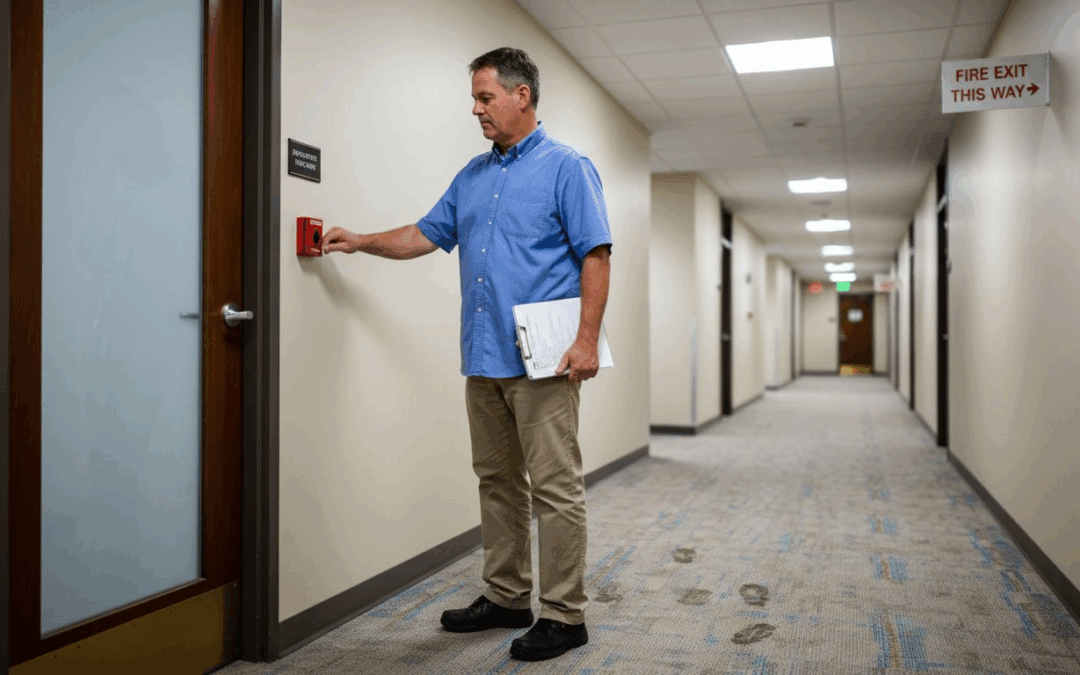
Keeping Houston buildings safe takes more than just good intentions. Property managers face legal and personal risk if fire alarm systems are ignored, making reliable protection a daily responsibility. Fire alarms offer early warning to occupants, helping everyone evacuate before danger escalates and providing critical information to firefighters during emergencies. Understanding how these systems work and meeting NFPA 72 standards can make the difference between smooth compliance and costly liability.
Table of Contents
- Fire Alarm Systems And Their Essential Role
- Types Of Fire Alarms In Houston Buildings
- How Fire Alarm Testing Works
- Houston Fire Codes And Legal Requirements
- Risks Of Neglecting Regular Alarm Testing
- Best Practices For Property Manager Compliance
Key Takeaways
| Point | Details |
|---|---|
| Importance of Fire Alarm Systems | Fire alarm systems provide early warnings, enabling safe evacuations and reducing liability during emergencies. |
| Regular Testing Requirement | Quarterly testing and documentation are critical to ensure fire alarm systems function correctly and comply with safety regulations. |
| Compliance with Fire Codes | Adhering to local fire codes is mandatory to maintain safety standards and avoid legal repercussions. |
| Training and Preparedness | Staff training on fire procedures and regular drills enhance response effectiveness during actual emergencies. |
Fire Alarm Systems And Their Essential Role
Fire alarm systems are your first line of defense when an emergency strikes. These systems do one critical thing: provide early warning to occupants so they can evacuate safely before fire spreads. Without them, people in your building face serious danger, and you face serious liability.
A complete fire alarm system includes several interconnected components working together. You have smoke and heat detectors positioned throughout your property, manual pull stations that occupants can activate if needed, audible and visual alarms that alert everyone, and a central control panel that monitors everything. Understanding how fire alarm systems detect and signal fires helps you recognize what your specific building requires.
Fire alarm systems provide critical early warning to building occupants of a fire emergency, enabling evacuation to protect lives. They also serve a secondary but equally important purpose: they give incident commanders and firefighters immediate information about your building’s fire protection setup. This intelligence helps emergency responders act faster and more effectively when they arrive at your property.
For Houston property managers, compliance isn’t optional. The NFPA 72 standard establishes specific requirements for detector placement, alarm notification zones, and control panel configuration to ensure your system reliably detects fires and alerts occupants. These aren’t guidelines you can ignore. They’re building codes that protect people and protect you from liability. Your system must meet these standards without exception.
Regular testing proves your system works when it matters most. A detector that hasn’t been tested in months might fail silently. A battery in your control panel could be dead. An alarm speaker could be too quiet. Testing reveals these problems before a real fire does, and that difference can save lives in your building.
Pro tip: Schedule fire alarm tests quarterly and document each one with photos and timestamps. This creates a clear compliance record that demonstrates your diligence if questions ever arise about your building’s safety practices.
Types Of Fire Alarms In Houston Buildings
Houston buildings use different fire alarm technologies depending on their size, occupancy type, and specific fire risks. Understanding what types exist in your property helps you know what you’re testing and why each component matters. Not all alarms work the same way, and that’s intentional.
Smoke alarms are the foundation of most detection systems. Ionization smoke alarms respond quickly to flaming fires where flames spread rapidly, while photoelectric smoke alarms detect smoldering fires that produce visible smoke. Many modern systems use both types because they catch different fire scenarios. Houston buildings typically install these in bedrooms, hallways, and common areas where people spend time and need maximum warning.
Heat detectors serve a different purpose. These thermistor-based heat detectors activate when temperatures reach dangerous levels, making them ideal for kitchens and mechanical rooms where smoke alarms might trigger false alarms from cooking or steam. They’re slower to respond than smoke alarms but more reliable in environments with constant temperature variations.
Manual fire alarm pull stations let occupants activate the alarm system if they spot danger before detectors do. These bright red stations placed throughout your building give people control during emergencies. Combined with audible and visual notification appliances like horns and strobes, they ensure no one misses the alert, even if they’re deaf or in noisy areas.
Commercial buildings in Houston often have networked fire alarm systems that connect multiple detectors to a central monitoring station. Stand-alone systems work independently, while networked systems provide greater coverage and faster response because authorities get notified automatically. This matters significantly for your liability and emergency response times.
Here’s a comparison of key fire alarm technologies used in Houston buildings:
| Alarm Type | Detection Method | Best Locations | Unique Advantage |
|---|---|---|---|
| Ionization Smoke | Electrical current change | Bedrooms, hallways | Fast response to open flames |
| Photoelectric Smoke | Light scatter detection | Common areas, stairs | Detects smoldering, smoky fires |
| Heat Detector | Temperature threshold | Kitchens, boiler rooms | Reliable in high-humidity areas |
| Manual Pull Station | Human activation | Hallways, exits | Immediate occupant-initiated alert |
| Networked System | Remote monitoring | Entire building | Automatic alerts to authorities |
Pro tip: Document which fire alarm type exists in each zone of your building and test them on a rotating schedule so you catch failures before emergencies do.
How Fire Alarm Testing Works
Fire alarm testing is straightforward in concept but requires precision in execution. You’re checking whether every component of your system actually does what it’s supposed to do when needed. This isn’t a quick walk-through. Proper testing involves systematic verification of detectors, alarms, wiring, and backup power.
Start with the control panel. This is the brain of your system, and it needs to be functional and properly powered. Testing verifies that the panel receives signals from detectors, processes them correctly, and sends alerts to notification devices. Battery backup systems get tested too because a power outage during a real fire can’t leave your system dead.
Detection devices get tested individually. You use specialized equipment to simulate smoke or heat, triggering each detector one at a time. Smoke and heat detector simulation confirms proper operation of each device throughout your building. A detector that doesn’t respond during testing won’t respond during an actual fire, so this step catches failures before they matter.
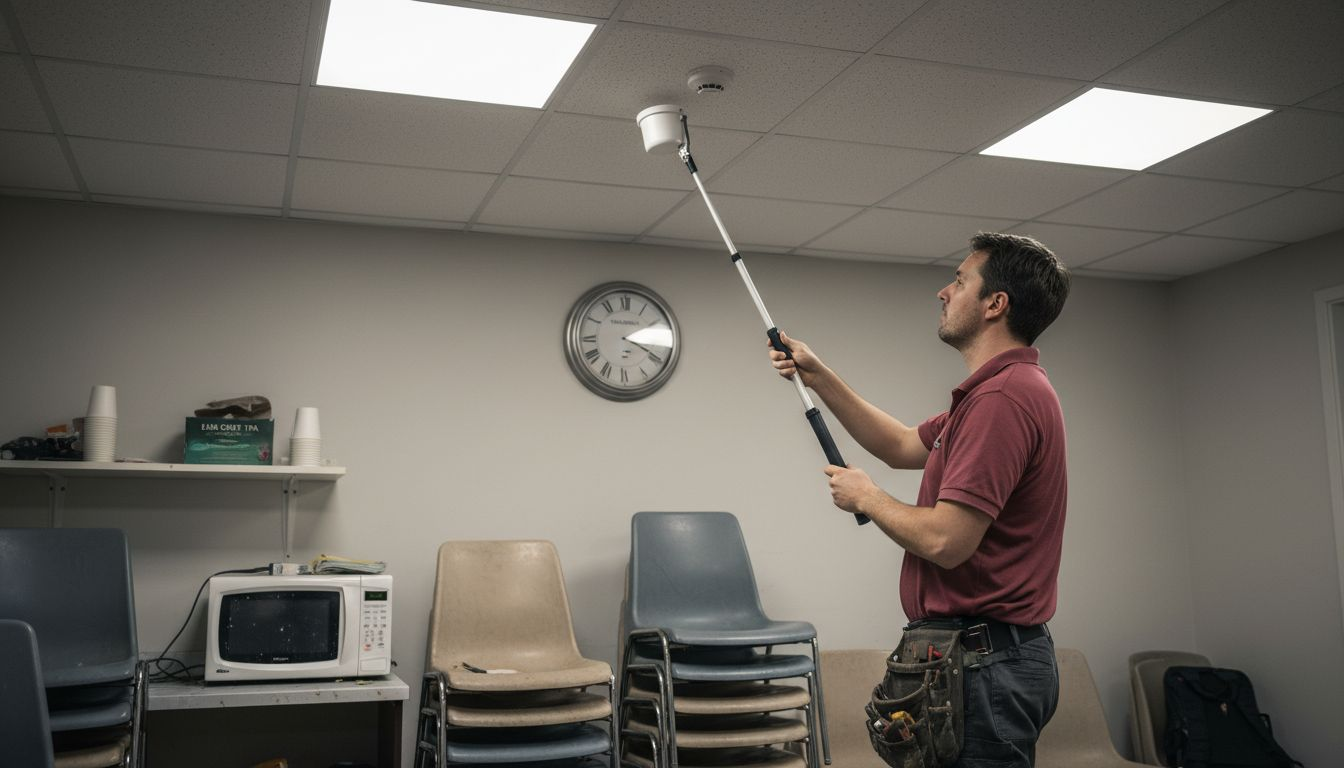
Notification appliances require testing too. Horns need to sound loud enough to wake sleeping occupants. Strobes need to flash visibly. Functional testing of alarms and signaling devices ensures occupants receive clear warning. If your alarm is silent or invisible, it fails its core purpose.
Manual pull stations get tested to confirm they trigger the system. Wiring gets checked for breaks or damage. Backup batteries get capacity tested. Documentation during testing creates a record proving everything worked on a specific date. This record protects you legally and shows building inspectors that you’re serious about compliance.
The entire process typically takes a few hours depending on your building size. Annual testing is standard, but quarterly testing catches problems faster. Testing identifies defects early so maintenance can happen before failure.
Pro tip: Schedule testing during a slow business day and notify occupants in advance so they understand why alarms are sounding and don’t panic or call emergency services during the test.
Houston Fire Codes And Legal Requirements
Houston has specific fire codes you must follow, and they’re not suggestions. The City of Houston Fire Department enforces these regulations through inspections and citations. Non-compliance exposes you to fines, legal liability, and worst of all, puts lives at risk in your building.
Houston fire codes require proper installation and maintenance of fire alarm systems in all commercial and residential buildings. You can’t just install a system and ignore it. Permits are mandatory before installation or modification, and inspections verify ongoing compliance. The city takes this seriously because fires don’t care whether you filed paperwork.
Smoke alarms must be placed in specific locations throughout your building. Bedrooms, hallways, and common areas all need coverage. Fire extinguishers need to be accessible and properly charged. Emergency escape routes must be clear and marked. Fire safety codes enforce requirements for smoke alarms and emergency procedures to minimize injury and fatality risk when fires occur.
Documentation matters more than you might think. When inspectors visit, they want records showing your system has been tested and maintained. Fire alarm testing logs prove you’re monitoring your equipment. Missing documentation during an inspection looks like negligence, and that creates liability exposure that extends beyond the immediate fine.
The stakes get higher if something goes wrong. If a fire occurs and your alarm system fails because you skipped testing, you’re liable for injuries, deaths, and property damage. Insurance companies may deny claims if you can’t prove you maintained the system. Your building occupants trust you to keep them safe.
Texas property liability law holds owners and managers accountable for maintaining reasonably safe premises. Fire code compliance is the baseline for reasonable safety. Skipping it doesn’t just risk citations, it creates personal liability exposure for you.
Pro tip: Keep all fire safety documentation organized in a dedicated folder with dates and photographs, then provide copies to your insurance agent to ensure they understand your compliance efforts.
Risks Of Neglecting Regular Alarm Testing
Skipping fire alarm testing isn’t just a compliance issue. It’s a gamble with lives and your liability. When you ignore testing, your system becomes a liability instead of protection.
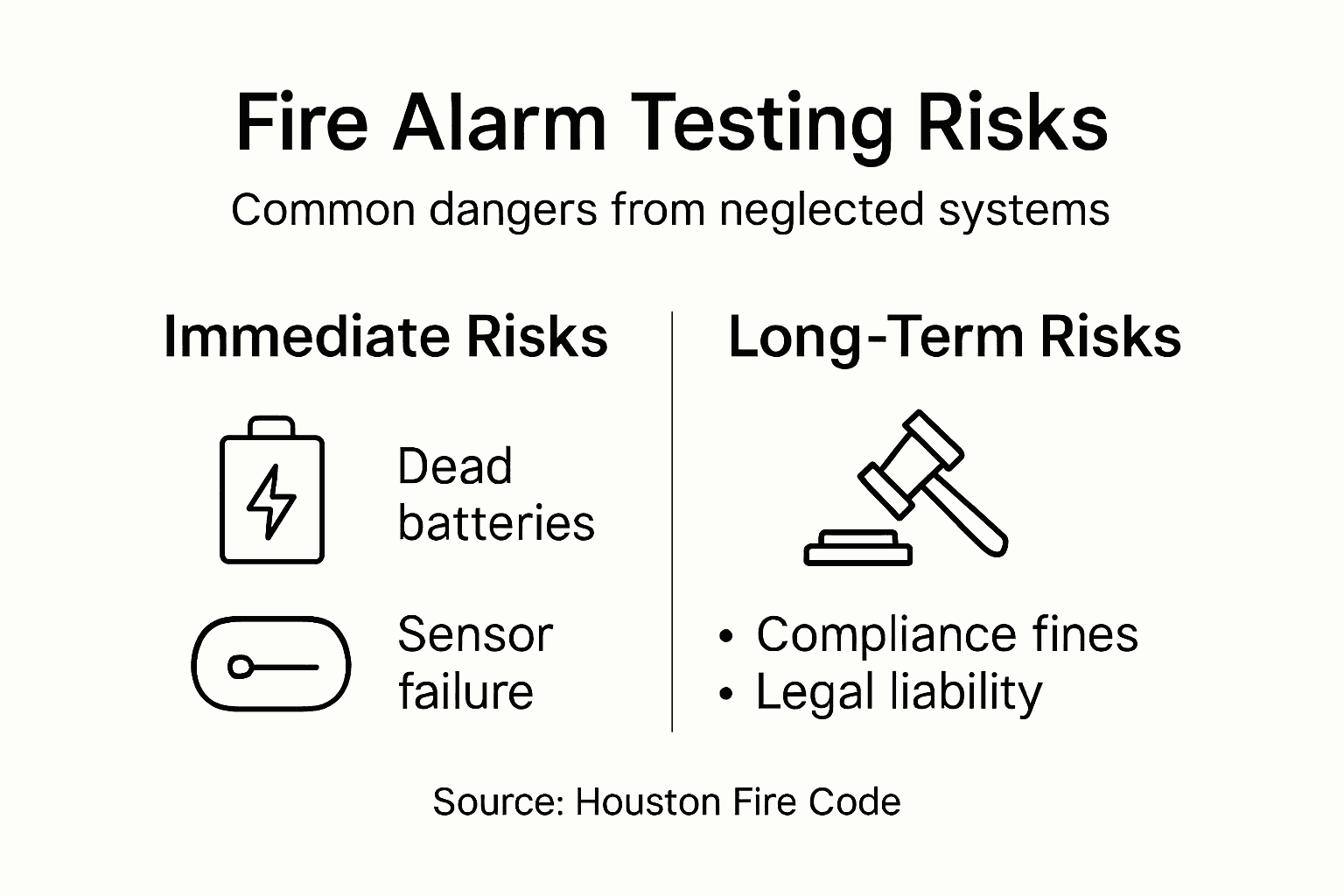
Untested detectors fail silently. A smoke detector’s sensor can degrade over months without anyone knowing. A battery slowly dies. A speaker corrodes. None of these problems announce themselves before a real fire starts. Regular maintenance testing identifies defects and power problems early before they become life threatening failures.
When a fire occurs in an untested system, the consequences compound rapidly. A detector that should activate within seconds fails to trigger. Occupants don’t get the warning they need. Precious minutes of evacuation time disappear. People hesitate, unsure if danger is real, while smoke spreads faster than they can escape.
System malfunctions from lack of maintenance compromise occupant safety and can result in undetected fires escalating unchecked. Your building fills with smoke before anyone realizes there’s a problem. By then, evacuation becomes chaotic and dangerous. Some occupants may not escape at all.
Emergency responders depend on building information from your fire alarm system. If your system fails, they enter blind. They don’t know where the fire started or how far it has spread. They waste critical response time gathering information they should have instantly. That delay costs lives.
Liability follows you personally. If someone is injured or dies because your alarm system failed due to negligence, your insurance may deny coverage. Lawsuits target you directly. Families of victims pursue damages. Juries don’t sympathize with property managers who skipped routine maintenance. The cost extends far beyond the original testing expense.
Pro tip: Set calendar reminders for quarterly testing well in advance and assign a specific team member responsibility so testing never gets forgotten or deprioritized when schedules get busy.
Best Practices For Property Manager Compliance
Compliance isn’t a one-time achievement. It’s an ongoing commitment that requires systems, documentation, and accountability. Property managers who treat fire safety as a checkbox on an annual list miss the point entirely. Your building occupants depend on consistent, reliable protection.
Start by creating a documented testing schedule. Regular inspection and testing of fire alarm systems maintains compliance with all applicable regulations. Schedule quarterly tests and write them on a master calendar so they never slip through the cracks. Assign specific staff members responsibility for each test and follow up to confirm completion.
Documentation is your legal protection. Every test needs a record with the date, time, components tested, results, and technician name. Photos of test results provide visual evidence. Keep these records organized in a dedicated file both physically and digitally. When inspectors visit, you hand them a complete history proving your diligence.
Train your staff on emergency procedures. Your team needs to understand the fire alarm system, know how to initiate evacuation, and recognize when manual intervention is necessary. Staff who understand the system can identify problems and communicate clearly with emergency responders when seconds matter.
Periodic testing and detailed record maintenance ensure full operational status of fire protection equipment and support audit readiness. Schedule regular fire drills so occupants practice evacuation before they face real danger. These drills reveal problems with egress routes, signage, and occupant awareness that testing alone won’t catch.
Coordinate with your local fire department. Many departments offer guidance on compliance and may conduct pre-inspection consultations. Building relationships with authorities creates partnerships instead of adversarial interactions during actual inspections. They want your system to work because working systems save lives.
Review your building’s specific fire codes annually. Regulations change, and your obligations may expand. A system that met code five years ago might be inadequate today. Stay current so compliance doesn’t become a moving target you’re always chasing.
Pro tip: Create a simple spreadsheet tracking all testing dates, results, and maintenance work, then email a monthly summary to your supervisor or building owner so compliance stays visible and prioritized.
Below is a summary of critical compliance steps for property managers:
| Compliance Action | Purpose | Impact on Safety |
|---|---|---|
| Quarterly Testing | Verify system functionality regularly | Prevents undetected failures |
| Detailed Record Keeping | Provide proof of maintenance | Reduces legal and liability risk |
| Staff Training | Prepare team for real emergencies | Improves evacuation efficiency |
| Annual Code Review | Stay updated on regulation changes | Maintains long-term compliance |
| Fire Department Partnership | Access expert guidance and support | Smoother inspections, better safety |
Ensure Your Fire Alarm System Works When It Matters Most
Testing your fire alarms regularly is essential to protect lives, maintain compliance with Houston fire codes, and avoid costly liabilities. At Reliable Fire Protection, we understand the challenges property managers face with keeping every detector, alarm, and control panel in perfect condition. Our expert team specializes in comprehensive fire protection services designed to meet all NFPA 72 standards and local regulations.
Don’t risk silent failures or outdated systems putting your occupants in danger. Take control today by partnering with Reliable Fire Protection. Visit our website at https://reliable-fire-protection.com to schedule your free quote or consultation. Let us help you ensure your fire alarms and safety systems are tested, compliant, and ready to save lives before the next emergency strikes.
Frequently Asked Questions
Why is it important to test fire alarms?
Testing fire alarms is essential to ensure all components function properly during an emergency. Untested systems can fail without warning, putting lives at risk and increasing liability for property managers.
How often should fire alarms be tested?
Fire alarms should be tested quarterly to identify any issues early. Regular testing helps prevent undetected failures from compromising occupant safety during a fire.
What components of the fire alarm system should be tested?
All components should be tested, including smoke detectors, heat detectors, manual pull stations, and notification appliances like horns and strobes. This ensures that every part of the system works effectively.
What are the legal requirements for fire alarm testing?
Legal requirements for fire alarm testing include following local fire codes, which mandate proper installation, maintenance, and regular inspections. Documentation of testing and maintenance is critical for compliance and liability protection.