Fewer than half of American commercial buildings pass their annual fire safety inspections without needing major repairs or upgrades. For property managers in Houston responsible for multi-tenant facilities, every missed detail in fire prevention can put tenants at risk and disrupt operations. This overview highlights practical fire safety solutions, from extinguishers to backflow preventers, that help ensure full compliance and reliable building protection.
Table of Contents
- Fire Extinguishers: Quick Response To Small Fires
- Fire Alarm Systems: Early Warning For Building Occupants
- Automatic Sprinkler Systems: Reliable Fire Suppression
- Emergency Exit Signs: Guiding Safe Evacuation
- Smoke Detectors: Essential Fire Detection Devices
- Fire Suppression Systems: Advanced Hazard Control
- Backflow Preventers: Protecting Water Supply During Fire Events
Quick Summary
| Takeaway | Explanation |
|---|---|
| 1. Understand PASS Method for Fire Extinguishers | It’s crucial to know how to properly use a fire extinguisher with the PASS method: Pull, Aim, Squeeze, and Sweep. |
| 2. Regular Maintenance of Fire Alarms is Essential | Schedule quarterly inspections and monthly tests to ensure fire alarm systems are functional and ready for emergencies. |
| 3. Install Automatic Sprinkler Systems | These systems provide rapid fire suppression without human help, significantly reducing potential damage from fires. |
| 4. Regularly Test Smoke Detectors | Change batteries annually and test detection systems monthly for optimal performance in detecting early fire signs. |
| 5. Maintain Backflow Preventers to Protect Water Supply | Periodic professional inspections are necessary to ensure backflow preventers function effectively and maintain water quality during emergencies. |
1. Fire Extinguishers: Quick Response to Small Fires
Fire extinguishers are critical first line defense tools for rapidly controlling small fires before they spread and cause extensive damage. These portable safety devices enable property managers and occupants to take immediate action during the critical early moments of a fire incident.
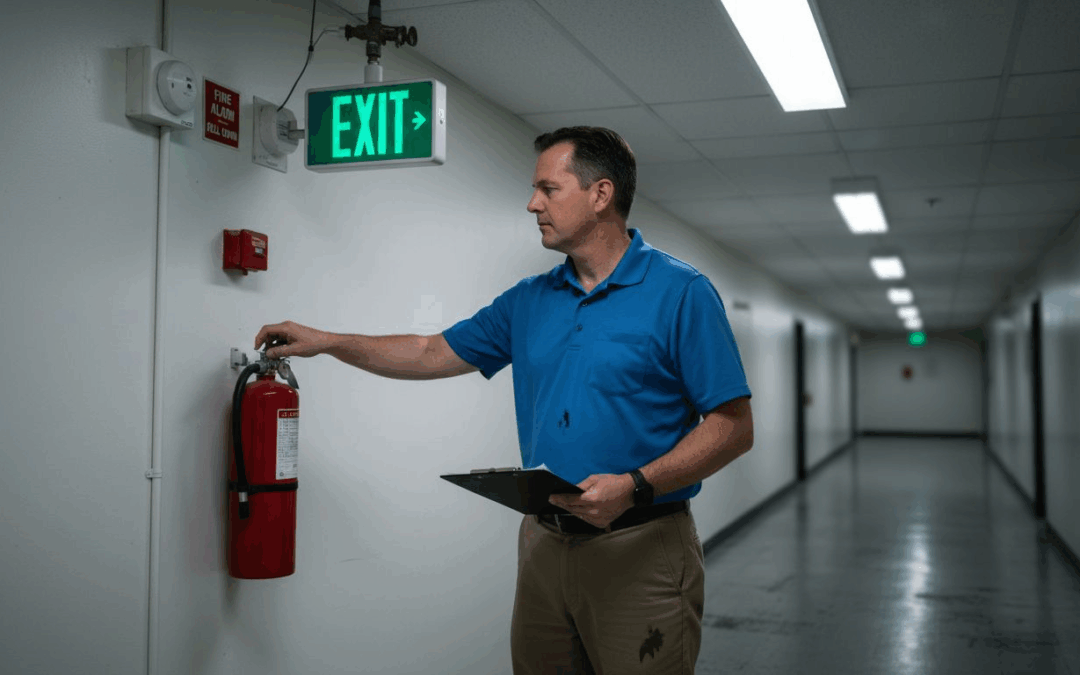
Operating a fire extinguisher requires understanding its core functionality. Handheld devices are filled with specialized chemicals designed to suppress specific fire types using stored pressure systems. The National Fire Protection Association recommends using multi purpose extinguishers strategically placed near potential fire risk areas like kitchens, electrical panels, and building exits.
When confronting a small fire, users should remember the critical PASS method recommended by safety experts:
Pull the pin at the top of the extinguisher
Aim low toward the base of the fire
Squeeze the handle evenly
Sweep from side to side until flames are completely extinguished
Commercial property managers in Houston should prioritize understanding fire extinguisher types and placement strategies to ensure comprehensive building safety. Regular maintenance and staff training are essential for effective fire prevention.
Pro tip: Replace fire extinguishers every 5-15 years and schedule annual professional inspections to guarantee optimal performance and compliance with safety regulations.
2. Fire Alarm Systems: Early Warning for Building Occupants
Fire alarm systems serve as critical lifesaving technologies designed to provide early warning during potential fire emergencies. These sophisticated networks of sensors and notification devices work continuously to protect building occupants by detecting and communicating potential fire risks.
Advanced fire alarm systems integrate multiple detection technologies including smoke detectors, heat sensors, and manual pull stations that instantly alert occupants when danger is detected. The primary goal is providing rapid notification that enables swift evacuation and minimizes potential human and property damage.
Commercial properties require comprehensive alarm strategies that go beyond simple noise making. Modern systems include nuanced notification approaches such as:
Selective Area Notification
Public Mode Alerts
Phased Evacuation Protocols
These strategic approaches ensure targeted communication during emergencies, allowing controlled and organized responses. Understanding fire alarm system functionality helps property managers implement more effective safety protocols.
Building safety experts recommend regular system testing, professional maintenance, and staff training to guarantee optimal performance during critical moments. Proper installation and consistent monitoring are essential for creating reliable early warning mechanisms.
Pro tip: Schedule quarterly professional inspections of your fire alarm system and conduct monthly manual tests to verify all components are functioning correctly and provide maximum protection.
3. Automatic Sprinkler Systems: Reliable Fire Suppression
Automatic sprinkler systems represent the most advanced and dependable fire protection technology for commercial and residential properties. These intelligent systems operate without human intervention to quickly suppress fires and minimize potential property damage.
Automatic fire suppression technologies utilize sophisticated detection mechanisms that instantly respond to temperature changes or fire conditions. When activated, strategically placed sprinkler heads release precise water volumes directly onto the fire source, effectively controlling and extinguishing flames before they can spread.
The National Fire Protection Association establishes rigorous standards for these critical safety systems. Professional sprinkler installations follow NFPA 13 guidelines to ensure comprehensive building protection. Key components include:
Rapid Detection Sensors
Precision Water Distribution
Automated Activation Mechanisms
Heat Responsive Sprinkler Heads
Commercial property managers can significantly reduce potential fire damage by implementing these proactive protection systems. Modern sprinkler technologies provide instant response times that are substantially faster than traditional firefighting methods.
Building safety experts recommend professional design and installation to guarantee optimal system performance. Regular maintenance and professional inspections ensure these critical safety mechanisms remain fully operational and ready to protect lives and property.
Pro tip: Schedule annual professional inspections of your automatic sprinkler system to verify all components are functioning correctly and meet current safety standards.
4. Emergency Exit Signs: Guiding Safe Evacuation
Emergency exit signs are critical visual communication tools that guide building occupants to safety during fire emergencies. These strategically placed markers serve as lifelines during critical evacuation moments, providing clear directional guidance when every second counts.
Exit signs are engineered to be unmistakable visual indicators designed to remain visible and legible even during power failures or dense smoke conditions. Modern emergency signage includes battery powered illumination and high contrast lettering to ensure maximum visibility across diverse environmental challenges.
Effective emergency evacuation requires understanding key principles:
Immediate Recognition
Clear Directional Guidance
Continuous Illumination
Universal Understanding
Emergency evacuation procedures emphasize the importance of knowing multiple exit routes and maintaining calm during potential crisis situations. Commercial property managers should ensure exit signs are:
Unobstructed
Properly Illuminated
Regularly Maintained
Strategically Positioned
Building safety experts recommend periodic employee training to familiarize occupants with evacuation protocols and exit sign locations. Understanding these visual safety markers can make a significant difference in emergency response effectiveness.
Pro tip: Conduct quarterly exit sign visibility assessments and employee evacuation drills to maintain optimal emergency preparedness and ensure all occupants understand proper evacuation procedures.
5. Smoke Detectors: Essential Fire Detection Devices
Smoke detectors represent the frontline defense in early fire detection for residential and commercial properties. These sophisticated devices provide critical early warnings that can mean the difference between life and death during potential fire emergencies.
Smoke detection technologies utilize advanced sensors that identify fire indicators through two primary mechanisms: photoelectric and ionization detection. These intelligent devices can recognize both smoldering and flaming fire conditions with remarkable precision.
Modern smoke detection systems offer multiple critical features:
Rapid Smoke Identification
Loud Audible Alarms
Battery or Electrical Powered Options
Interconnected Network Capabilities
National Fire Protection Association guidelines recommend strategic placement of smoke detectors to maximize safety coverage. Key installation strategies include:
Near Sleeping Areas
On Every Building Level
Inside Bedrooms
Outside Sleeping Quarters
Commercial property managers should implement comprehensive smoke detection strategies that include regular testing, battery replacement, and system maintenance. The goal is creating a proactive safety environment that provides maximum protection for building occupants.
Pro tip: Replace smoke detector batteries annually and conduct monthly testing to ensure optimal performance and reliability of your fire detection systems.
6. Fire Suppression Systems: Advanced Hazard Control
Fire suppression systems represent the most sophisticated technological defense against potential fire catastrophes in commercial and industrial settings. These advanced protective mechanisms go far beyond traditional firefighting approaches by providing immediate targeted intervention.
Modern fire suppression technologies incorporate complex detection and response mechanisms designed to neutralize fire risks across diverse environments. These systems utilize specialized agents including water mist, chemical compounds, and gaseous suppressants tailored to specific hazard types.
Key components of advanced fire suppression strategies include:
Rapid Detection Sensors
Targeted Agent Delivery
Automatic Activation Protocols
Environment Specific Solutions
Comprehensive fire suppression installations require careful assessment of potential risks and precise engineering to ensure maximum protection. Commercial property managers must consider:
Specific Hazard Characteristics
Building Occupancy Types
Potential Fire Propagation Scenarios
Regulatory Compliance Requirements
Professional fire safety experts recommend ongoing system evaluation and maintenance to guarantee optimal performance and readiness. Understanding the nuanced capabilities of different suppression technologies enables more effective risk management strategies.
Pro tip: Schedule annual professional assessments of your fire suppression systems to verify technological compatibility and ensure compliance with current safety standards.
7. Backflow Preventers: Protecting Water Supply During Fire Events
Backflow preventers are critical safety devices that protect potable water systems from potential contamination during emergency fire suppression scenarios. These sophisticated mechanical safeguards ensure water quality remains uncompromised even during high stress firefighting conditions.
Backflow prevention technologies incorporate multiple design strategies to maintain water system integrity. They prevent reverse water flow that could introduce hazardous substances into clean water supplies during pressure fluctuations caused by fire events or municipal water system disruptions.
Key components of effective backflow prevention include:
Pressure Zone Management
Mechanical Valve Mechanisms
Contamination Prevention
Emergency Response Protocols
Professional backflow preventer services recommend understanding two primary device categories:
Testable Assemblies
Non Testable Devices
Commercial property managers must prioritize regular professional inspections and maintenance to guarantee optimal performance. These systems require periodic testing by certified professionals to verify continued functionality and compliance with safety standards.
Pro tip: Schedule annual professional inspections of your backflow prevention systems to ensure continuous water supply protection and maintain critical fire safety infrastructure.
Below is a comprehensive table summarizing the key topics and information presented in the article concerning fire safety tools and strategies.
| Topic | Key Details | Pro Tips |
|---|---|---|
| Fire Extinguishers | Portable devices to control small fires using specialized chemicals. Follow PASS: Pull, Aim, Squeeze, and Sweep. | Replace extinguishers every 5-15 years and schedule annual inspections. |
| Fire Alarm Systems | Technologies offering early warning signs through sensors detecting smoke or heat. Use for selective or phased evacuation. | Test quarterly and conduct monthly manual tests. |
| Sprinkler Systems | Automated systems detecting temperature spikes, instantly suppressing fires with water. Function without human intervention. | Schedule annual inspections to check for component functionality and compliance. |
| Emergency Exit Signs | Visual markers guiding safe evacuation, understandable universally with illumination in diverse environments. | Conduct quarterly visibility assessments and evacuation drills. |
| Smoke Detectors | Devices using ionization or photoelectric sensors for early smoke detection. Install near sleeping areas and frequently used spaces. | Replace batteries annually and perform monthly testing. |
| Fire Suppression Systems | Advanced mechanisms utilizing agents like water mist, chemicals, or gases tailored for specific fire hazards. | Conduct annual assessments to ensure safety compliance and compatibility. |
| Backflow Preventers | Devices safeguarding water supply integrity during pressure variations in firefighting events. | Schedule annual device inspections for optimal functionality and contamination prevention. |
This table facilitates understanding of various fire protection systems and their associated benefits and maintenance requirements.
Elevate Your Property Safety with Expert Fire Protection Solutions
Fire safety equipment like fire extinguishers, alarm systems, and automatic sprinklers are vital to protecting your property and saving lives. However, knowing the right equipment and ensuring proper installation, inspection, and maintenance can be overwhelming. At Reliable Fire Protection, we understand the challenges commercial and residential property owners face in meeting safety regulations while securing their buildings from fire risks.
Take control of your fire safety today by partnering with a trusted Houston-based company specializing in comprehensive fire protection systems. Our expert team offers services ranging from fire alarm systems to automatic sprinkler installations, and backflow preventer inspections tailored to your property’s unique needs. We prioritize compliance, reliability, and rapid emergency response to give you peace of mind.
Protect your property and those who depend on it by requesting a free consultation at Reliable Fire Protection now. Don’t wait until an emergency arises. Act proactively with certified fire safety experts dedicated to your safety and compliance needs.
Frequently Asked Questions
What are the types of fire extinguishers needed for properties?
Fire extinguishers need to match the types of fires they may encounter. Common types include water-based, foam, dry chemical, and CO2 extinguishers. Identify potential fire risks in your property and install at least one multi-purpose extinguisher in each high-risk area.
How often should fire alarm systems be maintained?
Fire alarm systems should undergo quarterly inspections and monthly manual tests. Regular maintenance ensures all components are functioning correctly to alert occupants promptly during an emergency, helping to minimize risk.
What should be included in a smoke detector maintenance plan?
A smoke detector maintenance plan should involve replacing batteries annually and testing the devices monthly. Ensure detectors are placed near sleeping areas and on all building levels to maximize safety coverage for occupants.
How can I ensure proper placement of emergency exit signs?
Emergency exit signs should be unobstructed, properly illuminated, and strategically positioned near exits. Conduct quarterly assessments to confirm visibility and ensure they are easily recognizable during an emergency.
What steps are involved in inspecting a fire suppression system?
Inspecting a fire suppression system involves checking rapid detection sensors, ensuring delivery mechanisms are functional, and confirming compliance with safety standards. Schedule annual professional assessments to maintain optimal readiness and performance of the system.
How do backflow preventers work in fire safety?
Backflow preventers stop contaminated water from entering clean water systems during fire suppression events. Regular inspections and maintenance are crucial—aim to have these systems checked annually to ensure they continue to protect water quality.
Recommended
- 12 Bad Fire Safety Habits That Can Burn Down Your Workplace
- How to Avoid Common Workplace Fire Hazards?
- The Importance of Fire Alarms: Ensuring Safety and Protection
- How Fire Protection System Help Businesses Save Money
- Fire Protection Company Cinco Ranch TX
- Fire Alarm System Services Cinco Ranch TX