
More than fifty percent of American commercial building fires result from outdated or missing safety equipment, putting property managers at risk for heavy fines and tenant lawsuits. In Houston, staying compliant comes with extra challenges for multi-tenant buildings where every detail counts. This guide brings practical, Houston-focused fire safety strategies that help managers spot gaps, identify essential equipment, and maintain systems that protect tenants and investments every day.
Table of Contents
- Defining Fire Safety Equipment And Its Role
- Major Types Of Fire Safety Equipment For Buildings
- How Key Fire Protection Systems Function
- Houston Fire Code Requirements For Equipment
- Property Manager Responsibilities And Liabilities
- Avoiding Common Fire Equipment Mistakes
Key Takeaways
| Point | Details |
|---|---|
| Comprehensive Fire Safety Systems | Fire safety equipment is essential for preventing, detecting, and mitigating fire risks in buildings. |
| Strategic Integration for Safety | A strategic approach incorporating detection, prevention, and response is crucial for effective fire safety. |
| Compliance with Regulations | Adhering to the Houston Fire Code is necessary to ensure safety and avoid significant penalties. |
| Regular Maintenance and Training | Conducting inspections and providing training are vital to keeping fire safety systems operational and effective. |
Defining Fire Safety Equipment And Its Role
Fire safety equipment represents a comprehensive system of protective tools and technologies designed to prevent, detect, and mitigate fire risks in commercial and residential environments. Fire safety measures encompass critical practices intended to reduce destruction and protect human life during potential fire emergencies.
These protective systems typically include multiple interconnected components that work together to ensure comprehensive safety. Key elements often include fire extinguishers, smoke detectors, sprinkler systems, fire alarms, emergency exit signage, and specialized suppression technologies. Each piece of equipment serves a specific function within the broader fire safety ecosystem, designed to minimize potential damage and maximize occupant protection.
For Houston commercial property managers, understanding fire safety equipment goes beyond simple compliance. It involves creating a strategic approach that integrates detection, prevention, and rapid response mechanisms. The National Fire Protection Association framework emphasizes that effective fire safety requires an interdependent system where prevention, detection, suppression, and emergency response work in concert to protect people and property.
Pro tip: Conduct a comprehensive fire safety equipment audit at least twice annually to ensure all systems are functioning correctly and meet current Houston municipal safety regulations.
Major Types Of Fire Safety Equipment For Buildings
Fire safety equipment encompasses a diverse range of specialized tools and technologies designed to detect, suppress, and mitigate fire risks in commercial and residential buildings. Fire protection systems include multiple critical components that work together to ensure comprehensive safety and protect occupants during potential emergencies.
The primary categories of fire safety equipment include detection systems, suppression equipment, and emergency response tools. Detection systems involve smoke detectors, heat sensors, and fire alarms that provide early warning signals. Suppression equipment features automatic sprinkler systems, fire extinguishers with different chemical agents, and specialized suppression technologies tailored to specific building environments. Firefighting apparatus ranges from portable extinguishers to advanced aerial ladder trucks, each designed to address unique fire scenarios and building configurations.
For Houston commercial properties, fire safety equipment selection requires careful consideration of building occupancy, potential hazards, and local municipal regulations. Managers must ensure that equipment meets National Fire Protection Association (NFPA) standards, which specify precise installation, maintenance, and testing protocols. This includes choosing appropriate fire extinguisher types, strategically placing detection systems, and implementing comprehensive emergency response plans that align with local safety codes.
Pro tip: Develop a color-coded fire extinguisher placement map for your building to help occupants quickly identify and access the right type of fire suppression equipment during emergencies.
Here’s a quick overview of major fire safety equipment types and their primary roles:
| Equipment Type | Main Function | Typical Location |
|---|---|---|
| Smoke Detector | Early fire detection | Hallways, living areas |
| Fire Extinguisher | Immediate fire suppression | Near exits, kitchens |
| Sprinkler System | Automated fire control | Ceilings, corridors |
| Fire Alarm | Alert and evacuation signal | Entrances, stairwells |
| Emergency Exit Sign | Guides safe evacuation | Above exits and routes |
How Key Fire Protection Systems Function
Fire protection systems represent a complex network of interconnected technologies designed to detect, alert, and suppress fire risks in buildings. These sophisticated systems integrate multiple components that work seamlessly to protect occupants and minimize potential property damage during emergency scenarios.
The primary functional components include detection mechanisms, alarm systems, and suppression technologies. Detection systems utilize advanced sensors that continuously monitor environmental conditions, identifying heat or smoke signatures indicative of potential fire risks. Fire alarm systems immediately trigger audible and visual alerts when these sensors detect abnormal conditions, ensuring rapid occupant notification and facilitating timely evacuation. Suppression systems, such as automatic sprinklers, activate automatically when predetermined temperature thresholds are exceeded, delivering targeted water or chemical agents to control and extinguish developing fires.
Building fire protection systems also incorporate critical secondary safety features like emergency lighting and fire doors. These elements create additional layers of protection by ensuring safe evacuation routes remain visible during power interruptions and preventing fire and smoke spread between building compartments. For Houston commercial properties, these integrated systems must meet stringent local and national safety regulations, requiring professional design, precise installation, and regular maintenance to guarantee optimal performance.
Pro tip: Schedule quarterly comprehensive inspections of your fire protection systems to ensure all components remain calibrated, functional, and compliant with current safety standards.
Houston Fire Code Requirements For Equipment
Houston Fire Marshal Office regulations establish rigorous standards for fire safety equipment installation, maintenance, and operational compliance. These comprehensive requirements ensure that commercial and residential properties in the Houston metropolitan area maintain critical safety infrastructure designed to protect occupants and minimize potential fire risks.
The 2021 Houston Fire Code, specifically Chapter 10, provides detailed mandates for fire protection systems. Key requirements include precise specifications for fire alarm systems, sprinkler installations, emergency exits, and detection technologies. Commercial property managers must ensure their equipment meets strict design, arrangement, and functional standards, including:
- Proper installation of fire detection sensors
- Functional emergency notification systems
- Accessible and well-maintained fire extinguishers
- Regularly tested sprinkler systems
- Clearly marked emergency egress routes
Fire code enforcement involves comprehensive inspections that evaluate not just equipment presence, but also its operational readiness. Compliance requires documented maintenance records, periodic professional testing, and immediate remediation of any identified system deficiencies. Failure to meet these standards can result in significant penalties, including potential business operation restrictions and substantial financial fines.
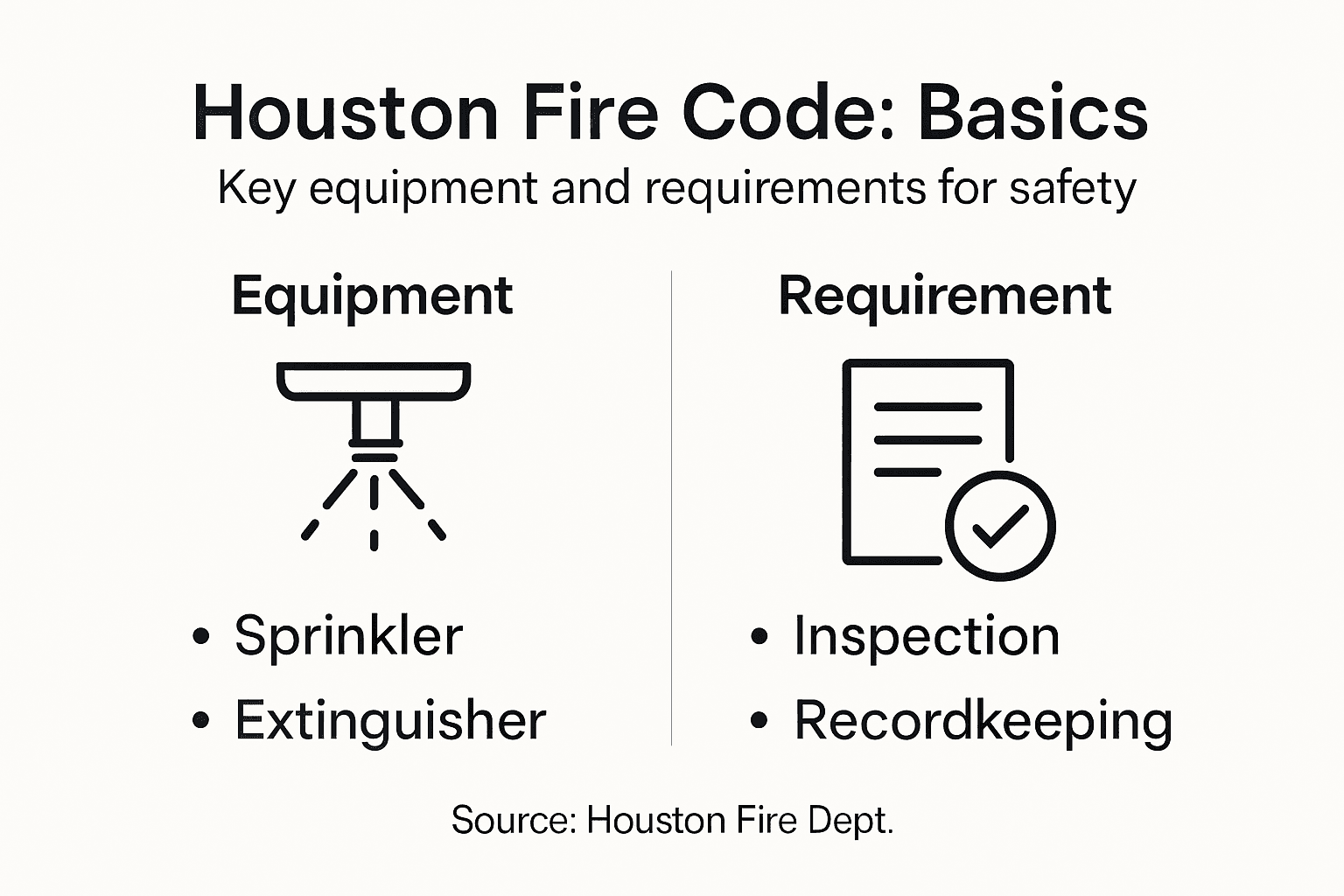
The following table summarizes key Houston fire code requirements and their compliance purpose:
| Requirement | Compliance Purpose | Risk If Ignored |
|---|---|---|
| Sprinkler system testing | Ensure functional suppression | Increased damage risk |
| Documented inspections | Prove ongoing readiness | Fines, legal exposure |
| Marked egress routes | Enable safe, quick evacuation | Occupant injury |
| Regular alarm maintenance | Guarantee reliable alerts | Delayed emergency response |
Pro tip: Maintain a comprehensive digital log of all fire safety equipment inspections, repairs, and maintenance to streamline compliance documentation and demonstrate proactive safety management.
Property Manager Responsibilities And Liabilities
Fire safety responsibilities for Houston property managers extend far beyond simple equipment maintenance. These professionals bear significant legal and ethical obligations to protect occupants, maintain regulatory compliance, and minimize potential risks associated with fire emergencies.
The core responsibilities include comprehensive risk assessment, proactive prevention, and systematic management of fire safety infrastructure. Property managers must:
- Conduct thorough hazard identification processes
- Install and maintain appropriate fire detection equipment
- Keep emergency exits clear and accessible
- Develop and communicate clear emergency evacuation procedures
- Provide regular occupant safety training
- Maintain detailed documentation of all safety interventions
Fire protection system compliance involves more than just meeting minimum standards. Property managers face potential legal liabilities if they fail to implement proper safety measures. This includes financial penalties, potential lawsuits, and in extreme cases, criminal negligence charges if occupant safety is compromised due to inadequate fire protection protocols.
Pro tip: Create a comprehensive digital safety management system that tracks all fire safety equipment inspections, maintenance records, and training sessions to demonstrate proactive risk management and regulatory compliance.
Avoiding Common Fire Equipment Mistakes
Fire equipment maintenance requires meticulous attention to detail and proactive management. Houston property managers frequently encounter critical errors that can compromise safety systems and potentially endanger occupants during emergency scenarios.
The most significant mistakes in fire safety equipment management include:
- Neglecting regular equipment inspections
- Improper placement of fire extinguishers
- Using incorrect extinguisher types for specific fire classes
- Failing to maintain comprehensive maintenance records
- Skipping required testing intervals
- Disabling alarm systems due to nuisance triggers
- Blocking emergency exits with equipment or storage
Occupational safety protocols emphasize that these mistakes are not merely procedural oversights but potentially life-threatening errors. Comprehensive risk assessments, systematic documentation, and ongoing staff training are critical to preventing these common pitfalls and ensuring robust fire safety infrastructure.
Pro tip: Implement a quarterly digital audit system that tracks all fire safety equipment inspections, maintenance records, and training completions to systematically eliminate potential compliance gaps.
Ensure Houston Fire Safety Equipment Compliance with Expert Support
Understanding Houston fire code requirements and managing complex fire protection systems can feel overwhelming. The stakes are high because noncompliance with fire safety equipment mandates risks serious fines, legal liabilities, and most importantly, occupant safety. If you want peace of mind knowing your commercial property fully meets standards for fire alarms, sprinklers, extinguishers, and emergency egress, Reliable Fire Protection is your trusted local partner.
Take control of your fire safety compliance today. Explore our wide range of professional fire protection solutions tailored for Houston properties at Fire Protection – Reliable Fire Protection. Our family-owned company provides certified installation, rigorous maintenance, and rapid emergency response services designed to keep your building and occupants safe. Visit Reliable Fire Protection now for a free consultation and expert guidance that ensures your fire safety equipment is always up to code and fully operational.
Frequently Asked Questions
What is the primary purpose of fire safety equipment?
Fire safety equipment is designed to prevent, detect, and mitigate fire risks to protect occupants and minimize property damage during emergencies.
How often should fire safety equipment be inspected and maintained?
It’s recommended to conduct a comprehensive audit of fire safety equipment at least twice annually, along with quarterly inspections of fire protection systems to ensure compliance and functionality.
What are the key components of a fire protection system?
Key components of a fire protection system include smoke detectors, fire extinguishers, sprinkler systems, fire alarms, and emergency exit signage, all working together to ensure safety and quick response during a fire emergency.
What are the legal responsibilities of property managers regarding fire safety equipment?
Property managers are legally responsible for conducting hazard assessments, maintaining fire safety equipment, ensuring emergency exits are accessible, and providing safety training for occupants to minimize risks associated with fire emergencies.
Recommended
- What Is a Fire Inspection and Why Compliance Matters
- Fire Extinguisher Inspection Workflow for Houston Compliance
- Fire Safety Testing Requirements for Houston Properties
- Commercial Fire Safety Basics: Protecting Houston Properties
- Fire Protection Company Cinco Ranch TX
- Fire Alarm System Services Cinco Ranch TX