
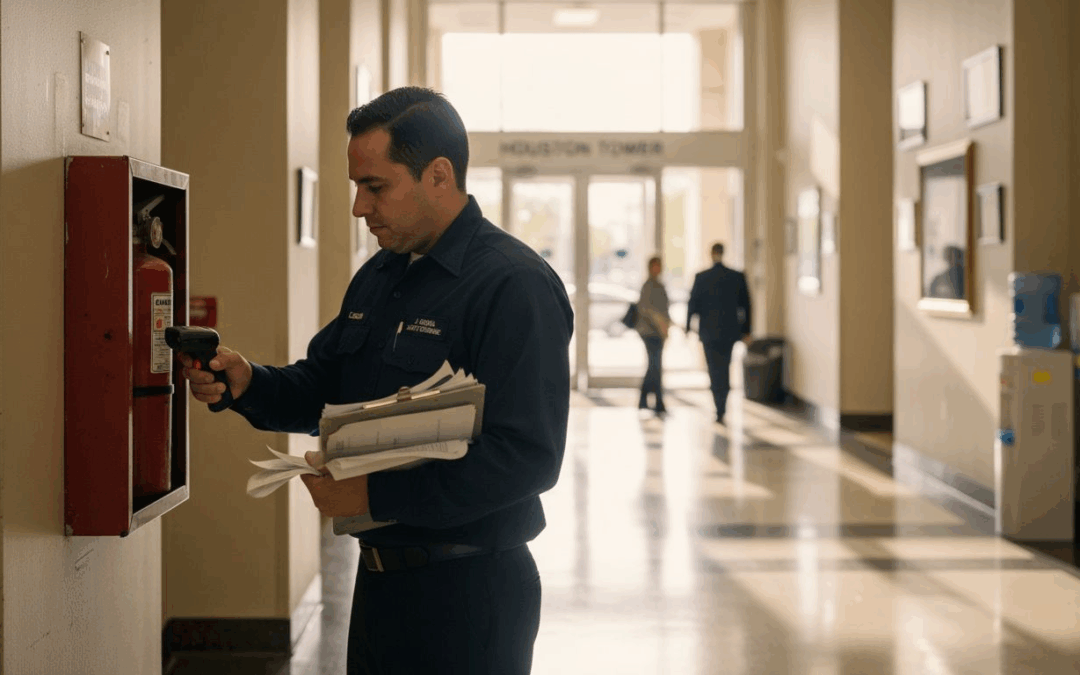
Every american commercial property must follow strict Houston Fire Department and OSHA fire extinguisher inspection rules, yet many facilities fall short of true regulatory compliance. Missing even one required step can lead to legal penalties or put building occupants at risk. This step by step guide shows fire safety compliance officers in Houston how to organize inspections for accuracy, efficiency, and safety—helping you meet every local and american standard with confidence.
Table of Contents
- Step 1: Gather Inspection Tools And Documentation
- Step 2: Review Placement And Accessibility Of Extinguishers
- Step 3: Examine Physical Condition And Pressure Levels
- Step 4: Test Operational Components For Functionality
- Step 5: Document Results And Address Deficiencies
- Step 6: Verify Compliance And Schedule Next Inspection
Quick Summary
| Key Point | Explanation |
|---|---|
| 1. Gather necessary tools and documentation | Organize inspection tools, past inspection records, and required documentation for effective fire extinguisher assessment. |
| 2. Ensure proper placement of extinguishers | Position extinguishers at accessible heights and clear visibility, following local regulations for optimal safety. |
| 3. Conduct thorough physical inspections | Regularly check for damage, pressure levels, and functionality to guarantee extinguishers are operational and compliant. |
| 4. Maintain comprehensive inspection records | Document all inspection results, addressing deficiencies promptly to maintain safety compliance and readiness. |
| 5. Schedule routine inspections | Set upcoming inspection dates to ensure continuous compliance with safety regulations and proactive maintenance. |
Step 1: Gather inspection tools and documentation
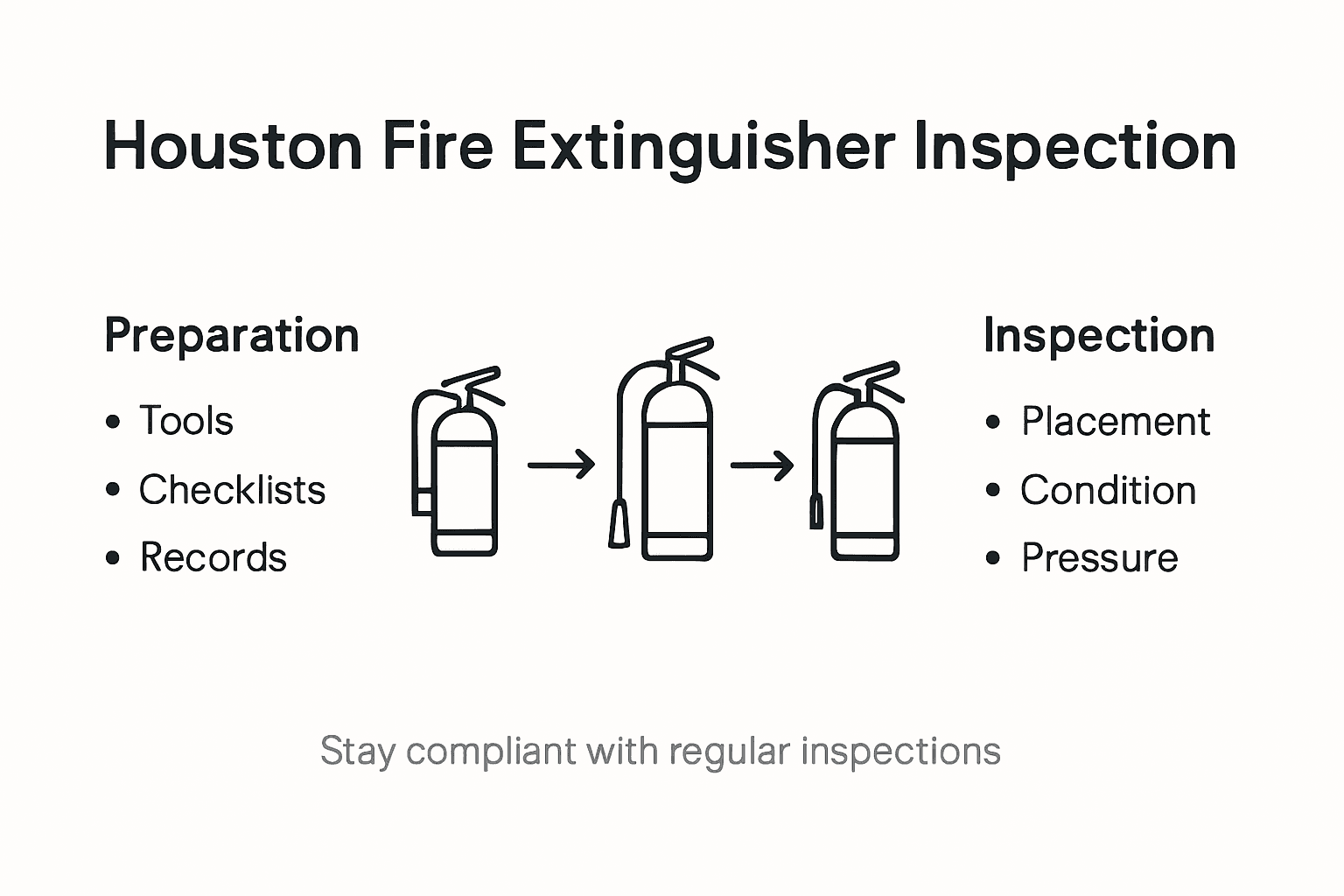
Prepping for a fire extinguisher inspection requires strategic organization of specific tools and paperwork. Your goal in this initial phase is assembling everything needed to conduct a thorough and compliant safety assessment.
Start by collecting essential documentation including past inspection records, equipment maintenance logs, and certification tracking sheets. These documents will help you track the history and current status of each fire extinguisher. Typical tools you will need include a clipboard, pen, flashlight, pressure gauge, inspection tag forms, and a detailed measurement tape. Houston Fire Department regulations require annual professional inspections, so ensure you have standard forms from licensed fire protection equipment companies ready for accurate documentation.
Organize your tools systematically before beginning your inspection. Group similar items together like measurement tools, recording materials, and safety equipment. Having a well-prepared toolkit will streamline your workflow and help you move efficiently through each inspection checkpoint.
Professional tip: Create a portable inspection kit with all necessary tools and forms pre-packed in a durable carrying case to save time and maintain a professional appearance during fire safety assessments.
Step 2: Review placement and accessibility of extinguishers
This step focuses on ensuring your fire extinguishers are strategically positioned for maximum safety and quick response. Houston Fire Department regulations mandate that portable fire extinguishers must be conspicuously located and immediately accessible during potential emergency situations.
Carefully evaluate each extinguisher’s location by walking through your facility and checking several critical factors. Verify that extinguishers are mounted at appropriate heights typically between 3 to 5 feet from the floor, with clear visibility and unobstructed access. They should be positioned along standard travel paths near potential fire hazards like electrical equipment, kitchens, storage areas, and exit routes. Ensure no heavy furniture, equipment, or storage items block the extinguisher or impede rapid retrieval.
Pay special attention to travel distance. Most safety codes recommend that no point in a facility should be more than 75 feet from a fire extinguisher. Use floor markings or signage to help employees quickly identify extinguisher locations. Proper installation standards require compliance with NFPA 10 guidelines, which specify detailed requirements for mounting and accessibility.
Professional tip: Create a facility map highlighting all fire extinguisher locations and post it in visible areas to help staff quickly locate emergency equipment during high stress situations.
Step 3: Examine physical condition and pressure levels
This step involves a detailed physical inspection of your fire extinguishers to ensure they remain in optimal operational condition. OSHA mandates monthly visual inspections to verify extinguishers are fully charged and operational, which means carefully checking every critical component.
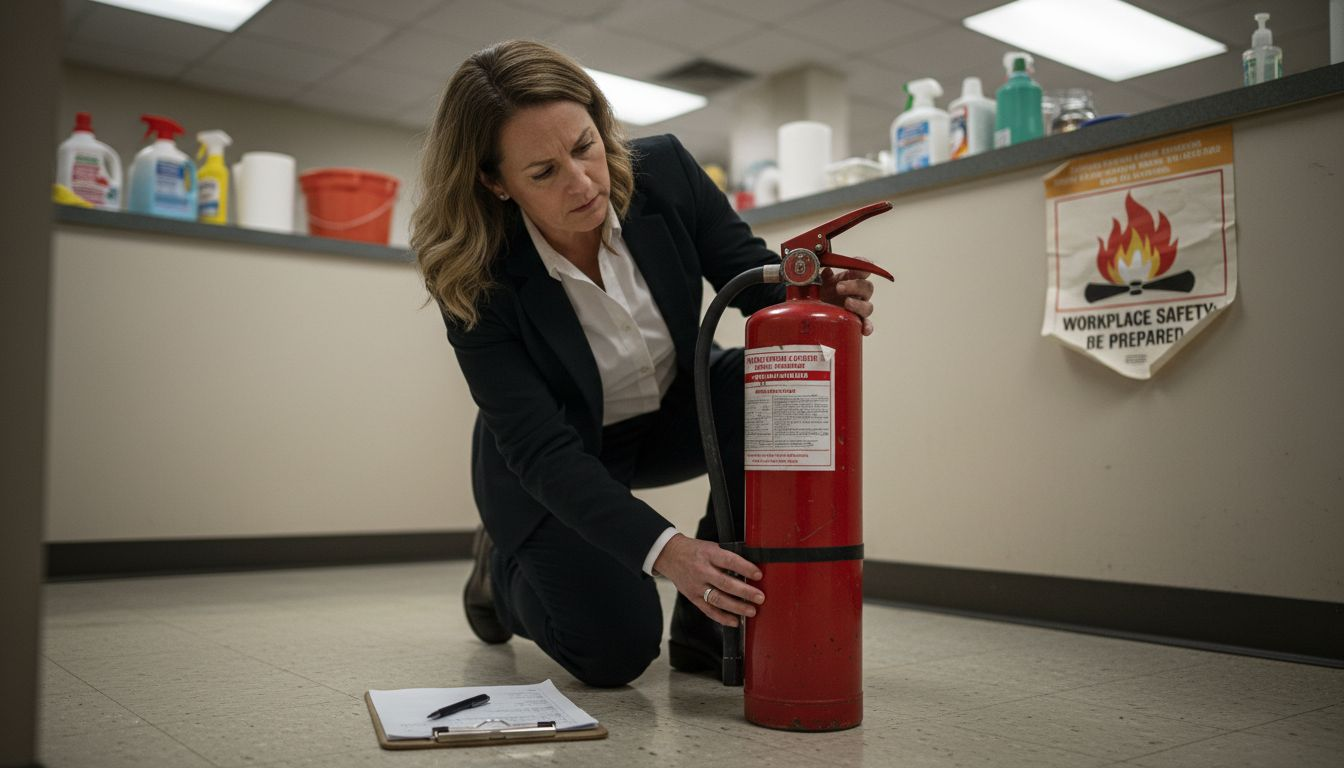
Begin by performing a comprehensive visual examination of each extinguisher. Look for signs of physical damage including dents, rust, corrosion, or leakage on the cylinder body and nozzle. Check the safety pin and tamper seal to confirm they remain intact. Verify the pressure gauge is in the green zone, indicating the extinguisher is properly charged and ready for use. Rotate the extinguisher slightly to assess internal pressure distribution and listen for any unusual sounds that might indicate internal problems.
Pay special attention to the instruction label and maintenance tag. Confirm these are legible and current. Inspect the mounting bracket or wall hook to ensure it provides secure support. Houston Fire Department standards require extinguishers to be maintained in a fully charged and operable condition at all times, so any detected issues should be immediately addressed by a professional fire safety technician.
Professional tip: Use a standardized inspection checklist during your examination to ensure consistency and create a systematic record of each extinguisher’s condition, which can help track potential maintenance trends over time.
Step 4: Test operational components for functionality
In this critical phase of your fire extinguisher inspection, you will verify that every mechanical component functions precisely as intended. OSHA requires annual maintenance checks that thoroughly test mechanical parts and the condition of extinguishing agents, making this step essential for ensuring safety readiness.
Begin by carefully examining the safety pin and tamper seal. Gently test the pin to confirm it moves smoothly without resistance and can be easily removed in an emergency. Check the discharge lever for proper tension and movement. Inspect the hose and nozzle for any signs of cracking, brittleness, or obstruction that might impede quick deployment. Rotate the extinguisher gently to assess internal agent distribution and listen for any unusual sounds that could indicate internal problems with the pressurized contents.
Pay special attention to the instruction label and verify that all operational instructions remain clearly legible. Houston Fire Department standards mandate that extinguishers must be service tagged annually by licensed fire protection professionals, so document any potential functional issues for immediate professional assessment. Ensure that each component moves smoothly and that the extinguisher feels balanced and ready for immediate use.
Professional tip: Create a standardized functionality testing log for each extinguisher that tracks mechanical performance over time, helping you identify potential wear patterns or recurring issues before they become critical safety problems.
Step 5: Document results and address deficiencies
Documenting your fire extinguisher inspection is not just a best practice it is a legal requirement. OSHA mandates that employers record annual maintenance dates and retain these records for at least one year, ensuring a comprehensive tracking system for safety compliance.
Create a detailed inspection report for each fire extinguisher, noting its unique identifier, location, current condition, and any identified issues. Use a standardized form that captures critical information such as pressure gauge readings, physical damage observations, functional test results, and maintenance recommendations. For any identified deficiencies, categorize them by severity level and develop an immediate action plan. Minor issues might require simple maintenance, while significant problems could necessitate professional servicing or complete extinguisher replacement.
Houston Fire Department standards require all fire extinguishers to have a current annual inspection tag from a licensed fire protection equipment company, so ensure your documentation includes clear evidence of professional assessment. Contact a certified fire safety technician promptly if you discover any operational problems that could compromise the extinguisher performance during an emergency.
Here’s a summary of common fire extinguisher inspection deficiencies and their recommended corrective actions:
| Deficiency Type | Example Issue | Recommended Action |
|---|---|---|
| Physical Damage | Dents or corrosion | Replace or repair extinguisher |
| Blocked Accessibility | Obstructed by furniture | Clear obstruction immediately |
| Pressure Issue | Low gauge reading | Recharge or replace unit |
| Tag/Label Problems | Illegible or missing labels | Install new tag/label |
| Expired Inspection | Outdated service tag | Schedule professional inspection |
Professional tip: Develop a digital tracking system that allows you to scan inspection reports, set automatic reminders for future maintenance, and create a historical record of each fire extinguisher equipment lifecycle.
Step 6: Verify compliance and schedule next inspection
The final stage of your fire extinguisher inspection involves carefully reviewing your documentation and ensuring full regulatory alignment. Houston Fire Department standards mandate that all servicing, testing, and maintenance be conducted annually by qualified personnel, making this verification process critically important for maintaining safety compliance.
Compare your completed inspection documents against local and federal requirements. Check that each extinguisher has a valid service tag and that all identified issues from previous inspections have been addressed. Confirm you have comprehensive records documenting the condition, location, and functional status of every fire extinguisher in your facility. Verify that the inspection follows NFPA 10 guidelines and meets the specific requirements for professional equipment assessment, paying special attention to the timing and comprehensiveness of your evaluation.
Schedule your next comprehensive inspection immediately, ensuring you maintain a consistent annual review cycle. Create a digital or physical calendar reminder that alerts you well in advance of the upcoming inspection deadline. If any significant deficiencies were discovered during this inspection, coordinate with a licensed fire protection equipment service to resolve these issues before your next full assessment.
Professional tip: Develop a color coded tagging system that allows you to quickly track the inspection status and maintenance history of each fire extinguisher, simplifying future compliance tracking and reducing the risk of overlooking critical safety requirements.
The following table contrasts monthly visual checks and annual professional inspections for fire extinguishers:
| Aspect | Monthly Visual Inspection | Annual Professional Inspection |
|---|---|---|
| Required By | OSHA | OSHA, Houston Fire Department |
| Performed By | Facility staff | Licensed fire technician |
| Focus | Readiness and visible issues | Mechanicals, tags, full testing |
| Documentation | Basic log entry | Detailed tagged service record |
Ensure Houston Compliance with Expert Fire Extinguisher Inspections
Maintaining full compliance with Houston Fire Department regulations and OSHA standards is not just a requirement it is crucial for the safety of your property and everyone inside. The detailed inspection workflow discussed earlier highlights challenges you might face such as verifying pressure levels accessibility physical condition and documenting every step accurately. Without professional support these tasks can become overwhelming and time consuming potentially exposing your business to risks or penalties.
At Reliable Fire Protection we specialize in comprehensive fire safety solutions tailored specifically for Houston clients. Our licensed technicians ensure your fire extinguishers meet all NFPA 10 and local guidelines with precise monthly and annual inspections. We help you tackle pain points like documenting deficiencies scheduling timely maintenance and maintaining service tags so you can feel confident that your fire safety program is up to code and ready for any emergency.
Protect your business and simplify compliance today by partnering with Reliable Fire Protection. Take the next step toward peace of mind by requesting a free quote or expert consultation through our website Reliable Fire Protection. Don’t wait until the next inspection cycle to discover a problem act now to keep your property safe and compliant.
Frequently Asked Questions
What tools do I need for a fire extinguisher inspection?
To conduct a fire extinguisher inspection, gather tools such as a clipboard, pen, flashlight, pressure gauge, inspection tag forms, and a measuring tape. Assemble these tools in a portable inspection kit to streamline your workflow and ensure you have everything needed for a thorough assessment.
How can I ensure fire extinguishers are accessible during an emergency?
Verify that fire extinguishers are mounted between 3 to 5 feet from the floor, clearly visible, and free from obstructions. Walk through your facility and check that the extinguishers are located along standard travel paths, ensuring no heavy items block their access.
What should I look for during a physical inspection of fire extinguishers?
During a physical inspection, look for signs of damage such as dents, rust, or leakage. Also, check the pressure gauge to ensure it’s within the green zone, and confirm that the safety pin and tamper seal are intact to guarantee readiness during an emergency.
How do I document the results of my fire extinguisher inspection?
Document each fire extinguisher’s condition, location, and any identified issues using a standardized inspection report. Include details such as pressure readings and observations of damage, and develop an action plan for addressing any deficiencies found during the inspection.
How often should fire extinguishers be inspected and maintained?
Conduct monthly visual inspections to verify readiness and compliance, and schedule comprehensive annual inspections by a licensed technician. Set reminders to ensure these inspections are conducted on time to maintain safety compliance and equipment reliability.
What steps should I take if I find deficiencies during the inspection?
Immediately categorize any identified deficiencies based on severity and develop an action plan for remediation. Minor issues may only need quick maintenance, while significant problems could require professional servicing or replacement of the extinguisher.