
Managing a commercial property in Houston means facing strict safety codes and the pressure to protect every tenant. Property managers often encounter common myths about fire sprinklers that make compliance and planning more difficult. Understanding how these systems truly operate—activating only when heat from a fire reaches a certain point, not from smoke—can help you make smarter safety choices. This guide will clarify how fire sprinklers function and tackle the misconceptions that stand in the way of thorough fire protection.
Table of Contents
- What Fire Sprinklers Do And Common Myths
- Main Types Of Fire Sprinkler Systems
- How Fire Sprinkler Activation Occurs
- Houston And NFPA 13 Compliance Requirements
- Responsibilities And Risks For Property Managers
Key Takeaways
| Point | Details |
|---|---|
| Fire Sprinkler Activation | Fire sprinklers activate individually based on heat, minimizing water damage and responding effectively to fires. |
| System Types | Choosing the right sprinkler system depends on building characteristics, with options including Wet Pipe, Dry Pipe, Pre-Action, and Deluge systems. |
| NFPA 13 Compliance | Properties in Houston must comply with NFPA 13 standards to ensure safety and avoid legal penalties. |
| Property Manager Responsibilities | Property managers must maintain records, conduct inspections, and prepare emergency protocols to mitigate fire safety risks. |
What Fire Sprinklers Do and Common Myths
Fire sprinklers are advanced safety systems designed to automatically detect and control fires before they spread catastrophically. Unlike popular misconceptions, these systems operate with precision and intelligence, targeting specific areas of heat buildup to minimize property damage and protect human life.
Modern fire sprinklers work through individual heat-activated mechanisms that respond uniquely to fire conditions. Fire sprinkler systems operate independently, meaning each sprinkler head is triggered only when surrounding temperatures reach a critical threshold. This targeted approach ensures that not all sprinklers activate simultaneously, contrary to widespread myths.
Here are some key facts about how fire sprinklers actually function:
- Individual Activation: Only the sprinkler head nearest to the fire will activate
- Heat Sensitivity: Sprinklers respond to high temperatures, not smoke
- Quick Response: Most fires are controlled before the fire department arrives
- Precision Engineering: Systems are designed according to strict NFPA standards
Many property managers mistakenly believe that fire sprinklers are unreliable or prone to accidental discharge. However, modern sprinkler systems are engineered with sophisticated temperature-sensitive glass bulbs or metal links that require significant heat to trigger. Leaks and random activations are extremely rare.
Fire sprinklers provide critical life and property protection by reacting quickly to heat, often extinguishing fires before significant damage occurs.
Pro Tip: Have a professional inspect your fire sprinkler system annually to ensure optimal performance and compliance with local safety regulations.
Main Types of Fire Sprinkler Systems
Fire sprinkler systems are not one-size-fits-all solutions. Instead, they are sophisticated safety mechanisms designed to address specific building requirements and potential fire risks. Fire sprinkler system classifications vary based on environmental conditions, property type, and potential hazard levels.
The primary types of fire sprinkler systems include:
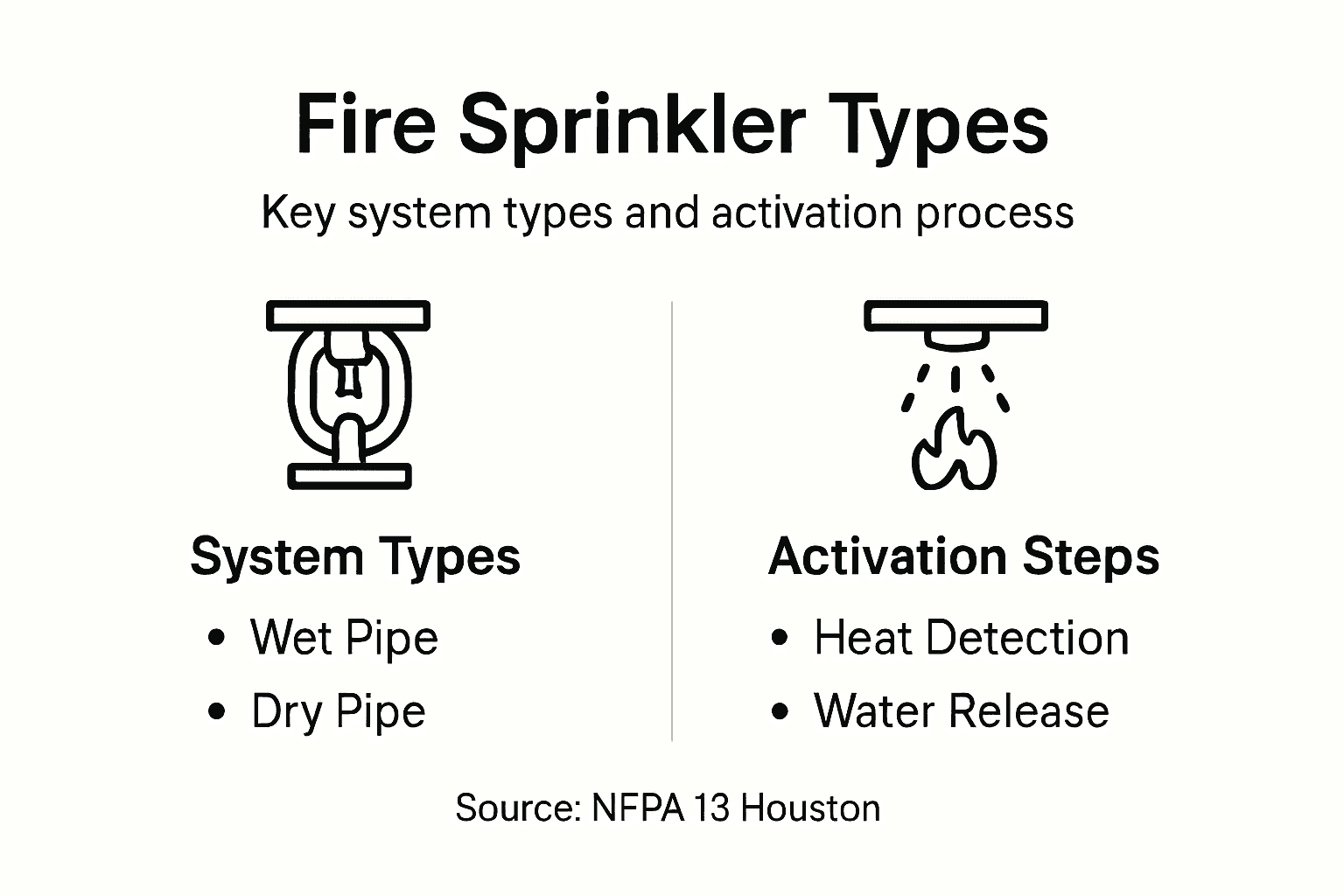
- Wet Pipe Systems: Most common type, with water constantly present in pipes
- Dry Pipe Systems: Used in cold environments where water might freeze
- Pre-Action Systems: Require additional fire detection before water release
- Deluge Systems: Used in high-risk areas where immediate total water coverage is necessary
Each system has unique characteristics tailored to specific environments. Standard spray sprinklers come in multiple configurations, including pendent (hanging down), upright, and sidewall orientations. These variations allow for precise placement and maximum coverage in different building layouts.
Wet pipe systems represent the most straightforward and fastest-responding option. Water remains pressurized in the pipes, enabling immediate discharge when a sprinkler head is triggered. Dry pipe systems, conversely, use compressed air or nitrogen, which must first escape before water flows – making them ideal for unheated spaces like parking garages or refrigerated warehouses.
Here’s a summary of the main fire sprinkler system types and their ideal usage environments:
| System Type | Best Suited For | Main Advantage |
|---|---|---|
| Wet Pipe | Offices and residential spaces | Fastest response time |
| Dry Pipe | Unheated or cold locations | Prevents pipe freezing |
| Pre-Action | Data centers, museums | Reduces water damage risk |
| Deluge | Industrial, high-hazard areas | Rapid, total coverage |
Selecting the appropriate fire sprinkler system requires careful analysis of building occupancy, environmental conditions, and potential fire risks.
Pro Tip: Consult with a professional fire protection engineer to determine the most suitable sprinkler system for your specific property needs.
How Fire Sprinkler Activation Occurs
Fire sprinkler systems represent a sophisticated defense mechanism that responds precisely to rising temperatures. Fire sprinkler thermal activation involves a complex yet reliable process where heat-sensitive elements trigger water discharge only in the specific area experiencing fire conditions.
The activation mechanism typically relies on several critical components:
- Thermal Bulb: A glass bulb containing special liquid that expands under heat
- Trigger Temperature: Preset temperature threshold for each sprinkler head
- Sealing Mechanism: Plug or seal that prevents water flow until triggered
- Pressurized Piping: Water supply system ready for immediate response
Each sprinkler head operates independently, with a unique heat-sensitive element designed to burst only when surrounding temperatures reach a critical point. Sprinkler system mechanics ensure that water is released precisely where the fire originates, minimizing unnecessary water damage and maximizing firefighting efficiency.
The process begins with the thermal bulb or metal link containing a special liquid or mechanism. As temperatures rise, the liquid expands or the link weakens, causing the sprinkler head to open and release water directly onto the fire source. This targeted approach means that typically only one or two sprinkler heads activate, contrary to popular misconceptions about entire systems discharging simultaneously.
Fire sprinkler systems provide surgical precision in fire suppression, activating only where and when needed.
Pro Tip: Schedule annual inspections to ensure your fire sprinkler system’s thermal elements remain calibrated and responsive to potential fire risks.
Houston and NFPA 13 Compliance Requirements
Fire safety in Houston demands rigorous adherence to national standards, with NFPA 13 regulations serving as the critical framework for fire sprinkler system design and installation. These comprehensive guidelines ensure that commercial and residential properties maintain the highest levels of fire protection and life safety.
Key compliance requirements for Houston properties include:
- System Design: Detailed hydraulic calculations and sprinkler placement strategies
- Hazard Classification: Specific requirements based on building occupancy and risk level
- Installation Standards: Precise specifications for pipe sizing, sprinkler head selection
- Periodic Testing: Regular maintenance and performance verification protocols
Professional fire protection engineers must carefully analyze each property’s unique characteristics to develop a sprinkler system that meets NFPA 13 standards. This involves comprehensive assessments of building layout, potential fire risks, occupancy types, and specific environmental conditions that could impact system performance.
The Houston Fire Department enforces these standards through rigorous inspection processes, requiring property owners to demonstrate full compliance with NFPA 13 guidelines. Failure to meet these requirements can result in significant penalties, potential legal liabilities, and most critically, compromised safety for occupants and property.
Compliance with NFPA 13 is not just a regulatory requirement, but a fundamental commitment to protecting lives and property.
Pro Tip: Work with certified fire protection professionals who specialize in NFPA 13 compliance to ensure your Houston property meets all necessary safety standards.
Responsibilities and Risks for Property Managers
Property managers bear significant legal and ethical responsibilities when it comes to fire safety systems, with critical fire protection obligations extending far beyond simple maintenance. Understanding these responsibilities is crucial for mitigating potential risks and ensuring occupant safety in Houston properties.
Key responsibilities for property managers include:
- System Documentation: Maintaining comprehensive records of fire sprinkler installations and maintenance
- Regular Inspections: Scheduling professional assessments of fire protection systems
- Compliance Verification: Ensuring all fire safety systems meet current NFPA and local regulations
- Emergency Preparedness: Developing and maintaining clear emergency response protocols
- Tenant Communication: Providing clear information about fire safety procedures
Property managers face substantial legal and financial risks if they fail to maintain proper fire protection systems. Potential consequences of negligence can include significant property damage, legal liability for injuries or fatalities, increased insurance premiums, and potential lawsuits from tenants or property owners.
The financial implications of inadequate fire protection extend beyond immediate damage. Insurance companies carefully evaluate a property’s fire safety management, with comprehensive maintenance records potentially reducing insurance costs and demonstrating proactive risk management.
The following table outlines property manager responsibilities and related risks if neglected:
| Responsibility | Why It Matters | Risk If Ignored |
|---|---|---|
| Maintenance Records | Verifies compliance | Legal liability in audits |
| Regular Inspections | Ensures system readiness | System failure during a fire |
| Emergency Protocols | Prepares occupants | Increased injury or confusion |
| Tenant Communication | Informs about procedures | Tenant lawsuits for negligence |
Effective fire protection management is not just a legal requirement, but a fundamental responsibility to protect lives and property.
Pro Tip: Develop a comprehensive fire safety management checklist and review it quarterly to ensure ongoing compliance and minimize potential risks.
Protect Your Houston Property with Expert Fire Protection Solutions
Understanding how fire sprinklers work and the critical role they play in safeguarding lives and property highlights the importance of professional fire safety systems tailored to your building’s unique needs. Whether you manage commercial spaces, residential buildings, or high-hazard environments, ensuring compliance with NFPA 13 standards and reliable activation of fire sprinklers can make all the difference when seconds count.
Reliable Fire Protection specializes in comprehensive fire safety services designed to provide precision-engineered systems like wet pipe, dry pipe, and pre-action sprinklers that respond only where and when needed. Our experts focus on helping Houston property managers meet all regulatory requirements while reducing risks and minimizing damage from fire emergencies. Learn more about our full range of fire protection services and how we deliver peace of mind through meticulous system design, installation, and maintenance.

Don’t leave your property vulnerable to fire-related dangers. Act now to schedule a consultation or request a free quote at Reliable Fire Protection. Secure your Houston property with trusted expertise and ensure your fire sprinkler system is always ready to protect what matters most.
Frequently Asked Questions
What are the main types of fire sprinkler systems?
Fire sprinkler systems include four main types: Wet Pipe Systems, Dry Pipe Systems, Pre-Action Systems, and Deluge Systems. Each type is designed for specific environments and potential fire risks, maximizing efficiency and safety.
How do fire sprinklers activate during a fire?
Fire sprinklers activate individually when heat-sensitive elements, like thermal bulbs, detect elevated temperatures. This means that only the sprinkler closest to the fire will discharge water, effectively targeting the fire source without unnecessary water damage.
What are the compliance requirements for fire sprinklers?
Fire sprinkler systems must comply with NFPA 13 regulations, which dictate system design, hazard classification, installation standards, and periodic testing to ensure optimal performance and safety.
Why is regular maintenance of fire sprinkler systems important?
Regular maintenance ensures that fire sprinkler systems remain in optimal working condition, verifying compliance with safety regulations and reducing the risk of system failure during a fire emergency.
Recommended
- Fire Sprinkler Systems Explained: Protecting Houston Properties
- Sprinkler Maintenance: Protecting Houston Properties Safely
- Role of Sprinkler Systems in Houston Safety Compliance
- Sprinkler System Inspection Guide for Houston Properties
- What Is Security Audit? Why It Matters for GTA Properties – A To Z Locksmith Inc
- Fire Alarm System University Place TX
- Fire Alarm System Bellaire TX