

Most American property owners are surprised to learn that fire sprinkler systems reduce building fire deaths by over 80 percent. Fire safety is not just a legal requirement, it is a critical safeguard for families, employees, and irreplaceable assets. Understanding how fire sprinkler systems work can make the difference between minor disruption and devastating loss. This guide breaks down why these systems matter so much, how they function, and the essential choices every American must consider for reliable fire protection.
Table of Contents
- Fire Sprinkler Systems And Their Purpose
- Main Types Of Fire Sprinkler Systems
- How Sprinkler Systems Detect And Suppress Fires
- Installation And Code Requirements In Houston
- Maintenance Responsibilities And Common Pitfalls
Key Takeaways
| Point | Details |
|---|---|
| Fire Sprinkler Systems Provide Life Safety | These systems are essential for controlling fire spread, allowing occupants valuable time to evacuate safely. |
| Types of Systems for Specific Needs | Different fire sprinkler systems (wet, dry, preaction, deluge) cater to various environments and risks, requiring expert assessment for proper selection. |
| Regular Maintenance is Crucial | Consistent inspections and maintenance help ensure system reliability and compliance, preventing catastrophic failures and ensuring safety. |
| Compliance with Local Codes | Installation must adhere to local building standards, necessitating professional guidance to navigate complex regulations and permit requirements. |
Fire Sprinkler Systems and Their Purpose
Fire sprinkler systems are sophisticated safety devices designed to protect properties and save lives by rapidly controlling fires before they become unmanageable. These automatic extinguishing systems prevent fire growth and spread by releasing water through strategically placed sprinkler heads when surrounding air temperatures reach critical levels.
The primary purpose of fire sprinkler systems extends beyond mere property protection. They are engineered to provide critical time for occupants to safely evacuate during emergencies. When a fire starts, the system activates automatically, targeting the specific area where temperature changes indicate potential danger. This targeted response means only the sprinkler heads near the fire will discharge water, minimizing water damage while effectively controlling the flame’s progression.
Modern fire sprinkler systems incorporate advanced technology that makes them incredibly reliable and efficient. These systems are designed to control fires when they are still small, significantly reducing potential property damage and increasing the likelihood of saving human lives. They work silently in the background, requiring minimal maintenance while providing round-the-clock protection against potential fire hazards.
Pro Tip: Regular professional inspection of your fire sprinkler system ensures optimal performance and can potentially lower your property insurance premiums by demonstrating proactive safety measures.
Main Types of Fire Sprinkler Systems
Fire sprinkler systems are engineered with multiple configurations to address different environmental and safety requirements. The American Fire Sprinkler Association recognizes four primary types of systems: wet pipe, dry pipe, preaction, and deluge sprinkler systems, each designed to provide targeted fire protection in specific settings.
Wet pipe systems represent the most common type of fire sprinkler configuration. These systems maintain water continuously pressurized within the pipes, allowing immediate water discharge when a sprinkler head’s heat-sensitive element is activated. Dry pipe systems, in contrast, store compressed air or nitrogen in the pipes, which must first escape before water flows. This design makes them ideal for unheated spaces like parking garages or cold storage facilities where pipe freezing could be a concern.
Specialized fire suppression environments require advanced system types, including electronic, foam water, water spray, and water mist systems. Preaction systems offer an additional layer of protection by requiring two activation events before water release, making them perfect for locations with sensitive equipment like data centers or museums. Deluge systems spray water simultaneously across all sprinkler heads, typically used in high-risk areas with potential for rapid fire spread, such as aircraft hangars or chemical storage facilities.
Here’s a concise comparison of the primary fire sprinkler system types, emphasizing their typical best uses and how they activate:
| System Type | Ideal Applications | Activation Method |
|---|---|---|
| Wet Pipe | Offices, hotels, retail stores | Heat activates head, instant water |
| Dry Pipe | Unheated garages, cold storage | Air release, then water discharge |
| Preaction | Data centers, museums, archives | Dual event triggers water release |
| Deluge | Chemical plants, aircraft hangars | All heads open, water floods area |
Pro Tip: Consult with fire protection professionals to determine the most appropriate sprinkler system type for your specific property, considering factors like environmental conditions, potential fire risks, and building infrastructure.
How Sprinkler Systems Detect and Suppress Fires
Fire sprinkler systems employ sophisticated heat detection mechanisms that enable precise and targeted fire suppression. Each sprinkler head operates independently, with a unique temperature-sensitive element designed to activate only when surrounding air temperatures reach critical levels. This intelligent design ensures that water is released exclusively in the specific area where fire risk is detected.
The activation process begins with a carefully engineered thermal link within each sprinkler head. When ambient temperatures rise to predetermined thresholds, typically between 135 to 165 degrees Fahrenheit, the heat-sensitive mechanism triggers, causing the sprinkler head to open. Sprinklers are designed to disperse water in an effective pattern that quickly douses a fire, with remarkable precision that minimizes unnecessary water damage while maximizing fire suppression efficiency.
Modern sprinkler systems incorporate advanced technologies that enhance their responsiveness and reliability. Depending on the system type, activation can involve different mechanisms such as melting metal alloys, breaking glass bulbs, or electronic sensors. The goal remains consistent: detect heat rapidly, activate only the necessary sprinkler heads, and control fire spread with minimal collateral damage. This targeted approach allows for quick intervention, reducing potential property destruction and providing crucial time for occupant evacuation.
Pro Tip: Schedule annual professional inspections of your fire sprinkler system to ensure all thermal elements are functioning correctly and that no corrosion or damage compromises the system’s detection and suppression capabilities.
Installation and Code Requirements in Houston
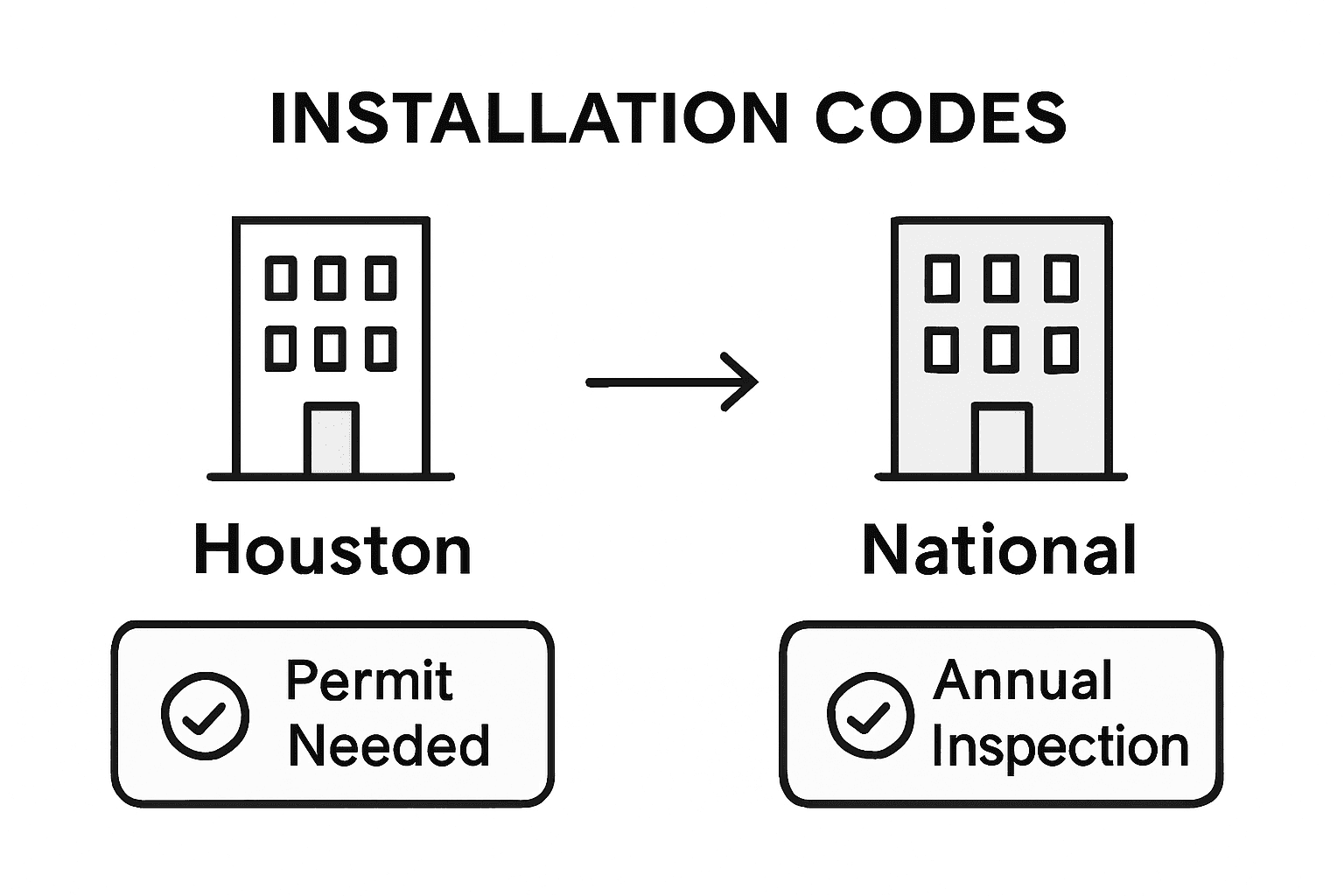
Fire sprinkler systems in Houston must comply with stringent local and national building codes that ensure maximum safety for commercial and residential properties. The Houston Fire Department and the International Fire Code establish comprehensive guidelines governing fire protection system installations, which require meticulous planning, professional design, and precise implementation to meet regulatory standards.
The installation process involves multiple critical components and professional assessments. Building owners must obtain necessary permits from the City of Houston’s Building and Engineering Department, which requires detailed system design documents demonstrating compliance with local fire safety regulations. Professional fire protection engineers must calculate water supply requirements, pipe sizing, sprinkler head placement, and hydraulic performance to ensure the system can effectively suppress potential fires across different building types and occupancy classifications.
Code requirements vary significantly depending on the property’s usage, size, and construction type. Commercial buildings, healthcare facilities, educational institutions, and industrial complexes each have unique installation standards that address their specific fire risks. Critical factors include sprinkler head spacing, water pressure requirements, backflow prevention, system testing protocols, and mandatory annual inspections to maintain compliance and ensure ongoing operational reliability.
Pro Tip: Always work with certified fire protection professionals who understand Houston’s specific building codes and can navigate the complex permitting process, ensuring your fire sprinkler system meets all regulatory requirements while providing maximum safety protection.
Maintenance Responsibilities and Common Pitfalls
Fire sprinkler system maintenance requires consistent professional attention to ensure optimal performance and compliance with safety regulations. Property owners must recognize that these critical safety systems demand more than occasional inspections. Regular, comprehensive maintenance prevents potential failures that could compromise fire protection capabilities and expose buildings to significant risk.
Common maintenance pitfalls often emerge from neglect or misunderstanding of system complexity. Corrosion, pipe damage, improper pressure levels, and obstructed sprinkler heads represent frequent issues that can dramatically reduce system effectiveness. Property managers should implement a structured maintenance program that includes quarterly visual inspections, annual comprehensive testing, and immediate repairs of any detected irregularities. Critical components requiring regular assessment include water supply connections, pipe integrity, sprinkler head alignment, and overall hydraulic system performance.
Sophisticated fire sprinkler systems involve intricate networks of pipes, valves, sensors, and mechanical components that interact dynamically. Potential failure points include mechanical wear, water quality issues, temperature fluctuations, and potential accidental damage during building renovations or maintenance activities. Professional fire protection technicians utilize specialized diagnostic tools to conduct pressure tests, evaluate system responsiveness, and identify potential vulnerabilities before they become critical safety concerns.
For quick reference, here’s a summary of key maintenance responsibilities and frequent pitfalls property managers should be aware of:
| Maintenance Task | Importance | Common Problems if Ignored |
|---|---|---|
| Quarterly Inspections | Early issue detection | Corrosion, clogged heads |
| Annual System Testing | Ensures system reliability | Undetected leaks or valve failure |
| Immediate Repairs | Prevents escalation of minor faults | Major system failure |
| Documentation of All Actions | Insurance and legal compliance | Lack of repair history, liabilities |
Pro Tip: Develop and maintain a detailed maintenance log documenting every inspection, test, and repair, which not only ensures ongoing system reliability but also provides crucial documentation for insurance compliance and potential legal requirements.
Secure Your Houston Property with Expert Fire Sprinkler Solutions
Understanding the critical role that fire sprinkler systems play in faster fire detection and suppression highlights the importance of having a reliable and professionally maintained system. If you want to prevent costly water damage, avoid common maintenance pitfalls, and ensure your sprinklers instantly activate where needed, then expert guidance is essential. Houston’s unique climate and stringent code requirements mean your system must be designed and serviced by local professionals who truly understand the risks and regulations.
At Reliable Fire Protection, we specialize in comprehensive fire safety services tailored to Houston properties. From initial sprinkler system installation to routine inspections and urgent repairs, our certified experts help you maintain full code compliance and optimal system performance. We prioritize your safety and work efficiently to protect your family, employees, or customers while minimizing fire damage and disruption.

Don’t wait for an emergency to find out if your fire sprinkler system is ready. Connect with our trusted team today and benefit from personalized solutions designed to safeguard your property and peace of mind. Visit Reliable Fire Protection now for a free consultation or to schedule a professional inspection. Your Houston property deserves the best protection available—act now to secure it.
Frequently Asked Questions
What are fire sprinkler systems and how do they work?
Fire sprinkler systems are automatic safety devices that control fires by releasing water through sprinkler heads when surrounding air temperatures reach critical levels. They are designed to minimize fire growth and provide occupants with time to evacuate safely.
What are the main types of fire sprinkler systems?
The main types of fire sprinkler systems include wet pipe, dry pipe, preaction, and deluge systems. Wet pipe systems are the most common, while dry pipe systems are ideal for unheated spaces. Preaction systems require two triggers to release water, and deluge systems spray water from all heads simultaneously.
How do I maintain a fire sprinkler system?
Regular maintenance of a fire sprinkler system includes quarterly visual inspections and annual comprehensive testing. Property owners should address any issues like corrosion or obstructed heads immediately to ensure the system operates effectively.
What installation codes must be followed for fire sprinkler systems?
Installation of fire sprinkler systems must comply with local building codes and the International Fire Code. This involves obtaining permits and ensuring that the design meets regulations concerning water supply, sprinkler head placement, and proper testing protocols.