
TL;DR:
- Houston homes face unique fire risks from aging wiring, extreme heat, and storm damage that can cause rapid fires. Preparing with essential safety equipment, developing escape plans, and practicing regular drills can significantly improve family safety. Ongoing maintenance, awareness of local hazards, and professional assessments help ensure your home remains protected year-round.
Houston homes face a specific set of fire risks that other cities don’t. Aging electrical systems in older Montrose bungalows, fierce summer heat stressing appliances, and storm surges that damage wiring all create conditions where a fire can start fast. NFPA data shows roughly 350,800 home structure fires occur annually, causing over 2,700 deaths, with three in five fatalities happening in homes without working smoke alarms. This guide gives you a clear, step-by-step plan to protect your family before the worst happens.
Table of Contents
- What you need to prepare for home fire safety
- Step-by-step: Key residential fire safety actions
- Common hazards and mistakes specific to Houston homes
- How to verify your fire safety readiness
- A realistic perspective: Why Houston homeowners skip critical fire safety steps and how to do better
- Protect your home with expert solutions and ongoing support
- Frequently asked questions
Key Takeaways
| Point | Details |
|---|---|
| Test alarms frequently | Monthly alarm tests catch failures early and cut fatal fire risk in half. |
| Practice escape drills | Family fire drills every six months help everyone escape in under two minutes. |
| Prevent main hazards | Never leave cooking unattended and check electrical cords and lint traps to avoid avoidable fires. |
| Verify readiness | Check equipment, hold drills, and update your checklist for true safety all year. |
What you need to prepare for home fire safety
With an understanding of why fire safety matters, let’s look at exactly what you need to have on hand before starting step-by-step.
Building your fire safety foundation starts with gathering the right equipment and knowing where each piece belongs. Think of this stage like stocking a first-aid kit. You wouldn’t wait until someone is bleeding to figure out where the bandages are.
Essential equipment checklist
Here’s what every Houston home should have in place:
- Smoke alarms: Install on every level, inside every bedroom, and directly outside sleeping areas. A two-story home with three bedrooms needs at least five smoke alarms.
- Carbon monoxide (CO) detectors: Place one on each floor and near sleeping areas. CO is odorless and invisible, so detectors are the only warning system you have.
- Fire extinguishers: Install ABC-rated extinguishers in the kitchen and garage at minimum. ABC rating means the unit handles ordinary combustibles, flammable liquids, and electrical fires.
- Escape ladder or rope: Any bedroom above the first floor needs a window escape ladder. These fold flat under a bed and deploy quickly.
- Flashlights and battery backups: Power outages during a fire are common. Keep flashlights on nightstands, not just in a utility drawer.
Understanding the types of fire extinguishers matters more than most homeowners realize. A Class K extinguisher for cooking oils is different from the ABC unit in your garage. Using the wrong type can actually spread certain fires.
Houston-specific equipment concerns
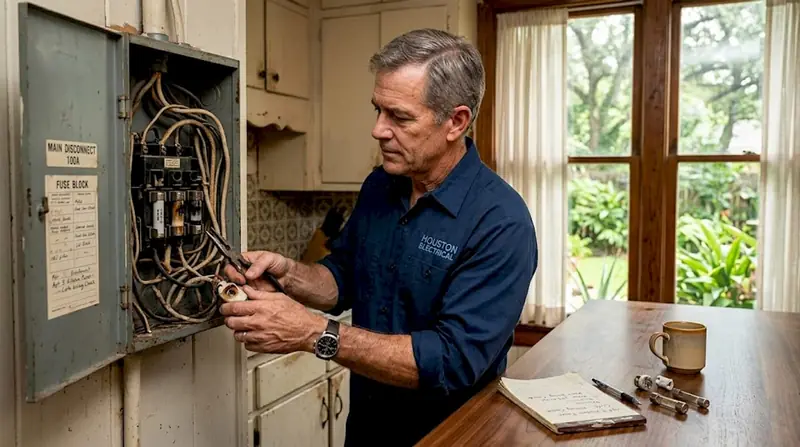
Older Houston homes, particularly those built before 1980, often have aluminum wiring or knob-and-tube systems that create specific risks. These wiring types heat up faster under load and can cause electrical fires inside walls where no detector catches them early. Annual chimney inspections matter too, especially after a Houston storm season when debris can block flues and create carbon monoxide backup.
| Equipment | Placement | Replacement schedule |
|---|---|---|
| Smoke alarm | Every level, every bedroom, outside sleeping areas | Every 10 years |
| CO detector | Each floor, near sleeping areas | Every 5 to 7 years |
| ABC fire extinguisher | Kitchen, garage, hallways | Inspect monthly, replace per gauge |
| Escape ladder | Upstairs bedrooms | Check annually for wear |
| Flashlight | Nightstands, utility areas | Check batteries twice yearly |
Pro Tip: Keep a written log or a simple smartphone note listing every safety device in your home, the installation date, and the last inspection date. Reviewing fire alarm maintenance tips once a year helps you stay on schedule and catch problems before they cost lives.
Step-by-step: Key residential fire safety actions
Now that you know what tools and equipment you need, here’s how to put home fire safety into action, step by step.
Step 1: Install and test smoke alarms and CO detectors
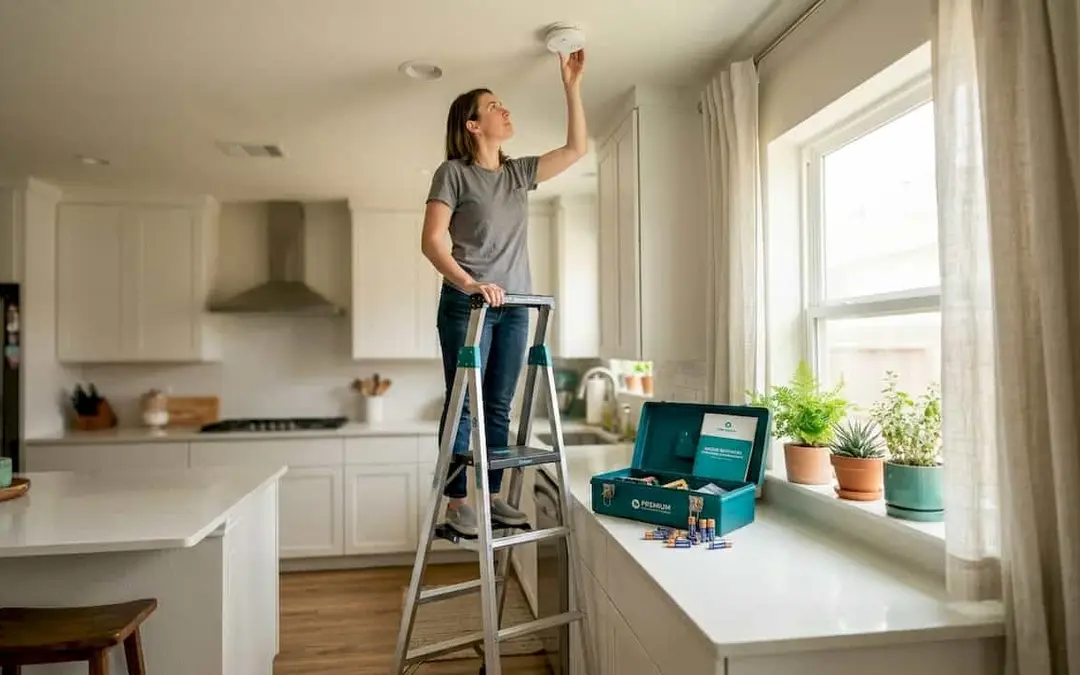
Mount smoke alarms on the ceiling or high on a wall, since smoke rises. Keep them at least 10 feet away from cooking appliances to reduce false alarms. Press the test button once a month. If the alarm doesn’t sound within three seconds, replace the battery immediately. If it still doesn’t work after a fresh battery, replace the unit.
CO detectors belong outside sleeping areas so that an overnight leak wakes you up. Don’t place them directly next to gas appliances. A few feet of distance prevents false positives.
Step 2: Develop and practice a home escape plan
Draw a simple floor plan of your home on paper. Mark two ways out of every room, usually a door and a window. Pick one spot outside as your family meeting place. The front mailbox, a neighbor’s driveway, or a large tree works well. Everyone in the house must know the spot.
Practice your plan twice a year, including once at night. Nighttime drills are critical because most fatal fires happen while families are asleep. Children and elderly family members often need extra guidance navigating stairs or windows in the dark. Practice builds the kind of muscle memory that works even when panic sets in.
Step 3: Place and maintain your extinguishers
Mount extinguishers at a reachable height, away from direct heat sources. In the kitchen, mount it near the door rather than directly beside the stove. That way, a grease fire doesn’t block your access to the extinguisher.
Use the PASS method when operating an extinguisher:
- Pull the pin at the top of the handle
- Aim the nozzle at the base of the fire, not the flames
- Squeeze the handle with a firm, steady grip
- Sweep side to side across the base until the fire goes out
Refer to our fire extinguisher checklist for a quick guide on inspecting the pressure gauge, checking for physical damage, and confirming the safety pin is intact.
Step 4: Practice with every family member, including at night
“Modern homes can reach flashover in under two minutes. That’s why escape plans aren’t optional; they’re the difference between a close call and a tragedy.”
Escape times in modern homes can fall below two minutes because synthetic furnishings burn faster than older materials. Foam-filled sofas, plastic blinds, and engineered wood all ignite quickly and release toxic gases. Practicing at night means your children know what to do when their room is dark and disorienting.
Pro Tip: Use a timer during escape drills. Set a two-minute countdown and challenge your family to reach the meeting spot before it goes off. This isn’t meant to scare anyone. It builds a realistic sense of urgency and makes the drill feel real enough to stick. You can find additional Texas fire safety tips to layer onto your household routine.
Common hazards and mistakes specific to Houston homes
Executing the core steps is crucial, but to avoid setbacks, watch for these Houston-specific hazards and mistakes that trip up many families.
Top 5 local fire triggers
- Old wiring and storm damage: Post-storm electrical faults are a leading hidden risk in older Houston neighborhoods. Even a small surge can damage wiring inside walls.
- Overloaded outlets and power strips: Running too many high-draw appliances on one circuit, especially window AC units in summer, overwhelms older electrical systems.
- Unattended cooking: Cooking is the number one cause of residential fires nationwide. Never leave the stove unattended, and keep sleeves rolled up near open flames.
- Lint-filled dryers: Dryer lint is highly combustible. A clogged dryer vent is a frequent and entirely preventable fire source.
- Space heaters placed too close to furniture: Portable heaters need at least three feet of clearance from anything that can burn. Clean dryer vents and chimneys annually and keep heaters away from curtains, rugs, and bedding.
The numbers tell the real story: Electrical failures cause 13% of home fires. That’s a significant share tied to something homeowners can actively prevent through cord checks and outlet inspections.
Annual to-dos for Houston homeowners include cleaning the dryer vent duct, scheduling chimney repairs or cleaning, inspecting all power cords for fraying or cracking, and adding GFCI (ground fault circuit interrupter) outlets in bathrooms and kitchens if you don’t have them yet. GFCIs cut power within milliseconds of detecting a ground fault, which stops electrical fires before they can start.
For those managing rental properties in the Houston area, the Houston property manager fire tips guide covers additional responsibilities that come with multi-unit buildings and tenant safety.
Pro Tip: After any major summer storm, walk through your home and look for signs of electrical trouble: tripped breakers, flickering lights, burning smells, or discolored outlet covers. In older homes especially, storm-induced power surges can cause internal wiring damage that’s invisible from the outside but highly dangerous.
How to verify your fire safety readiness
Once you’ve addressed local fire risks, consistently verify your fire readiness to keep your family safe year-round.
Knowing what to check is half the battle. The other half is actually checking it on a schedule. Most families put safety devices in place and then forget them entirely. A smoke alarm with a dead battery is just plastic on the wall.
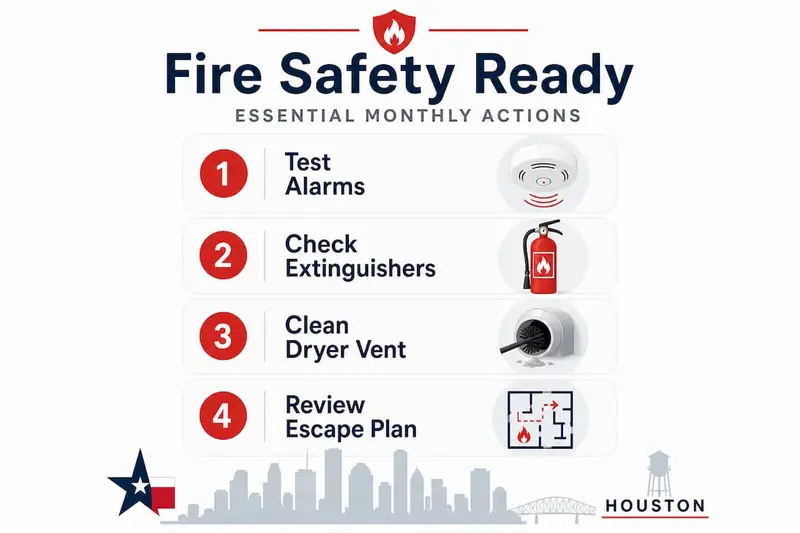
Your monthly and annual verification checklist
Monthly:
- Test all smoke alarms and CO detectors
- Visually inspect fire extinguishers, confirm the gauge needle is in the green zone
- Check that exit paths are clear of furniture, boxes, and clutter
- Look over power cords and extension cords for damage
- Confirm escape ladders are accessible and stored properly
Twice yearly:
- Hold a full family fire escape drill, including one nighttime practice
- Replace extinguisher batteries or recharge as needed
- Clean the dryer vent and inspect the chimney if applicable
Annually:
- Replace batteries in all alarms, replace units every 10 years
- Review your escape plan and update it for any home layout changes
- Schedule professional inspections for alarms and suppression systems
| Issue | How to detect | Fix |
|---|---|---|
| Dead smoke alarm battery | No sound during test | Replace battery; if still silent, replace unit |
| Extinguisher pressure low | Gauge needle in red zone | Recharge or replace extinguisher |
| Blocked exit path | Visual walkthrough reveals clutter | Clear hallways, move stored items |
| Dryer lint buildup | Clothes take longer to dry | Clean duct from dryer to exterior vent |
| Frayed electrical cord | Visible wire damage on inspection | Replace cord or appliance immediately |
| CO detector fault | Unit beeps in a pattern, not alarm tone | Test per manufacturer guide, replace if faulty |
Pro Tip: Set recurring digital reminders in your phone right now. Label them “Monthly alarm test,” “Biannual fire drill,” and “Annual extinguisher check.” Share the calendar events with every adult in your household so the task doesn’t fall to one person. Revisit alarm maintenance tips annually to stay current with best practices.
A realistic perspective: Why Houston homeowners skip critical fire safety steps and how to do better
Now that we’ve covered practical steps and verification, here’s a hard truth about why follow-through on fire safety is often lacking, and what you can do differently.
After years of working with Houston homeowners, one pattern shows up again and again. People install smoke alarms after a scare, or after a neighbor’s house catches fire, and then they treat the job as done. They don’t drill. They don’t test. They don’t replace batteries until an alarm starts chirping at 2 a.m. That’s not a criticism. It’s human nature to prioritize visible, immediate problems over invisible future ones.
Texas has no state law requiring routine home smoke alarm inspection or replacement, though the NFPA strongly recommends it. Because there’s no legal consequence for skipping it, fire safety feels optional. And in a low-incident year, that feeling gets reinforced. Nothing bad happened, so the system must be fine.
The real problem is that fire risk doesn’t follow your luck. It follows your habits.
“The real fire risk is the belief that it’ll never happen to you. Until it does.”
We’d encourage you to think about fire safety the same way you think about car maintenance. You don’t wait for your engine to seize before checking the oil. You check it on a schedule because you know the consequences of neglect. Your home’s fire safety equipment works exactly the same way. It’s not a one-time purchase. It’s an ongoing maintenance commitment.
Involve every family member. Make the drills a regular household habit, not a scary event. When children grow up practicing escape plans, they react with calm speed rather than frozen panic. That instilled habit is worth more than any single piece of equipment you can install.
Protect your home with expert solutions and ongoing support
Every step in this guide gives your family a stronger chance of escaping a fire safely. But sometimes the right move is getting a professional to assess what your home actually needs.
At Reliable Fire Protection, we work with Houston homeowners every day to install, inspect, and maintain the fire safety systems that modern homes require. From alarm systems and sprinkler installations to extinguisher service and suppression solutions, our team knows the specific hazards Houston properties face. Whether you’re not sure which fire extinguisher basics apply to your kitchen or you want a full system inspection, we’re ready to help. Contact us for a free quote and let us take the guesswork out of protecting what matters most.
Frequently asked questions
How often should I replace smoke alarms in my home?
Replace smoke alarms every 10 years and test them monthly to confirm they’re working properly between replacements.
What is the most common cause of house fires in Houston?
Cooking accidents are the leading cause of residential fires, with human error driving 72 to 76% of incidents nationwide, making the kitchen the most dangerous room in the home.
Why do I need carbon monoxide detectors?
CO detectors alert you to dangerous, invisible gas buildup that standard smoke alarms cannot detect, giving your family critical warning time before symptoms appear.
How long do I have to escape a house fire?
In modern homes with synthetic furnishings, you may have less than two minutes to escape safely, which is exactly why regular practice drills matter so much.
What simple habit reduces fire risk the most?
Testing your smoke alarms monthly and never leaving cooking unattended are the two habits that consistently reduce residential fire risk more than any other single action.
Recommended
- Fire prevention checklist for Houston properties 2026
- Top fire prevention tips for Houston property owners
- Government fire safety tips for Houston managers 2026
- 7 Essential Fire Safety Compliance Tips for Houston Buildings
- Fire Alarm System University Place TX
- Fire Alarm System Services in Bellaire, TX