
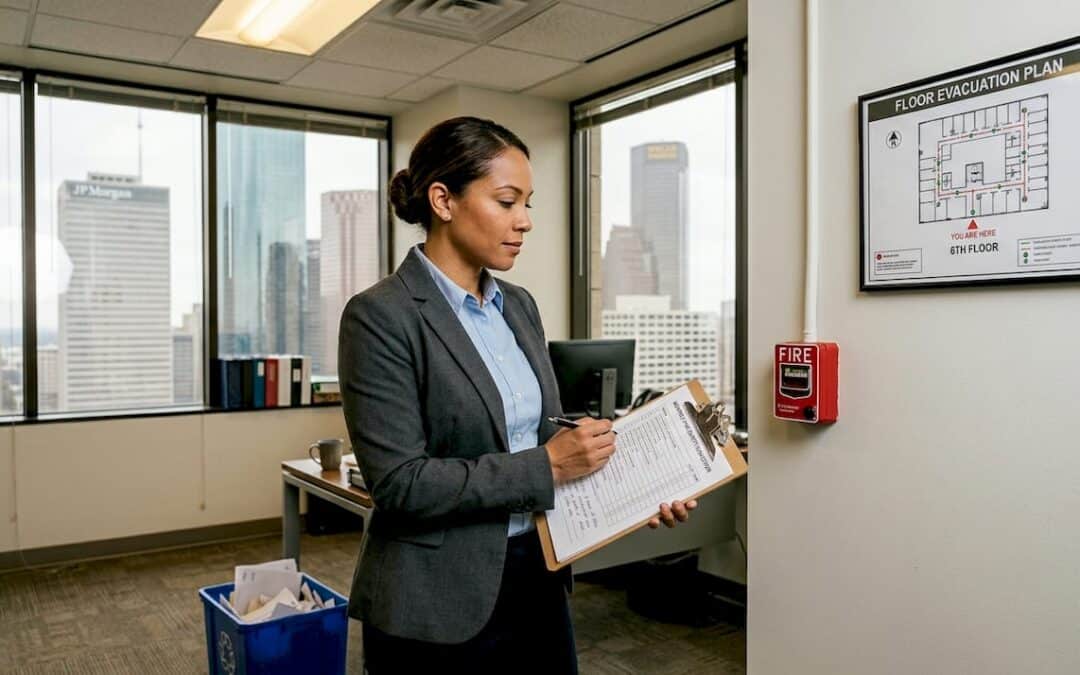
Fire safety compliance in Houston demands precise attention to government standards, especially as 2026 regulations tighten enforcement for residential and commercial properties. Property managers face complex requirements spanning alarm systems, sprinkler protocols, evacuation planning, and fire watch procedures. This guide translates official government recommendations into actionable steps, helping you protect occupants while avoiding costly penalties. You’ll discover monthly testing schedules, system impairment protocols, and extinguisher requirements tailored to Houston’s unique regulatory landscape.
Table of Contents
- Understand Houston’s Fire Safety Criteria For Residential And Commercial Properties
- Implement Recommended Fire Safety Features And Testing Protocols
- Manage System Impairments With Required Fire Watch Procedures
- Compare Fire Extinguisher Requirements For Residential And Commercial Properties In Houston
- Enhance Your Fire Safety Compliance With Reliable Fire Protection
Key takeaways
| Point | Details |
|---|---|
| Monthly alarm testing | Test smoke alarms in living areas, hallways, and bedrooms to catch failures early and maintain compliance |
| Fire watch protocols | Deploy certified personnel for hourly patrols when systems are impaired over four hours, with mandatory HFD notification |
| Extinguisher requirements | Commercial and multi-family properties require maintained extinguishers, while single-family homes face no statewide mandate |
| Annual evacuation drills | Practice and post evacuation plans yearly to meet Houston Fire Department standards and ensure occupant readiness |
| Sprinkler system checks | Verify control valves and alarm connections monthly to guarantee immediate fire response capability |
Understand Houston’s fire safety criteria for residential and commercial properties
Houston property managers operate under a dual regulatory framework where state and local fire codes intersect. The Houston Fire Department enforces local compliance through permit requirements for commercial kitchens and hazardous material storage, while the Texas State Fire Marshal conducts annual inspections for specific property types. This layered approach means you must track both jurisdictions to avoid gaps in your fire safety program.
Residential properties face different standards than commercial buildings. Single-family homes follow basic life safety codes, while multi-family complexes require comprehensive alarm systems, posted evacuation routes, and regular fire drills. Commercial properties add sprinkler mandates, emergency lighting, and fire-rated construction materials to the mix. Understanding these distinctions prevents you from applying residential standards to commercial spaces or vice versa.
“Local fire marshals have authority to enforce fire safety codes specific to their jurisdiction, creating variation in requirements across Houston neighborhoods.”
Your compliance checklist should include functional fire alarms with battery backups, operational sprinkler systems where mandated, clearly marked exit routes, and documented fire watch procedures for system downtime. The Houston Fire Department prioritizes these elements during inspections, and deficiencies trigger reinspection fees or occupancy restrictions. For comprehensive guidance on meeting these standards, review fire safety compliance tips for Houston buildings to align your property with current enforcement priorities.
Key criteria property managers must verify:
- Fire alarm systems with monthly test documentation
- Sprinkler control valve accessibility and quarterly inspections
- Posted evacuation maps on every floor
- Fire extinguisher placement within 75 feet of all occupied spaces
- Emergency lighting with 90-minute battery backup
- Fire door self-closing mechanisms and annual testing
Implement recommended fire safety features and testing protocols
Government fire safety guidelines emphasize proactive testing over reactive repairs. Monthly smoke alarm testing in living areas, hallways, and bedrooms catches battery failures and sensor degradation before emergencies occur. This simple routine takes 15 minutes per building but dramatically reduces false negatives during actual fire events. Document each test with date, location, and results to demonstrate due diligence during inspections.
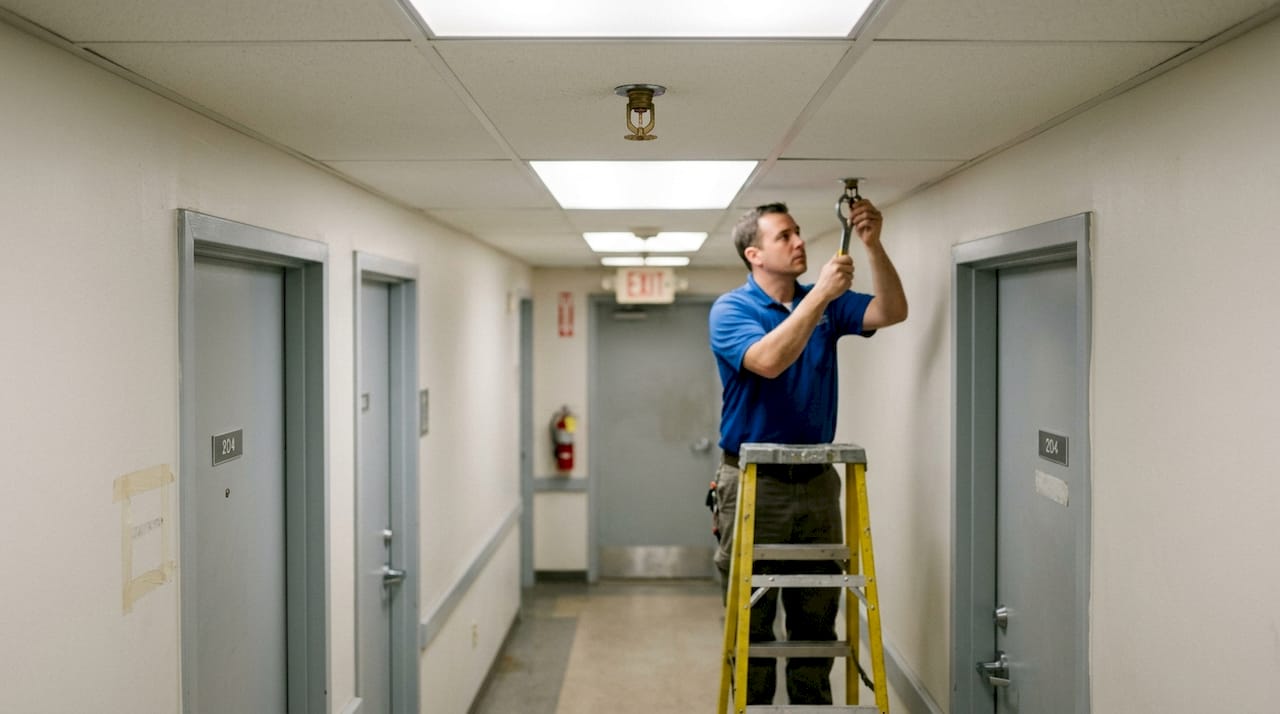
Sprinkler systems provide your first line of automated defense. These systems respond immediately to small fires, containing flames before they spread beyond the room of origin. Monthly visual checks of control valves, pressure gauges, and alarm connections ensure readiness. Quarterly flow tests verify water pressure meets design specifications, while annual inspections by certified technicians validate system integrity. Learn proper installation standards through our guide on how to install fire sprinklers in Houston to understand what inspectors evaluate.
Evacuation planning transforms chaos into coordinated response. Post evacuation maps at every elevator bank and stairwell entrance, highlighting primary and secondary exit routes. Conduct annual fire drills during business hours for commercial properties and semi-annual drills for residential complexes. Time these drills to identify bottlenecks, measure evacuation speed, and train occupants on assembly point locations. Update plans whenever you reconfigure interior spaces or add occupancy capacity.
Pro Tip: Create a digital testing calendar with automatic reminders for monthly alarm checks, quarterly sprinkler inspections, and annual drill schedules. Store all documentation in cloud-based folders organized by property and system type, making audit preparation effortless and ensuring you never miss critical deadlines.
Essential testing protocols by frequency:
- Monthly: Smoke alarm functionality, sprinkler valve position, emergency lighting battery
- Quarterly: Sprinkler flow tests, fire door operation, extinguisher pressure gauges
- Annually: Full system inspection by certified technician, evacuation drill execution, alarm panel programming review
Reference our fire alarm system checklist for step-by-step testing procedures that align with Houston Fire Department expectations and industry best practices.
Manage system impairments with required fire watch procedures
System downtime creates vulnerability windows that demand immediate compensatory measures. Houston requires fire watch when systems are impaired over four hours, including certified personnel conducting hourly patrols with detailed logs. This human surveillance replaces automated detection temporarily, maintaining continuous fire monitoring until repairs restore full system functionality. Failing to implement fire watch during extended outages violates city ordinances and exposes you to liability.
Certified fire watch personnel must complete approved training programs covering fire behavior, evacuation procedures, and emergency communication protocols. These individuals patrol all building areas hourly, checking for smoke, unusual heat, or fire hazards. They carry communication devices to alert emergency services immediately upon detecting problems. Logs must record patrol times, areas covered, and any observations, creating an auditable trail of your safety efforts.
Notification requirements extend beyond internal procedures. You must inform the Houston Fire Department before implementing fire watch, providing details about the impaired system, expected repair timeline, and fire watch staffing plan. This notification allows HFD to adjust response protocols for your property and conduct spot checks to verify compliance. Penalties for unreported fire watch situations include fines starting at $500 and potential occupancy restrictions until systems are restored.
“Fire watch serves as a critical safety bridge during system maintenance, preventing the gap between automated protection and manual oversight from creating dangerous blind spots.”
Fire watch implementation steps:
- Assess system impairment scope and estimate repair duration within first hour
- Contact Houston Fire Department with impairment details and fire watch activation notice
- Deploy certified fire watch personnel with communication equipment and patrol route maps
- Establish hourly patrol schedule covering all building areas and document each round
- Maintain continuous fire watch until system restoration is verified and HFD notified
- Conduct post-restoration testing to confirm full system functionality before ending fire watch
Understanding common workplace fire hazards helps fire watch personnel identify risks during patrols, while our fire safety inspection guide for Texas explains what inspectors verify during compliance checks.
Compare fire extinguisher requirements for residential and commercial properties in Houston
Extinguisher regulations vary dramatically based on property classification. Texas has no statewide mandate for extinguishers in single-family homes, leaving this decision to homeowner discretion. However, multi-family and commercial properties face strict installation and maintenance requirements under local fire codes. This distinction reflects different occupancy patterns and fire risk profiles across property types.
Commercial properties must place extinguishers within 75 feet of any point in the building, with specific classifications matching potential fire types. Kitchens require Class K extinguishers for grease fires, while electrical rooms need Class C units for energized equipment. Multi-family residential buildings follow similar spacing rules but may use multi-purpose ABC extinguishers throughout common areas. Monthly visual inspections and annual professional servicing maintain these devices in ready condition.
| Property Type | Legal Requirement | Maintenance Obligation | Recommended Placement |
| — | — | — |
| Single-family residential | No statewide mandate | Voluntary if installed | Kitchen, garage, near exits |
| Multi-family residential | Required by local code | Monthly checks, annual service | Hallways every 75 feet, common areas |
| Commercial properties | Required by local code | Monthly checks, annual service | Per occupancy type, 75-foot spacing |
Maintenance responsibilities extend beyond simple presence. Where extinguishers are installed, property managers must verify pressure gauges remain in the green zone, safety pins are intact, and nozzles are unobstructed. Annual professional inspections include internal examination, pressure testing, and recharging as needed. Documentation of these services provides crucial evidence during fire marshal inspections or post-incident investigations.
Pro Tip: Install extinguishers in single-family rentals even when not legally required. This proactive measure costs under $50 per unit but significantly reduces fire damage and demonstrates landlord care, potentially lowering insurance premiums and tenant liability concerns.
Explore fire extinguisher types to match devices to your property’s specific fire risks, and review our extinguisher inspection guide for Houston businesses for detailed maintenance protocols.
Extinguisher selection by area:
- Kitchens: Class K for cooking oils, Class ABC for general areas
- Mechanical rooms: Class ABC for mixed combustibles and electrical
- Office spaces: Class ABC for paper, wood, and electrical equipment
- Parking garages: Class ABC for vehicle fires and general combustibles
Enhance your fire safety compliance with Reliable Fire Protection
Navigating Houston’s fire safety landscape requires expertise in both regulatory requirements and practical implementation. Reliable Fire Protection specializes in helping property managers meet 2026 compliance standards through professional installation, testing, and maintenance services. Our certified technicians understand the nuances of how fire alarm systems work and can design solutions tailored to your property’s specific needs.
Whether you need to install fire sprinklers in Houston properties or upgrade existing alarm systems, our team delivers code-compliant solutions that pass inspections the first time. We handle everything from initial system design through ongoing maintenance, creating a seamless compliance pathway that protects occupants and preserves your investment. Our knowledge of types of fire extinguishers ensures proper device selection for every area of your property. Contact us today to schedule a comprehensive fire safety assessment and discover how professional support simplifies regulatory compliance while enhancing occupant protection.
FAQ
What monthly fire safety checks should property managers perform?
Test smoke alarms in all living areas, hallways, and bedrooms by pressing the test button until the alarm sounds. Verify sprinkler control valves remain in the open position and check pressure gauges for proper readings. Review fire watch logs if systems were impaired during the month, ensuring all patrol documentation is complete and stored for inspection access.
When is a fire watch required in Houston properties?
Fire watch becomes mandatory when fire protection systems are impaired for more than four hours, whether due to maintenance, repairs, or equipment failure. Certified personnel must conduct hourly patrols throughout the building, documenting observations in detailed logs. You must notify the Houston Fire Department before implementing fire watch and again when systems are restored to full operation.
Are fire extinguishers legally required in Houston single-family homes?
No statewide Texas law mandates fire extinguishers in single-family residences, leaving installation as a homeowner choice. Multi-family and commercial properties face different standards, with local Houston codes typically requiring extinguishers in common areas and specific occupancy spaces. Where extinguishers are present, regardless of legal requirements, proper maintenance including monthly checks and annual professional servicing is essential for functionality.
How often should evacuation plans be updated and practiced?
Update evacuation plans whenever you modify building layouts, change occupancy loads, or add new exits or stairwells. Conduct evacuation drills annually for commercial properties and semi-annually for residential complexes, timing these exercises to identify bottlenecks and measure evacuation speed. Post updated evacuation maps at every elevator bank and stairwell entrance, ensuring all occupants can access current route information during emergencies.