
TL;DR:
- Not all firefighting foams operate the same way, and selecting the correct type is crucial for fire control and property protection. Understanding foam mechanisms—such as blanket formation and film creation—helps Houston businesses prevent re-ignition and meet regulatory requirements regarding PFAS content. Properly evaluating foam chemistry, hazard specifics, and compliance ensures effective, safe, and environmentally responsible fire suppression.
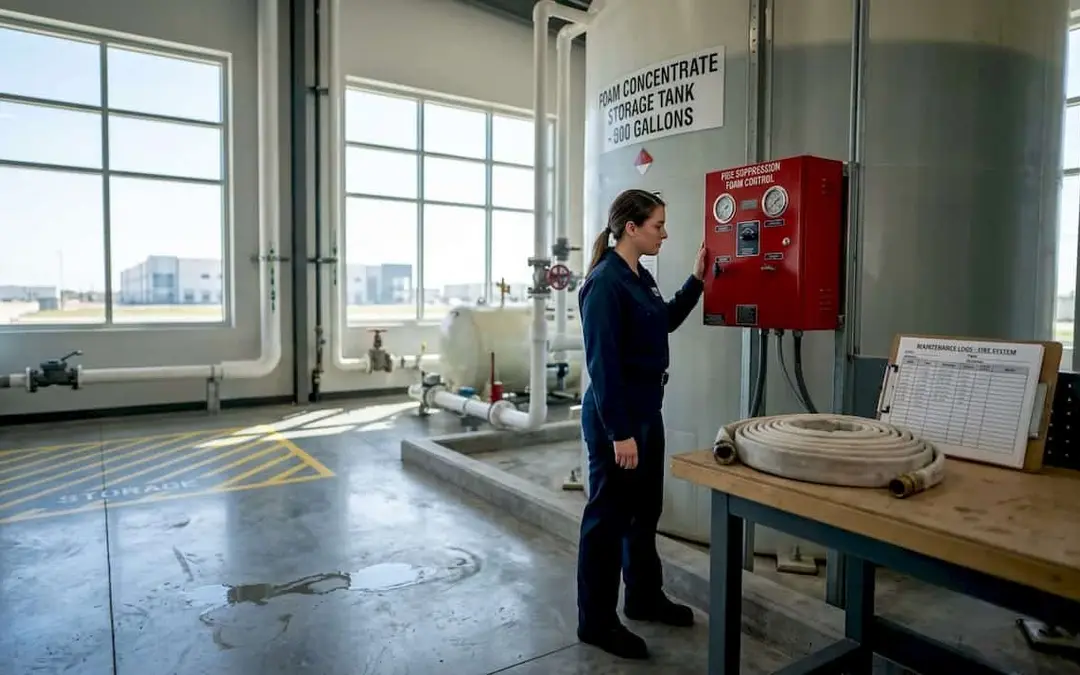
Not all firefighting foams work the same way, and for Houston business owners and property managers, that distinction can mean the difference between a controlled incident and a total loss. A common assumption is that any foam product on the shelf will handle any fire, but the gap between a blanket-forming foam and a film-forming foam is enormous when it comes to Class B fire control, regulatory compliance, and long-term property protection. Understanding what fire suppression foam actually is and how each type behaves gives you the foundation to make better, safer decisions.
Table of Contents
- What is fire suppression foam?
- Types of fire suppression foam and their mechanisms
- PFAS and environmental compliance: What Houston properties must know
- Choosing and maintaining fire suppression foam systems
- Why most Houston businesses misunderstand fire suppression foam and what actually works
- Connect with the experts for reliable fire suppression solutions
- Frequently asked questions
Key Takeaways
| Point | Details |
|---|---|
| Foam definition matters | Understanding the basics helps business owners choose the right system for their property’s hazards. |
| Film-forming vs blanket-only | Not all fire suppression foams work the same; film-forming foams are vital for flammable liquid fires. |
| PFAS and compliance | Labels like AFFF or AR-AFFF usually mean PFAS content, with special regulatory implications in Houston. |
| Maintenance is key | Ongoing care of foam systems ensures compliance, safety, and reliable performance during emergencies. |
| Expert advice saves trouble | Consulting with local fire protection specialists helps avoid common mistakes and keeps properties protected. |
What is fire suppression foam?
Fire suppression foam is not just soap and water mixed together. It is a precisely engineered firefighting agent, typically a foam concentrate blended with water, that works through specific physical and chemical mechanisms to stop fires that water alone cannot handle. The film-forming foam category goes one step further by producing an aqueous film over the surface of burning fuel, blocking both oxygen and vapor release simultaneously.
For most Houston businesses, the fires that matter most are Class B fires. These involve flammable and combustible liquids: gasoline, diesel, solvents, lubricating oils, and industrial chemicals. Water applied directly to a Class B fire can actually spread the burning fuel and worsen the situation. Foam changes the physics of the situation entirely.
Here is how fire suppression foam works at a fundamental level:
- Blanketing: Foam forms a thick layer over the burning liquid, cutting off the oxygen supply and smothering the fire.
- Film formation: For aqueous film-forming foam (AFFF), a water-based film spreads rapidly across the fuel surface, sealing vapors before they can ignite or re-ignite.
- Cooling: The water content in the foam absorbs heat from the fuel surface, reducing temperature and suppressing further vapor release.
- Vapor suppression: Both the blanket and the film prevent flammable vapors from escaping and reaching an ignition source.
Key insight: Fire suppression foam does not just extinguish a fire. Its most critical function is preventing re-ignition, which is where most flammable liquid fires become catastrophic if not handled with the right agent.
For Houston properties that store fuel, run commercial kitchens, or manage industrial operations, installing the right Houston suppression systems means accounting for exactly this type of hazard. Understanding how foam works is not a technical luxury. It is the starting point for every safety decision you make.
| Suppression mechanism | Water only | Foam (blanket only) | Foam (film-forming) |
|---|---|---|---|
| Oxygen cutoff | No | Yes | Yes |
| Vapor suppression | No | Partial | Full |
| Re-ignition prevention | No | Limited | Strong |
| Class B fire suitability | No | Moderate | High |
Reviewing the top suppression systems available today shows just how much foam chemistry influences system design and installation decisions.
Types of fire suppression foam and their mechanisms
Defining the foam is only the start. Understanding the categories and how their mechanisms differ is what separates effective protection from false security. Several major foam types exist, each with distinct chemistry, behavior, and regulatory implications.
Major foam categories:
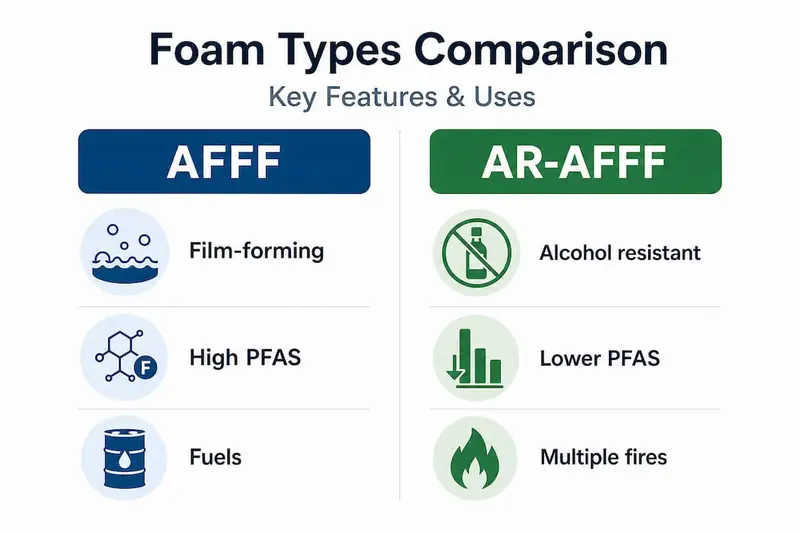
- AFFF (Aqueous Film-Forming Foam): The most widely available type, AFFF uses PFAS-based surfactants to create both a foam blanket and a water film that glides over burning liquid, sealing off vapors rapidly. It works fast and performs well on standard Class B hydrocarbon fuels.
- AR-AFFF (Alcohol-Resistant AFFF): Designed for polar solvents like ethanol and ketones that would break down standard AFFF. AR-AFFF forms a polymer membrane when it contacts alcohol-based fuels, preserving foam integrity.
- FP (Fluoroprotein Foam): A protein-based foam enhanced with fluorinated surfactants. It creates a strong blanket but is slower to spread a film compared to AFFF.
- FFFP (Film-Forming Fluoroprotein Foam): A hybrid of protein foam and film-forming agents, offering blanket strength and faster film formation than straight fluoroprotein.
- Fluorine-free foams (F3): Emerging as the replacement option for PFAS-containing foams. They rely on blanket-forming mechanisms, since they lack the fluorinated chemistry that creates aqueous films. Effectiveness on certain fuel types requires verification.
| Foam type | Film-forming? | PFAS content | Best for |
|---|---|---|---|
| AFFF | Yes | High | Hydrocarbon fuels |
| AR-AFFF | Yes | High | Polar solvents, alcohols |
| FP | Limited | Moderate | Subsurface injection |
| FFFP | Yes | Moderate | Mixed hazards |
| Fluorine-free (F3) | No | None | Compliance-focused applications |
The suppression workflow for any property starts with hazard identification. A warehouse storing gasoline has completely different requirements than one storing ethanol-blended fuels, and selecting the wrong foam type is not just an effectiveness issue. It is a liability issue.

One critical number worth knowing: AFFF is the most widely used firefighting foam in the world, but that widespread use comes directly tied to its PFAS content and the regulatory pressure that has followed. Understanding that before you invest in a system setup protects you from investing in technology that may face restrictions.
Pro Tip: Do not rely on product names or marketing labels alone when selecting foam. Ask for the Safety Data Sheet (SDS) and look specifically at the surfactant section. The ingredient chemistry tells you far more than the brand name about whether the product is film-forming and whether it contains PFAS.
Choosing the right agent is the foundation of selecting suppression systems that actually protect your specific property rather than just checking a compliance box.
PFAS and environmental compliance: What Houston properties must know
As foam types evolve, environmental and compliance risks have become a major factor, especially for Houston properties operating near waterways, refineries, or areas with strict stormwater regulations. PFAS stands for per- and polyfluoroalkyl substances, a group of synthetic chemicals used in fluorinated foam formulations. They are persistent in the environment and in human tissue, which is why regulators worldwide have been tightening restrictions.
Here is what you need to understand as a Houston business owner or property manager:
- AFFF, AR-AFFF, FP, and FFFP foams are all candidates for PFAS content. Regulators advise treating these foams as PFAS-containing unless you have laboratory confirmation otherwise.
- Not every firefighting foam contains PFAS. Protein-based and fluorine-free foams may be PFAS-free, but you must verify this through documentation, not assumption.
- PFAS contamination from foam discharge, even during testing or equipment flushing, can trigger environmental liability for your property.
- Texas and federal regulatory frameworks are both tightening around PFAS disposal and discharge, meaning what is permissible today may not be permissible in two or three years.
The ITRC (Interstate Technology Regulatory Council) notes that while PFAS restrictions are driving a shift toward fluorine-free alternatives, the mechanism of the foam still matters for hazard matching. A fluorine-free foam that cannot form a film may be compliant but ineffective for certain fuel hazards. Compliance and effectiveness must be evaluated together, not as separate considerations.
How to identify PFAS on a foam product label:
- Labels or SDS documents that include “AFFF,” “AR-AFFF,” “FP,” or “FFFP” in the product designation
- Ingredients listed as fluorinated surfactants, perfluorooctane sulfonate (PFOS), or perfluorooctanoic acid (PFOA)
- References to “C6” chemistry, which still involves short-chain fluorinated compounds
- Any mention of “fluoroprotein” in the formulation description
Pro Tip: When evaluating a foam product for your Houston facility, request the full Safety Data Sheet and ask the supplier directly whether the product contains any fluorinated surfactants. If the answer is vague, treat the product as PFAS-containing and plan accordingly for storage, use, and disposal compliance.
A strong compliance workflow built into your fire safety plan from the start avoids costly retrofits later. Pairing your foam suppression system with a well-designed fire detection setup also ensures that any release of foam is triggered by an actual confirmed fire event rather than a false alarm, reducing unnecessary environmental exposure.
Choosing and maintaining fire suppression foam systems
Having covered foam types and compliance, here is how you can apply this knowledge to real-world protection and ongoing maintenance for your Houston property. Selection and upkeep are where theory becomes practice, and both require a structured approach.
Step-by-step checklist for choosing a foam suppression system:
- Identify your specific fire hazard class. Are you dealing with standard hydrocarbon fuels, polar solvents, or a mix? This single question eliminates half the foam options immediately.
- Map your regulatory environment. Review current Texas Commission on Environmental Quality (TCEQ) requirements for your industry and check whether any PFAS restrictions apply to your operations.
- Match foam mechanism to hazard. Verify whether your hazard requires film-forming capability or whether a blanket-only foam meets the performance standard for your application.
- Evaluate fluorine-free alternatives. If PFAS restrictions are a concern, test fluorine-free foam options against your specific fuel types. Not all F3 foams perform equally across different fuel categories.
- Confirm storage and compatibility. Some foam concentrates have specific storage temperature requirements, shelf-life limits, and compatibility issues with certain metal tanks or mixing equipment.
- Schedule a system inspection cycle. Foam systems require periodic testing, concentrate sampling, and equipment checks to ensure they will perform when needed.
Class B fluorinated foams work by cutting off oxygen to the fire, cooling the fuel surface, and preventing re-ignition through sustained film or blanket coverage. That performance only holds if the system is correctly maintained.
Expert note: Many Houston property managers discover during annual inspections that their foam concentrate has degraded past its usable life or that the proportioning equipment is out of calibration. A system that looks intact on paper may deliver ineffective foam at the moment it is needed most.
Common maintenance pitfalls to avoid include skipping annual concentrate quality tests, assuming that a system installed five years ago still meets current code, and neglecting to update your system after facility changes that alter your fuel storage layout or volume. Review the system workflow for safety and work with a qualified technician to keep your records current. Also consider whether your property would benefit from supplementary protection covered in sprinkler installation guidance for areas adjacent to foam-protected zones.
Why most Houston businesses misunderstand fire suppression foam and what actually works
Here is the uncomfortable reality: most Houston businesses approach foam selection the same way they approach buying office supplies. They look at the label, pick something familiar, and assume compliance is handled. That assumption has caused real problems for real properties, not because anyone was careless, but because foam is marketed in ways that obscure the actual chemistry and mechanism.
The most common error we see is treating all foam products as interchangeable. A facility manager sees the word “foam” on a product and assumes it will work on their fuel hazard. But a blanket-only foam on a gasoline spill fire will not hold the same way an AFFF system does. The re-ignition risk alone is a serious operational exposure.
The second mistake is letting regulatory compliance drive every decision without also asking whether the selected foam actually works for the specific hazard. A fluorine-free foam may check every environmental box on paper but underperform on the fuel types stored in your facility. Both questions must be answered together.
We also see businesses rely too heavily on the installer’s recommendation without asking the installer to show their hazard analysis. A good suppression system installer should show you the fuel types they are designing for, the foam mechanism selected, and why that mechanism matches the hazard. If the conversation never reaches that level of detail, push for it.
Reviewing the top systems for homes and commercial properties makes clear that the best outcomes come from matching suppression technology to actual risk, not to convenience or habit. That matching process requires expert guidance from people who understand Houston’s specific industrial mix, regulatory environment, and climate conditions.
Connect with the experts for reliable fire suppression solutions
Turning the insights from this article into actual property protection means working with professionals who know the Houston market, understand the regulatory environment, and can match the right foam suppression system to your specific hazard profile.

At Reliable Fire Protection, we work with Houston business owners and property managers every day to design, install, and maintain suppression systems that meet both performance and compliance requirements. From reviewing your fire safety products needs to building a full suppression solution, our certified team brings local expertise and hands-on experience to every project. Learn more about the right extinguisher types for your property, or explore complete Houston suppression solutions designed specifically for your industry. Contact us today for a free consultation and quote.
Frequently asked questions
What is the main purpose of fire suppression foam?
Fire suppression foam is used to extinguish flammable liquid fires, prevent re-ignition, and protect property by forming a physical barrier over the burning fuel surface that cuts off oxygen and suppresses vapor release.
Are all fire suppression foams PFAS-based?
No. Not all foams contain PFAS, but products labeled AFFF, AR-AFFF, FP, or FFFP should be treated as PFAS-containing unless you have verified documentation that proves otherwise.
How does fire suppression foam prevent fires from reigniting?
Foam forms a blanket over the fuel surface, and film-forming types also spread a water film that seals off flammable vapors, blocking the oxygen and vapor supply that reignition requires.
What should Houston property managers look for in foam labels to ensure compliance?
Look for the terms AFFF, AR-AFFF, FP, FFFP, fluorinated surfactants, or C6 chemistry on the product label or Safety Data Sheet, as these indicators confirm likely PFAS content and trigger additional compliance requirements.
Why is the mechanism of foam important for Houston fire safety planning?
Understanding whether a foam forms a film or only a blanket directly affects product selection for specific fuel hazards, and as PFAS-related restrictions evolve, mechanism knowledge ensures you choose a product that is both effective and compliant for your property.
Recommended
- Fire suppression systems: what Houston businesses need
- Fire prevention checklist for Houston properties 2026
- Why fire suppression systems save Houston businesses in 2026
- Top fire prevention tips for Houston property owners
- Fire Alarm System University Place TX
- Fire Alarm System Services in Bellaire, TX