
TL;DR:
- The fire incident reporting process involves documenting, classifying, and submitting fire events accurately and promptly. The 2026 transition to NERIS requires real-time reporting, shift-level training, and compliance with both federal and local mandates. Proper documentation supports safety, legal, insurance, and funding outcomes, making it a critical safety asset.
The fire incident reporting process is the structured method for documenting, submitting, and analyzing fire events to meet safety regulations and support emergency response. For business owners and facility managers, this process carries direct consequences: incomplete reports create compliance gaps, weaken insurance claims, and leave safety programs without the data they need. The 2026 transition from NFIRS to NERIS has reshaped fire incident reporting protocols nationwide, introducing real-time submission requirements and new onboarding steps. Understanding the current standards is no longer optional. It is the foundation of every credible fire safety program.
What are the key steps in the fire incident reporting process?
The fire incident reporting process follows a defined sequence from the moment an incident occurs to the final submission of a verified report. Each step builds on the last, and skipping any one of them creates gaps that regulators, insurers, and investigators will notice.
- Identify and classify the incident. On arrival, the responding officer assigns an Incident Type code. Accurate classification drives the correct report structure and determines which data modules must be completed. Misclassification at this stage cascades into incomplete data and compliance failures downstream.
- Capture field notes in real time. Document who was involved, what happened, when each action occurred, and where the fire originated. Notes should follow a strict chronological order from the 911 call through final overhaul actions.
- Enter data into a certified Records Management System. As of february 1, 2026, departments must use an RMS configured for NERIS V1. NERIS-compliant systems automate GPS data capture and map legacy NFIRS codes to the new schema, which reduces manual entry errors.
- Submit in near real time. NERIS replaces the old batch submission model. Reports must be submitted promptly after each incident, not collected and sent in bulk at the end of a shift or week.
- Complete a supervisor quality review. A designated reviewer checks for missing fields, vague narrative language, and coding errors before the report is finalized. This step is the last line of defense against data integrity problems.
- Conduct shift-level crew training. Habit-based reporting from legacy NFIRS workflows is one of the most common sources of errors in the new NERIS environment. Repeated, shift-level training is the most effective way to break those habits.
Pro Tip: Build the quality review into your shift schedule as a fixed task, not an afterthought. Reviewers who check reports within two hours of submission catch errors while the incident is still fresh in the crew’s memory.
How have fire incident reporting protocols evolved with the 2026 NERIS transition?
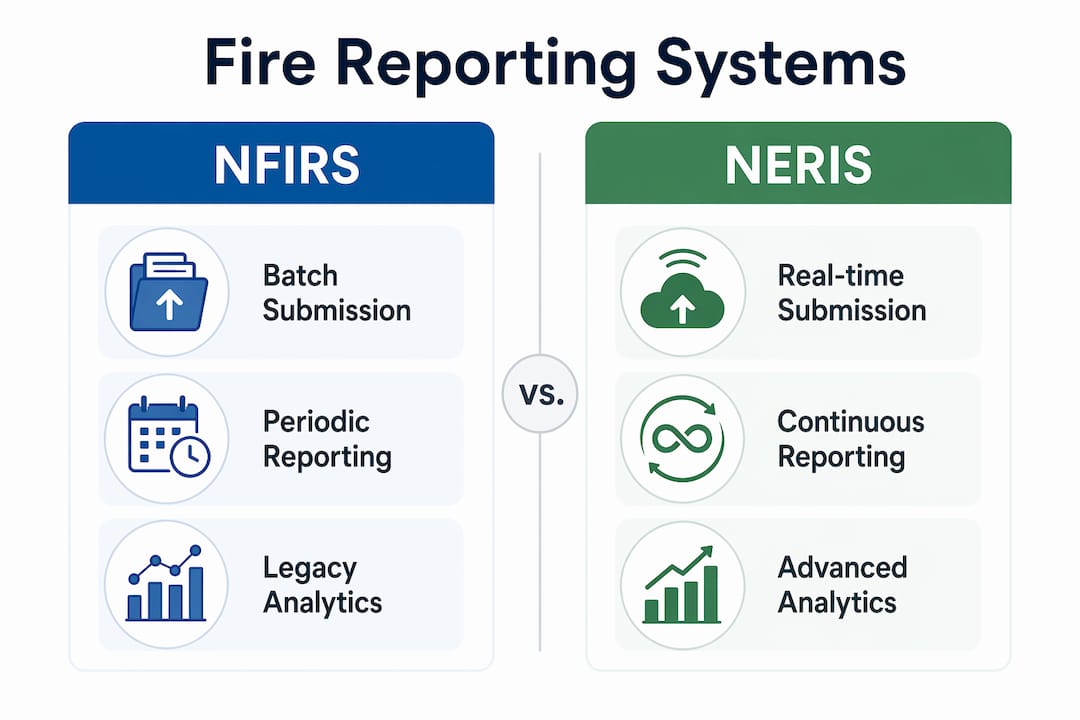
NFIRS, the National Fire Incident Reporting System, served as the federal standard for fire report documentation for decades. It used a batch submission model where departments collected data and submitted it periodically. That system reached its end of life on january 31, 2026.

NERIS replaced NFIRS effective february 1, 2026, making it the exclusive federal platform for fire and emergency incident reporting. The shift is not cosmetic. NERIS is built for near real-time analytics, meaning federal agencies can now track fire trends as they emerge rather than months after the fact.
The practical implications for facility managers and business owners are significant. Your fire department must now operate under NERIS, and the quality of data they collect at your property directly affects local risk assessments and resource allocation decisions.
Departments must complete a 6-step onboarding process to achieve NERIS compliance. The steps include confirming RMS vendor certification, registering a FEMA Entity ID, configuring incident types, training crews, running a test incident, and establishing quality checks.
Key differences between the two systems include:
- Submission timing: NFIRS allowed batch submissions; NERIS requires near real-time reporting after each incident.
- Analytics capability: NERIS feeds live federal dashboards; NFIRS data was analyzed retrospectively.
- RMS certification: NERIS mandates vendor-certified systems; NFIRS had more flexible software options.
- Data migration: Departments must map historical NFIRS records to the NERIS schema to maintain continuity.
Regional mandates remain in force alongside the federal transition. Ontario, for example, requires quarterly Standard Incident Reports, and British Columbia mandates reporting property-damaging fires directly to the Fire Commissioner. Business owners operating across multiple jurisdictions must track both federal and local deadlines.
| Reporting System | Submission Model | Analytics Use | Status in 2026 |
|---|---|---|---|
| NFIRS | Batch, periodic | Retrospective | Sunset jan 31, 2026 |
| NERIS | Near real-time | Live federal dashboards | Active, mandatory |
What are best practices for accurate fire incident report documentation?
Accurate fire report documentation starts with factual, plain-language narrative writing. Emotional language, vague descriptions, and subjective interpretations weaken a report’s credibility. Poor grammar and incomplete action logs are among the most common errors that reduce report reliability and defensibility in legal or insurance contexts.
The narrative should follow the incident from the first dispatch notification through every command change, equipment deployment, and final action. Small operational details matter. Command changes and equipment delays are frequently scrutinized during investigations, and a report that omits them becomes difficult to defend.
Field documentation should capture environmental and physical evidence details that help reconstruct fire dynamics. Documenting wind direction, flame color, and access logs helps investigators understand how the fire behaved and preserves the chain of evidence. Witness identities and statements belong in the report as well, recorded at the scene before memories fade.
Scene security is part of the documentation process, not separate from it. Strict perimeter control and access logging prevent evidence contamination and should be recorded as a formal part of the incident file. For business owners, this means cooperating with responders to restrict access and keeping your own log of who entered the property after the fire.
Key documentation practices to follow:
- Write in chronological order from 911 call to final unit clearance.
- Use specific times, not approximate ranges.
- Identify all personnel by name and role, not just by unit number.
- Record every safety system status: sprinklers, alarms, suppression systems.
- Note any pre-existing code violations or hazards observed on arrival.
- Avoid conclusions. Describe what was observed, not what it means.
Pro Tip: Keep a dedicated incident notebook on every apparatus. Field notes written at the scene are far more accurate than notes reconstructed from memory at the station. Those raw notes become the backbone of a defensible report.
How does fire incident reporting support compliance and safety outcomes?
Fire incident reports serve as critical historical records for investigations, insurance claims, and grant applications. A report with gaps in its chronological notes loses much of its value in each of those contexts. For business owners, a well-documented incident report can be the difference between a successful insurance claim and a disputed one.
Regulatory compliance is the most immediate driver. Local, state, and federal authorities require timely and accurate fire report submission as a condition of operating a commercial property. Your fire code compliance obligations include cooperating with post-incident reporting requirements, not just maintaining physical safety systems.
Detailed, timestamped, and factual fire reports become foundational data for fire service improvements, resource distribution, and public transparency. When your property’s incident data is accurate, it contributes to better local risk assessments and more effective deployment of fire resources in your area.
Grant funding for fire departments is also tied to data quality. Departments that submit complete, accurate reports are better positioned to secure federal and state grants for equipment and training. Those resources directly affect the quality of emergency response your property receives.
Fire reporting functions as an accountability process that integrates frontline actions with legal, investigative, and insurance workflows. Facility managers who understand this connection treat reporting as a safety asset, not a paperwork obligation. A commercial fire compliance checklist is a practical tool for tracking all reporting and documentation responsibilities in one place.
The 2026 shift to real-time analytics requires formal review processes before report submission to prevent error compounding. That means your internal protocols need to match the speed of the new system. Waiting until the end of a shift to review and submit is no longer an acceptable workflow.
Key Takeaways
The fire incident reporting process is most effective when classification is accurate, documentation is chronological, and submission follows NERIS real-time protocols without delay.
| Point | Details |
|---|---|
| Classify incidents correctly on arrival | Incident Type codes determine which report modules are required; errors here cascade through the entire report. |
| NERIS is mandatory as of 2026 | NFIRS sunset on january 31, 2026; all departments must now submit through NERIS-certified RMS platforms. |
| Document environmental and scene details | Wind direction, flame color, access logs, and witness identities all strengthen report accuracy and defensibility. |
| Regional mandates still apply | Federal NERIS compliance does not replace local requirements; track both federal and jurisdiction-specific deadlines. |
| Reports drive compliance and funding | Accurate submissions support insurance claims, grant applications, and local fire risk assessments. |
What I’ve learned from watching facilities get reporting wrong
Most facility managers I work with treat fire incident reporting as something that happens after the emergency is over. That framing is the root of most reporting failures. The documentation process starts the moment the alarm sounds, not when the fire truck leaves.
The NERIS transition has exposed how many organizations were coasting on NFIRS habits. Batch submission created a false sense of control. Teams would collect data, clean it up later, and submit on their own schedule. NERIS eliminates that buffer. Real-time submission means errors surface immediately, and there is no quiet period to fix them before anyone notices.
The facilities that handle this well share one trait: leadership treats the quality review as a non-negotiable step, not a suggestion. They assign a specific person to review every report before submission, and that person has the authority to send it back for corrections. That single structural decision prevents the majority of compliance problems I see.
Digital tools help, but they are not a substitute for training. An RMS configured for NERIS will automate GPS capture and code mapping, but it cannot fix a vague narrative or a missing command change. Those require human judgment, and human judgment requires consistent practice. Shift-level training, even brief, keeps crews sharp and reduces the drift back toward legacy habits.
Reporting is not bureaucracy. It is the record of what your organization did under pressure. Treat it that way, and it becomes one of your strongest safety assets.
— Reliable-fire-protection
How Reliable-fire-protection supports your fire safety compliance
Fire incident reporting does not exist in isolation. The quality of your reports depends partly on the systems installed in your facility and whether they functioned correctly during an incident.
Reliable Fire Protection installs and maintains fire alarm systems, sprinkler systems, and suppression systems for commercial properties across Houston. When your systems are properly installed and documented, responders arrive with better information, and your incident reports reflect a property that meets code. Understanding how fire alarm systems work is a practical starting point for facility managers who want their safety infrastructure to hold up under scrutiny. Reliable-fire-protection offers free quotes and expert guidance to help you meet reporting and compliance requirements from the ground up.
FAQ
What is the fire incident reporting process?
The fire incident reporting process is the structured sequence of documenting, classifying, and submitting fire event data to meet regulatory requirements. It covers everything from initial incident identification through supervisor review and final submission to a certified reporting platform.
When did NFIRS stop being used?
NFIRS was sunset on january 31, 2026. NERIS became the exclusive federal platform for fire and emergency incident reporting starting february 1, 2026.
What is the most common fire report documentation error?
Poor grammar, vague narrative language, and incomplete action logs are the most frequently cited errors. Missing command changes and incorrect Incident Type coding are also common problems that reduce report reliability.
Do regional reporting requirements still apply under NERIS?
Yes. Federal NERIS compliance does not replace local or provincial mandates. Ontario requires quarterly Standard Incident Reports, and British Columbia requires reporting of property-damaging fires to the Fire Commissioner regardless of federal system changes.
How does accurate reporting affect insurance claims?
Gaps in chronological notes reduce a report’s defensibility and utility in insurance proceedings. A complete, timestamped, and factual report provides the documentation insurers need to process claims accurately and without dispute.