

TL;DR:
- Fire marshals are key officials responsible for enforcing fire codes, conducting inspections, and investigating fires to prevent safety hazards. They hold legal authority to order closures and enforce standards like IFC and NFPA during routine building reviews. Proactive cooperation with fire marshals ensures compliance, helps avoid costly violations, and supports fire prevention efforts.
A fire marshal is the top-ranking fire prevention official responsible for enforcing fire codes, conducting inspections, investigating fires, and ensuring public safety through legal authority and technical expertise. The role of fire marshals sits at the intersection of law enforcement, fire science, and regulatory compliance. Facilities managers, business owners, and public safety officials who understand this role avoid costly violations, shutdowns, and insurance complications. Fire marshals operate under standards including the International Fire Code (IFC), NFPA codes, and OSHA fire safety regulations, making their authority both broad and legally binding.
What are the primary responsibilities of fire marshals?
Fire marshal responsibilities cover four core functions: code enforcement, fire investigation, permitting, and public education. Each function directly affects how your building operates and how prepared your staff must be.

Code enforcement and inspections form the daily backbone of the job. Fire marshals review buildings against the IFC, NFPA standards, and local amendments to confirm that exits, alarms, sprinklers, and suppression systems meet current requirements. A fire safety officer’s authority to order corrections or shut down operations is not theoretical. It is exercised regularly.
Fire investigation is a less visible but equally serious responsibility. Fire marshals investigate fire origins and causes, coordinate with law enforcement on arson cases, and may serve as expert witnesses in court. This investigative work requires scientific analysis and legal documentation, not just a walk-through of a burned building.
Permitting and plan review apply before construction begins. Fire marshals review blueprints for new commercial buildings, tenant improvements, and any activity involving hazardous materials. Approval at this stage prevents costly retrofits after a certificate of occupancy is issued.
Public education programs round out the role. Fire marshals run community outreach, train building occupants on evacuation procedures, and work with schools and businesses to reduce fire risk at the source.
- Code enforcement against IFC, NFPA, and OSHA fire safety standards
- Fire origin and cause investigation, including arson coordination
- Permitting and plan review for new construction and hazardous operations
- Public education and fire prevention outreach programs
- Oversight of fire drill records and emergency response planning
Pro Tip: Request a pre-inspection meeting with your local Authority Having Jurisdiction (AHJ) before any major renovation. Fire marshals often flag plan-level issues that are far cheaper to fix on paper than in a finished building.
How do fire marshals conduct building inspections?
Inspection frequency depends on occupancy risk. High-hazard facilities are inspected annually, while lower-risk properties may be reviewed every two to three years. New construction, layout changes, and business license renewals all trigger mandatory inspections regardless of the regular schedule.
The physical inspection follows a structured checklist. Fire marshals work through the building systematically, checking each life-safety system against code requirements.
- Exit routes and doors. Inspectors verify that all exits are unobstructed, properly marked, and equipped with functioning hardware. Chained or blocked exit doors are among the most common grounds for immediate closure orders.
- Emergency signage and lighting. Exit signs must be illuminated and visible. Emergency lighting must activate automatically during a power failure and maintain adequate brightness for the required duration.
- Fire alarm systems. Inspectors test pull stations, smoke detectors, and notification devices. Systems must meet NFPA 72 requirements and show current inspection tags from a licensed contractor.
- Sprinkler systems. Sprinkler heads must be unobstructed, undamaged, and properly spaced. Inspectors check control valves, water supply connections, and the most recent flow test records.
- Fire extinguishers. Each extinguisher must be mounted, accessible, charged, and tagged with an annual inspection date. A fire extinguisher checklist helps facilities managers stay ahead of this requirement.
- Fire doors. Self-closing mechanisms must function correctly. Propped-open fire doors are a frequent violation that inspectors cite immediately.
Document verification is equally important. Fire marshals prioritize service logs and fire drill records during every inspection. When paperwork does not match physical conditions, inspectors treat the discrepancy as a red flag and investigate further. Missing or outdated records can result in a failed inspection even when the physical systems appear functional.
| Inspection element | Common violation | Consequence |
|---|---|---|
| Exit routes | Blocked or chained doors | Immediate closure order |
| Fire alarm system | Outdated inspection tags | Reinspection required, potential fine |
| Sprinkler heads | Obstructed or painted over | Code violation, corrective order |
| Fire extinguishers | Expired or missing tags | Citation and replacement required |
| Fire drill records | Missing or incomplete logs | Failed inspection, follow-up audit |
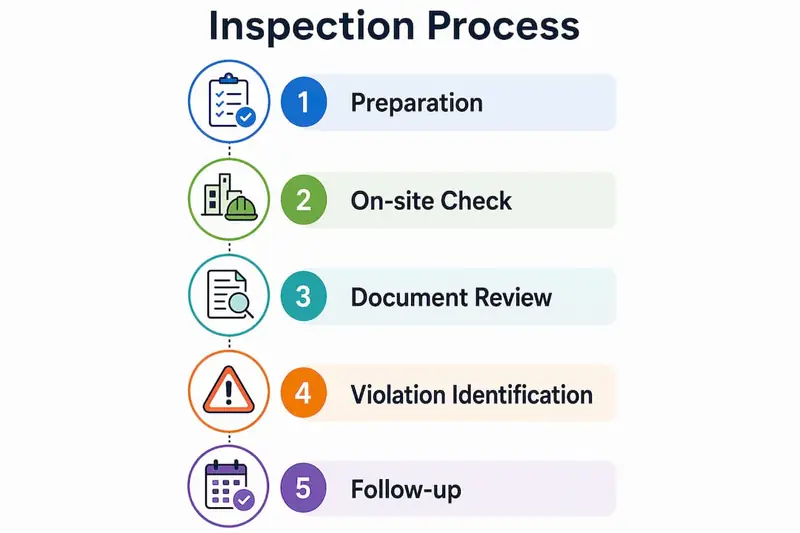
Pro Tip: Keep a dedicated compliance binder at the front desk with current inspection tags, drill records, and service logs. Fire marshals check documents first. A clean binder signals a well-managed facility before the physical walk-through even begins.
What legal authority do fire marshals possess?
Fire marshals act as the top-ranking public safety official in fire prevention, with legal powers that go well beyond issuing warnings. In many jurisdictions, fire marshals hold sworn law enforcement status. That status gives them authority to make arrests, execute search warrants, and compel access to buildings under investigation.
The enforcement toolkit includes citations, fines, and closure orders. Fire marshals issue closure orders when immediate life-safety hazards exist, such as chained exit doors, disabled alarm systems, or improper hazardous material storage. Closure authority is used sparingly, but when it is exercised, the building stops operating until the violation is corrected and reinspected.
Fire marshals enforce codes based on the International Fire Code, NFPA standards, and local amendments including OSHA fire safety regulations. This layered framework means a single building may be subject to federal, state, and municipal requirements simultaneously. Understanding which standards apply to your specific occupancy type is the first step toward genuine compliance.
Property owners do have appeal rights. Most jurisdictions provide a formal process to contest citations or request variance hearings before an administrative board. The appeal window is typically short, often 10–30 days from the date of the citation, so acting quickly matters. Working with a licensed fire protection contractor to document corrective actions strengthens any appeal.
Understanding fire safety regulations in your jurisdiction is not optional. Ignorance of the applicable code is not a defense in an enforcement proceeding.
How can facilities managers work effectively with fire marshals?
Proactive coordination with the local AHJ is the single most effective compliance strategy available to facilities managers. Scheduling inspections proactively and ensuring access to all building areas reduces inspection delays and eliminates re-inspection fees. Passive facilities managers who wait for the inspector to show up unannounced consistently pay more and fix more.
The following practices define a proactive compliance posture:
- Schedule inspections in advance. Contact your local fire marshal’s office before your permit renewal or occupancy change. Early scheduling gives you time to correct deficiencies before the official visit.
- Grant full access. Inspectors must reach mechanical rooms, rooftop equipment, and all tenant spaces. Restricted access delays the inspection and raises questions about what is being hidden.
- Maintain current documentation. Service logs for alarms, sprinklers, and extinguishers must be up to date. A fire compliance checklist for commercial properties helps you track every required document in one place.
- Correct violations promptly. Accurate documentation and prompt correction reduce the risk of fines, shutdowns, and insurance claim complications. Insurers may deny or reduce claims if documented violations existed at the time of a fire.
- Know your appeal rights. If you receive a citation you believe is incorrect, request the specific code section cited and consult a licensed fire protection professional before the appeal deadline passes.
Pro Tip: Treat every fire marshal visit as a partnership, not an adversarial audit. Inspectors who see a cooperative, well-documented facility are more likely to issue corrective notices with reasonable timelines rather than immediate fines.
How do fire marshals differ from fire inspectors and fire chiefs?
The three titles sound interchangeable but describe distinct roles with different authority levels. Fire marshals set policy and enforce codes at an executive level. Fire inspectors apply those codes in the field during routine inspections. Fire chiefs manage incident response and department administration. Each role is necessary, and they function best when they operate as a coordinated system.
| Role | Primary function | Legal authority |
|---|---|---|
| Fire marshal | Policy, code enforcement, investigation | Sworn law enforcement in many jurisdictions |
| Fire inspector | Field application of codes, routine inspections | Citation authority, no arrest power |
| Fire chief | Emergency incident command, department administration | Operational authority at fire scenes |
The fire marshal’s role is proactive by design. The focus is on preventing fires through code enforcement and education, not managing emergencies after they occur. Fire chiefs operate reactively, commanding resources at active incidents. Fire inspectors work between those two poles, conducting the day-to-day technical reviews that keep buildings compliant between major enforcement actions.
Distinguishing these roles matters practically. When you receive a citation from a field inspector, the fire marshal’s office is the authority you engage for appeals or variance requests. Calling the fire chief about a code citation sends you to the wrong office and wastes time.
Key Takeaways
Fire marshals hold executive legal authority over fire prevention, and proactive compliance with their requirements protects your building, your business, and your insurance coverage.
| Point | Details |
|---|---|
| Fire marshal authority | Marshals hold sworn law enforcement powers including the right to close buildings for life-safety violations. |
| Inspection triggers | High-hazard facilities face annual inspections; layout changes and license renewals trigger mandatory reviews. |
| Document verification | Service logs and drill records are reviewed first; mismatches with physical conditions cause failed inspections. |
| Proactive scheduling | Coordinating with the AHJ before inspections reduces delays, re-inspection fees, and liability exposure. |
| Role distinctions | Marshals set policy and investigate fires; inspectors apply codes in the field; chiefs command emergencies. |
Why fire marshals deserve more credit than they get
Most facilities managers think of fire marshal inspections as a compliance checkbox. That framing misses the actual value of the role. Fire marshals are the only officials in the public safety system whose entire job is to prevent fires before they start. Fire chiefs respond to emergencies. Inspectors apply codes. Marshals shape the environment that determines whether an emergency happens at all.
The common misunderstanding I see repeatedly is treating inspections as adversarial. Facilities managers who prepare documentation, schedule proactively, and communicate openly with their local AHJ consistently experience faster inspections, fewer citations, and more reasonable correction timelines. The marshal’s office is not looking for reasons to shut you down. It is looking for evidence that you take fire safety seriously.
The deeper issue is that fire marshal authority is often invisible until something goes wrong. A building that never has a fire, never gets closed, and never makes the news is frequently a building where a fire marshal did their job well years earlier. That prevention success is structurally hard to measure, which is why the role gets undervalued in budget conversations and facility planning. Facilities managers who understand this dynamic treat their relationship with the local AHJ as a long-term investment, not an annual inconvenience.
— Results
How Reliable-fire-protection helps you meet fire marshal standards
Meeting fire marshal requirements means keeping every system in your building inspection-ready year-round, not just in the weeks before a scheduled visit.
Reliable-fire-protection serves Houston-area facilities managers and business owners with certified inspection, maintenance, and installation services for fire alarm systems, sprinkler systems, fire extinguishers, and suppression systems. Every service is designed to align with IFC, NFPA, and local AHJ requirements so your documentation is always current. Learn how fire alarm systems work and what inspectors check during a compliance visit. For facilities in the Energy Corridor, Reliable-fire-protection provides fire alarm system services built specifically for commercial compliance needs. Contact Reliable-fire-protection for a free quote and get your facility inspection-ready before the next visit.
FAQ
What is the main role of a fire marshal?
A fire marshal is the top-ranking fire prevention official responsible for enforcing fire codes, conducting building inspections, investigating fires, and ordering closures when life-safety hazards exist.
How often do fire marshals inspect commercial buildings?
High-hazard facilities are inspected annually, while lower-risk properties are typically reviewed every two to three years. Layout changes and business license renewals trigger mandatory inspections outside the regular schedule.
Can a fire marshal shut down my business?
A fire marshal can order an immediate building closure when life-safety hazards exist, such as blocked exits, disabled alarms, or improper hazardous material storage. The closure remains in effect until the violation is corrected and reinspected.
What documents should I have ready for a fire marshal inspection?
Maintain current service logs for fire alarms, sprinklers, and extinguishers, along with fire drill records and any permits for hazardous operations. Mismatches between paperwork and physical conditions are treated as red flags and can result in a failed inspection.
How is a fire marshal different from a fire inspector?
A fire marshal holds executive authority, sets fire prevention policy, and investigates fires with law enforcement powers. A fire inspector applies codes during routine field inspections but does not hold the same level of legal authority as a marshal.