
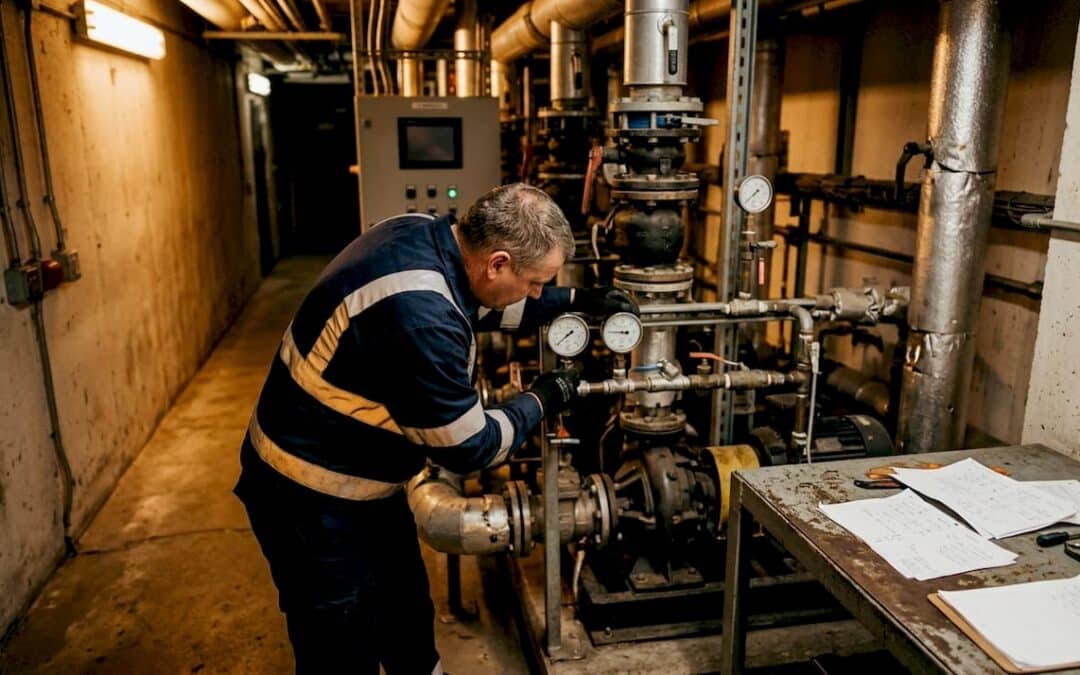
TL;DR:
- A fire pump boosts water pressure in systems where municipal supply cannot meet demands, especially in tall buildings or those with high fire flow needs. Compliance with NFPA 20 and NFPA 25 standards ensures proper design, installation, and ongoing maintenance, significantly reducing failure risks during emergencies. Regular testing, trend analysis, and coordinated management are essential to keep fire pump systems reliable and code-compliant.
A fire pump is defined as a mechanical device that boosts water pressure in a fire suppression system when the municipal supply cannot meet the required flow and pressure demands. Every property owner and facility manager who oversees a building with a sprinkler system needs a working fire pump requirements guide to stay compliant and protect occupants. Two standards govern this space: NFPA 20 covers installation and design, while NFPA 25 covers inspection, testing, and maintenance. Getting both right is not optional. Gaps in either area put lives, property, and your operating license at risk.
What triggers the need for a fire pump in your building?
Fire pumps become necessary when a building’s fire suppression pressure demands exceed what the available municipal water supply can deliver. That gap is the single most common trigger, and it shows up in three predictable scenarios.
Building height is the most straightforward driver. Pressure drops roughly 0.434 psi for every foot of elevation. A 10-story building loses more than 40 psi just getting water to the top floor. Local codes set specific thresholds: New York requires fire pumps for buildings exceeding 75 feet, and California mandates them for buildings over four stories. Houston properties follow similar logic under local amendments to NFPA 13.
High fire flow demand is the second trigger. Large floor plates, high-hazard occupancies such as warehouses or manufacturing facilities, and densely sprinklered spaces all require more water volume than a standard municipal connection can sustain. NFPA 13 sets the hydraulic demand thresholds that designers use to calculate whether a pump is needed.
Inadequate municipal supply rounds out the list. Rural properties, older urban infrastructure, and sites at the end of a distribution main often cannot deliver the residual pressure that a sprinkler system needs at peak demand. A fire pump fills that gap regardless of building height.
The practical takeaway: if your hydraulic calculations show that the available water supply pressure falls short of the system demand at any point in the building, a fire pump is required. Consult a licensed fire protection engineer before finalizing your building design to avoid costly retrofits. For a broader look at how these requirements differ by property type, the residential vs. commercial comparison from Reliable-fire-protection is a useful reference.
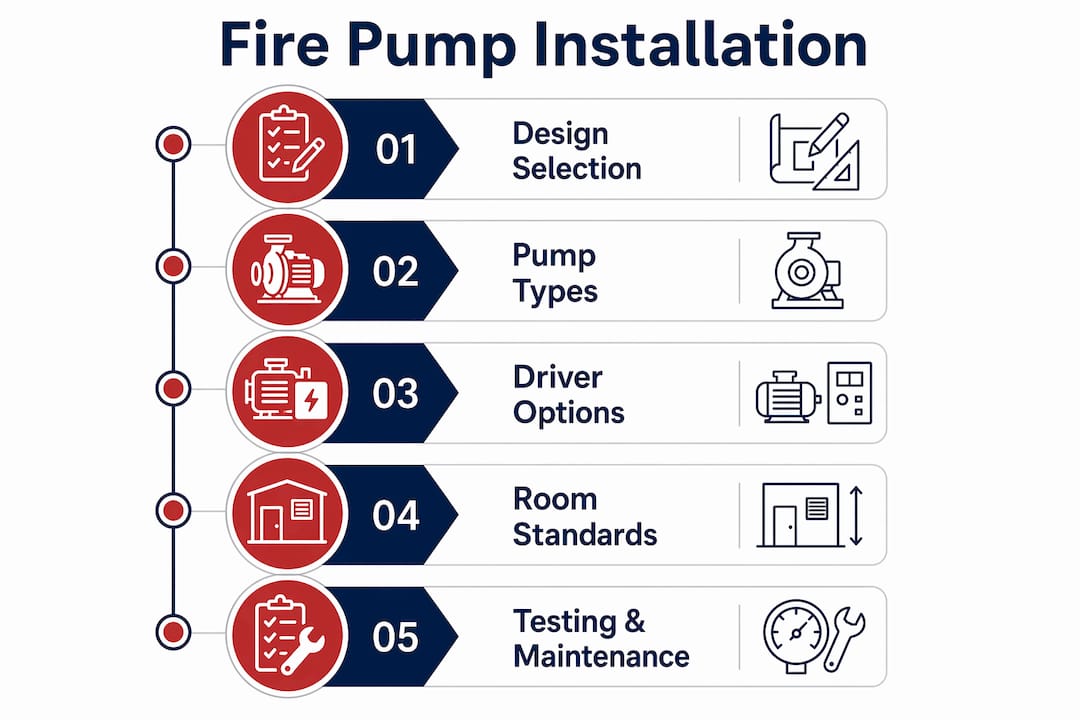
Key design and installation requirements under NFPA 20
NFPA 20 is the definitive standard for fire pump installation. It covers everything from pump type selection to room construction to electrical supply. Meeting these requirements is not a matter of preference. They are enforceable code.
Pump types and driver selection
Fire pumps come in three main configurations: horizontal split-case, vertical turbine, and end-suction. Horizontal split-case pumps are the most common in commercial buildings because they handle high flow rates efficiently. Vertical turbine pumps work best when the water source is below grade, such as a storage tank or well. End-suction pumps fit smaller applications with moderate flow demands.

Drivers are either electric motors or diesel engines. Electric motors are the standard choice when a reliable utility feed exists. Diesel drivers serve as the primary or backup driver when power reliability is a concern, and NFPA 20 requires a fuel supply sufficient for at least eight hours of operation.
Fire pump room requirements
NFPA 20 mandates that the pump room maintain a minimum temperature of 40°F, provide adequate ventilation, and use fire-resistant construction to protect the pump during an emergency. The room must have direct access for maintenance personnel and enough clearance around the equipment for servicing. These are not suggestions. An improperly constructed pump room can cause the pump to fail at the exact moment it is needed.
Piping, power, and accessories
- Suction piping must be designed to prevent cavitation. Cavitation from inadequate suction pressure causes silent internal damage that accumulates over time. NFPA 20 limits the number of elbows on the suction side and specifies minimum pipe diameters to maintain laminar flow.
- Discharge piping connects to the system riser and must include a listed check valve, a listed indicating gate valve, and a pressure gauge on each side of the check valve.
- Power supply falls under NEC Article 695. The electrical feed must withstand locked-rotor current without tripping a breaker, because a fire pump that loses power mid-operation is worse than no pump at all.
- Required accessories include a pressure relief valve on the discharge side, a flow meter for testing, and a jockey pump to maintain system pressure between fire events.
- Acceptance testing must verify performance at churn (no-flow), rated capacity, and 150% of rated capacity before the system goes into service.
Pro Tip: Schedule your acceptance test with the authority having jurisdiction (AHJ) present. Their sign-off on the test report eliminates disputes during future inspections and speeds up certificate of occupancy approvals.
What are the inspection, testing, and maintenance requirements under NFPA 25?
NFPA 25 sets the testing intervals that keep fire pumps reliable after installation. The schedule is non-negotiable and applies to virtually every fire pump in a building covered by a sprinkler system.
- Weekly: Run the pump under no-flow (churn) conditions for a minimum of 10 minutes. Record suction pressure, discharge pressure, and any unusual vibration or noise.
- Monthly: Verify controller settings, alarm signals, and transfer switch operation for diesel-driven pumps. Confirm that the pump room temperature stays above 40°F.
- Annually: Conduct a full flow test at churn, 100% of rated capacity, and 150% of rated capacity. Compare results against the original acceptance test curve.
The 5% rule is the critical performance threshold. A net pressure drop exceeding 5% from the original acceptance curve during an annual flow test requires investigation and corrective action before the system can be considered compliant. That threshold exists because gradual degradation is invisible without data.
Sixty-eight percent of fire pump emergency failures trace back to missed or inadequate maintenance. That figure means the majority of pump failures in the field are preventable. Skipping a weekly churn test feels low-risk until the pump fails to start during an actual fire.
Trend data from repeated inspections provides the clearest picture of pump health over time. A single test tells you whether the pump passed today. A three-year trend tells you whether it is declining and when to act. Store every test report in a centralized log. Reliable-fire-protection recommends keeping digital records that are accessible during AHJ inspections. The fire safety documentation guide covers the recordkeeping format that Houston inspectors expect.
Qualified contractors with proper equipment are required for NFPA 25 compliant flow testing. A garden hose and a stopwatch do not meet the standard. Flow testing requires calibrated meters, proper discharge points, and personnel who understand how to read a pump curve.
Pro Tip: Log the ambient temperature in the pump room during every weekly test. A room that dips below 40°F in winter is a code violation and a freeze risk. Catching it early costs far less than replacing a cracked pump casing.
How to size and select fire pumps for your building
Sizing a fire pump starts with hydraulic calculations, not catalog browsing. The design engineer calculates the total pressure and flow demand at the most remote sprinkler head, then works backward to determine what the pump must deliver at the base of the riser.
Building height is a primary sizing driver, and tall buildings often require pressure zoning to keep system pressures below 400 psi. Running a single pump to serve a 40-story building would create dangerously high pressures on lower floors. Zoning splits the building into pressure zones, each with its own pump or pressure-reducing valves.
The table below summarizes the key sizing parameters every facility manager should understand before meeting with a fire protection engineer.
| Parameter | What it means | Why it matters |
|---|---|---|
| Rated flow (GPM) | Volume of water the pump delivers at rated pressure | Must meet or exceed hydraulic demand of the sprinkler system |
| Rated pressure (PSI) | Pressure at rated flow | Must cover elevation loss plus system friction loss |
| Churn pressure | Pressure at zero flow | Must not exceed system component pressure ratings |
| Operating range | 90%–140% of rated capacity | Pumps outside this range risk damage or inadequate supply |
| Net positive suction head | Minimum suction pressure to prevent cavitation | Drives suction pipe design and tank elevation requirements |
Oversized pumps create their own problems. A pump running at less than 90% of rated capacity produces excessive pressure that can damage sprinkler heads, fittings, and piping. Undersized pumps cannot meet demand during a fire event. The fire sprinkler installation guide from Reliable-fire-protection explains how pump sizing integrates with sprinkler system design at the building level.
Pro Tip: Request the pump manufacturer’s certified performance curve before finalizing your selection. Factory curves show actual tested performance, not theoretical values. Compare that curve against your hydraulic calculations to confirm the pump will perform within its optimal range.
Key Takeaways
A fire pump that meets NFPA 20 installation standards and NFPA 25 maintenance requirements is the foundation of a reliable fire suppression system for any building where municipal water pressure falls short.
| Point | Details |
|---|---|
| Know your trigger conditions | A fire pump is required when building height, high fire flow demand, or weak municipal supply creates a pressure deficit. |
| Follow NFPA 20 for design | Pump room construction, suction piping, NEC Article 695 power supply, and acceptance testing are all mandatory, not optional. |
| Test on schedule | Weekly churn tests, monthly controller checks, and annual flow tests are the minimum NFPA 25 intervals. |
| Watch the 5% threshold | A pressure drop exceeding 5% from the acceptance curve requires investigation and corrective action before the system is compliant. |
| Size within the operating range | Fire pumps must operate between 90% and 140% of rated capacity to avoid system damage and supply failures. |
Why compliance alone is not enough
Most fire pump programs I have seen fail the same way. The property owner passes every scheduled test, keeps clean paperwork, and then gets blindsided by a pump failure during an actual emergency. The tests were real. The records were accurate. But nobody was reading the trend.
Compliance is a floor, not a ceiling. NFPA 25 tells you the minimum frequency for testing. It does not tell you what to do when your annual flow test shows a 3% pressure drop three years in a row. That trend is telling you something. A pump declining at that rate will cross the 5% threshold within a year or two. A proactive facility manager replaces the impeller or schedules a full overhaul before the system fails an inspection or, worse, fails during a fire.
The other gap I consistently see is coordination. Property owners hire a contractor for installation, a different firm for annual testing, and nobody owns the full picture. The installer never sees the test data. The testing firm never reviewed the original acceptance curve. Gaps fall through every handoff. The fix is simple: designate one point of contact who holds all records and reviews every test report against the original baseline.
Early design consultation prevents the most expensive mistakes. A fire pump added as an afterthought during construction costs two to three times more than one designed into the building from the start. Mechanical room space, electrical capacity, and suction source all need to be planned before walls go up. Bring a licensed fire protection engineer into the project at schematic design, not during permit review.
— Results
Reliable-fire-protection’s fire pump services for Houston properties
Reliable-fire-protection works with property owners and facility managers across Houston to design, install, and maintain fire pump systems that meet NFPA 20 and NFPA 25 requirements from day one.
The team at Reliable-fire-protection handles hydraulic calculations, pump room design, acceptance testing coordination, and ongoing NFPA 25 inspection programs. Every service is backed by certified technicians who understand both the code requirements and the practical realities of Houston’s building stock. Whether you are commissioning a new system or bringing an existing pump back into compliance, Reliable-fire-protection provides the documentation your AHJ expects. Learn how a complete fire sprinkler compliance workflow integrates with your fire pump program, or contact Reliable-fire-protection directly to schedule a site assessment and get a free quote.
FAQ
What is NFPA 20 and why does it govern fire pumps?
NFPA 20 is the National Fire Protection Association standard that defines installation requirements for stationary fire pumps used in fire protection. It covers pump selection, room construction, piping design, power supply, and acceptance testing.
How often does a fire pump need to be tested?
NFPA 25 requires weekly no-flow churn tests, monthly controller and alarm inspections, and annual full-flow tests at churn, rated capacity, and 150% of rated capacity.
What happens if my fire pump fails the annual flow test?
A pressure drop exceeding 5% from the original acceptance curve requires investigation and corrective action. The system is not considered compliant until the cause is identified and resolved.
Do all buildings with sprinkler systems need a fire pump?
No. A fire pump is only required when the available water supply pressure cannot meet the hydraulic demands of the sprinkler system. Single-story buildings with strong municipal supply often do not need one.
Who is qualified to test a fire pump under NFPA 25?
Qualified contractors with calibrated flow meters and documented training are required for NFPA 25 compliant testing. Building maintenance staff running informal checks do not satisfy the standard.