
TL;DR:
- Fire detection in healthcare involves sensors, alarms, and controls that identify fire threats before they become life-threatening. Advanced systems like AI-powered detectors and aspirating smoke sensors reduce false alarms and improve response times in critical environments. Regular maintenance, documentation, and proactive system reviews ensure compliance and help adapt to evolving facility needs.
Fire detection in healthcare is defined as the coordinated system of sensors, alarms, and integrated controls that identify fire threats and protect patients, staff, and property before conditions become life-threatening. US hospitals average nearly 9 fires daily, making fire risk assessment healthcare professionals conduct a non-negotiable operational priority. Knowing how to improve fire detection in healthcare requires more than installing new equipment. It demands alignment with NFPA 72, NFPA 101, and NFPA 99, plus a clear strategy for managing the unique pressures of continuous patient care environments.
What are the primary challenges in fire detection unique to healthcare?
Healthcare facilities face fire detection challenges that no other building type encounters at the same scale. Patients cannot self-evacuate. Critical care equipment cannot be interrupted. These two facts alone reshape every decision a facility manager makes about alarm design and system placement.
The core challenges fall into five categories:
- Continuous occupancy and patient vulnerability. ICUs, surgical suites, and neonatal units operate 24 hours a day. Any alarm response must account for patients on ventilators, under anesthesia, or in isolation.
- System integration complexity. Fire alarm systems must connect with medical gas shut-offs, smoke dampers, and access controls without disrupting life-support equipment or patient care workflows.
- Alarm audibility versus patient disruption. Loud, immediate alarms that work in office buildings can cause physiological harm in sensitive patient areas. The system must alert staff without triggering panic.
- Room reclassification and renovation drift. When a storage room becomes a procedure room, or a corridor gets subdivided, the detection coverage map changes. Systems that are not updated after these changes develop blind spots.
- Overlapping regulatory frameworks. Facility managers must satisfy NFPA codes, Centers for Medicare and Medicaid Services (CMS) requirements, and Joint Commission accreditation standards simultaneously. CMS often enforces older code editions while local authorities require newer ones, creating direct conflicts.
The regulatory complexity alone justifies a dedicated compliance strategy rather than a reactive, inspection-by-inspection approach. Facilities that treat compliance as an ongoing program rather than a periodic event consistently perform better during surveys.
Which advanced technologies improve fire detection accuracy in healthcare?
AI-powered fire detection systems reduce false alarms by 40% and deliver emergency response times 25% faster than traditional systems. That combination directly addresses the two biggest operational problems healthcare facilities face: unnecessary evacuations that endanger patients and delayed responses that allow fires to grow.
Aspirating smoke detection
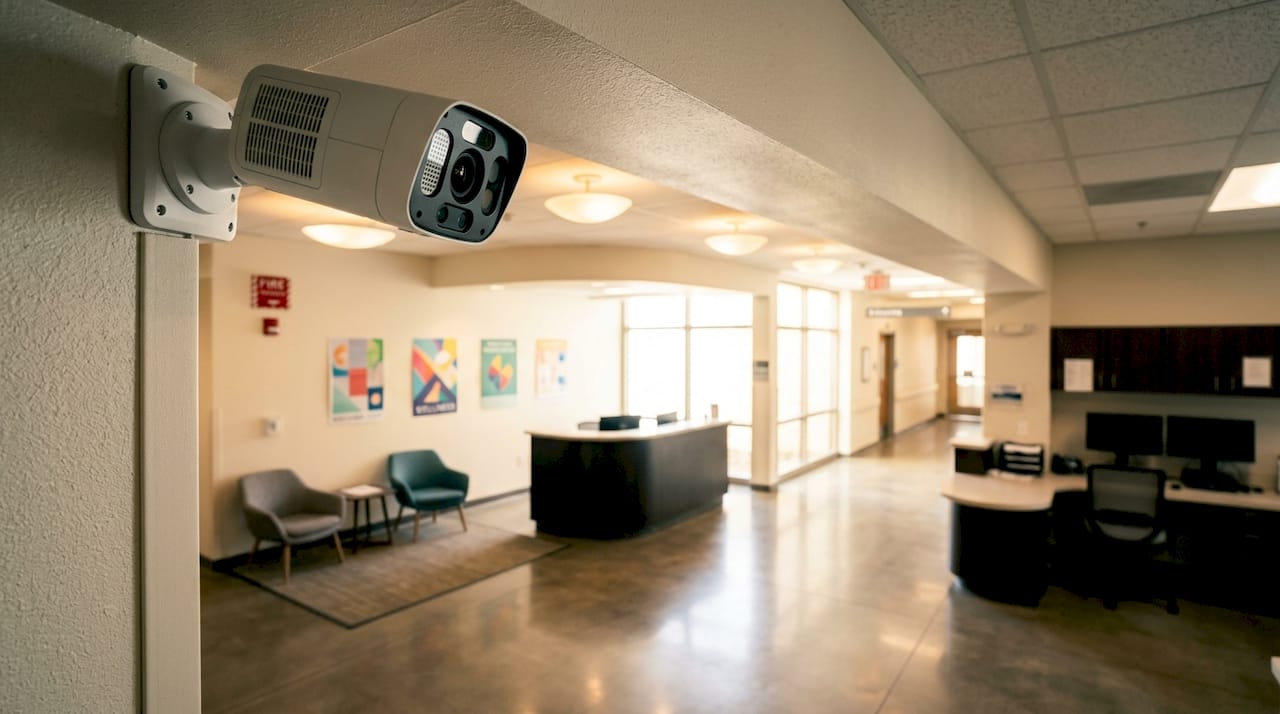
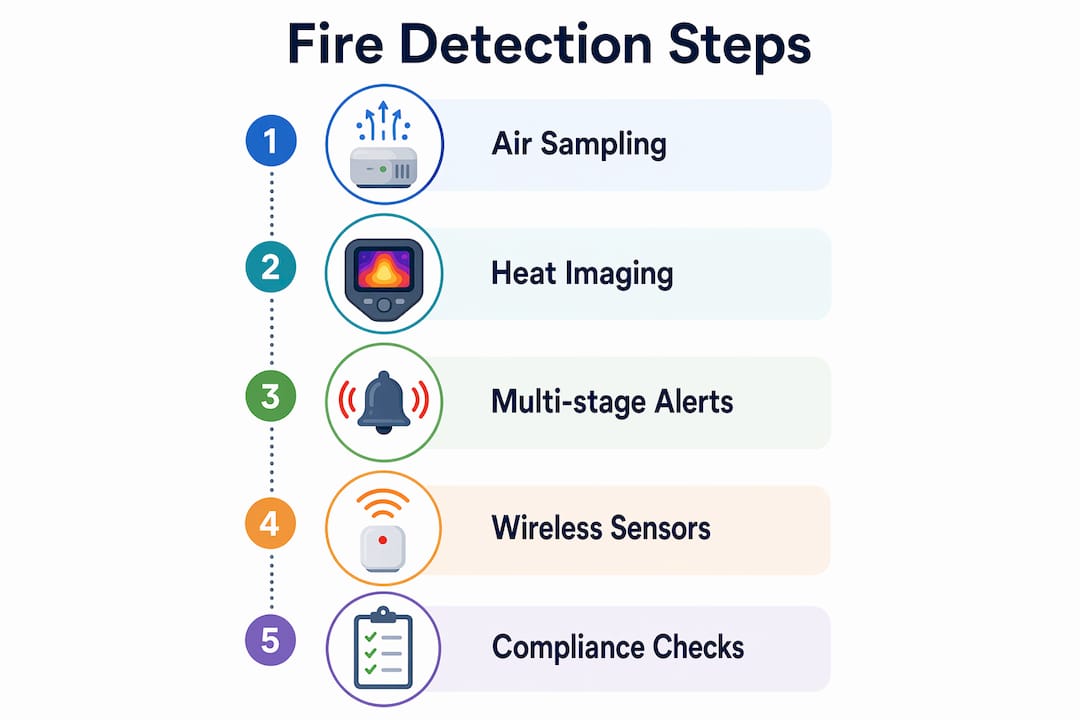
Aspirating smoke detection (ASD) systems actively draw air samples from multiple zones through a network of pipes. A single ASD unit can monitor a large wing of a hospital, detecting smoke at concentrations far below what a standard point detector registers. This makes ASD ideal for server rooms, pharmacy storage, and any area where early warning is critical but traditional detector placement is impractical.
Heat signature cameras and intelligent detectors
Thermal imaging cameras detect heat signatures before visible smoke develops. They work well in areas like laundry facilities, kitchens, and mechanical rooms where steam or cooking vapors would trigger conventional smoke detectors repeatedly. Paired with advanced fire detectors that use multi-sensor algorithms, these cameras reduce nuisance alarms while catching genuine threats faster.
Addressable alarm systems with multi-stage alerts
Intelligent fire detection with silent pre-alarms allows staff to investigate a potential threat without triggering a full facility-wide alarm. In an ICU, this means a nurse receives a localized alert on a panel or mobile device, investigates, and confirms or cancels the alarm before patients are disturbed. Addressable systems pinpoint the exact device that triggered, cutting investigation time from minutes to seconds.
Wireless sensor networks
Wireless sensor networks eliminate the need for extensive cable runs during retrofits, which is a major advantage in occupied healthcare buildings. These systems support remote diagnostics and predictive maintenance, flagging devices that are drifting out of calibration before they fail or generate false alarms.
Pro Tip: When specifying a new detection system, require the vendor to demonstrate how the system handles alarm verification in patient-sensitive zones. A system that cannot support multi-stage alerting is not appropriate for ICU or surgical suite coverage.
How to maintain compliance with fire detection inspection requirements?
Documentation failures cause more compliance problems than equipment failures. 54% of missed fire safety inspections in healthcare arise from handoff errors or incorrect contractor report filing, not device malfunctions. Surveyors treat undocumented maintenance as incomplete work, regardless of whether the device actually functions correctly.
NFPA 72 sets the baseline inspection framework. Follow these steps to build a defensible compliance record:
- Schedule annual device testing. NFPA 72 requires testing of all initiating devices, notification appliances, and control equipment annually. Quarterly monitoring checks are also required for supervising stations.
- Retain records for a minimum of 3 years. NFPA 72 mandates that testing and inspection records be kept for at least 3 years. Many facilities extend this to 5 years to cover multiple accreditation cycles.
- Standardize contractor report formats. Require all contractors to submit reports in a format that matches your internal tracking system. Mismatched formats are a leading cause of filing errors.
- Assign a single compliance owner. Handoff failures happen when responsibility is shared without a clear primary owner. One person must be accountable for confirming that every contractor report is received, reviewed, and filed.
- Audit documentation quarterly. Do not wait for an annual survey to discover gaps. A quarterly internal audit catches missing reports while there is still time to correct them.
| Compliance task | Frequency | Owner |
|---|---|---|
| Device testing | Annual | Contracted inspector |
| Monitoring station check | Quarterly | Facility manager |
| Record retention review | Quarterly | Compliance officer |
| Full documentation audit | Annual | Facility manager |
| CMS and Joint Commission prep | Per survey cycle | Safety committee |
Digital, cloud-based CMMS platforms automate inspection scheduling and documentation storage, replacing paper-based tracking that creates gaps. These platforms generate audit-ready reports on demand, which significantly reduces preparation time before Joint Commission surveys.
Pro Tip: Integrate your CMMS with your contractor’s reporting portal so that inspection reports upload automatically. Manual data entry is where most filing errors originate. Maintaining fire alarm inspection records in a centralized digital system also satisfies multi-jurisdiction code requirements more reliably than paper files.
What steps align fire detection systems with changing facility needs?
Fire alarm systems drift out of alignment with their environment over time. Renovations, repurposed spaces, and equipment changes that do not trigger full system evaluations create coverage gaps that only become visible during an incident or a survey. The solution is treating system reviews as strategic audits, not just corrective responses.
Facility managers who build system reviews into their capital planning cycle avoid emergency corrections and stay ahead of coverage gaps. The key steps include:
- Map every renovation against the detection plan. Before any construction begins, require the project team to submit a fire detection impact assessment. Any change to room use, ceiling height, or HVAC configuration must trigger a detector placement review.
- Conduct a full system audit every 3 years. Even without visible changes, sensor sensitivity drifts, building materials age, and occupancy patterns shift. A scheduled audit catches misalignments before they become compliance findings.
- Integrate fire detection with building automation systems. When the fire alarm communicates directly with HVAC controls, access control, and medical gas panels, the facility responds as a coordinated system rather than a collection of independent components. This system integration complexity requires specialized expertise to manage correctly.
- Plan upgrades in phases. Full system replacements in occupied healthcare buildings are rarely feasible. A phased life safety master plan allows upgrades to proceed wing by wing, minimizing disruption to patient care.
- Engage specialists for interface management. The intersection of fire alarm systems, medical gas shut-offs, and building management systems is technically complex. Generalist contractors frequently miss interface failures that specialists catch during commissioning.
Facilities that adopt proactive system reviews avoid the costly emergency corrections that reactive facilities face when a survey or incident exposes a coverage gap. The cost of a planned audit is a fraction of the cost of an emergency system correction in an occupied hospital.
Key Takeaways
Improving fire detection in healthcare requires intelligent technology, rigorous documentation, and proactive system reviews aligned with NFPA 72, NFPA 101, and NFPA 99.
| Point | Details |
|---|---|
| Documentation drives compliance | 54% of missed inspections stem from filing errors, not equipment failures. |
| AI detection reduces false alarms | AI-powered systems cut false alarms by 40% and speed response by 25%. |
| Multi-stage alerts protect patients | Silent pre-alarms let staff investigate threats without disturbing ICU patients. |
| System drift is a real risk | Renovations and room changes create coverage gaps if detection plans are not updated. |
| CMMS platforms are best practice | Cloud-based tracking automates scheduling and generates audit-ready records on demand. |
What I have learned managing fire detection in healthcare environments
The most common mistake I see facility managers make is treating fire detection as a one-time installation rather than a living system. A hospital is never static. Departments expand, rooms get repurposed, and new equipment changes airflow patterns. Every one of those changes has the potential to leave a detector in the wrong place or calibrated for conditions that no longer exist.
The second mistake is underestimating how much compliance depends on paperwork rather than hardware. A perfectly functioning detector that lacks a documented inspection record is, in the eyes of a CMS surveyor, a non-compliant detector. That reality is uncomfortable, but it is the standard you are held to. Investing in a CMMS platform is not an administrative luxury. It is the most direct way to protect your facility from a survey finding that has nothing to do with actual fire risk.
The technology side of this field has genuinely improved. Multi-stage alerting, aspirating detection, and addressable systems give facility managers tools that were not available a decade ago. But technology only performs as well as the maintenance program behind it. A sophisticated system with a weak inspection record is more dangerous than a simpler system with a clean one, because it creates a false sense of security.
My honest recommendation: treat your next system review as a strategic audit, not a compliance checkbox. Map your current detection coverage against your actual building use. Find the gaps before a surveyor or an incident does. The alarm maintenance practices that protect your facility are not complicated. They require consistency, ownership, and a willingness to invest before a problem forces your hand.
— Results
How Reliable-fire-protection supports healthcare fire detection
Reliable fire protection provides fire alarm systems and detection services built for the compliance demands of healthcare facilities. Their team works with NFPA 72, NFPA 101, and NFPA 99 requirements directly, helping facility managers close coverage gaps, pass surveys, and maintain accurate documentation.
If you manage a healthcare facility in the Houston area and need a fire alarm system that meets current code requirements, Reliable-fire-protection offers inspections, installations, and maintenance programs designed for medical environments. Learn how fire alarm systems work and what a properly designed system looks like for your building type. Contact Reliable-fire-protection to schedule a site assessment and get a clear picture of where your current system stands.
FAQ
What NFPA codes govern fire detection in healthcare?
NFPA 72 covers fire alarm system installation and testing, NFPA 101 addresses life safety and egress, and NFPA 99 governs health care facilities specifically. Facilities must satisfy all three simultaneously, along with CMS and Joint Commission requirements.
How often must fire alarm systems be tested in hospitals?
NFPA 72 requires annual testing of all initiating devices and notification appliances, with quarterly checks for supervising station monitoring. Records must be retained for a minimum of 3 years.
What causes most fire safety inspection failures in healthcare?
54% of missed inspections result from handoff failures or incorrect contractor report filing, not equipment malfunctions. Surveyors treat undocumented maintenance as incomplete work regardless of device condition.
How do multi-stage fire alarms protect patients in sensitive areas?
Multi-stage systems issue a silent pre-alarm to staff panels or mobile devices first, allowing investigation before a full audible alarm activates. This approach protects ICU and surgical suite patients from unnecessary disruption while maintaining response speed.
When should a healthcare facility conduct a full fire detection system review?
A full system audit is recommended every 3 years at minimum, and immediately following any renovation, room reclassification, or significant equipment change that affects ceiling configuration or airflow patterns.