
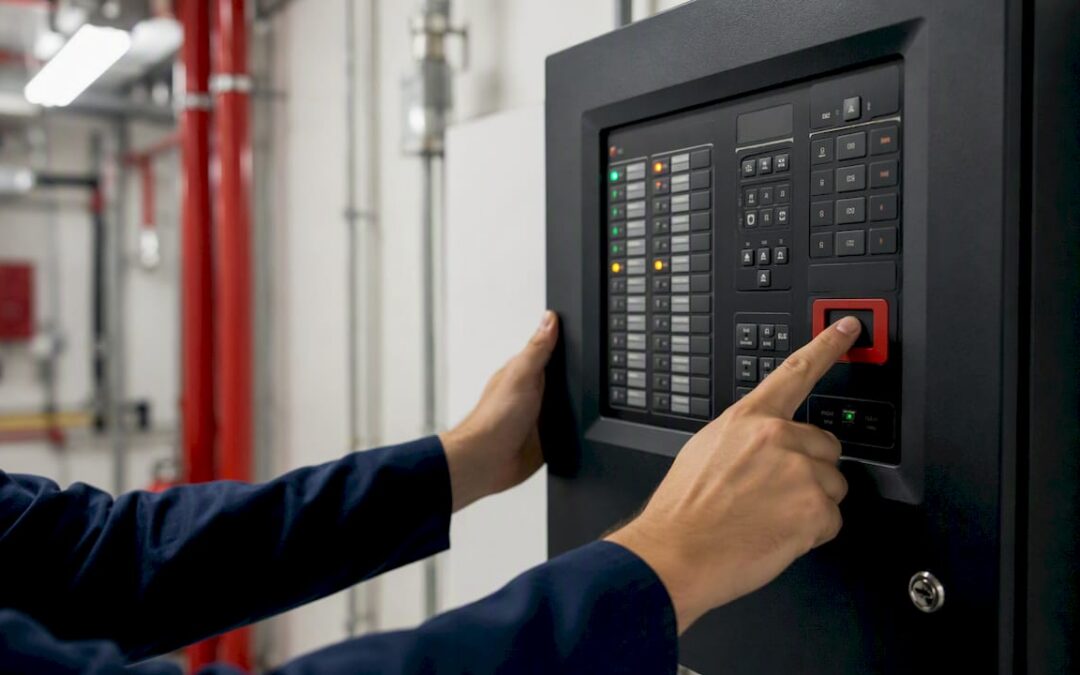
When a fire alarm activates or you confirm a fire, the sequence is this: verify the alarm panel and zone, order evacuation or investigate per your Emergency Action Plan (EAP), call 911, notify your fire-protection contractor, account for every occupant, and document every action with a timestamp. That is the whole emergency response checklist in one breath. Everything else in your EAP exists to make each of those six steps fast, unambiguous, and defensible after the fact.
The standards behind this sequence aren’t arbitrary. OSHA 29 CFR 1910.38 requires employers to identify evacuation routes, designate a chain of command, keep contact lists current, and document drills and instructions. NFPA guidance for high-rise and general facilities pushes further, calling for a named Fire and Life Safety Director, a filed EAP with your Authority Having Jurisdiction (AHJ), and at least two drills a year for the first two years after acceptance, per NFPA guidance for high-rise buildings. Life safety comes first. Everything after the last occupant is accounted for is about handing a clean, well-documented scene over to responders.
The one-line checklist:
- Verify the alarm panel zone and type before ordering any response.
- Evacuate or investigate strictly per your EAP, not by gut feel.
- Call 911 immediately, then notify your fire-protection contractor.
- Assist occupants who need help, then account for everyone at assembly points.
- Preserve the scene, log every action with a timestamp, and hand off cleanly to responders.
Key Takeaways
A fire emergency response checklist works because it converts standards like OSHA 1910.38 and NFPA 2800 into a timed sequence of verify, evacuate, call, notify, account, and document.
| Point | Details |
|---|---|
| Verify before you act | Confirm the panel zone and alarm type before ordering evacuation or investigation. |
| Call 911 first, contractor second | Dial emergency services immediately, then notify your fire-protection contractor within minutes. |
| Assign roles in advance | Define FLSD, BERT, and warden duties in writing so nobody hesitates during a real alarm. |
| Document everything with timestamps | A timestamped incident log speeds AHJ review, insurance claims, and after-action reviews. |
| Keep contacts and drills current | Update contact lists and run regular drills to meet NFPA and OSHA expectations. |
| Partner with a fire-protection provider | Reliable-fire-protection supports EAP reviews, inspections, and 24/7 emergency system repairs. |
Table of Contents
- Emergency Response Timeline: What Happens in the First 24 Hours
- Who Handles What During a Fire Emergency?
- What Should You Do at the Fire Alarm Panel?
- How Do You Evacuate Occupants Safely and Account for Everyone?
- What Documentation Do You Need After a Fire Incident?
- How Often Should You Train and Drill for Fire Emergencies?
- Emergency Response Checklist Template You Can Use Today
- Working With the Fire Department Before and After an Incident
- What I Learned Running a Fire Drill That Actually Mattered
- How Reliable-fire-protection Helps You Put This Checklist Into Action
- Frequently Asked Questions
- Sources
Emergency Response Timeline: What Happens in the First 24 Hours
A fire incident isn’t one event. It’s three overlapping phases, each with its own priorities and its own failure modes if nobody owns them.
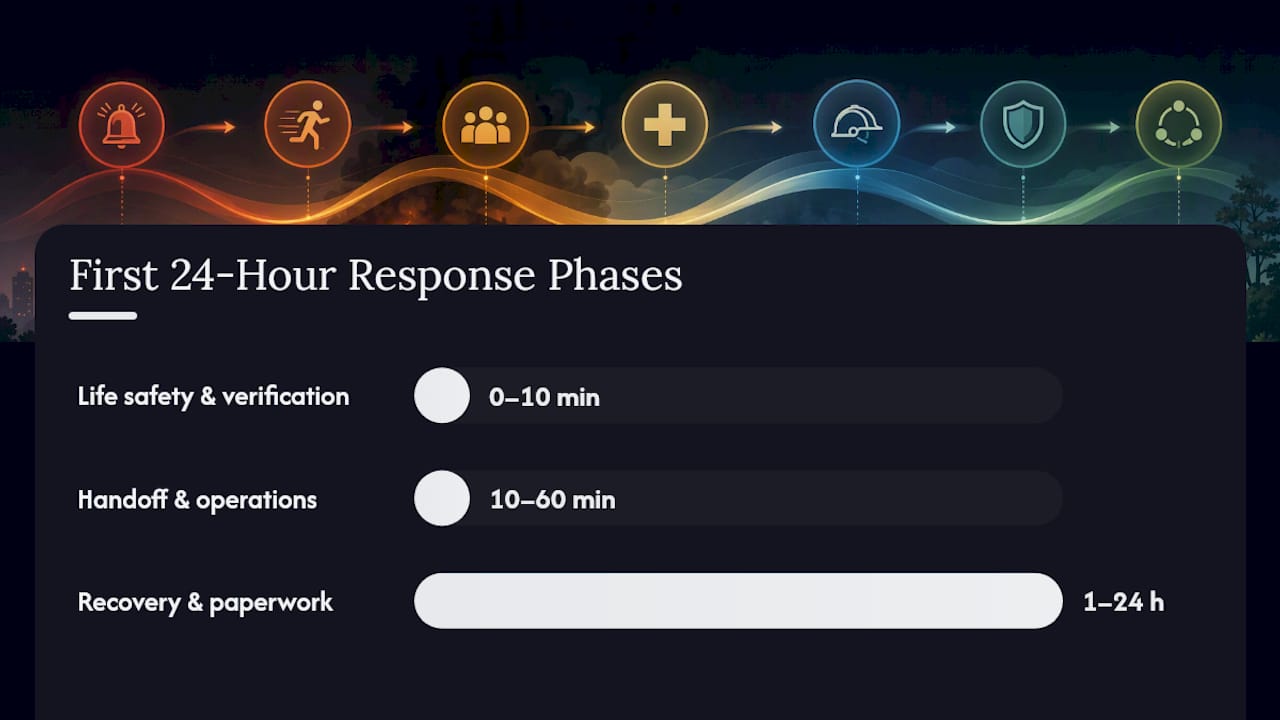
0 to 10 minutes is entirely about life safety and verification. Someone confirms the panel’s zone and alarm type, decides whether to evacuate or investigate based on the EAP’s pre-written triggers, and dials 911 without waiting for a supervisor’s blessing. Floor wardens start moving people toward exits. Anyone assisting a mobility-impaired occupant does it now, not after the building clears. Your fire-protection contractor gets a call in this window too, not after the fact.
10 to 60 minutes is the handoff phase. Someone meets the fire department at the entrance with building plans and a panel summary. Utility isolation, if it’s needed at all, happens only by trained personnel coordinating directly with responders. Whoever is running the incident log starts capturing timestamped entries: alarm time, evacuation start, headcount completion, responder arrival. Assembly point access gets managed so nobody wanders back toward the building.
1 to 24 hours shifts to recovery and paperwork. This is when:
- A qualified technician inspects alarm and suppression systems before anything is reactivated.
- Someone coordinates with the vendor and the AHJ to restore service.
- The incident report gets filed and insurance gets notified.
- Follow-up inspections get scheduled, and any impaired equipment gets a documented restoration timeline.
Skipping straight from evacuation to “back to normal” is where most facilities lose the paper trail an insurer or AHJ will ask for later.
Who Handles What During a Fire Emergency?
Confusion about who’s in charge costs minutes you don’t have. NFPA’s high-rise EAP guidance recommends a clear chain that most commercial properties can scale down without losing the logic:
- Fire and Life Safety Director (FLSD) and a trained deputy hold incident command, liaise with the AHJ, and own the incident record from start to finish.
- Building Emergency Response Team (BERT) members handle floor sweeps, meet responders at the door, and manage any authorized system isolation.
- Floor wardens and alternates account for occupants on their floor, guide evacuation, and report headcounts to the FLSD or BERT lead.
- Incident commander (often the FLSD until the fire department arrives, then handed to the ranking officer) makes real-time calls on evacuation strategy.
The communication flow should run in one direction under stress: on-duty technician or the person who spots the alarm notifies the property manager, who alerts the FLSD, who contacts 911 and your fire-protection service in parallel. Keep a laminated contact list, not just a digital one, since panels and phones can lose power. That list belongs in the physical EAP binder and posted near the main fire panel, updated every time staff changes.
What Should You Do at the Fire Alarm Panel?
The panel is the first source of truth, and misreading it wastes precious minutes. Staff trained to glance at the panel should be able to report three things fast: the zone, the device type triggering it, and whether it’s reading as alarm, supervisory, or trouble. A fire alarm operational playbook built around this taxonomy maps each condition to a specific action, which cuts the guesswork that slows down real incidents.
A few rules of thumb keep panel handling safe:
- Never reset or silence the system without explicit authorization from the FLSD or arriving fire department.
- Only personnel trained on your specific suppression system may operate isolation valves.
- Log every panel action with a timestamp, including who touched it and why.
- Sprinkler activations, deluge systems, and clean-agent rooms each need their own coordination with your fire-protection technician before anyone re-arms them.
Pro Tip: Print a one-page “panel cheat sheet” that maps your building’s zone numbers to physical locations, and laminate it next to the panel. Responders will ask for this in the first thirty seconds, and fumbling through a digital directory under stress wastes time you don’t have.
Understanding how fire alarm systems work and how addressable panels report zone-level data makes this kind of fast, accurate reporting possible in the first place.
How Do You Evacuate Occupants Safely and Account for Everyone?
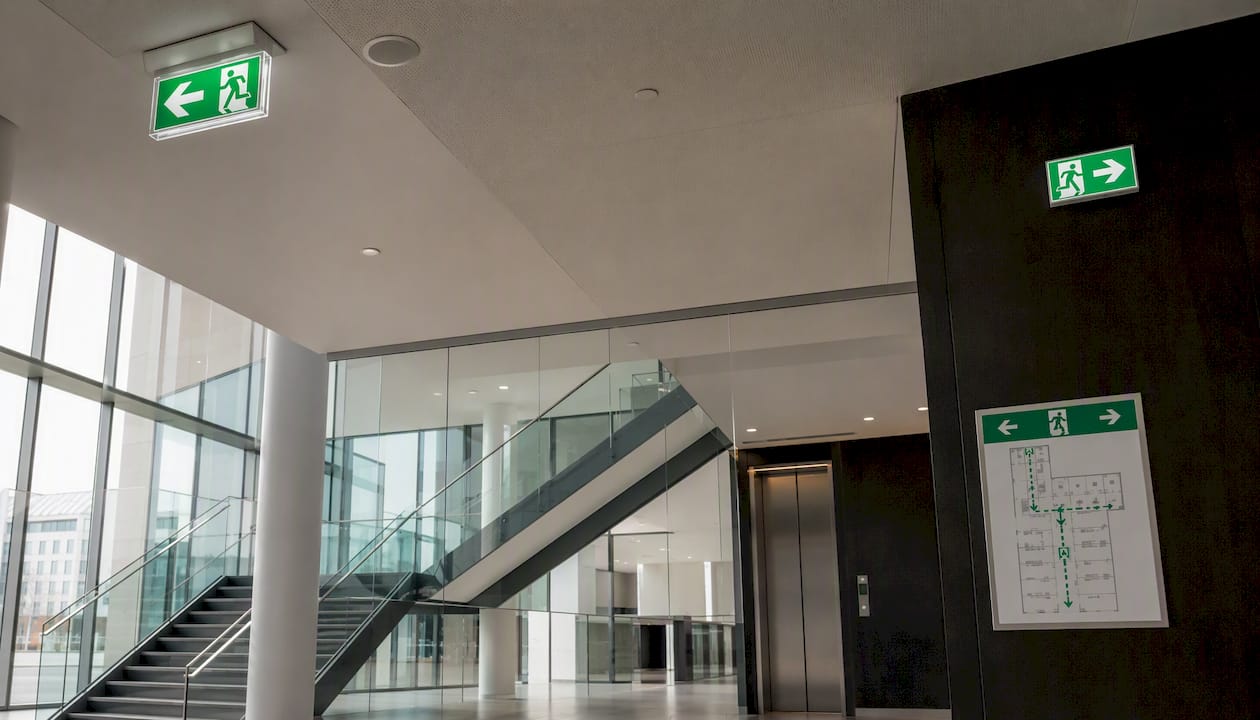
Evacuation isn’t just “everyone walks out.” It’s a documented process with a clear end state: every occupant accounted for at a known assembly point. Posted route maps, clearly marked alternate routes, and unmistakable signage near stairwells and elevators aren’t nice extras. NFPA 2800 built its entire evacuation framework, called TRIP (total evacuation, remain-in-place, in-facility relocation, partial evacuation), around the idea that the right response strategy depends on the hazard, not a blanket rule for every alarm.
Accountability works best as a structured sweep, not a shouted head-count. Wardens sweep their assigned zones, then report headcounts against a printed or electronic roster at the assembly point. A missing name gets escalated to the FLSD immediately, not after everyone else has settled down.
Occupants with disabilities need role-based support built into the plan in advance, not improvised help in the hallway. That means:
- Maintaining a voluntary self-identification list for occupants who may need evacuation assistance.
- Designating areas of refuge with two-way communication where full evacuation isn’t immediately possible.
- Assigning specific staff, not “whoever is nearby,” to each occupant on the assistance list.
- Stocking evacuation chairs or similar equipment on upper floors where stairwell descent is the only option.
Clear escape route design and signage directly determines how fast this sweep can happen, and it’s one of the cheapest fixes a property can make before an incident ever occurs.
What Documentation Do You Need After a Fire Incident?
The moment the fire department gives the all-clear, your paperwork clock starts. Your incident log should already have entries for alarm time, evacuation start and finish, responder arrival, and every panel action taken. If arson is suspected, secure the scene, restrict access, and photograph conditions before any cleanup begins.
Return-to-service work follows a specific sequence:
| Step | Who Handles It | Typical Timeframe |
|---|---|---|
| Inspect alarm and suppression devices | Licensed fire-protection technician | Within 24 hours |
| Authorize system restoration | FLSD or building owner, based on inspection report | After inspection sign-off |
| Document repairs and vendor work orders | Property manager, filed with the EAP | Same day as repair |
| File incident report with AHJ | FLSD or designated deputy | Per local AHJ deadline |
| Notify insurer | Property owner or risk manager | Within 24 hours |
A fire compliance checklist built for AHJ review helps keep this sequence from turning into a scramble the week after the incident, when memories of exact timestamps start to fade.
How Often Should You Train and Drill for Fire Emergencies?
A checklist only works if the people using it have practiced it. NFPA’s high-rise guidance recommends regular EAP drills during the early years after your plan is accepted by the AHJ, rotating between full evacuation, partial evacuation, and remain-in-place scenarios so staff don’t just memorize one script.
Training should cover, at minimum:
- Recognizing and reporting an alarm, including who to call and in what order.
- Evacuation and shelter-in-place procedures specific to the building’s layout.
- Basic extinguisher use for incipient fires, only when it’s safe to attempt.
- Accountability procedures, including how headcounts get reported to the FLSD.
- Just-in-time refreshers for BERT members after any staffing change.
A well-run drill tests more than foot traffic. It should test whether the panel-to-responder handoff actually works, whether the contact list is current, and whether wardens can complete a sweep inside the time your EAP assumes. The role fire drills play in emergency preparedness goes well beyond compliance checkbox, since a drill that never tests communication failure points isn’t really testing anything.
Emergency Response Checklist Template You Can Use Today
Here’s a compact version built to drop straight into an EAP or print for a clipboard:
| Action | Responsible Role | Timeframe | Done |
|---|---|---|---|
| Verify alarm panel zone and type | On-duty staff / BERT | Immediate | ☐ |
| Order evacuation or investigate per EAP | FLSD / floor warden | 0 to 2 minutes | ☐ |
| Call 911 | Any trained staff member | Immediate | ☐ |
| Notify fire-protection contractor | Property manager | 0 to 10 minutes | ☐ |
| Assist occupants needing help | Assigned BERT member | 0 to 10 minutes | ☐ |
| Complete headcount at assembly point | Floor wardens | 0 to 10 minutes | ☐ |
| Brief arriving responders | FLSD or deputy | On arrival | ☐ |
| Isolate utilities (if trained/authorized) | Trained facilities staff only | 10 to 60 minutes | ☐ |
| Log all actions with timestamps | FLSD or designee | Ongoing | ☐ |
| Schedule post-incident inspection | Property manager | Within 24 hours | ☐ |
Customize rows for building-specific hazards, clean-agent server rooms, industrial process lines, commercial kitchens, and add a signature line next to each “Done” box. Keep the master copy in your filed EAP and a laminated quick-reference near the main panel and in the security office. A related checklist framework for Houston-area properties covers how to adapt templates like this one to specific occupancy types.
Working With the Fire Department Before and After an Incident
The best incident responses are the ones where the fire department already knows your building before they arrive. File your EAP with the AHJ when required, share pre-incident building information cards, and invite local responders to a walkthrough. NFPA 1660 frames this as pre-incident planning, and it’s the difference between responders navigating blind and responders walking in with a floor plan already in hand.
When trucks arrive, one person, ideally the FLSD or a trained deputy, should meet them with:
- Building plans and a summary of what the panel is currently showing.
- Any known hazards: chemical storage, clean-agent rooms, occupants still unaccounted for.
- A rundown of what’s already been done: evacuation status, utility isolation, suppression activation.
After the department clears the scene, submit any AHJ-required documentation, act on their recommendations, and update your EAP and drill schedule to reflect what actually happened versus what the plan assumed would happen.
What I Learned Running a Fire Drill That Actually Mattered
A facility manager I spoke with described a building where the alarm went off on a Tuesday afternoon, and the response fell apart in the first ninety seconds. Nobody knew which zone the panel was flagging. The warden list hadn’t been updated in eight months, so two of the four names on it no longer worked in the building. It turned out to be a false alarm from a malfunctioning smoke detector, but the confusion revealed exactly how badly the plan would have failed in a real fire.
That’s the gap a written, rehearsed checklist closes. It’s not about memorizing NFPA code language. It’s about knowing, without hesitation, who calls 911, who meets the truck, and who’s responsible for the third-floor headcount. The buildings that handle real incidents well aren’t the ones with the fanciest suppression systems. They’re the ones where every person on shift already knows their one job cold.
How Reliable-fire-protection Helps You Put This Checklist Into Action
A checklist is only as good as the systems and training behind it. Reliable-fire-protection works directly with facility managers across Houston and nearby areas to close the exact gaps this article covers: EAP consulting that maps your building to the TRIP strategy, alarm and sprinkler inspections that keep your panel reporting accurate, staff training and drills that turn a paper plan into muscle memory, and 24/7 emergency repair when a system needs restoration fast.
If your last drill revealed the same confusion described above, an on-site EAP review is the fastest way to fix it before the next real alarm. Reliable-fire-protection’s team can walk your property, review your current fire alarm system service coverage, and help you build a checklist that matches your building’s actual layout and hazards. Reach out for a free quote and get your EAP reviewed before it’s tested by a real incident instead of a drill.
Frequently Asked Questions
What is the first step in an emergency response checklist for a fire alarm?
Verify the panel’s zone and alarm type before doing anything else. Acting on an unverified signal wastes time; acting without verifying can mean evacuating the wrong area while a real fire spreads elsewhere.
Who should call 911 during a fire incident?
Any trained staff member should call immediately once the alarm is confirmed or a fire is visually confirmed. Don’t wait for a supervisor’s approval, and don’t assume the alarm monitoring company’s automatic call is enough.
How often does OSHA require fire drills?
OSHA’s general guidance requires training whenever the EAP changes or new hazards are introduced, while NFPA’s high-rise guidance recommends at least two full EAP drills annually for the first two years after acceptance.
What should you tell the fire department when they arrive?
Provide building plans, a current panel status summary, known hazards, and a summary of actions already taken, including evacuation status and any utility isolation performed.
Can staff reset a fire alarm panel themselves?
Only with explicit authorization from the FLSD or the responding fire department. An unauthorized reset can mask an active condition and put returning occupants at risk.
Sources
Any EAP that will hold up to AHJ review or an insurer’s questions should reference primary standards, not blog summaries. A few worth keeping on file:
- OSHA eTools: Evacuation Plans and Procedures — Develop & implement checklists
- Guidelines to Developing Emergency Action Plans for All-Hazard Emergencies in High-Rise Office Buildings (NFPA guidance)
Pair these with a working fire alarm system checklist and clear evacuation signage so your EAP references match what’s actually posted on the walls.