Local fire codes are the legally enforceable minimum standards that dictate how a building prevents fires, detects them, suppresses them, and gets people out alive. They aren’t suggestions or best-practice guides. They’re law, and the local Authority Having Jurisdiction (AHJ) has the power to shut your building down if you ignore them.
Here’s what that means in practice:
- Who enforces it: A local fire marshal or AHJ, not a distant regulatory board, reviews your plans and shows up for inspections.
- Where the language comes from: Model codes published by the National Fire Protection Association (NFPA) and the International Code Council (ICC) get adopted, sometimes amended, by your state or city.
- What you’re on the hook for: Scheduled inspections, current documentation, and fast corrections when something fails.
Key Takeaways
Local fire codes function as the enforceable minimum standard for life safety, and compliance depends on identifying your AHJ, tracking your adopted code edition, and maintaining documented, ongoing system testing.
| Point | Details |
|---|---|
| Codes are law, not guidance | Local fire codes set legally enforceable minimums for prevention, detection, suppression, and egress. |
| Model codes shape local rules | NFPA and ICC publish the technical language that states and cities adopt, often with local amendments. |
| Editions matter | Model codes update roughly every three to five years, so knowing your adopted edition is essential. |
| Enforcement runs through the AHJ | Your local fire marshal or fire prevention bureau handles permits, inspections, and appeals. |
| Noncompliance carries real cost | Fines, closure orders, and insurance denial follow violations, especially around egress and suppression failures. |
| A local partner closes the gap | Reliable-fire-protection provides inspection, testing, and documentation support to keep Houston-area properties audit-ready. |
Where to Verify Your Fire Code Obligations
Confirm details directly at the source rather than relying on secondhand summaries. The NFPA codes and standards page explains current editions and update timelines. The Congressional Research Service overview breaks down how model codes become local law. FEMA’s Building Codes Enforcement Playbook outlines administrative best practices, and code viewers like UpCodes let you read your jurisdiction’s actual adopted chapter online.
This article is general information, not a substitute for advice from a qualified lawyer. Consult a qualified legal professional about your own circumstances before acting on anything here.
Table of Contents
- The Role of Local Fire Codes in Setting Minimum Safety Standards
- Who Adopts and Enforces Fire Codes Locally?
- How Fire Code Enforcement Works Day to Day
- What Fire Codes Typically Require in a Commercial Building
- The Real Cost of Ignoring Local Fire Regulations
- Your Fire Code Compliance Checklist
- Sources
The Role of Local Fire Codes in Setting Minimum Safety Standards
A fire code is the written document that spells out the minimum requirements for fire prevention, detection, suppression, and safe egress in a given building type. It’s not aspirational language. Every clause exists because a past fire exposed a gap, and someone decided that gap needed to close permanently.
Two organizations write most of the model language that local jurisdictions eventually adopt. NFPA produces the technical standards most fire officials reference daily, including NFPA 72 for fire alarm systems, NFPA 13 for sprinkler installation, and NFPA 101 for life safety. The ICC publishes the I-Codes, which many states use as their base building and fire code framework.
Here’s the detail that trips up a lot of property owners: NFPA develops and revises its codes on a three-to-five-year update cycle, incorporating new research and new technology each time. Your jurisdiction doesn’t automatically adopt the newest edition the day it publishes. A city might still be enforcing the 2018 edition of a code while the current version is several cycles ahead, which is why the specific edition your city adopted, not just the code’s name, determines what you’re actually required to do.
- Model code language sets the technical baseline.
- States and cities adopt a specific edition, sometimes years after publication.
- Local amendments can tighten or adjust requirements further.
Who Adopts and Enforces Fire Codes Locally?
Adoption happens one of three ways: a state adopts a single code for the whole state, a state sets a minimum baseline that cities can amend upward, or a city writes its own ordinance from scratch. States and local governments frequently adopt the ICC I-Codes and NFPA model fire codes in whole or in part, then layer on local amendments to address regional risks like wildfire exposure or high-rise density.
Enforcement then falls to a specific person or office: the Authority Having Jurisdiction. In most cities that’s the local fire marshal or a fire prevention bureau, though the exact title and reporting structure varies by jurisdiction and occupancy type. A state fire marshal’s office may also hold overlapping authority for certain occupancies, like schools or healthcare facilities, which is worth confirming before you assume your city inspector has final say.
The flow looks like this in practice:
- NFPA or ICC publishes model code language.
- The state adopts it wholesale, adopts it with amendments, or defers entirely to local ordinance.
- The city or county assigns enforcement to its AHJ, who becomes your point of contact for permits, inspections, and appeals.
Pro Tip: Call your local fire marshal’s office before you assume anything about your code edition. Ask directly which edition is currently enforced and whether any local amendments apply to your occupancy type. That single call can save weeks of rework later, and it’s exactly the kind of engagement covered in our guide to the role of fire marshals.
How Fire Code Enforcement Works Day to Day
Code enforcement isn’t a single event. It’s a sequence that starts before construction and never really ends as long as the building operates.
- Plan review and permitting. Your design gets checked against the adopted code edition before anyone breaks ground or touches an existing system.
- Installation inspections. Inspectors verify sprinkler layouts, alarm wiring, and fire-resistant assemblies as they go in, not after drywall covers them.
- Certificate of occupancy. The AHJ signs off once construction and life-safety systems pass final inspection.
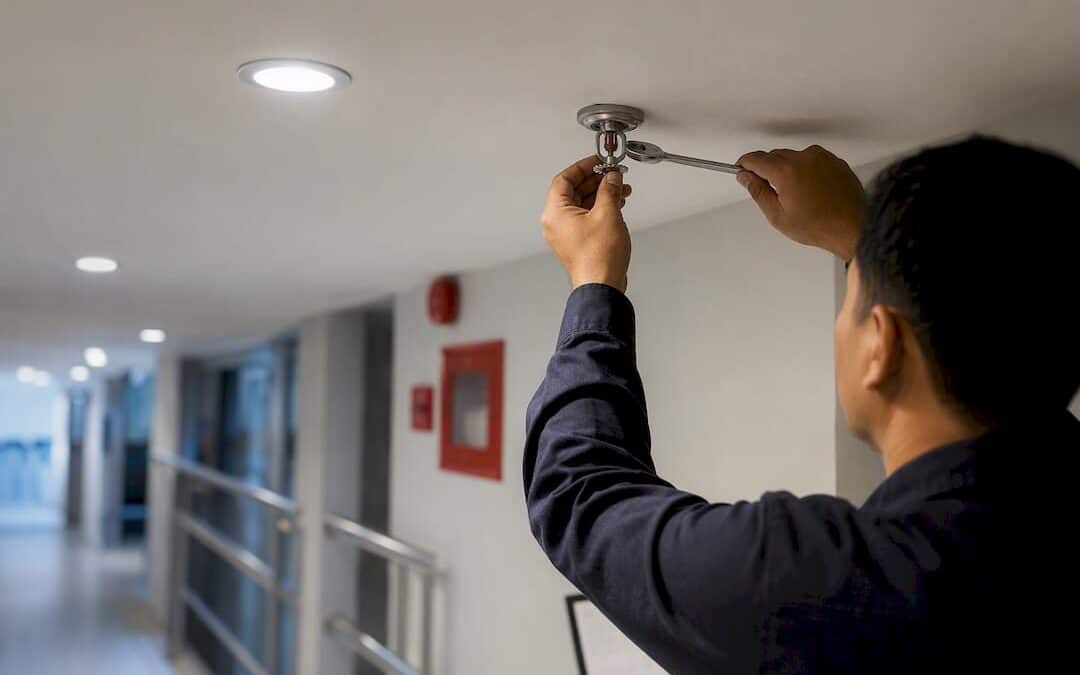
- Ongoing inspection, testing, and maintenance. Systems get tested on recurring schedules, often tied to standards like NFPA 25 for water-based fire protection and NFPA 72 for alarms.
Fire prevention codes specifically authorize fire departments to inspect premises and order corrective action when something fails, which means routine visits aren’t optional courtesy checks. Inspectors typically look at:
- Clear, unobstructed egress paths and illuminated exit signage.
- Sprinkler control valves in the correct position, with tamper switches functioning.
- Alarm panels free of unresolved trouble signals.
- Impairment logs showing when systems went offline and why.
- Current certifications for any contractor who serviced the systems.
When you disagree with an interpretation, most codes allow an appeals process, and administrative provisions give the code official real discretion to approve alternate methods. Engaging early, before construction locks in a design choice, resolves far more disputes than fighting a citation after the fact.
What Fire Codes Typically Require in a Commercial Building
Most adopted fire codes converge on the same handful of protection categories, even though the exact thresholds shift by occupancy and jurisdiction. Knowing these categories lets you self-audit before an inspector ever shows up.
- Means of egress: Exit width, travel distance, and signage sized to the building’s occupant load. Our guide to fire escape routes breaks down what inspectors check first.
- Fire alarm and detection systems: Smoke detection, manual pull stations, and notification appliances calibrated to the building’s use.
- Automatic sprinklers: Often mandatory in dormitories, high-rise structures, and larger assembly occupancies, depending on the adopted edition.
- Fire-resistant construction: Rated walls, doors, and floor assemblies that slow fire spread between units or tenants.
- Emergency lighting: Battery-backed illumination along every required exit path.
- Occupancy limits: Posted capacity figures based on egress capacity, not guesswork.
- Hazardous materials controls: Storage, quantity, and separation rules for flammable or combustible substances on-site.
Construction-phase requirements get verified once and locked into the building’s design. Alarms, sprinklers, and extinguishers require ongoing testing and maintenance for the life of the building, and that distinction is where most violations actually happen.
The Real Cost of Ignoring Local Fire Regulations
Skipping fire code compliance rarely stays a paperwork problem. It escalates fast, and it escalates in ways that hit your budget long after the citation is resolved.
- Fines and civil penalties, sometimes accumulating daily until corrected.
- Stop-work orders on active construction, or closure orders on occupied space.
- Forced remediation at the owner’s expense, often on a compressed timeline set by the AHJ.
- Higher insurance premiums, or outright claim denial if a loss occurs while a violation was open.
- Personal and corporate liability exposure that expands significantly after an incident.
Weak enforcement of egress and other life-safety requirements shows up repeatedly as a contributing factor in major fatal fires, which is the grim reason inspectors don’t treat these violations casually. If you’re cited, most AHJs will work with a documented corrective action plan and, where permitted, a temporary fire watch while repairs are underway. Our breakdown of common fire code violations covers the mistakes that trigger these situations most often.
Your Fire Code Compliance Checklist
Treat compliance as a recurring operational task, not an annual scramble. This sequence covers the ground that matters most:
- Identify your AHJ and confirm the adopted code edition. This single step resolves more confusion than anything else on this list, and it’s the first move fire-safety professionals recommend to every property manager.
- Build one compliance file. Permits, inspection reports, vendor certifications, impairment logs, and every written exchange with the AHJ belong in a single, organized folder, not scattered across email threads.
- Set a recurring inspection and testing calendar. Automated reminders beat sticky notes for systems that need quarterly, semiannual, or annual checks.
- Train staff and run drills. An alarm that works means nothing if nobody knows the evacuation route.
- Document every correction. Written proof of what you fixed, when, and who did the work protects you during the next inspection.
Our fire compliance checklist for commercial properties walks through a version of this you can adapt directly.
Pro Tip: If a system goes down, don’t just file the repair ticket and move on. Document an interim operating plan, including fire watch frequency and escalation steps, and notify your AHJ in writing. A vendor ticket alone rarely counts as adequate evidence that you managed the impairment safely.
Compliance as Safety Leadership, Not a Checkbox
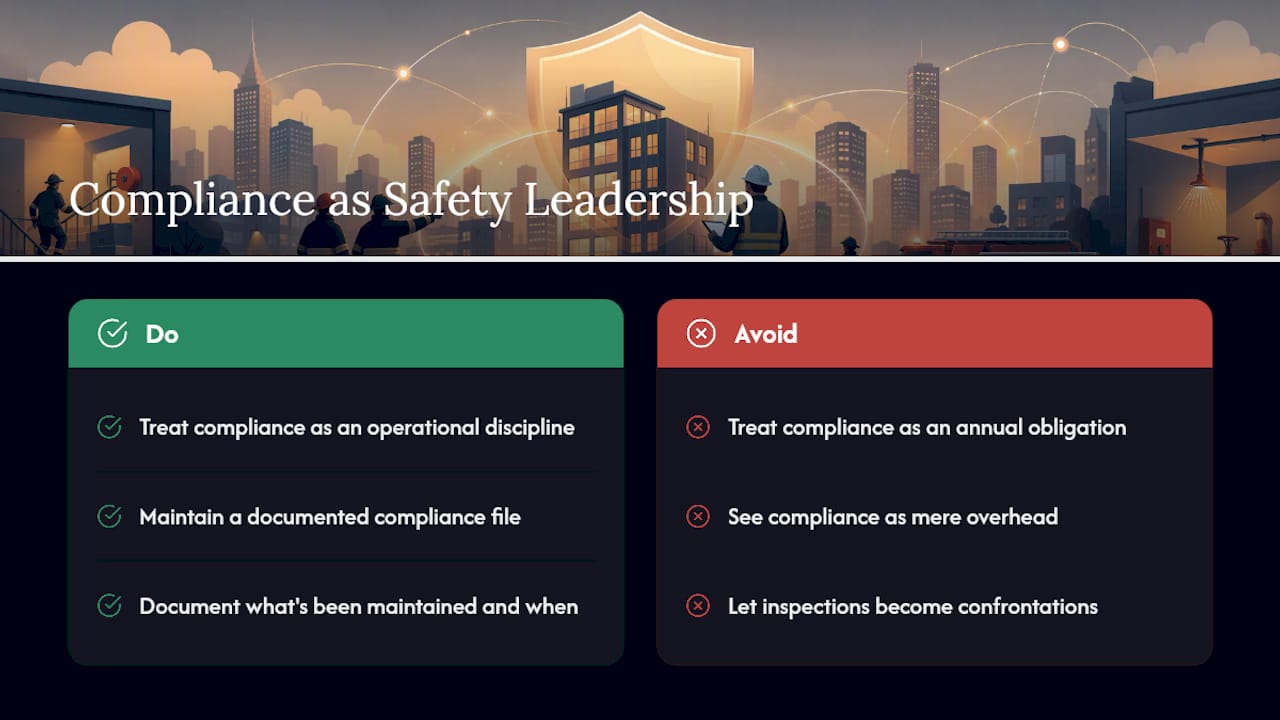
Owners who treat code compliance as an operational discipline, not an annual obligation, see fewer incidents and recover faster when something does go wrong. A documented compliance file turns a routine inspection from a confrontation into a five-minute formality, because the inspector can see exactly what’s been maintained and when. That paper trail also tends to matter enormously to insurers after a loss. Compliance isn’t overhead. It’s the asset that keeps a bad day from becoming a catastrophic one.
Let a Local Fire Protection Partner Handle the Compliance Load
Reading a checklist is one thing. Executing recurring inspections, testing, and documentation across an entire property portfolio is another, and it’s where most compliance gaps actually start. Reliable-fire-protection handles the parts of this checklist that eat the most time: scheduled testing that satisfies NFPA 25 and NFPA 72 requirements, sprinkler and alarm servicing, impairment management when a system goes down, and a consolidated record set you can hand an inspector without digging through old emails.
We work directly with Houston-area property owners and managers as a local partner who already knows the regional AHJ relationships and inspection expectations. If your alarm system hasn’t been tested this cycle or you’re not sure what edition your building falls under, start with a straightforward review. Get a free fire alarm system quote and find out exactly where your property stands before an inspector tells you.
Sources
- Congress
- Codes and Standards Help Protect Lives and Property | NFPA
- Building Codes Enforcement Playbook | FEMA
- Precourse reading: Fire prevention and code enforcement content (USFA/FEMA)
- Chapter 1 scope and administration: Alabama Fire Code 2021 | UpCodes