
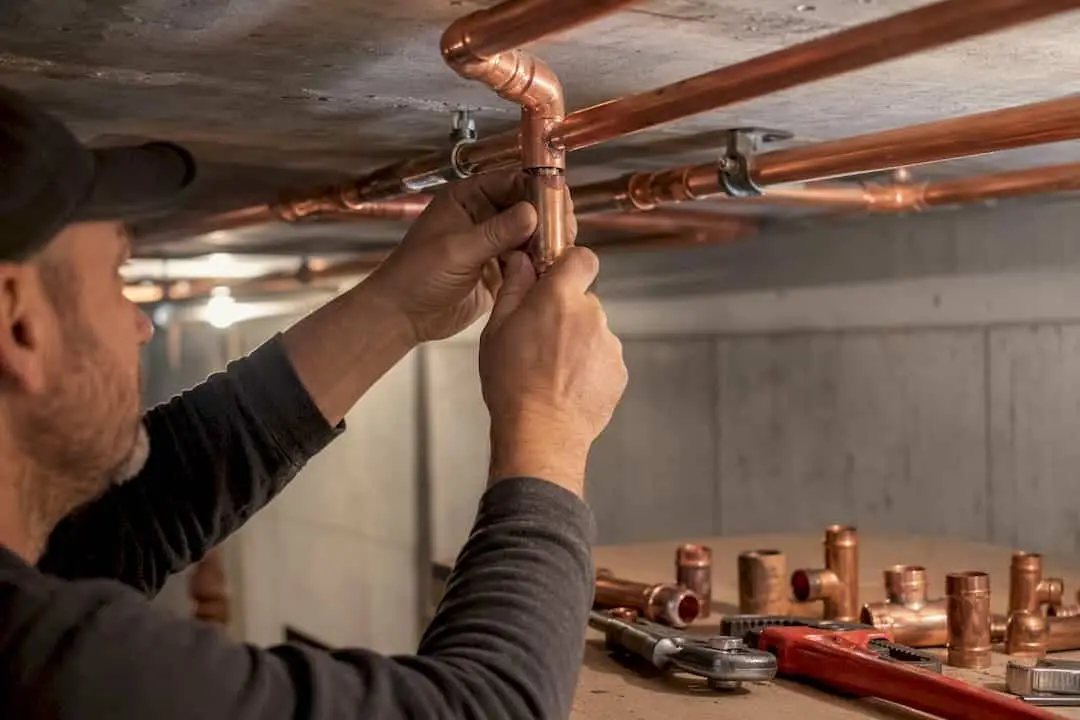
New construction sprinkler systems run $1.50 to $3.00 per sprinklered square foot, while retrofitting an existing building typically costs $2.00 to $7.00 or more per square foot. High-rise and hazardous occupancies push past that range quickly, driven by pumps, standpipes, and specialty piping.
The single biggest swing factor is water supply and system type, not square footage. A building with strong municipal pressure and a straightforward wet-pipe design lands near the low end; anything needing a fire pump, storage tank, or dry-pipe protection for freezing spaces climbs quickly. Permit fees and finish repairs (drywall, painting, ceiling tile) usually sit outside the quoted per-square-foot number entirely.
- Get a site visit and an itemized estimate, not a phone quote.
- Budget separately for permits, plan review, and post-install inspections.
- Ask whether the price includes finishing work if you’re retrofitting an occupied space.
Fast fact: Retrofits commonly carry a 50–100% premium over new-construction installs because of demolition, limited access, and finish repair.
Table of Contents
- What Does Fire Sprinkler Installation Cost Per Square Foot?
- How Does System Type Change the Price?
- What Do Real Installation Totals Look Like?
- Which Cost Factors Cause the Biggest Bid Differences?
- How Much Does Ongoing Sprinkler Maintenance Cost?
- How Do You Get an Accurate Fire Sprinkler Quote?
- How Reliable-fire-protection Helps You Budget and Install Correctly
- Can You Save Money on Fire Sprinkler Installation?
- How Long Does Installation Take, From Planning to Completion?
- What the Numbers Actually Tell You About Budgeting
- Get a Sprinkler Quote Built Around Your Actual Building
- Frequently Asked Questions
- Sources
What Does Fire Sprinkler Installation Cost Per Square Foot?
The per-square-foot number you’ll see in most quotes reflects $1.50 to $3.00 for new construction and $2.00 to $7.00 for retrofits, and the gap between those two isn’t padding. New builds let crews run pipe before walls go up, share trenching with plumbing and electrical, and skip patching altogether. Retrofits mean cutting into finished ceilings, routing around ductwork, and repairing every hole afterward.
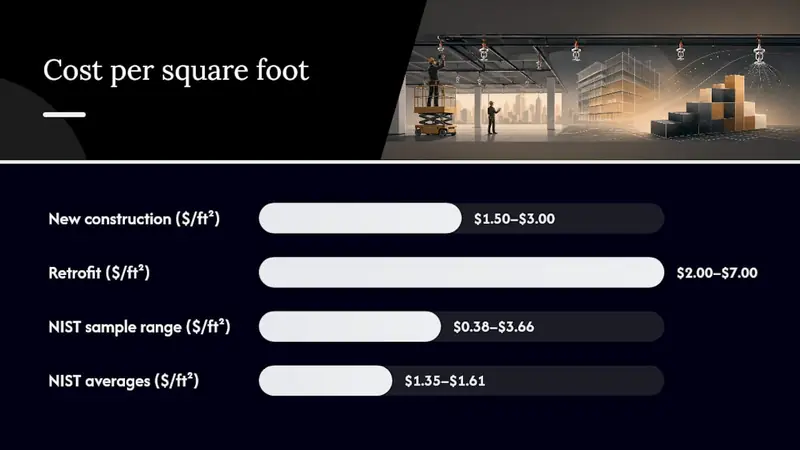
Older government data tells a similar story from a different angle. NIST and the Fire Protection Research Foundation’s residential cost assessment found sprinkler costs in sampled homes ranging from $0.38 to $3.66 per sprinklered square foot, with averages closer to $1.35 to $1.61 depending on piping choice and the study year. That spread shows how much a single decision, copper versus CPVC, municipal versus well water, can move your final number.
High-rise buildings, historic structures, and hazardous occupancies multiply upward from there. Standpipe integration, fire pumps, and code-mandated redundancy in tall buildings can push costs several times higher than a standard commercial retrofit.
What’s usually included in a per-square-foot quote:
- Sprinkler heads, branch piping, and standard hangers
- Baseline labor for a typical layout
- Basic system design
What’s usually excluded, and worth asking about directly:
- Fire pumps, storage tanks, and backflow preventers
- Permit fees and plan review charges
- Drywall, ceiling, or paint repair after retrofit work
How Does System Type Change the Price?
Wet-pipe systems are the default for a reason: they’re the simplest design, with water sitting in the pipe ready to discharge, and they anchor the low end of most per-square-foot ranges. If your building stays above freezing year-round, this is usually the answer.
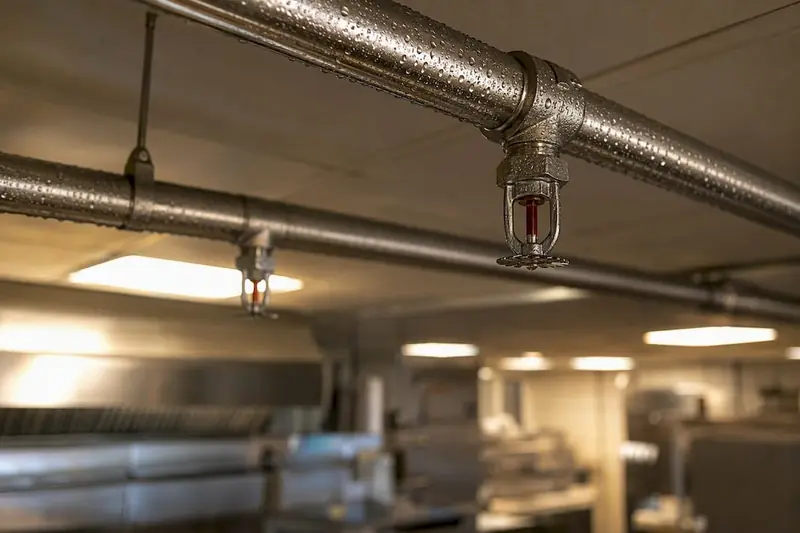
Dry-pipe systems, used in unheated warehouses, parking structures, and attics, hold pressurized air instead of water until a head activates. The added valve, air compressor, and more complex design typically add a real premium over a comparable wet system.
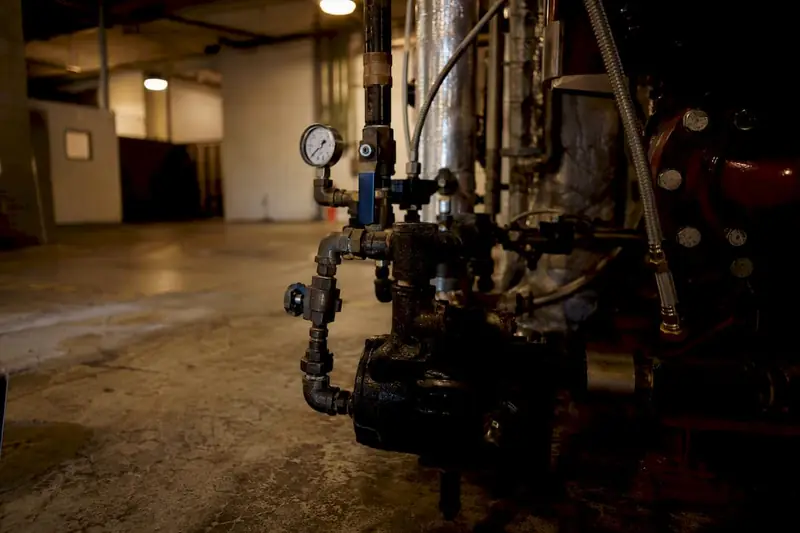
Pre-action and deluge systems serve data centers, museums, and hazardous storage where accidental discharge or fast fire spread are both serious concerns. These run considerably higher per square foot because they require additional detection components and control valves layered on top of standard piping.
Clean-agent suppression, common in server rooms, sits in a different cost category entirely since it protects equipment rather than people, and it’s usually specified alongside sprinklers rather than instead of them.
Pro Tip: If part of your building is unheated, ask your contractor to price that zone as dry-pipe separately. Blending it into a whole-building wet-system quote can hide a real cost difference.
What Do Real Installation Totals Look Like?
Numbers get more useful once they’re attached to an actual building. Here’s how the ranges above translate into totals, assuming municipal water, no major structural work, and standard wet-pipe design unless noted.
- 1,000 sq ft home, new construction: roughly $1,500 to $3,000 for the sprinkler system alone, built in during framing.
- 1,000 sq ft home, retrofit: roughly $2,000 to $7,000, higher if ceilings are finished throughout and access is limited.
- 5,000 sq ft office, new construction: roughly $7,500 to $15,000 before permits and fire pump costs, if any.
- 5,000 sq ft office, retrofit: roughly $10,000 to $35,000, with finishing work as the main variable.
- 20,000 sq ft warehouse with high ceilings: often $40,000 to $100,000+, since ceiling height and storage classification drive higher water density requirements and larger pipe.
- High-rise floor with standpipe integration: figure a meaningful multiplier over standard commercial retrofit pricing once pumps and redundancy requirements enter the design.
Which Cost Factors Cause the Biggest Bid Differences?
Two contractors can look at the same building and land $10,000 apart, and it’s rarely because one is padding the price. It’s usually because they’re pricing different assumptions.
- Pipe material. CPVC and PEX cost less than steel or copper, but code often requires metal piping in garages, attics, and other spaces with fire or mechanical exposure. Material choice alone can shift total cost significantly, especially on larger commercial jobs.
- Water source. Municipal supply with adequate pressure is the cheap scenario. Wells or low-pressure municipal connections often require a pump, storage tank, and backflow preventer, which can add $8,000 to $35,000 depending on building size.
- Retrofit finishing. Drywall, paint, and concealed chase work in occupied commercial buildings can add $5 to $15 per square foot on top of the base installation number, and this is the line item most quotes leave out entirely.
- Permits and plan review. Fees vary widely by jurisdiction, and some cities charge per sprinkler head rather than a flat fee. Ask for this as its own line item.
- Local market maturity. Areas that mandated sprinklers earlier tend to see lower installed costs simply because contractors have more experience and better supply relationships.
How Much Does Ongoing Sprinkler Maintenance Cost?
Installation is a one-time number. Inspection and testing are forever, and the frequency depends entirely on what you own. NFPA 25 governs commercial inspection, testing, and maintenance, requiring quarterly checks on some components and annual full-system tests, while residential systems under NFPA 13D need far less frequent attention.
Budget roughly 1% to 3% of your original installation cost per year for a commercial system, covering routine inspections, gauge checks, and minor repairs. Every five years, expect an internal pipe inspection and, for systems with fire pumps, an annual pump performance test, both priced separately from routine visits.
Backflow preventers need their own testing cycle, typically annual, and local jurisdictions often set the exact frequency and fee. Our own sprinkler inspection guide for Houston-area properties breaks down local fee ranges in more detail.
How Do You Get an Accurate Fire Sprinkler Quote?
A vague per-square-foot number is worth almost nothing until it’s tied to your building. Here’s how to get quotes you can actually compare side by side.
- Share floor plans, water service specs, and occupancy classification upfront. A commercial NFPA 13 system nearly always needs hydraulic calculations and a licensed designer’s stamp, and bidders can’t price that without seeing your layout.
- Require itemized bids that separate materials, labor, permits, finishing, and any pump or backflow equipment. If a bidder won’t break it down, that’s information in itself.
- Ask about timeline, warranty coverage, and who handles the final inspection with the fire marshal after installation.
- Watch for red flags: a suspiciously low per-square-foot price with no itemization, no permit line at all, or no mention of hydraulic calculations on a commercial job.
Pro Tip: Get at least two itemized bids before signing anything. The gap between them usually reveals which contractor forgot to price permits, finishing, or a fire pump, not which one is simply cheaper.
How Reliable-fire-protection Helps You Budget and Install Correctly
Reliable-fire-protection designs, installs, permits, inspects, and maintains fire sprinkler systems for homes and businesses across the Houston area, and every quote starts with an actual site visit rather than a phone estimate. That matters because water supply, occupancy type, and existing construction all change your real number, not just square footage.
- Design and installation for residential and commercial systems
- Permitting and plan review coordination with local fire marshals
- Ongoing inspection and maintenance scheduled to NFPA requirements
- Free, itemized quotes based on a walkthrough of your property
Request a free quote and bring the checklist from this article. A written estimate that itemizes materials, labor, permits, and finishing work is the single best tool you have for comparing bids fairly.
| Point | Details |
|---|---|
| New construction is cheaper | Expect $1.50 to $3.00 per sprinklered square foot versus $2.00 to $7.00 for retrofits. |
| Water supply drives cost swings | Wells or low pressure can add $8,000 to $35,000 for pumps, tanks, and backflow preventers. |
| Finishing is often excluded | Retrofit drywall and paint repair can add $5 to $15 per square foot on top of base quotes. |
| Maintenance is a recurring cost | Budget 1% to 3% of install cost annually for NFPA 25 inspections and testing. |
| Reliable-fire-protection offers itemized quotes | Free site-visit estimates cover design, permitting, installation, and ongoing NFPA-compliant maintenance in Houston. |
Can You Save Money on Fire Sprinkler Installation?
Insurance is where sprinkler installation cost starts to look different over time. Discounts on homeowner and commercial premiums range roughly from 5% to 45% depending on the insurer and local rules, and insurers often want features beyond minimum code, like extra coverage in garages or attics, to unlock the larger discounts. It’s worth asking your insurer directly what triggers their maximum discount before finalizing a system design.
Spread over a 20 to 30 year ownership period, the amortized monthly cost of residential sprinklers becomes fairly small, and insurance savings can offset a meaningful share of that number for homeowners who shop their policy after installation. Commercial property owners see a parallel effect: lower fire-related liability exposure and, in many markets, reduced commercial property insurance rates.
Some municipalities and utilities also offer rebates or fee waivers tied to voluntary sprinkler installation, particularly in areas encouraging retrofits in older multifamily buildings. These programs vary by city and aren’t universal, so check with your local fire marshal’s office and your insurance carrier separately. Reading how sprinkler systems affect insurance premiums in more detail is a good next step before you finalize your budget, since the discount conversation often changes which system design makes financial sense.
None of this changes your upfront installation number. It does change the real cost of ownership, and that’s the number that should guide a close budgeting decision.
How Long Does Installation Take, From Planning to Completion?
Planning starts well before anyone touches a pipe. Design and hydraulic calculations for a commercial system typically take a few weeks, longer if your building has an unusual layout or requires a fire pump. Permit review adds more time on top of that, and this is where timelines vary most by jurisdiction. Some cities turn around plan review in a couple of weeks; others take a month or more, especially for larger commercial submissions requiring fire marshal sign-off.
Once permits clear, actual installation moves faster than most owners expect. A small residential system can be installed in a matter of days during new construction, since it’s integrated alongside other rough-in work. Commercial retrofits take longer, often one to several weeks depending on building size and whether the space stays occupied during construction. Working around tenants, existing ceilings, and business hours adds real time that an empty new-construction site doesn’t require.
After installation, a final inspection with the local fire marshal or building department is required before the system is considered code-compliant and active. Budget for a follow-up visit if the inspector flags anything, which is common enough on complex commercial jobs that it shouldn’t derail your schedule. Our step-by-step guide to installing fire sprinklers for commercial spaces walks through what to expect at each stage, from initial design through final sign-off.
What the Numbers Actually Tell You About Budgeting
The conventional advice on this topic stops at “expect $2 to $7 a square foot for retrofits,” and that’s technically true but practically useless. It tells you nothing about whether your building leans toward $2 or $7, and that gap on a 5,000 square foot office is the difference between $10,000 and $35,000.
What the research actually supports is a more specific claim: water supply and finishing work explain most of the variance you’ll see between bids, far more than contractor markup does. A property with municipal pressure and exposed ceilings will land near the bottom of any range. A property needing a pump, tank, and full drywall repair will land near the top, sometimes above it, and no amount of shopping around changes that physics.
Where I’d push back on standard guidance is the emphasis on getting “multiple quotes” as the main defense against overpaying. The better defense is getting one itemized quote and reading it carefully. A bid that separates pipe, labor, permits, pump costs, and finishing tells you exactly where your money goes and lets you negotiate specific line items. A bid that just says “$4.50 per square foot” tells you nothing you can act on.
Prioritize the walkthrough and the itemization before you prioritize the number of bids on your desk.
Get a Sprinkler Quote Built Around Your Actual Building
Generic per-square-foot ranges are a starting point, not a number you can build a budget on, and that’s exactly the gap Reliable-fire-protection closes for Houston-area property owners. Instead of a phone estimate based on square footage alone, you get a site visit, an occupancy review, and an itemized quote that separates materials, labor, permits, and any pump or finishing work your specific building needs.
That matters most for retrofit projects, where the difference between a $2 and $7 per square foot outcome usually comes down to water supply and finish work that a phone quote can’t account for. Reliable-fire-protection’s team handles design, permitting coordination with your local fire marshal, installation, and the ongoing maintenance workflow required to stay compliant with NFPA 25 after the system goes live.
If you’re planning a new build, a retrofit, or just need a real number to bring to your insurance agent, request a free itemized quote and use the checklist above to compare it against anything else you receive.
Frequently Asked Questions
What is the average cost to install a fire sprinkler system in a home?
Most homeowners land between $1.50 and $3.00 per square foot for new construction, or $2.00 to $7.00 per square foot for a retrofit into an existing house, with water supply and access being the main variables.
Does fire sprinkler installation cost include permits?
Usually not. Permit and plan review fees vary by city and are typically billed separately from the per-square-foot installation price, so always ask for this as its own line item.
How much does a fire sprinkler inspection cost?
Annual commercial inspections and testing under NFPA 25 typically run a modest flat fee per visit, while five-year internal pipe inspections and fire pump tests cost more and happen less often.
Is a dry-pipe system more expensive than a wet-pipe system?
Yes. Dry-pipe systems require additional valves and an air compressor, adding a real cost premium over standard wet-pipe design, but they’re necessary for unheated spaces prone to freezing.
Can installing fire sprinklers lower my insurance premium?
Often, yes. Discounts vary by insurer and location, and larger discounts sometimes require coverage beyond minimum code requirements, so it’s worth confirming specifics with your carrier before finalizing your system design.
Sources
- How Much Does a Fire Sprinkler System Cost? (2026)
- NIST / Fire Protection Research Foundation Home Fire Sprinkler Cost Assessment
- Fire Suppression System Cost Guide (2026)
- NFPA (National Fire Protection Association)