TL;DR:
- Fire alarms in hospitality enable early fire detection, ensuring safe evacuations and reducing damage. Proper maintenance and integration lower false alarms, insurance costs, and build guest trust through visible safety measures. A proactive safety strategy enhances long-term reliability, legal compliance, and operational efficiency.
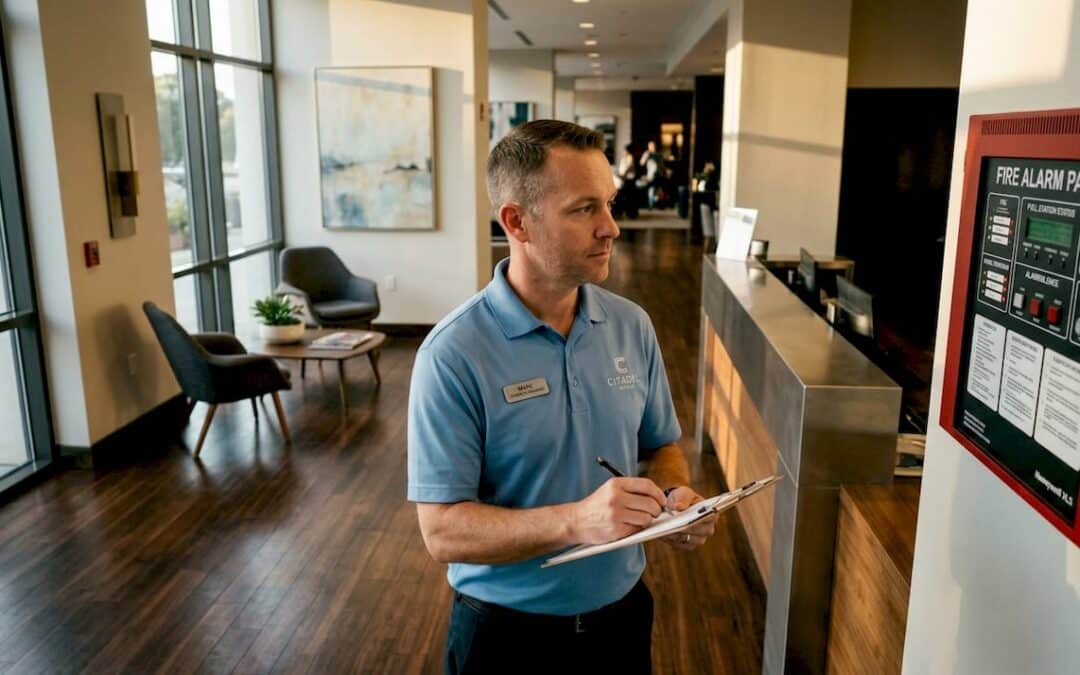
Running a hotel or hospitality venue means constantly balancing guest comfort against hard safety requirements. The benefits of fire alarms in hospitality go far beyond satisfying a building inspector. They directly affect whether guests sleep soundly, whether your insurance stays affordable, and whether your staff can respond before a small incident becomes a catastrophe. This guide breaks down the specific, practical advantages that fire alarm systems deliver for property managers, from early detection to reputation protection, so you can make smarter decisions about your building’s safety strategy.
Table of Contents
- Key takeaways
- 1. The core benefits of fire alarms in hospitality start with early detection
- 2. Reducing false alarms protects guest experience and your budget
- 3. Lowering insurance costs and passing inspections
- 4. Building guest trust through visible safety commitment
- 5. Integration with sprinklers, HVAC, and emergency systems
- 6. Protecting staff and reducing liability across your operation
- 7. Long-term cost efficiency from a proactive fire safety strategy
- My perspective on fire alarms and hospitality management
- How Reliable Fire Protection supports hospitality safety goals
- FAQ
Key takeaways
| Point | Details |
|---|---|
| Early detection saves lives | Smoke and heat detectors cut evacuation time significantly, reducing injury risk for guests and staff. |
| False alarms cost more than you think | A single false alarm can generate over $35,000 in compensation costs plus regulatory fines. |
| Compliance protects your bottom line | Documented maintenance programs can reduce total fire safety costs by 40-60% compared to reactive approaches. |
| Integration multiplies effectiveness | Fire alarms connected to sprinklers, HVAC, and emergency lighting create a unified safety response. |
| Guest trust is tied to safety perception | One unaddressed alarm issue can damage your property’s online reviews and repeat booking rate. |
1. The core benefits of fire alarms in hospitality start with early detection
The most direct value a fire alarm system delivers is time. Smoke and heat detectors identify a fire in its earliest stage, often before flames are visible or the smell reaches a guest corridor. That window of minutes, or even seconds, is what allows safe evacuation rather than a scramble.
Here is what early detection delivers in practice:
- Smoke spreads through HVAC systems in large buildings in under two minutes, so corridor-level detection can trigger an alert before fire reaches sleeping areas.
- Staff are alerted immediately to the exact zone, giving them the information they need to act rather than investigate.
- Guests in rooms far from a stairwell have enough time to exit safely when the alarm triggers at the earliest sign of combustion.
- Properties with documented safety programs show a 94% survival rate in fire incidents compared to 71% for those with non-functional systems.
The operational impact of a delayed response compounds quickly. A fire that reaches a structural element before detection triggers suppression systems and guest evacuation can close a property for months. Insurance claims, regulatory investigations, and reputational fallout all follow. Early detection is not just a safety benefit. It is a business continuity benefit.
Pro Tip: Install heat detectors, not just smoke detectors, in commercial kitchens and laundry rooms where steam and cooking fumes would otherwise trigger constant false alerts.
2. Reducing false alarms protects guest experience and your budget
False alarms are one of the most overlooked operational liabilities in hospitality fire safety. False alarms account for 76% of all U.S. fire service callouts, with 23% of hotel incidents attributed to malfunctioning detectors. That frequency has real consequences: guests wake at 2 a.m., evacuate into cold parking lots, and post reviews before they are back in their rooms.
The most common causes in hotel settings include:
- Cooking fumes and steam from kitchens and banquet facilities
- Dust accumulation on older photoelectric sensors
- High-humidity bathrooms triggering moisture-sensitive detectors
- Maintenance staff using aerosols or paint near detector heads
Modern fire alarm systems for hospitality address these causes directly. Multi-sensor detectors combine optical, heat, and CO sensing to cross-verify conditions before triggering an alert. That combination dramatically reduces nuisance activations without sacrificing detection speed for real fires.
Digital computerized maintenance management system (CMMS) platforms add another layer of protection. By tracking individual device performance and enforcing scheduled testing, these platforms can reduce false alarms by 67% while maintaining 100% testing accountability. For a property manager, that means fewer compensation payouts, fewer emergency service fines, and fewer negative reviews rooted in a 3 a.m. evacuation drill nobody asked for.
Pro Tip: Request device-level performance reports from your fire safety contractor after every maintenance visit. Patterns in individual sensor failures predict failures before they cause a false alarm or, worse, a missed detection.
3. Lowering insurance costs and passing inspections
Insurance underwriters reward documented fire safety programs. A property with organized maintenance records, recent inspections, and verified NFPA 72 compliance presents a fundamentally different risk profile than one relying on reactive repairs. Failure to maintain records can increase insurance premiums by 15-25%, a significant ongoing cost that compounds every renewal cycle.
The financial case for proactive maintenance breaks down clearly:
- Annual fire alarm maintenance for a mid-size hotel (100 to 200 rooms) costs between $3,000 and $8,000.
- A single false alarm generating guest compensation, lost revenue, and regulatory fines can exceed $35,000.
- Preventive maintenance programs reduce total fire safety costs by 40-60% compared to reactive approaches.
NFPA 72 compliance requires weekly visual inspections, monthly functional tests, and annual sensitivity tests. Failing to meet that schedule does not just risk a citation. It can trigger an operational shutdown if an inspection finds systemic failures. For hotels where a single weekend closure means tens of thousands in lost bookings, that risk is simply not worth taking.
Liability exposure also shrinks when you can show documented compliance. If a fire incident does occur, a property manager with a clean, verified maintenance history is in a fundamentally stronger legal position than one without records.
4. Building guest trust through visible safety commitment
Guests do not arrive at your property thinking about fire safety. But they notice when something feels off. A single chirping alarm perceived as a failure of the entire property, damaging both guest satisfaction scores and online reputation. That is not an exaggeration. It is a documented pattern in hospitality feedback.
The connection between safety and brand perception runs deeper than most property managers realize. Guests who see clearly maintained alarm panels, visible detector heads in clean condition, and staff who respond confidently to any alarm event form a subconscious impression of a well-managed property. That impression influences reviews, repeat bookings, and word-of-mouth referrals.
“Guests do not separate decor from safety. An unaddressed alarm issue reflects directly on the quality of property management, regardless of how beautiful the lobby is.” The Importance of Smoke Alarms in Restaurants and Hotels
The inverse is equally true. A well-executed fire safety program, with staff trained on response protocols and systems that only alarm when there is a real threat, becomes a quiet differentiator. Properties that treat fire safety as a guest experience issue, not just a regulatory box to check, tend to outperform on satisfaction metrics over time. For fire safety measures in hospitality, visible reliability matters as much as technical performance.
5. Integration with sprinklers, HVAC, and emergency systems
A fire alarm system that operates in isolation is a significantly less effective tool than one that serves as the trigger point for your entire emergency response. Modern fire alarm systems integrate with sprinklers, HVAC smoke control, elevator recall systems, and emergency lighting to create a coordinated response the moment a detector activates.
Here is how that integration plays out in a real hotel emergency:
| System component | Role in integrated response |
|---|---|
| Smoke detector triggers | Sends alert to fire alarm control panel and monitoring center |
| HVAC smoke control | Shuts down air handling units to prevent smoke spread through ducts |
| Elevator recall | Returns all elevators to ground floor and locks them out of service |
| Sprinkler activation | Suppresses fire in the affected zone automatically |
| Emergency lighting | Activates in corridors and stairwells to guide evacuation |
| Voice notification | Delivers floor-specific, staged evacuation instructions |
The staged evacuation capability deserves specific attention. Voice notification systems allow property managers to alert only the floors directly affected by a threat first, avoiding a full-building panic evacuation when only two floors are at risk. That precision protects guests and keeps evacuation orderly. It also reduces the operational disruption that comes from a property-wide evacuation when a kitchen on the second floor triggers a detector. For guidance on matching system capabilities to your property layout, fire detection technologies vary significantly in their integration capabilities.
6. Protecting staff and reducing liability across your operation
Hotel staff work around the clock in spaces guests rarely see. Back-of-house areas including commercial kitchens, laundry facilities, server rooms, and utility corridors carry their own fire risks. These areas are often understaffed at night and may have significant delays in human detection of a fire.

Fire alarm systems in these zones protect employees who may be isolated during their shifts. They also create a documented record of safety protocols that matters in workers’ compensation and liability contexts. An employer who cannot show that adequate fire detection was present in a staff area where an injury occurred faces a significantly harder legal situation than one with verified, maintained coverage.
Beyond physical protection, consistent fire alarm maintenance supports staff confidence. When employees know the system works and understand their role in the response plan, they perform better in actual emergencies. That confidence comes from regular drills tied to a reliable alarm system, not from paper procedures that nobody rehearses.
7. Long-term cost efficiency from a proactive fire safety strategy
Many property managers think about fire alarm systems as a fixed cost. Buy the system, pass the inspection, move on. That framing misses the financial advantages of treating your fire alarm infrastructure as a managed asset.
The advantages of alarm systems operated proactively rather than reactively accumulate over years. Preventive maintenance catches sensor drift before it causes a false alarm. Scheduled battery replacements prevent the overnight battery chirp that generates a guest complaint and a late-night maintenance call. Regular panel diagnostics identify wiring issues before they cause a system-wide failure during an inspection.
Proactive maintenance also extends system lifespan. A fire alarm system that receives consistent care can perform reliably for 10 to 15 years. One that is only serviced when something breaks typically requires full replacement in seven years or less, at significant capital cost. For property managers balancing tighter operational budgets, fire alarm maintenance tips designed for hospitality properties make a measurable difference in both safety outcomes and five-year cost trajectories.
My perspective on fire alarms and hospitality management
I’ve worked closely with hotel property managers and seen a pattern repeat itself too often. Most teams treat fire alarm maintenance as a compliance task rather than an operational priority. The system gets serviced when the inspector is coming, not because anyone actually checked the last test cycle date.
What I’ve found is that the properties with the fewest problems are the ones that have connected their fire alarm schedule to their broader property safety protocols. Not as a separate checklist, but as part of how the building runs week to week. When the chief engineer knows which detectors are due for sensitivity testing and why, that knowledge changes how the whole team thinks about safety.
The false alarm issue frustrates property managers more than almost anything else in fire safety. My honest take: most false alarms are predictable and preventable. They are not random system failures. They are the result of deferred maintenance and mismatched sensor types for the environments they are deployed in. Fix those two things, and you eliminate the majority of 2 a.m. evacuations.
Investing in the right system design from the start saves significant grief. The brands and sensor configurations that work well in a luxury resort are different from what works in a budget property or a conference center. Getting that specification right before installation is worth every hour spent upfront.
— Reliable-fire-protection
How Reliable Fire Protection supports hospitality safety goals
If you manage a hotel, resort, or hospitality property in the Houston area and want to realize the full benefits discussed above, Reliable Fire Protection specializes in exactly this kind of work. The team installs, maintains, and upgrades fire alarm systems for hospitality clients, with a focus on reducing false alarms, achieving NFPA compliance, and integrating with your existing safety infrastructure.
Whether you need a full system assessment, a maintenance contract that keeps your inspection records clean, or an upgrade to multi-sensor detectors that stop unnecessary evacuations, Reliable Fire Protection has the certified expertise to deliver. Learn how fire alarm systems work and what a properly designed system looks like for your property type, or contact the team directly for a free quote. If you are in the Houston area, local installation support is available through Houston fire alarm services tailored to commercial and hospitality properties.
FAQ
What are the main benefits of fire alarms in hospitality?
Fire alarms provide early fire detection, faster evacuation, insurance compliance, and guest safety protection. They also reduce liability exposure and protect your property’s reputation by preventing incidents before they escalate.
How do fire alarms reduce insurance premiums for hotels?
Documented maintenance programs and verified NFPA 72 compliance demonstrate reduced risk to insurers. Failure to maintain records can increase premiums by 15-25%, while proactive maintenance programs reduce total fire safety costs by 40-60%.
Why do hotels experience so many false alarms?
Cooking fumes, dust, steam, and humidity are the most common triggers in hospitality environments. Modern multi-sensor detectors and digital maintenance tracking reduce false alarm rates significantly by cross-verifying environmental conditions before activating.
What does NFPA 72 require for hotel fire alarm systems?
NFPA 72 mandates weekly visual inspections, monthly functional tests, and annual sensitivity tests. Missing these schedules can result in inspection failures, fines, and in serious cases, operational shutdowns.
How do integrated fire alarm systems improve evacuation in hotels?
Integrated systems connect fire alarms with HVAC smoke control, elevator recall, sprinklers, and voice notification to create a coordinated emergency response. Staged evacuation systems allow floor-by-floor alerts, reducing panic and keeping evacuation orderly.
Recommended
- Fire Alarm Installation Guide for Houston Property Managers
- 7 Essential Fire Alarm Maintenance Tips for Property Managers
- Why Fire Alarms Matter for Houston Commercial Properties
- The Importance of Fire Alarms: Ensuring Safety and Protection
- Fire Alarm System University Place TX
- Fire Alarm System Services in Bellaire, TX