
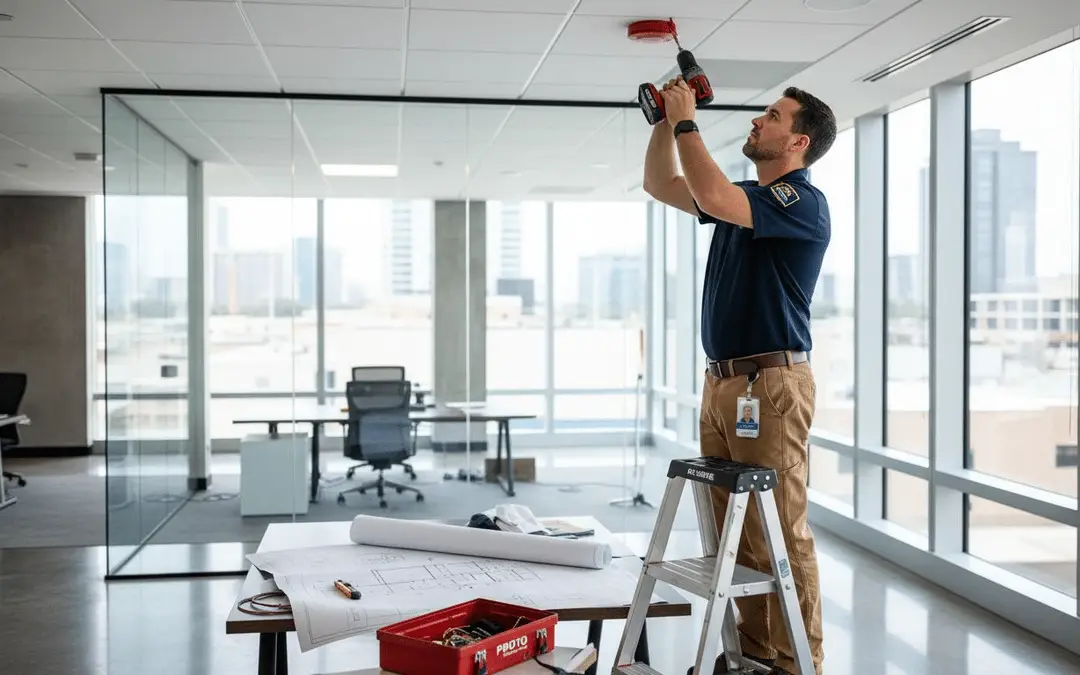
Managing a commercial property in Houston means facing questions about fire alarm systems and how they truly safeguard your tenants. Many property managers assume these systems automatically stop fires, yet their main role is early detection and alert—not suppression—according to the standards set by NFPA 72. Understanding the difference between alarm types and how they signal emergencies can help you strengthen tenant safety while also reducing costly compliance risks. Stay ahead by debunking common myths about fire alarm protection and knowing what keeps your buildings—and your legal standing—secure.
Table of Contents
- Defining Fire Alarms And Common Misconceptions
- Types Of Fire Alarm Systems For Commercial Buildings
- How Fire Alarm Systems Detect And Alert
- Houston Fire Code And NFPA 72 Compliance Essentials
- Property Manager Responsibilities And Legal Risks
- Benefits Of Maintenance And Reliable Monitoring
Key Takeaways
| Point | Details |
|---|---|
| Fire Alarms Are Not Suppression Systems | Fire alarms primarily provide early detection and facilitate evacuation but do not extinguish fires. |
| Understand Different System Types | Conventional, addressable, and intelligent fire alarm systems offer varying detection capabilities and should be chosen based on building needs. |
| Legal Compliance Is Essential | Property managers must comply with fire safety regulations to avoid legal issues and ensure the safety of occupants. |
| Routine Maintenance Is Crucial | Consistent maintenance and monitoring enhance system reliability, reduce legal liabilities, and ensure optimal performance. |
Defining Fire Alarms and Common Misconceptions
Fire alarms represent a critical safety infrastructure in Houston commercial properties, designed to detect and respond to potential fire emergencies. Fire alarm systems are sophisticated networks of sensors, control panels, and notification devices strategically engineered to protect lives and property.
At their core, these systems comprise several key components that work together seamlessly:
- Smoke detectors that sense particulate matter in the air
- Heat detectors monitoring temperature variations
- Manual pull stations allowing human-activated emergency alerts
- Control panels processing and routing alarm signals
- Notification devices like sirens and strobe lights
Many property managers misunderstand fire alarm functionality, believing these systems automatically extinguish fires. In reality, fire alarms serve a primary purpose of early detection and evacuation, providing crucial time for occupants to safely exit the building before dangerous conditions escalate.
Fire alarm systems are not fire suppression systems – they alert and protect, but do not directly stop fires.
Understanding the nuanced differences between alarm types is crucial. Conventional systems route all device signals through shared circuits, while addressable systems provide precise location information for faster emergency response. Houston commercial properties increasingly prefer addressable systems for their granular tracking capabilities.
Pro tip: Schedule regular professional inspections to ensure your fire alarm system remains calibrated, responsive, and compliant with local safety regulations.
Types of Fire Alarm Systems for Commercial Buildings
Houston commercial properties have multiple fire alarm system configurations designed to meet diverse safety requirements. Fire alarm systems typically fall into three primary categories that offer increasingly sophisticated detection and notification capabilities.
The main types of fire alarm systems include:
- Conventional Systems
- Divided into multiple zones
- Cost-effective for smaller buildings
- Limited precise location identification
- Addressable Systems
- Pinpoint exact device location
- Faster response times
- Advanced monitoring capabilities
- Intelligent Systems
- Advanced algorithmic detection
- Reduced false alarm rates
- Complex environmental analysis
Conventional systems represent the most basic fire alarm configuration, where multiple devices connect to shared circuits. These systems divide buildings into broad zones, making it challenging to identify the precise fire location. While economical, they provide less granular information during emergencies.
Commercial properties with complex layouts require more advanced fire detection technologies for optimal safety.
Addressable systems offer significant improvements by providing exact device location information to emergency responders. Each detector and sensor has a unique address, enabling rapid and precise identification of potential fire sources. This technology dramatically reduces response times and enhances overall building safety.
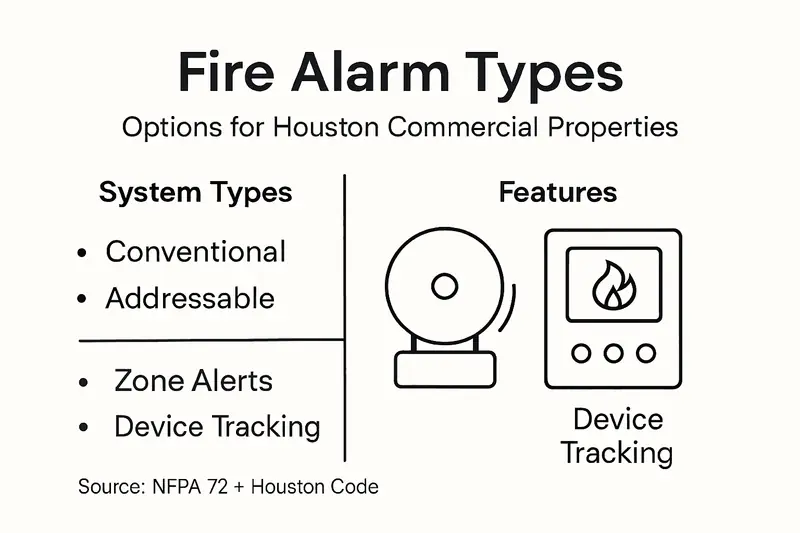
Intelligent systems represent the most advanced fire alarm technology, utilizing sophisticated algorithms to analyze environmental conditions. These systems can distinguish between actual fire risks and potential false alarms, providing an unprecedented level of precision for Houston commercial properties.
Here’s a side-by-side comparison of fire alarm system types and their suitability for different building sizes:
| System Type | Ideal Building Size | Tracking Precision | Cost |
|---|---|---|---|
| Conventional | Small to medium | Basic zone identification | Most economical |
| Addressable | Medium to large | Exact device location | Moderate |
| Intelligent | Large and complex | Advanced risk analysis | Most expensive |
Pro tip: Consult with fire safety professionals to determine the most appropriate fire alarm system configuration for your specific commercial property’s layout and occupancy requirements.
How Fire Alarm Systems Detect and Alert
Fire alarm systems in Houston commercial properties utilize sophisticated detection technologies to identify potential fire threats rapidly. Fire alarm control units serve as the central intelligence hub, processing signals from multiple sensor types and triggering appropriate emergency responses.
The detection mechanisms include several critical components:
- Smoke Detectors
- Photoelectric sensors
- Ionization technology
- Dual-sensor configurations
- Heat Detectors
- Fixed temperature triggers
- Rate-of-rise detection
- Combination heat sensors
- Manual Activation Devices
- Pull stations
- Emergency signal buttons
- Strategic location placement
Smoke detectors represent the frontline of fire detection, using advanced sensing technologies to identify potential fire conditions. Photoelectric sensors detect light scattering caused by smoke particles, while ionization detectors measure electrical current changes in the air, providing comprehensive monitoring capabilities.
Rapid detection and immediate notification are critical for minimizing potential property damage and protecting human lives.
Heat detectors complement smoke sensors by monitoring temperature changes. These devices can trigger alarms when room temperatures exceed predetermined thresholds or when temperature increases occur too quickly, providing an additional layer of safety for commercial environments.

Notification systems activate simultaneously with detection, using audible and visual signals to alert building occupants. Horns, speakers, and strobe lights work in concert to ensure comprehensive emergency communication, guiding individuals toward safe evacuation routes.
Pro tip: Conduct quarterly fire alarm system tests to ensure all detection and notification components remain fully operational and responsive.
Houston Fire Code and NFPA 72 Compliance Essentials
Houston commercial properties must navigate a complex landscape of fire safety regulations to ensure comprehensive protection and legal compliance. NFPA 72 National Fire Alarm Code establishes the fundamental standards that guide fire alarm system design, installation, and maintenance across commercial environments.
Key compliance requirements include:
- System Design Standards
- Precise detection device placement
- Comprehensive coverage mapping
- Performance-based design protocols
- Inspection Mandates
- Annual professional system evaluations
- Detailed documentation requirements
- Comprehensive testing procedures
- Notification Protocol
- Clear emergency communication strategies
- Audible and visual signal standards
- Accessibility compliance guidelines
The Houston Fire Department’s Life Safety Bureau enforces stringent regulations that align closely with national fire protection standards. These requirements mandate systematic approaches to fire alarm system management, ensuring that commercial properties maintain robust safety infrastructures.
Commercial properties must treat fire code compliance as an ongoing commitment, not a one-time checkbox exercise.
Technical specifications demand meticulous attention to detail, including precise device placement, signal transmission protocols, and emergency communication strategies. Compliance documentation becomes critical, with properties required to maintain comprehensive records of system installations, modifications, and periodic inspections.
Each commercial property must develop a nuanced understanding of how local Houston fire codes intersect with broader national standards, creating a multilayered approach to fire safety that prioritizes occupant protection and property preservation.
Pro tip: Schedule a comprehensive fire code compliance audit annually to identify potential vulnerabilities and ensure your fire alarm system meets all current regulatory requirements.
Property Manager Responsibilities and Legal Risks
Property managers in Houston face significant legal responsibilities when managing fire safety systems in commercial buildings. Fire safety compliance represents a critical legal obligation that extends far beyond routine maintenance.
Key legal responsibilities include:
- Risk Assessment Requirements
- Comprehensive fire risk evaluations
- Regular system documentation
- Detailed record-keeping protocols
- System Maintenance Obligations
- Periodic professional inspections
- Immediate repair of detected issues
- Comprehensive performance tracking
- Emergency Preparedness
- Staff training programs
- Evacuation plan development
- Communication strategy implementation
Failure to meet these responsibilities can result in severe legal consequences. Property managers may face significant financial penalties, potential criminal charges, and substantial liability in the event of fire-related incidents or injuries.
Legal compliance is not optional – it’s a fundamental requirement for protecting lives and property.
The legal landscape surrounding fire safety demands proactive management. Negligence can be established through documented failures to maintain proper fire alarm systems, conduct regular inspections, or respond to known safety deficiencies.
Commercial property managers must understand that their legal responsibilities extend beyond mere technical compliance. They are ultimately accountable for creating and maintaining a comprehensive safety environment that protects occupants and minimizes potential risks.
Pro tip: Develop a detailed fire safety compliance checklist and maintain comprehensive documentation to demonstrate your ongoing commitment to safety and legal requirements.
Benefits of Maintenance and Reliable Monitoring
Maintaining fire alarm systems represents a critical investment in safety for Houston commercial properties. Proper maintenance and monitoring ensures comprehensive protection and minimizes potential risks to occupants and property.
Key benefits of consistent fire alarm system maintenance include:
- Equipment Reliability
- Reduced system failure rates
- Early detection of potential issues
- Extended equipment lifespan
- Operational Performance
- Optimal sensor sensitivity
- Accurate threat detection
- Minimized false alarm occurrences
- Cost Management
- Preventing expensive emergency repairs
- Avoiding potential legal penalties
- Reducing insurance liability risks
Regular professional inspections identify potential vulnerabilities before they escalate into critical system failures. Technicians can detect subtle performance degradations, recalibrate sensors, and ensure all components function at peak efficiency.
Consistent maintenance is an investment in safety, not an optional expense.
Reliable monitoring provides continuous surveillance of fire protection infrastructure, creating a proactive safety management approach. Monitoring systems instantly communicate potential threats to emergency responders, dramatically reducing response times during critical situations.
Commercial properties benefit from comprehensive monitoring that goes beyond simple alarm activation. Advanced systems can track environmental changes, identify potential equipment malfunctions, and provide detailed diagnostic information that supports preventative maintenance strategies.
This table summarizes the main business impacts of regular fire alarm maintenance and monitoring:
| Maintenance Focus | Impact on Safety | Impact on Costs |
|---|---|---|
| Sensor Calibration | Reliable threat alerts | Fewer false alarms |
| Routine Inspections | Compliance with codes | Lower legal liability |
| Digital Monitoring | Fast emergency response | Reduced repair expense |
Pro tip: Implement a quarterly maintenance schedule and digital tracking system to ensure consistent fire alarm system performance and documentation.
Protect Your Houston Commercial Property with Expert Fire Alarm Solutions
Understanding why fire alarms matter for Houston commercial properties is just the first step toward safeguarding your building and its occupants. The article highlights key challenges such as ensuring early fire detection, complying with Houston fire codes, and maintaining reliable monitoring—critical goals every property manager must address to prevent costly legal risks and life-threatening emergencies. With terms like “addressable systems,” “NFPA 72 compliance,” and “regular professional inspections” emphasized, it’s clear that a detailed, customized fire alarm system is essential for effective protection.
At Reliable Fire Protection, we specialize in tailored fire safety solutions that align perfectly with these needs. From advanced fire alarm system installations to ongoing maintenance and compliance audits, our Houston-based experts ensure your commercial property meets all safety regulations with precision. Whether you require a conventional setup or an intelligent system that minimizes false alarms, our services empower you to protect your investment and avoid liability. Discover our full range of services on our Fire Protection page and learn how professional monitoring and maintenance keep your systems responsive and compliant.
Don’t wait until it’s too late. Take control of your fire safety today by contacting Reliable Fire Protection to schedule a free consultation. Visit Reliable Fire Protection now and secure your Houston commercial property with fire alarm solutions designed for peace of mind and legal compliance.
Frequently Asked Questions
What are the key components of a fire alarm system?
Fire alarm systems consist of several critical components, including smoke detectors that sense airborne particles, heat detectors that monitor temperature changes, manual pull stations for human-activated alerts, control panels that process alarm signals, and notification devices like sirens and strobe lights.
How do fire alarm systems differ from fire suppression systems?
Fire alarm systems primarily focus on early detection and alerting occupants of a fire, providing crucial time for evacuation. In contrast, fire suppression systems actively extinguish fires. Understanding this distinction is vital for effective fire safety management in commercial properties.
What types of fire alarm systems are available for commercial buildings?
Commercial properties typically utilize three types of fire alarm systems: conventional systems, which divide areas into zones; addressable systems, which provide exact location information for devices; and intelligent systems, which use advanced algorithms for more precise detection and reduced false alarms.
Why is regular maintenance important for fire alarm systems?
Regular maintenance of fire alarm systems is essential for ensuring equipment reliability, optimizing operational performance, and managing costs. It helps detect potential issues early, ensures compliance with safety codes, and ultimately protects both the property and its occupants.