

TL;DR:
- Offices often underestimate fire risks because they appear safe, but hazards like overloaded power strips, trapped cables, and clutter can cause fires. Regular inspections, proper maintenance, and strict enforcement of safety policies can significantly reduce these hazards and protect building occupants. Ensuring functional fire detection, clear escape routes, and governance documentation is critical for comprehensive office fire safety.
Most office managers underestimate fire risk because offices look safe. No open flames, no heavy machinery, no obvious danger. But a solid office fire hazards list reveals a different picture: overloaded power strips under desks, crumb-filled toasters in break rooms, and corridors stacked with cardboard boxes that shouldn’t be there. The common office fire risks hiding in plain sight are the ones that cause the most damage. This guide gives you the specific hazards to look for, why each one matters, and what to do about it before an incident forces your hand.
Table of Contents
- Key takeaways
- 1. Overloaded sockets and extension leads
- 2. Damaged or trapped electrical cables
- 3. Portable heaters
- 4. Kitchen and break room appliances
- 5. Paper, packaging, and accumulated combustibles
- 6. Blocked fire doors and wedged-open doors
- 7. Obstructed escape routes and poor egress planning
- 8. Inadequate fire detection and alarm maintenance
- 9. Emergency lighting failures
- 10. Governance gaps: documentation, PEEPs, and multi-tenant coordination
- My honest take on how most offices get fire safety wrong
- How Reliable Fire Protection helps you close the gaps
- FAQ
Key takeaways
| Point | Details |
|---|---|
| Electrical hazards top the list | Overloaded sockets and damaged cables cause more office fires than any other single source. |
| Kitchen areas are high-risk zones | Unattended appliances and grease buildup make break rooms a frequent ignition point. |
| Combustible materials increase fire spread | Paper, cardboard, and soft furnishings act as fuel and dramatically worsen fire severity. |
| Blocked exits and faulty detection cost lives | Obstructed escape routes and poorly maintained alarms turn small fires into emergencies. |
| Governance gaps are real hazards | Missing fire logs, incomplete PEEPs, and poor multi-tenant coordination undermine every physical control you put in place. |
1. Overloaded sockets and extension leads
This is consistently the top item on any office fire hazards list, and it’s the one most routinely ignored. Electrical faults from overloaded leads and adapters cause fires that start silently, often inside wall cavities or under furniture, long after everyone has gone home.
The specific problem is daisy chaining. That’s when one extension lead is plugged into another, and another, to reach more devices than a single outlet can safely handle. Every workstation in a modern office runs a computer, monitor, phone charger, task lamp, and possibly a personal heater. The draw on a single socket adds up fast.
- Never plug one extension lead into another
- Replace any cord with visible fraying, cracking, or scorch marks immediately
- Use surge-protected power strips rated for the device load they will carry
- Avoid running cables under carpet, rugs, or chair wheels where damage goes unnoticed
Pro Tip: Schedule a quarterly walk-through specifically to check under desks and behind furniture. That’s where the worst electrical violations hide, and they won’t appear in any visual scan from a standing position.
2. Damaged or trapped electrical cables
Cables that get trapped under furniture legs, pinched in door frames, or run across high-traffic floors are a fire waiting to happen. The insulation breaks down, heat builds up at the damage point, and if that spot is near paper or carpet, you have an ignition source.
Hidden cable damage is especially common in older offices where desk layouts have changed repeatedly over the years. Cables get rerouted and tucked away without anyone verifying their condition. A formal inspection program, not just a visual once-over, is the right fix here.
Every cable should be checked for routing, insulation integrity, and strain at connection points. Document what you find and set a timeline for replacement of anything questionable. That paper trail matters for compliance and for insurance purposes.
3. Portable heaters
Portable heaters deserve their own entry separate from general electrical hazards because their risk profile is distinct. They draw significant power, they get placed near desks covered in paper and other combustibles, and employees often leave them running when they step away.
Portable heater misuse is one of the more preventable items on any workplace fire hazards list. The fix is a written policy that prohibits personal heaters without prior approval, combined with a clear maintenance schedule for any approved units. If your building’s HVAC system can’t keep people comfortable, that’s an underlying facilities issue worth solving directly.
Pro Tip: If you allow portable heaters, require that they have automatic shutoff features and thermal cutouts. And put it in writing that they must be unplugged at end of day. Policy without enforcement is worthless.
4. Kitchen and break room appliances
Office kitchens are one of the most common ignition locations in commercial buildings. Unattended cooking appliances including microwaves, toasters, and kettles cause fires that can spread quickly because the kitchen also tends to accumulate paper towels, cardboard packaging, and cleaning products nearby.
The grease and crumb buildup issue is underappreciated. Toaster trays that never get emptied, microwave interiors coated with food residue, and range hood filters clogged with grease are all active fire fuel sources that an appliance malfunction can ignite in seconds.
- Never leave cooking appliances running unattended
- Empty and clean toaster crumb trays weekly
- Clean microwave interiors on a posted schedule
- Keep combustible materials at least three feet from all heat-producing appliances
- Unplug all kitchen appliances at the end of the business day
For more detail on controlling kitchen-specific ignition risks, the guidance on kitchen fire prevention applies directly to office break rooms. The principles are the same even if the scale is smaller.
5. Paper, packaging, and accumulated combustibles
Offices still generate enormous amounts of paper. Despite digitalization, paper accumulates in ways that significantly raise fire load. Recycling bins overflow. Archive rooms fill with boxes stacked floor to ceiling. Corridors become informal storage space for cardboard waiting to go out.
Paper and cardboard do not start fires on their own. But they make fires dramatically worse and faster. A fire that might have stayed contained can spread through an archive room or paper-stacked hallway in minutes instead of hours.
- Keep recycling bins emptied on a regular schedule, not when they’re overflowing
- Store archive boxes in designated rooms with proper fire compartmentalization
- Never allow cardboard or paper storage in corridors or near fire exit routes
- Audit soft furnishings and upholstered furniture, which contribute to fire load and toxic smoke
Every item in your office is either fuel or it isn’t. Managing combustible materials is the most straightforward office fire prevention tip you can act on today without spending a dollar.
6. Blocked fire doors and wedged-open doors
Fire doors are one of the most abused pieces of fire safety equipment in any building. They get wedged open with doorstops for ventilation or convenience, they get blocked by deliveries, or they get damaged and fail to seal properly. Each of those scenarios directly undermines the compartmentalization that slows fire and smoke spread.
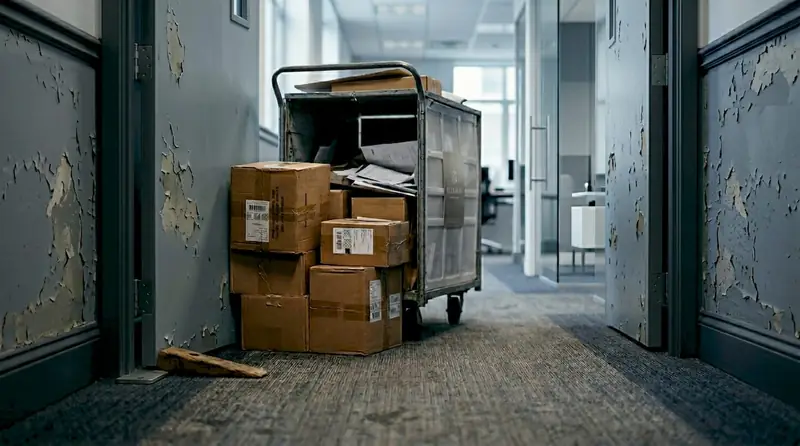
Blocked fire doors and obstructed corridors are among the most cited violations in workplace fire safety audits. A door that can’t close defeats its entire purpose. Your staff needs to understand that wedging a fire door open is not a minor infraction. It can be the difference between a manageable fire and a full-building emergency.
Check fire doors monthly. They should close fully and latch without manual assistance. Any door that drags, sticks, or fails to close on its own needs immediate repair.
7. Obstructed escape routes and poor egress planning
Even if a fire stays small, a poorly planned or obstructed escape route can turn it into a fatality event. Smoke makes escape routes unnavigable within minutes, which means routes need to be clear, well lit, and instantly recognizable to anyone in the building.
Common office egress failures include:
- Exit signs that are damaged, obscured, or not illuminated
- Corridors used as storage areas that narrow the effective width
- Exit doors that require multiple steps or keys to open during an emergency
- No posted floor plans showing escape routes at decision points
Conduct a timed evacuation drill annually and review whether every employee can reach a safe exit without confusion. Do not wait for a fire safety inspection to find the gaps.
| Egress element | Required standard | Common failure |
|---|---|---|
| Exit signage | Illuminated, visible from 200 ft | Blocked by shelving or signs |
| Corridor width | Minimum 28 inches clear | Storage boxes reduce clearance |
| Emergency lighting | Activates on power loss | Batteries not tested or replaced |
| Exit door hardware | Single-motion release | Locked or requires key from inside |
8. Inadequate fire detection and alarm maintenance
A fire alarm that is not properly maintained is nearly as dangerous as no alarm at all. Detectors that are dusty, outdated, or positioned incorrectly will miss a fire in its early stages. That early warning is exactly when an evacuation is orderly and survivable.
Weak fire detection systems in frequently used corridors can turn a low-probability ignition into a high-impact disaster. This is not a theoretical concern. It shows up in post-incident investigations with frustrating regularity.
Test detectors monthly, replace batteries annually, and schedule professional inspections at minimum once per year. Keep records of every test and service call. Office safety regulations in most jurisdictions require documented maintenance, and those records protect you legally and operationally.
9. Emergency lighting failures
Emergency lighting is the system everyone forgets about until a power outage or fire cuts the lights and people can’t find the stairs. It needs regular testing to confirm the battery backup functions, the fixtures are pointed correctly, and the illumination covers every section of every escape path.
Clear marking and maintained lighting are not optional upgrades to your fire safety program. They are foundational. Walk every escape route in your office after dark or with lights off and evaluate honestly whether someone unfamiliar with the building could navigate to an exit safely.
This test almost always surfaces problems. Fix them before an incident forces the issue.
10. Governance gaps: documentation, PEEPs, and multi-tenant coordination
Physical hazards get most of the attention, but fire safety governance is equally part of the workplace fire hazards picture. Missing or outdated documentation, lack of Personal Emergency Evacuation Plans for disabled occupants, and poor coordination between tenants in shared buildings are all hazards in the regulatory and operational sense.
An office fire hazards list that doesn’t include governance items is incomplete. Here’s what belongs in your documentation program:
- Fire log book with dated records of all inspections, tests, and incidents
- Written PEEP for every employee with a mobility, sensory, or cognitive limitation
- Shared emergency plan for multi-tenant floors that all relevant parties have signed off on
- Records of fire drills including participation rates and any issues identified
For Houston properties specifically, the fire safety documentation guide covers what records you need to maintain and how to structure them for both compliance and practical use.
My honest take on how most offices get fire safety wrong
I’ve worked with a lot of office environments over the years, and the pattern I see most consistently is that physical hazards and behavioral hazards get treated as separate problems. They aren’t. The bad fire safety habits that fuel common office fire risks are almost always rooted in convenience and familiarity. People stop seeing the daisy-chained power strip as a hazard because it has been there for two years and nothing has happened yet.
What I’ve found is that the offices with the lowest fire risk aren’t the ones with the newest equipment. They’re the ones where the office manager does regular, documented walk-throughs and treats fire safety as an operational discipline rather than a compliance checkbox. The governance items matter as much as the physical ones because they force accountability and create the records that allow you to see trends before they become incidents.
The most overlooked item on every list I’ve reviewed is emergency lighting. It fails silently, and nobody notices until the moment it needs to work. Check it now.
— Reliable-fire-protection
How Reliable Fire Protection helps you close the gaps

Knowing your office fire hazards list is step one. Having the systems in place to detect, contain, and suppress a fire is what actually protects your people and your building. Reliable Fire Protection serves commercial clients throughout Houston with fire alarm installation and maintenance, sprinkler system inspections, fire extinguisher services, and advanced detection solutions tailored to office environments.
If you are not sure whether your current fire alarm setup meets current code or will perform when you need it, start with understanding how fire alarm systems work and where gaps typically appear. For a broader look at the systems and services available for your property, the full fire safety products and services overview covers what Reliable Fire Protection offers. Contact us for a free quote tailored to your building’s specific configuration and compliance requirements.
FAQ
What are the most common office fire hazards?
Common office fire risks include overloaded sockets, damaged electrical cables, unattended kitchen appliances, accumulated paper storage, and blocked fire exits. Electrical faults and kitchen-related ignitions are the most frequent causes.
How often should office fire hazard inspections happen?
Most office safety regulations require formal fire risk assessments annually, but physical walk-throughs should happen monthly. Test fire detectors monthly and emergency lighting quarterly at minimum.
What is a PEEP in office fire safety?
A Personal Emergency Evacuation Plan is a documented plan for any employee who may need assistance evacuating during a fire. Every office with employees who have mobility, sensory, or cognitive limitations is required to have one in place.
How do you prevent electrical fires in an office?
Avoid daisy chaining extension leads, inspect cables regularly for damage, prohibit unauthorized portable heaters, and schedule professional inspections of electrical equipment at least annually.
Why do fire doors get wedged open and why does it matter?
Employees prop fire doors open for ventilation or ease of movement, which removes the compartmentalization that slows fire and smoke spread. A wedged fire door can allow a contained fire to reach an entire floor within minutes.