
TL;DR:
- Commercial kitchens are highly prone to fires due to grease buildup, open flames, and high-heat equipment. Implementing proper equipment, daily cleaning, staff training, and regular maintenance significantly reduces fire risks and enhances safety. Cultivating a safety-focused culture ensures proactive hazard reporting and effective emergency responses.
Commercial kitchens are statistically among the most fire-prone workplaces in any industry. Grease accumulation, open flames, high-heat equipment, and the constant pressure of a busy service create conditions where a fire can escalate in seconds. Following proven restaurant kitchen fire prevention steps is not just about passing inspections. It protects your staff, your guests, your investment, and your license to operate. This guide walks you through the equipment, daily protocols, training requirements, and maintenance routines that separate kitchens that stay safe from kitchens that make the news.
Table of Contents
- Key Takeaways
- Restaurant kitchen fire prevention steps start with equipment
- Daily safety practices that reduce fire risk
- Staff training and emergency preparedness
- Maintenance, inspection, and compliance verification
- Why culture matters more than any checklist
- Protect your kitchen with Reliable Fire Protection
- FAQ
Key Takeaways
| Point | Details |
|---|---|
| Equipment placement matters | Fire extinguishers should be within 10 feet of stoves, with 36-inch clearance around electrical panels. |
| Cleaning schedules follow cooking volume | NFPA 96 mandates monthly cleaning for high-volume kitchens, quarterly for moderate, and semi-annually for low-volume. |
| Staff training is non-negotiable | Annual training on alarm locations, suppression activation, and extinguisher use reduces response errors significantly. |
| Evacuation must be immediate | Staff should evacuate on alarm without investigating the source, unless trained to fight a small, contained fire. |
| Maintenance keeps systems ready | Suppression and alarm systems require scheduled inspections to stay compliant and operationally effective. |
Restaurant kitchen fire prevention steps start with equipment
You cannot build a safe kitchen on procedures alone. The right fire protection equipment for kitchens forms the physical backbone of your prevention strategy, and getting it wrong creates liability you cannot talk your way out of.
Choosing the right extinguishers and suppression systems
Class K fire extinguishers are the standard for commercial cooking environments. They use a wet chemical agent specifically formulated to suppress high-temperature cooking fires involving oils and fats. A Class K extinguisher should be positioned within 10 feet of cooking equipment, per fire marshal guidance, to make it reachable in the first critical seconds of a fire event.
Above the cooking line, a properly installed hood suppression system is your primary defense against a grease fire spreading into the exhaust duct and up through the building. Type 1 hood systems integrated with fire suppression per NFPA 96 and UL 300 standards reduce both fire escalation and airborne health risks from cooking fumes. These systems automatically discharge when heat sensors detect a fire, cutting fuel supply to the cooking equipment simultaneously.
Other safety equipment you need in place
Beyond extinguishers and suppression, the kitchen requires a layered approach. Fire blankets near fryers allow staff to smother small grease fires without an extinguisher. Interconnected fire alarm systems alert everyone in the building within seconds, including front-of-house staff who need time to begin safe evacuation. Emergency exit signage must be clearly visible and unobstructed at all times, and exit routes cannot double as storage areas.
Clearance requirements are frequently overlooked during busy renovation seasons. 36-inch clearance around electrical panels and boilers is a regulatory requirement, not a recommendation. Blocking that clearance is a citation waiting to happen, and more critically, a serious hazard during a fire event.
| Equipment | Primary Use | Maintenance Requirement |
|---|---|---|
| Class K extinguisher | Suppress cooking oil and grease fires | Annual inspection, 6-year internal exam |
| Hood suppression system | Automatic suppression at the cooking line | Semi-annual inspection by certified technician |
| Fire alarm system | Early warning and evacuation signal | Annual testing, monthly battery check |
| Fire blanket | Smother small contained fires | Replace after use; inspect annually |
| Emergency exit lighting | Guide safe evacuation | Monthly function test |
Pro Tip: Mount a laminated card near each fire extinguisher showing its class, correct use, and last inspection date. Inspectors notice this, and more importantly, it takes the guesswork out of a stressful moment for staff.
Daily safety practices that reduce fire risk
Equipment only works if the people using it follow consistent procedures. Most restaurant fires do not happen because the suppression system failed. They happen because a practice slipped, a fryer was left unattended, or grease built up over weeks without cleaning.
Follow a structured cleaning schedule
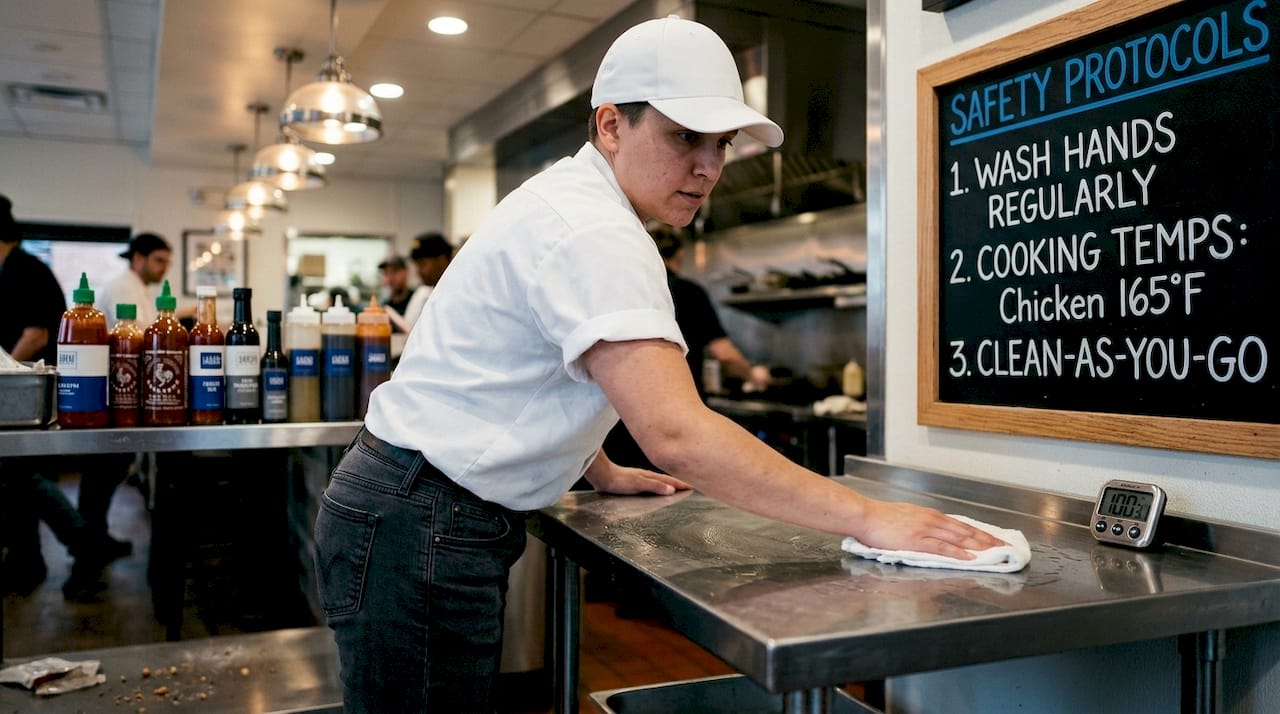
Grease trap and exhaust hood cleaning must follow NFPA 96 intervals tied to how much you cook, not just a fixed calendar date. A high-volume operation running two or three services daily needs monthly cleaning. A moderate-volume kitchen requires quarterly cleaning. A low-volume kitchen should schedule semi-annual cleaning at minimum. Letting grease accumulate in your exhaust ducts is like running a candle under kindling.
- Clean cooking surfaces and behind equipment every shift.
- Degrease the fryer area and surrounding floor daily.
- Inspect the filter screens on your hood system weekly and clean or replace when saturated.
- Arrange professional hood and duct cleaning at NFPA 96 intervals based on your cooking volume.
- Document every cleaning with the date, who performed it, and what was serviced.
Safe storage and equipment operating procedures
Flammable materials including cooking oils, aerosol sprays, and cleaning solvents must be stored away from heat sources in clearly labeled, sealed containers. Oils stored in bulk near the cooking line create unnecessary fuel load. Keep only what you need for one shift within reach of the line.
For stove and fryer operation, staff must never leave oil heating unattended. Set temperature limits on fryers and verify thermostats are calibrated correctly. If oil begins to smoke, it is already approaching ignition temperature. A simple calibration check once a month prevents thermal runaway scenarios that cause grease fires. Any time equipment is powered down, a staff member should visually confirm the heating elements are off before leaving the station.
Pro Tip: Post operating temperature limits directly on each piece of cooking equipment. When staff rotate positions or new hires cover a station, this removes any ambiguity about maximum safe operating temperatures.
Staff training and emergency preparedness
Equipment and protocols mean nothing if your team freezes or makes the wrong call during an actual fire. Building a fire-aware staff is a management responsibility, not a task you delegate to a single training session.
Onboarding and annual training requirements
Every new hire needs hands-on fire safety training before their first unsupervised shift on the cooking line. This goes beyond watching a video. Staff should physically locate every fire extinguisher, every alarm pull station, and every emergency exit in the building. Annual training including hood suppression manual pull activation and alarm operation is not optional. It keeps procedural memory fresh and identifies staff who need additional coaching.
Annual training should cover:
- How to identify early warning signs of a grease fire
- The correct operation of Class K extinguishers using the PASS technique (Pull, Aim, Squeeze, Sweep)
- How to manually activate the hood suppression system
- Where every alarm pull station is located in the building
- Who calls 911 and who has the authority to initiate evacuation
Building and practicing emergency action plans
A written emergency action plan is a regulatory requirement under OSHA and a practical necessity. The plan must assign specific roles: who calls the fire department, who does a headcount, who confirms exits are clear, and who speaks to first responders on arrival. Front-of-house staff need documented evacuation protocols just as much as kitchen staff do. A dining room full of guests is its own logistical challenge during a fire event, and a manager who has never rehearsed it will struggle under pressure.
Run a fire drill at least twice a year, including one during a simulated service scenario. Real drills expose gaps that tabletop planning never reveals. Time the evacuation. Review what went wrong. Adjust the plan.
“Staff should evacuate immediately on fire alarm without investigating the source of the alarm. Only trained employees in the right conditions should attempt to fight a small, contained fire.” Dining Room Management
The distinction matters enormously. Investigating an alarm costs time that could mean the difference between a contained incident and a full building fire.
Maintenance, inspection, and compliance verification
Even the best-designed kitchen fire safety system degrades without scheduled maintenance. Systems that have not been tested are systems you cannot trust when it counts.
Cleaning and inspection intervals
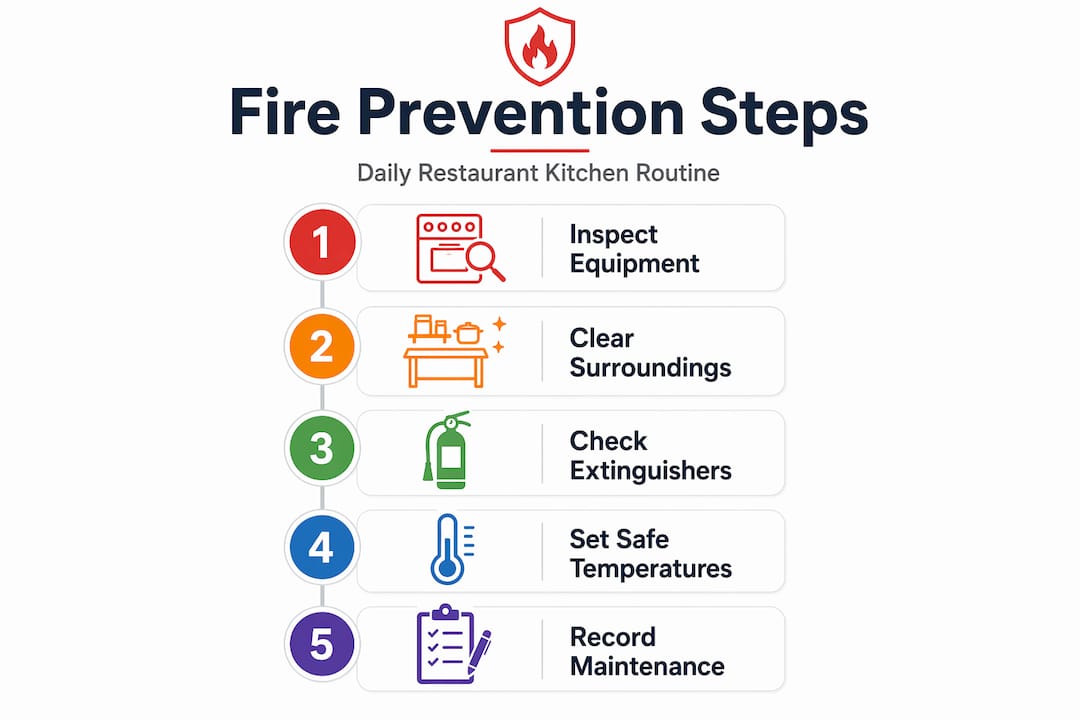
Your hood and duct cleaning schedule follows NFPA 96 volume-based intervals, as covered in the daily practices section. But mechanical and electrical systems require their own inspection rhythms. Hood suppression systems need a semi-annual inspection by a certified technician to confirm nozzle coverage, agent levels, and fusible link integrity. Fire alarm systems require annual testing, with monthly battery checks keeping the detection layer functional between full inspections.
Integrating fire suppression with ventilation pre-planning means your system shuts down the exhaust fan automatically when suppression activates, which prevents the system from pulling flames deeper into the duct. This coordination point must be verified during every suppression system inspection.
Common maintenance mistakes to avoid
| Mistake | Risk | Correction |
|---|---|---|
| Skipping hood cleaning due to light use | Grease accumulates faster than operators expect | Follow volume-based NFPA 96 intervals, not estimates |
| Delaying suppression system inspection | Nozzles may be blocked or agent depleted | Schedule inspections before and after peak seasons |
| Blocking electrical panel clearance | Code violation and evacuation hazard | Conduct monthly walkthrough of clearance zones |
| Failing to log maintenance activities | No proof of compliance during inspection | Use a signed maintenance log stored on-site |
Pro Tip: Set calendar reminders for every inspection and cleaning interval the week they are due, not the day. Vendors book up, and a reminder on the due date often means a missed appointment and a compliance gap.
Why culture matters more than any checklist
I have worked alongside restaurant teams across Houston for years, and the pattern I keep seeing is this: the kitchens that have fires are rarely the ones with missing equipment. They are the ones where safety became a routine that nobody actually believed in.
The habit of proactive hazard reporting is what separates a culture of genuine fire prevention from a culture of compliance theater. When a line cook notices a grease filter that is due for cleaning and says nothing because it is not their job, that is a culture problem. Equipment and procedures can be installed in a day. Building a team that speaks up takes real leadership investment.
What I have learned from seeing both types of kitchens is that managers set the tone completely. If you treat fire drills as a legal obligation rather than a real readiness check, your staff will treat them the same way. If you debrief after drills, reward staff who flag hazards, and treat every near-miss as a learning event, you build a team that reacts correctly without having to think about it.
Compliance and operations do not have to be in conflict. A clean hood is also a more efficient hood. A well-maintained suppression system also passes inspection faster. The kitchen that is safest is usually also the one running most smoothly. That is not a coincidence.
— Reliable-fire-protection
Protect your kitchen with Reliable Fire Protection
Reliable Fire Protection helps Houston-area restaurant owners meet compliance requirements and build kitchens that are genuinely protected. From fire alarm system installation and hood suppression inspections to extinguisher maintenance and full kitchen fire risk assessments, the team brings certified expertise and local knowledge to every service call. If your kitchen is due for an inspection or you want a professional review of your current fire protection setup, contact Reliable Fire Protection for a free quote and find out exactly where your kitchen stands.
FAQ
What are the most common causes of restaurant kitchen fires?
Unattended cooking and grease buildup on exhaust hoods and ducts are the leading causes of restaurant kitchen fires. Both risks are preventable through supervision protocols and NFPA 96-compliant cleaning schedules.
How often should restaurant hood systems be professionally cleaned?
Cleaning frequency depends on cooking volume. High-volume kitchens require monthly cleaning, moderate-volume kitchens require quarterly cleaning, and low-volume kitchens require semi-annual cleaning per NFPA 96 standards.
What type of fire extinguisher does a commercial kitchen need?
Commercial kitchens require Class K fire extinguishers rated for high-temperature cooking oil and grease fires. These should be positioned within 10 feet of cooking equipment for quick access.
When should staff evacuate during a kitchen fire alarm?
Staff should begin evacuating immediately when a fire alarm sounds without stopping to investigate the source. Only trained employees should attempt to fight a fire, and only if it is small and fully contained.
How often do restaurant fire suppression systems need inspection?
Hood suppression systems require inspection by a certified technician every six months. These inspections verify nozzle placement, agent levels, and proper integration with the ventilation system.