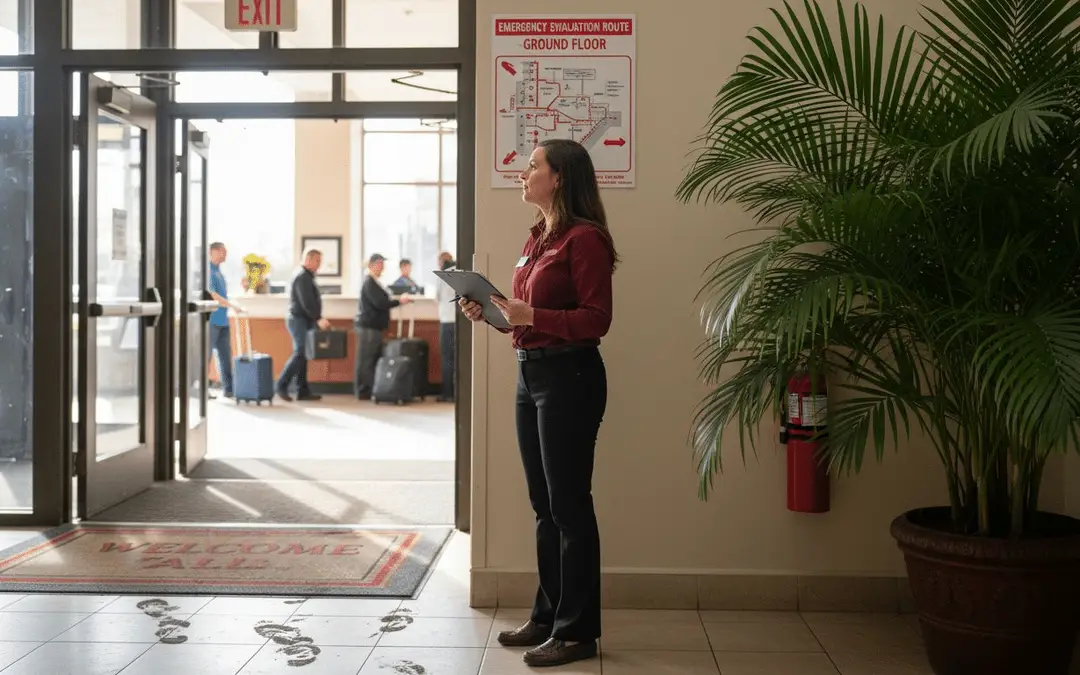
Proper maintenance of fire alarm and sprinkler systems can reduce fire damage by up to 45%, yet many hospitality operators overlook this critical safeguard. Texas hospitality venues face unique fire safety challenges requiring integration of compliance, advanced technology, trained staff, and rigorous maintenance protocols. This guide provides actionable strategies to protect your guests, property, and business from devastating fire incidents while ensuring full regulatory compliance.
Table of Contents
- Understanding Texas Fire Safety Regulations for Hospitality
- Key Fire Safety Equipment and Technologies in Hospitality
- Staff Training and Emergency Response Protocols
- Common Misconceptions About Fire Safety in Hospitality
- Comparing Fire Suppression Technologies for Hospitality
- Legal Compliance and Liability in Texas Hospitality Fire Safety
- Implementing Fire Safety: Best Practices for Texas Hospitality Operators
- Enhance Your Texas Hospitality Fire Safety with Reliable Fire Protection
- Frequently Asked Questions About Fire Safety in Texas Hospitality
Key Takeaways
| Point | Details |
|---|---|
| Regulatory Compliance | Texas fire safety regulations mandate specific fire detection and suppression systems for hospitality venues per NFPA standards. |
| Advanced Suppression | Pre-action sprinklers reduce water damage by 35% compared to traditional systems. |
| Staff Training | Comprehensive drills and training improve evacuation effectiveness and reduce casualties. |
| Maintenance Standards | Following NFPA 25 inspection protocols reduces fire risks substantially. |
| Compliance Penalties | Non-compliance results in fines exceeding $10,000 plus significant civil liability exposure. |
Understanding Texas Fire Safety Regulations for Hospitality
Texas hospitality operators must navigate a complex regulatory landscape governed by the Texas Administrative Code and Fire Prevention Code, both of which extensively reference National Fire Protection Association standards. Texas fire safety regulations mandate specific fire detection and suppression systems tailored to building occupancy classifications and guest capacity.
Every hospitality venue requires compliant fire alarm systems, automatic sprinkler coverage in designated areas, emergency lighting, exit signage, and portable fire extinguishers positioned according to hazard classifications. The Texas State Fire Marshal’s office enforces these requirements through regular inspections.
Inspection frequency requirements follow strict timelines. Fire alarm systems need quarterly testing and annual comprehensive inspections. Sprinkler systems require annual mechanical inspections, with internal pipe inspections every five years for dry systems and periodically for wet systems based on water quality. Backflow preventers demand annual testing to maintain water supply integrity.
Key regulatory compliance elements include:
- Installation of addressable fire alarm panels enabling precise incident location
- Automatic sprinkler coverage meeting NFPA 25 standard requirements
- Emergency evacuation plans posted visibly throughout facilities
- Fire-rated doors and walls maintaining compartmentalization
- Documentation of all inspections, tests, and maintenance activities
Non-compliance exposes operators to enforcement actions including substantial fines, operational shutdowns, and elevated liability if fire incidents occur. Understanding these foundational obligations protects your business legally and operationally while ensuring guest safety remains paramount.
Key Fire Safety Equipment and Technologies in Hospitality
Selecting appropriate fire safety hardware requires understanding each technology’s capabilities and limitations within hospitality environments. Fire alarm systems range from conventional zone-based panels to sophisticated addressable networks providing exact device locations during emergencies.
Addressable systems excel in large hospitality properties by pinpointing fire locations instantly, enabling faster response and reducing false alarm disruptions. These systems integrate smoke detectors, heat sensors, manual pull stations, and notification devices into a unified network monitored 24/7.
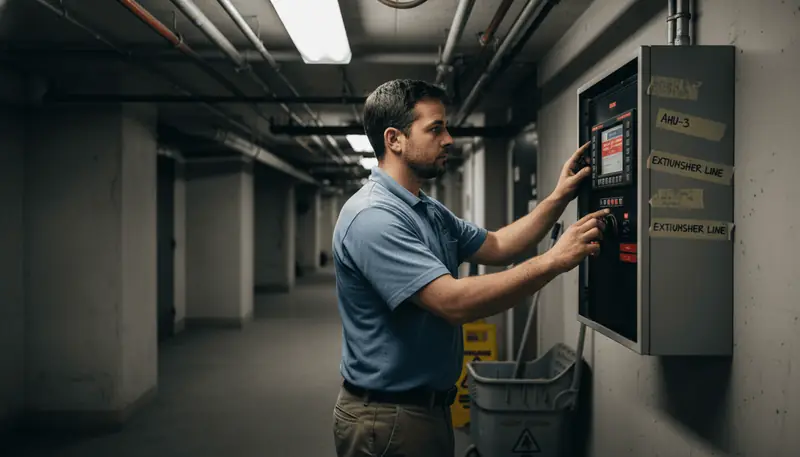
Sprinkler system selection dramatically impacts both fire suppression effectiveness and collateral damage. Traditional wet pipe systems maintain water under constant pressure, activating immediately when heat triggers sprinkler heads. Pre-action sprinkler systems reduce water damage by up to 35% by requiring both heat detection and sprinkler activation before water flows, preventing accidental discharge.
| System Type | Installation Cost | Water Damage Risk | Best Application |
|---|---|---|---|
| Wet Pipe Sprinklers | Lower | Higher | Guest rooms, corridors |
| Pre-Action Sprinklers | Higher | 35% lower | Server rooms, archives |
| Kitchen Suppression | Moderate | Minimal | Commercial kitchens |
| Clean Agent Systems | Highest | None | Electronics, data centers |
Fire extinguisher types must match specific hazards. Class K extinguishers containing wet chemical agents are mandatory for commercial kitchens where cooking oils create unique fire risks. ABC extinguishers handle ordinary combustibles, flammable liquids, and electrical fires, making them ideal for guest areas and back-of-house spaces.
Backflow preventers constitute critical components in Texas fire protection systems, preventing contamination of potable water supplies. Texas plumbing codes require annual testing of these devices to maintain water quality standards while ensuring reliable fire suppression water delivery.
Pro Tip: Install water flow detection devices on sprinkler systems that immediately alert monitoring stations when water flows, enabling rapid fire department notification even if fire alarm systems fail.
Emerging suppression technologies including clean agent systems using inert gases or chemical compounds extinguish fires without water, protecting sensitive electronics and valuable property while meeting environmental standards.
Staff Training and Emergency Response Protocols
Technology alone cannot ensure fire safety without properly trained personnel executing coordinated emergency responses. Specialized fire safety training and regular drills improve evacuation effectiveness by establishing clear roles and procedures during high-stress situations.
Every hospitality employee needs foundational fire safety knowledge covering alarm recognition, evacuation routes, assembly points, and guest assistance protocols. Designated fire wardens require advanced training in system operation, manual suppression equipment use, and coordination with arriving firefighters.
Effective staff training best practices include:
- Quarterly fire drills simulating realistic scenarios including smoke conditions
- Hands-on fire extinguisher training using controlled fires
- Communication protocols for alerting guests without causing panic
- Special needs guest assistance procedures for mobility-impaired individuals
- Post-incident accountability checks ensuring all guests and staff evacuated safely
Emergency response communication demands careful messaging balancing urgency with calmness. Staff should use clear, directive language avoiding ambiguous terms. Phrases like “Please proceed to the nearest exit” work better than alarming announcements that trigger dangerous crowd behaviors.
Hospitality-specific scenarios require specialized preparation. Late-night fires when most guests sleep demand robust alarm notification ensuring audibility in all rooms. Kitchen fires during peak service times need immediate suppression system activation and coordinated evacuation of dining areas.
Pro Tip: Conduct surprise drills during different shifts and occupancy levels to identify training gaps and refine procedures under varied conditions rather than predictable quarterly exercises.
Documenting all training activities, drill results, and corrective actions creates essential compliance records while identifying improvement opportunities. This documentation proves invaluable during inspections and potential liability investigations.
Common Misconceptions About Fire Safety in Hospitality
Dangerous myths about fire safety persist throughout the hospitality industry, undermining protection efforts and increasing risk exposure. Understanding these misconceptions prevents costly mistakes.
Many operators believe smoke detectors alone provide adequate fire protection. While detection enables early warning, smoke detectors cannot suppress fires or prevent property damage. Comprehensive safety requires integrated detection and suppression systems working together.
Another prevalent myth suggests fire safety compliance represents merely checking boxes for inspectors. Compliance standards exist because they demonstrably reduce fire incidents, casualties, and property losses. Meeting minimum code requirements protects your license, but exceeding them protects your guests and investment.
Cost-cutting through cheapest equipment purchases often backfires. Budget fire alarm panels may meet technical code requirements yet lack reliability, integration capabilities, and user-friendly interfaces that enable effective emergency response. Water damage from traditional sprinklers frequently exceeds fire damage in hospitality incidents, making pre-action systems worthwhile investments despite higher upfront costs.
Key misconceptions to avoid:
- Assuming older buildings are grandfathered from current fire codes
- Believing annual inspections are optional suggestions rather than legal requirements
- Thinking insurance coverage eliminates need for proactive fire prevention
- Expecting fire departments to arrive and suppress fires before significant damage occurs
- Assuming fire safety is solely the facilities manager’s responsibility rather than organization-wide priority
Fire safety demands holistic approaches integrating technology, training, maintenance, and culture. Isolated improvements without coordinated implementation leave dangerous gaps. A state-of-the-art sprinkler system provides little protection if staff cannot recognize alarm signals or execute evacuation procedures.
Comparing Fire Suppression Technologies for Hospitality
Selecting optimal suppression technology requires analyzing each system’s performance characteristics against specific hospitality applications and operational priorities.
| Feature | Traditional Wet Pipe | Pre-Action System | Clean Agent | Kitchen Suppression |
|---|---|---|---|---|
| Response Time | Immediate | 1-60 seconds delay | Immediate | Immediate |
| Water Damage | Significant | 35% less | None | Minimal |
| Installation Cost | $2-4 per sq ft | $4-8 per sq ft | $8-15 per sq ft | $3,000-10,000 per hood |
| Maintenance Complexity | Low | Moderate | Moderate | Moderate |
| Ideal Location | Guest rooms | Data centers | Server rooms | Commercial kitchens |
Traditional wet pipe systems dominate hospitality applications due to reliability, simplicity, and cost-effectiveness. Water remains pressurized throughout the piping network, activating instantly when sprinkler heads reach trigger temperatures. These systems excel in guest rooms, corridors, and public spaces where water damage concerns are secondary to rapid fire suppression.
Pre-action sprinkler systems reduce water damage incidents by up to 35% through dual activation requirements. Pipes remain dry until fire detection systems confirm incidents, then pressurize and discharge only from opened sprinkler heads. This design prevents accidental discharge from mechanical damage or freezing while providing wet system response speeds during actual fires.
Hospitality properties housing sensitive equipment, archives, or technology infrastructure benefit enormously from pre-action protection. The incremental installation cost proves economical compared to potential water damage losses from false activations.
Clean agent systems using FM-200, Novec 1230, or inert gases extinguish fires through oxygen displacement or chemical interruption without residue or collateral damage. These systems protect server rooms, telecommunications equipment, and irreplaceable property where water-based suppression would cause unacceptable losses.
Kitchen suppression systems deploy specialized wet chemicals that react with cooking oils, creating soapy foam barriers preventing re-ignition. These systems integrate with automatic fuel and power shutoffs, providing comprehensive commercial kitchen protection.
Hybrid approaches combining fire alarm systems with multiple suppression technologies optimize protection across diverse hospitality spaces. Guest floors might use wet pipe sprinklers while back-of-house technology areas employ pre-action systems and kitchens utilize specialized suppression.
Legal Compliance and Liability in Texas Hospitality Fire Safety
Texas hospitality operators face serious legal and financial consequences for fire safety non-compliance beyond immediate fines. Understanding this liability landscape motivates appropriate investment in protection systems and procedures.
The Texas State Fire Marshal’s office can assess fines exceeding $10,000 per violation for non-compliant installations, missing inspections, or inadequate maintenance documentation. Repeat violations trigger escalating penalties and potential operating license suspension.
Civil liability presents even greater financial exposure. If inadequate fire safety measures contribute to guest injuries or fatalities, operators face negligence lawsuits claiming damages for medical expenses, lost income, pain and suffering, and wrongful death. Juries award substantial verdicts when evidence reveals operators prioritized cost savings over guest safety.
Insurance complications compound these challenges. Many policies contain exclusions or coverage limitations for losses resulting from code violations or lapsed inspections. Claims adjusters scrutinize fire incidents thoroughly, potentially denying coverage if documentation reveals non-compliance.
Fire safety compliance tips emphasize documentation as liability protection:
- Maintain complete inspection and testing records for all fire protection systems
- Document all staff training sessions with attendance rosters and curriculum details
- Preserve all equipment maintenance logs and repair invoices
- Photograph system installations and modifications with timestamps
- Retain manufacturer certifications and installation contractor licenses
This documentation serves dual purposes: proving compliance during inspections and defending against liability claims by demonstrating reasonable care and professional standards adherence.
Proactive risk management through exceeding minimum code requirements demonstrates commitment to guest safety. Courts view operators more favorably when evidence shows investments in advanced protection systems and comprehensive training programs rather than bare minimum compliance.
Implementing Fire Safety: Best Practices for Texas Hospitality Operators
Successful fire safety implementation follows systematic approaches addressing assessment, installation, training, and ongoing maintenance.
- Conduct comprehensive fire safety audits evaluating current system capabilities, code compliance status, and vulnerability identification across all property areas.
- Develop prioritized upgrade plans addressing critical deficiencies first while budgeting for long-term systematic improvements rather than reactive patchwork fixes.
- Select qualified contractors holding appropriate Texas licenses and certifications for fire protection system installation and maintenance work.
- Install integrated detection and suppression systems designed specifically for hospitality applications with appropriate technology selections for each space type.
- Implement comprehensive staff training programs covering emergency procedures, equipment operation, and guest communication protocols with regular reinforcement.
- Establish rigorous inspection and maintenance schedules following NFPA 25 inspection protocols with documented completion verification.
- Create detailed emergency response plans addressing various fire scenarios with clear role assignments and communication procedures.
- Budget adequately for fire safety treating it as essential operational expense rather than discretionary cost, considering long-term risk reduction benefits.
Proper maintenance of fire alarm and sprinkler systems reduces fire incidents in hospitality venues by up to 45% through early detection and reliable suppression. This statistic underscores maintenance’s critical importance within overall safety strategies.
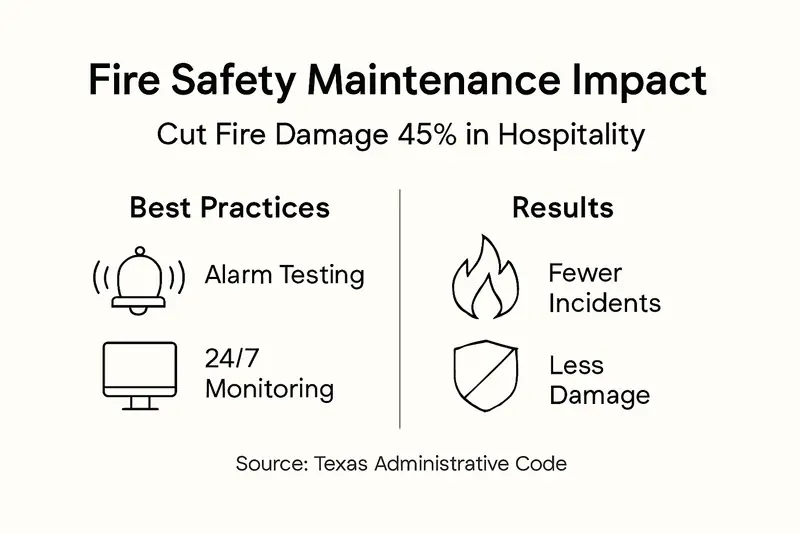
Monitoring services provide 24/7 system supervision, immediately alerting fire departments when alarms activate. This professional monitoring ensures rapid response even when properties have minimal overnight staffing.
Regular system testing verifies operational readiness. Fire system maintenance should never be deferred due to budget constraints given the catastrophic consequences of system failures during actual fires.
Enhance Your Texas Hospitality Fire Safety with Reliable Fire Protection
Protecting your guests and property requires partnering with experienced fire safety professionals who understand Texas hospitality’s unique challenges. Reliable Fire Protection delivers comprehensive solutions from initial assessment through installation, training, and ongoing maintenance.
Our expertise in fire alarm system solutions ensures your property benefits from the latest detection technology integrated seamlessly with suppression systems. We design, install, and maintain systems meeting all Texas codes and NFPA standards while providing superior protection tailored to your specific facility layout and operational requirements.
Fire sprinkler installation services from our certified technicians guarantee reliable performance when emergencies strike. Whether you need traditional wet pipe systems, advanced pre-action protection, or specialized kitchen suppression, we deliver professional installations backed by thorough testing and documentation.
Explore our complete range of fire safety products and services including portable extinguishers, emergency lighting, exit signage, and backflow prevention devices. Our comprehensive approach addresses every aspect of fire safety compliance and protection, giving you confidence your hospitality operation meets the highest safety standards.
Frequently Asked Questions About Fire Safety in Texas Hospitality
How often must Texas hospitality venues conduct fire safety inspections?
Fire alarm systems require quarterly testing and annual comprehensive inspections by certified technicians. Sprinkler systems need annual mechanical inspections with internal pipe examinations every five years for dry systems, and backflow preventers demand annual testing to maintain compliance with Texas regulations.
What fire suppression system works best for hotel guest rooms?
Traditional wet pipe sprinkler systems provide optimal protection for guest rooms due to reliability, cost-effectiveness, and immediate response during fires. Pre-action systems suit properties with valuable furnishings or electronics where water damage prevention justifies higher installation costs.
When should hospitality staff receive fire safety training?
All new employees need fire safety orientation during onboarding, with refresher training quarterly. Conduct realistic fire drills at least every three months during varied shifts and occupancy levels to maintain readiness and identify procedural improvements.
What penalties apply for fire safety non-compliance in Texas hospitality?
Texas can assess fines exceeding $10,000 per violation for non-compliant systems or lapsed inspections. Civil liability from guest injuries due to inadequate fire protection can result in substantial negligence judgments, and insurance may deny coverage for losses involving code violations.
How should hospitality operators budget for fire safety improvements?
Treat fire safety as essential operational expense rather than discretionary spending. Allocate 2-4% of property maintenance budgets for fire protection system upkeep, with capital reserves for systematic upgrades addressing aging equipment and evolving code requirements based on professional assessments.
Recommended
- Fire Protection Standards 2025: Houston Compliance Impact
- Fire Protection Best Practices for Houston 2025
- Fire Safety Regulations 2025: Essential Changes for Houston Properties
- Fire Safety Terms Defined: 25% Fewer Violations in Houston
- Fire Alarm System University Place TX
- Fire Alarm System Bellaire TX