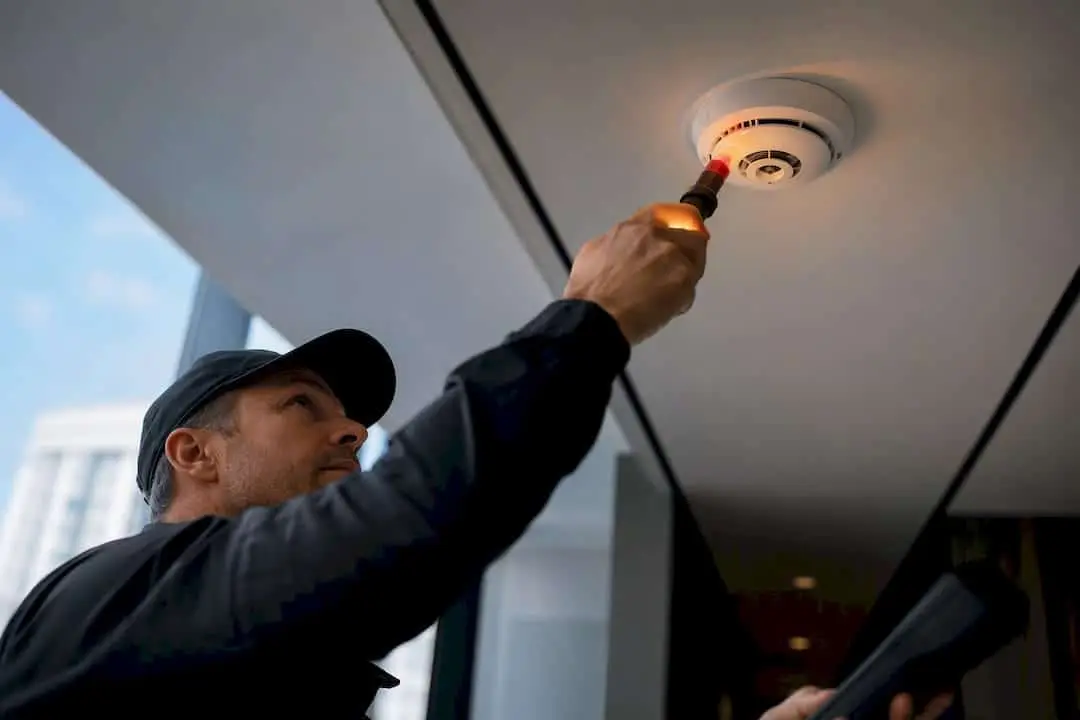
Yes, NFPA 72 requires sensitivity testing for smoke detectors, and skipping it is a code violation, not a gray area. The baseline schedule: test within one year of installation, then every two years after that. Passing tests can allow a longer interval, extended to every five years subject to AHJ approval. Continuous panel monitoring can shift that manual cadence. Keep the records. An AHJ or insurance adjuster will ask for them eventually.
TL;DR:
- Sensitivity testing must be conducted within one year of installation and every two years afterward, with extensions up to five years possible after consecutive compliant tests and AHJ approval.
- Addressable systems with panel-based monitoring can provide continuous sensitivity reports, reducing manual testing frequency, unlike conventional systems that require manual spot checks.
- If a detector drifts outside its sensitivity range, it should be cleaned and retested, with replacement recommended after 10 years of service or if cleaning cannot restore compliance.
- Proper documentation, including device ID, test date, sensitivity results, and corrective actions, is essential for code compliance and insurance assessments.
- Proactive sensitivity testing helps prevent costly violations and false alarms, with professional testing services streamlining the process and ensuring optimal system performance.
Table of Contents
- What Smoke Detector Sensitivity Testing Actually Measures
- NFPA 72 Requirements and the Official Testing Timeline
- Panel Reports, Field Testers, and Lab Calibration: Your Options
- When a Detector Fails: Clean, Recalibrate, or Replace
- Records Your AHJ and Insurer Will Actually Want to See
- Field Notes on Running Sensitivity Tests Without Disrupting Operations
- Why We Push Clients Toward Proactive Testing, Not Reactive Fixes
- Get Sensitivity Testing and Documentation Handled by Reliable-fire-protection
- Sources
What Smoke Detector Sensitivity Testing Actually Measures
Every smoke detector ships with a listed sensitivity range set by UL 268, usually expressed as a percent obscuration per foot. That number defines how much smoke has to fill the air before the sensor reports an alarm condition.
Sensitivity testing is not the same as a functional test, and confusing the two causes real compliance gaps.
- A functional test confirms the detector activates when smoke or a smoke substitute reaches it. It’s a pass/fail check on whether the device works at all.
- A sensitivity test measures exactly where the detector sits within its listed range, using a calibrated aerosol concentration.
- A detector can pass every functional test for years while drifting toward the edge of its range from dust, cooking grease, or construction debris.
- Once it drifts outside that range, it either triggers nuisance alarms constantly or, worse, fails to respond fast enough in an actual fire.
That gap between “it works” and “it works correctly” is why sensitivity testing exists as its own requirement, separate from the annual functional check most people already know about.
NFPA 72 Requirements and the Official Testing Timeline
NFPA 72 governs smoke detector sensitivity testing through Chapter 14, specifically §14.4.4.3 and the related table references in Table 14.4.3.2. The code doesn’t leave the schedule open to interpretation.
The baseline timeline works like this:
Test sensitivity within one year of installation. Retest every two years after that. If consecutive tests show compliance, the interval may be extended up to every five years subject to AHJ approval, provided the AHJ accepts the extension.
That last part matters. The five-year extension isn’t automatic. It requires documented, consecutive passing results, and some authorities having jurisdiction want to see nuisance-alarm history alongside the raw sensitivity numbers before they’ll sign off on the longer interval.
Addressable analog systems complicate the timeline in a good way. When a detector and its control unit are arranged so the panel continuously monitors sensitivity and flags any device drifting outside its listed range, that monitoring arrangement is an accepted method under NFPA 72 and can change how often manual field testing is required. In practice, buildings running modern addressable fire alarm control panels often lean on that continuous data feed rather than scheduling a technician to test every device by hand on a fixed two-year clock.
Panel Reports, Field Testers, and Lab Calibration: Your Options
NFPA 72 allows several verification methods, and the right one depends on your system type and how much documentation your AHJ wants to see.
- Panel-based sensitivity reporting. Addressable analog systems can generate exportable sensitivity reports directly from the fire alarm control panel, showing each device’s current reading against its listed range. This is the most efficient option for large commercial buildings because it eliminates the need to physically visit and test every device.
- Portable field sensitivity testers. Tools in the TruTest and Testifire family deliver a calibrated smoke aerosol directly into the sensing chamber and read back where the detector falls within its listed range. These work on conventional systems without panel monitoring and are the standard method for spot-checking or full-building manual rounds.
- Laboratory calibration. Sending detectors out for lab testing makes sense for specialized or older devices, disputed readings, or when a manufacturer requires it as a warranty condition.
The decision usually comes down to three factors: whether your system is addressable or conventional, what documentation format your AHJ expects, and how much labor you want to spend introducing smoke to hundreds of devices one at a time.
Pro Tip: If your building mixes addressable and conventional zones, don’t assume one testing method covers everything. Confirm with your fire alarm contractor which devices report sensitivity electronically and which still need a field tester.
When a Detector Fails: Clean, Recalibrate, or Replace
A detector reading outside its listed range isn’t automatically a lost cause, but it does need a defined response, not a shrug and a retest next year.
Over-sensitivity usually means the detector will trigger nuisance alarms, often from dust, humidity, or a chamber that’s collecting particulate faster than it should. Under-sensitivity is the more dangerous failure mode: the detector needs more smoke than its design allows before it reports an alarm, which delays notification exactly when speed matters most.
The corrective workflow contractors should follow:
- Verify the out-of-range reading with a second test to rule out a testing error.
- Clean the detector using the manufacturer-approved method, which typically means a specific vacuum attachment or compressed air process, not a generic wipe-down.
- Retest after cleaning to confirm the sensitivity value has returned within range.
- Replace the unit if cleaning doesn’t restore compliance, or if the detector is approaching the end of its service life.
NFPA guidance commonly points to 10 years as the threshold where replacement becomes the more reliable path than repeated cleaning and recalibration attempts. Practitioners who manage large detector inventories often keep spares of their most common models on hand specifically because replacement tends to outperform repeated servicing once a unit starts drifting.
Records Your AHJ and Insurer Will Actually Want to See
Sensitivity test results must be properly documented for inspector or insurance investigator review to count as compliance.
At minimum, each test record should capture, which is critical for fire restoration for safety, code compliance & re-entry:
- Device ID or address and the zone it’s assigned to
- Date of test
- Measured sensitivity value against the listed range
- Pass or fail result
- Corrective action taken, if any
- Tester’s name or ID and the equipment used
| Record element | Addressable system | Conventional system |
|---|---|---|
| Data source | Panel export | Manual field tester log |
| Update frequency | Continuous or per-test | Per scheduled test |
| Format for AHJ | Digital report | Signed paper or PDF log |
Addressable systems make this easier because panel exports generate most of these fields automatically. Conventional systems rely on manual logs, which means the discipline has to come from your maintenance team or contractor, not the hardware. Missing records are treated the same as missed tests by most AHJs, and that gap becomes a real liability exposure if a fire occurs and the sensitivity history can’t be produced.
Field Notes on Running Sensitivity Tests Without Disrupting Operations
Schedule the first sensitivity check inside your first annual fire alarm inspection rather than treating it as a separate visit. It saves a truck roll and keeps the one-year clock from sneaking up on you.
Buildings with staggered tenant improvements need extra attention here. If floors were built out and wired at different times, track each zone’s actual installation date separately, or you’ll end up testing devices a year early on some floors and, worse, a year late on others.
A few habits that keep this from becoming a fire drill of its own:
- Keep spare detectors and common replacement heads on-site so a failed unit gets swapped same-day, not scheduled for next week.
- Use panel-based monitoring wherever your system supports it. It’s less labor than manual field testing across a large building.
- Request a specific deliverable format from your contractor: sensitivity values per device, pass/fail status, panel export files where applicable, and photos of any replaced units.
Pro Tip: Ask your contractor for nuisance-alarm history alongside sensitivity data when requesting a five-year interval extension. Some AHJs will accept documented panel analytics and alarm-frequency logs as supporting evidence for the extension.
Why We Push Clients Toward Proactive Testing, Not Reactive Fixes
Waiting for a failed inspection to discover a sensitivity problem is the expensive way to find out. We’ve built our compliance reviews around catching drift before it becomes a citation or, worse, a delayed alarm during an actual fire. Reliable-fire-protection has served Houston-area commercial and residential properties for years, and we’re available for fire alarm system compliance reviews whenever your testing schedule needs a second set of eyes.
— Results
Get Sensitivity Testing and Documentation Handled by Reliable-fire-protection
You’ve now seen what NFPA 72 demands: baseline testing, panel monitoring exceptions, and documentation an AHJ will actually accept. Reliable-fire-protection handles all three without you having to coordinate three separate vendors for testing, cleaning, and paperwork.
A compliance visit from our team covers sensitivity testing on every detector or panel export review for addressable systems, cleaning and recalibration for units drifting toward the edge of their listed range, and replacement for anything past end-of-life. You get a documented report with device IDs, measured values, and corrective actions logged in the format your AHJ expects, not a verbal summary and a handshake. For buildings juggling staggered tenant improvements or older conventional systems, that documentation is often the difference between a clean inspection and a follow-up citation.
If you’re not sure whether your building’s detectors are due for testing, or whether your current contractor is even running sensitivity checks separate from functional tests, find out. Learn more about how our fire alarm systems work and request a compliance review to get your testing schedule and records in order before your next inspection date.
Sources
- Nfpa
- Smoke Detector Sensitivity Testing | Life Safety Consultants
- When & How to Test Smoke Detector Sensitivity