
TL;DR:
- Fireproofing involves applying materials to structural steel to extend load-bearing integrity during fires, buying critical evacuation time. The 2026 IBC mandates independent third-party inspections for spray-applied and intumescent fireproofing to ensure compliance and safety. Proper surface prep, accurate material application, and certified inspection are essential for effective fire protection and regulatory adherence.
Fireproofing is defined as the application of materials or treatments to structural components to increase their resistance to fire and maintain load-bearing integrity during a fire event. Property owners and facility managers in Houston and across the country face stricter requirements than ever before, with 2026 International Building Code (IBC) mandates now requiring independent third-party fireproofing inspections before a certificate of occupancy is issued. The two primary methods are spray-applied fire-resistive materials (SFRM) and intumescent fire-resistant materials (IFRM), each protecting steel and other substrates through different mechanisms. Understanding how these systems work, what inspections require, and what the real benefits are will help you protect your building, your occupants, and your investment.
What is fireproofing and how does it protect structures?
Fireproofing protects structures by acting as a thermal barrier between a fire’s heat and the structural elements that hold a building up. Fireproofing delays heat transfer rather than stopping fire spread, which is a critical distinction every property owner needs to understand. Steel loses roughly half its load-bearing strength at temperatures above 1,100°F, and unprotected steel can reach that threshold in as little as 10 minutes during a fully developed fire.
The goal is to buy time. Structural fireproofing insulates steel to maintain load-bearing capability for 1 to 4 hours during fire exposure, depending on material thickness and type. That window allows occupants to evacuate safely and gives firefighters the opportunity to suppress the fire before the building collapses.
Fireproofing is classified as a passive fire protection system, meaning it works automatically without any human activation. This places it alongside fire-rated walls, doors, and floor assemblies as a layer of protection that operates independently of fire alarms or sprinklers. For a broader view of how passive systems work together, the passive fire protection guide from Reliable Fire Protection covers the full picture for Houston properties.
The two main mechanisms at work are:
- Thermal insulation: SFRM coatings create a low-density layer that slows heat conduction into steel, keeping the metal below critical failure temperatures longer.
- Intumescent expansion: IFRM coatings remain thin at ambient temperatures but swell when heated, forming a thick insulating char layer that dramatically reduces heat transfer to the substrate.
Pro Tip: Never assume a fire-rated wall assembly alone protects your structural steel. The steel columns and beams supporting that wall need their own fireproofing treatment to prevent collapse even if the wall holds.
What are the common fireproofing materials and methods?
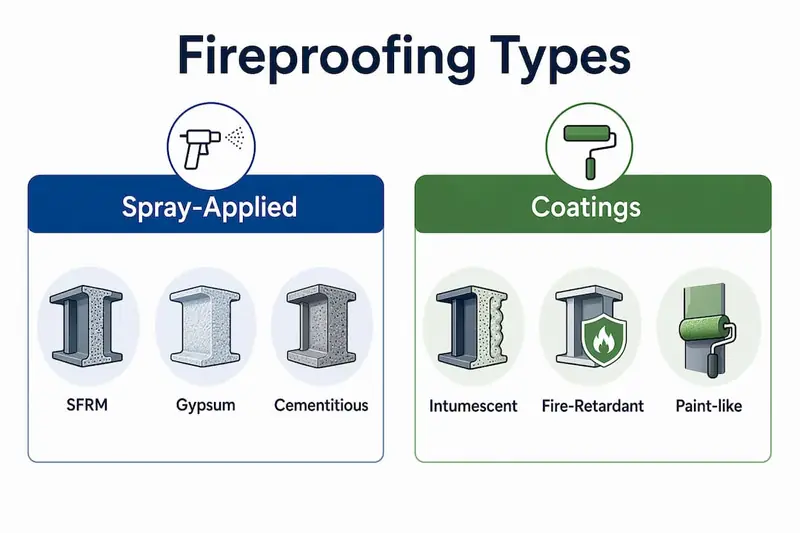
The choice of fireproofing material depends on the substrate, the required fire rating, the environment, and whether aesthetics matter. Each material type has a specific application method and performance profile.
SFRM uses gypsum or cementitious materials sprayed directly onto steel as a foam-like coating. It is the most widely used method in commercial construction because it is cost-effective, fast to apply, and achieves high fire ratings at greater thicknesses. The trade-off is appearance. SFRM looks rough and industrial, making it unsuitable for exposed architectural steel in lobbies or open-ceiling office spaces.
Intumescent coatings solve the aesthetics problem. They can be painted on to look like standard paint, making them the preferred choice for exposed steel in retail spaces, airports, and modern office buildings. The performance difference between SFRM and IFRM is not about quality but about application context.
| Material | Best use case | Appearance | Typical fire rating |
|---|---|---|---|
| Spray-applied SFRM (gypsum/cementitious) | Hidden structural steel, warehouses, parking structures | Rough, textured | 1 to 4 hours |
| Intumescent coatings (IFRM) | Exposed architectural steel, retail, offices | Smooth, paintable | 30 minutes to 2 hours |
| Cementitious board systems | Column encasement, high-impact areas | Solid, finished | 1 to 4 hours |
| Mineral fiber boards | Specialty substrates, retrofit applications | Rigid panels | 1 to 2 hours |
For residential applications, materials like Type X gypsum board and fire-retardant-treated wood are common fireproofing techniques. The fireproof materials guide for Houston homes covers residential-specific options in detail.
Proper surface preparation is non-negotiable regardless of which material you choose. Mismatched coating systems void UL fire-resistance listings, and contaminated or improperly primed surfaces cause adhesion failures that compromise the entire fire rating. Never mix products from different manufacturers within the same assembly.
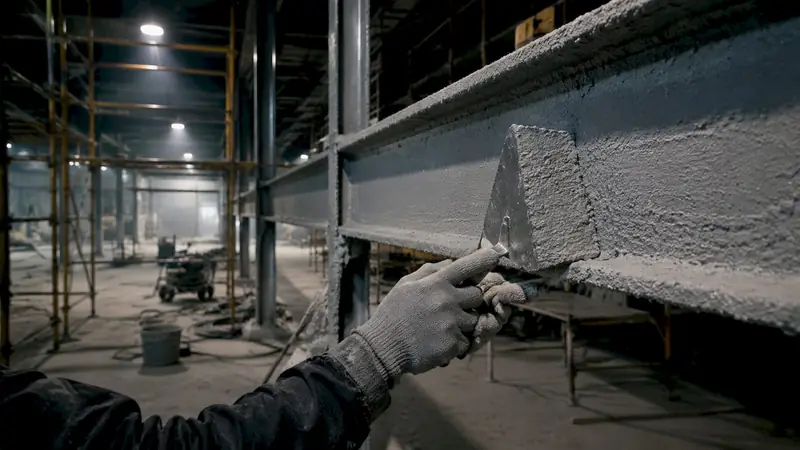
Pro Tip: Always request the UL design number for the specific fireproofing assembly being installed. That number confirms the exact combination of materials, thicknesses, and substrates that have been tested together. If the contractor cannot provide it, stop the job.
What are the inspection and code compliance requirements in 2026?
The 2026 IBC makes fireproofing inspection mandatory, not optional. IBC Sections 1705.15 and 1705.16 require independent third-party inspections for spray-applied and intumescent fireproofing as a condition of receiving a certificate of occupancy. This applies to new construction and significant renovations across commercial and industrial properties.
The most common mistake property owners make is assuming the general contractor manages inspection. Building owners must hire independent inspectors directly, and those inspectors cannot be employed by the fireproofing installer. The neutrality requirement exists specifically to prevent conflicts of interest that could result in substandard work being approved.
Here is what a compliant fireproofing inspection covers:
- Pre-application review: The inspector confirms surface preparation, substrate condition, and that the specified UL-listed system is on-site before any material is sprayed.
- In-progress monitoring: The inspector observes application to verify mixing ratios, spray pressure, and coverage patterns meet the design specification.
- Thickness testing: ASTM E605 thickness measurements require a minimum of four tests per 1,000 square feet of coated surface to confirm adequate depth.
- Bond strength testing: ASTM E736 tests measure adhesion to the substrate, with minimum values specified by the UL listing.
- Density verification: Core samples confirm the material meets the minimum density required for the fire rating.
- Final documentation: The inspector produces a written report that becomes part of the permanent building record.
Inspection failures most often trace back to insufficient thickness, poor surface prep, or unauthorized product substitutions made during application. Each failure triggers rework, re-inspection, and project delays. Budget for inspection services during preconstruction, not as an afterthought. The fire safety inspection guide for Texas 2026 breaks down the full workflow aligned with current code requirements.
What benefits does fireproofing provide to property owners?
Fireproofing delivers measurable safety and financial returns that go well beyond regulatory compliance. The benefits are concrete and directly tied to outcomes that matter to property owners and facility managers.
Occupant safety and evacuation time. The single most important benefit is the extended window for safe evacuation. A building with properly applied fireproofing can maintain structural integrity for up to 4 hours, compared to potential collapse in minutes for unprotected steel. That time difference is the difference between a successful evacuation and a catastrophe.
Reduced structural damage. When steel retains its strength during a fire, the building frame survives. Structural collapse is the most expensive outcome of a fire event, often making a building a total loss. Fireproofing directly reduces the probability of that outcome.
Insurance premium reductions. Professional fireproofing can reduce insurance premiums by lowering the risk of structural loss during fire in commercial and industrial properties. Insurers price risk, and a fireproofed building presents a lower risk profile. This financial incentive is increasingly recognized as a strategic benefit by developers and property owners.
Regulatory compliance and avoided penalties. Non-compliance with IBC fireproofing requirements can result in failed occupancy inspections, stop-work orders, and significant fines. Staying compliant avoids those costs and protects your ability to operate.
Lower business interruption risk. A fire that damages but does not collapse a fireproofed building is far more recoverable than one that causes structural failure. Faster recovery means less lost revenue, fewer displaced tenants, and a shorter path back to normal operations. You can also reduce related fire hazards by addressing HVAC fire risks as part of a broader fire safety strategy.
How to get fireproofing right: best practices and common pitfalls
Getting fireproofing right requires attention at every stage, from specification through application to long-term maintenance. Most failures do not happen because a material is inadequate. They happen because of process breakdowns.
Without proper surface prep and certified inspection, even the highest-rated materials fail to meet fire resistance requirements. Steel must be clean, dry, and free of mill scale, oil, and loose rust before any fireproofing material is applied. Skipping this step is the single most common cause of adhesion failure and voided fire ratings.
Key practices that separate compliant, durable fireproofing from work that fails inspection:
- Specify the complete UL-listed assembly in contract documents, including the design number, substrate type, and required thickness.
- Require the fireproofing contractor to submit product data sheets and UL listing documentation before mobilizing on-site.
- Never mix products from different manufacturers within a single fire-resistance assembly. Doing so voids the UL listing and typically requires complete removal and reapplication.
- Schedule independent inspection services during preconstruction budgeting, not after the general contractor has already started work.
- Inspect existing fireproofing during routine facility maintenance. Physical damage, water infiltration, and renovation work can compromise applied coatings years after installation.
Pro Tip: If you are managing an older commercial building, have the existing fireproofing assessed before any renovation that involves drilling, cutting, or attaching new loads to structural steel. Damage to fireproofing during renovation is common and rarely caught without a deliberate inspection.
Key takeaways
Fireproofing protects structural steel by delaying heat transfer long enough for safe evacuation and firefighting, and 2026 IBC codes require independent third-party inspection before occupancy is granted.
| Point | Details |
|---|---|
| Fireproofing is thermal protection | It delays heat transfer to steel, not fire spread, buying 1 to 4 hours of structural stability. |
| Two primary material types | SFRM suits hidden steel; intumescent coatings suit exposed architectural steel where appearance matters. |
| Independent inspection is mandatory | IBC 2026 requires owners to hire third-party inspectors not employed by the installer. |
| Surface prep determines success | Contaminated or improperly prepared substrates void UL listings and cause adhesion failures. |
| Financial benefits are real | Fireproofing can reduce insurance premiums and dramatically lower business interruption risk after a fire. |
The part most property owners get wrong about fireproofing
The word “fireproof” sets unrealistic expectations. No material is completely non-combustible. Every fireproofing system is rated for a specific duration under specific conditions, and that rating assumes correct installation, proper surface preparation, and periodic maintenance. When I see property owners treat fireproofing as a one-time checkbox, I know they are setting themselves up for a compliance failure or, worse, a real-world failure during a fire.
The inspection requirement is not bureaucratic overhead. It is the mechanism that confirms the fireproofing you paid for actually performs the way it was specified. Owners who budget for inspection from the start avoid the expensive rework cycles that come from discovering non-compliant application after the fact.
My strongest advice: treat fireproofing as structural insurance, not a finish coat. The steel frame of your building is what keeps the floors above your occupants from coming down. Protecting it is not optional, and verifying that protection through independent inspection is the only way to know it actually works.
— Reliable Fire Protection
Protect your building with Reliable Fire Protection
Reliable Fire Protection serves Houston-area property owners and facility managers with certified fire safety solutions, from initial consultation through inspection and ongoing compliance support. Whether you are navigating 2026 IBC requirements for a new commercial build or assessing the condition of existing fireproofing in an older facility, the team at Reliable Fire Protection brings the expertise to get it right the first time.
Fire protection works as a system, and fireproofing is only one layer. Understanding how fire alarm systems work alongside passive protection gives you the complete picture of what keeps your occupants safe. Contact Reliable Fire Protection for a free consultation and find out exactly where your property stands.
FAQ
What is fireproofing in simple terms?
Fireproofing is the application of materials to structural components, typically steel, to slow heat transfer and maintain load-bearing strength during a fire. It buys time for evacuation and firefighting rather than preventing fire from starting.
What is the difference between fireproofing vs fire resistance?
Fire resistance describes a material’s inherent ability to withstand fire for a rated period, while fireproofing refers to the active process of applying treatments to achieve or improve that resistance. All fireproofing creates fire resistance, but not all fire-resistant materials require applied fireproofing.
What does a fireproofing inspection involve?
A fireproofing inspection covers pre-application surface checks, in-progress monitoring, ASTM E605 thickness testing at a minimum of four points per 1,000 square feet, and ASTM E736 bond strength testing. The inspector must be independent and not employed by the fireproofing contractor.
What are the most common fireproofing materials?
The most common materials are spray-applied fire-resistive material (SFRM), which uses gypsum or cementitious compounds, and intumescent coatings, which expand under heat to form an insulating char layer. Cementitious board systems and mineral fiber boards are also used for column encasement and specialty applications.
Is fireproofing required by building code?
Yes. IBC Sections 1705.15 and 1705.16 require mandatory independent third-party inspections for spray-applied and intumescent fireproofing in commercial construction. Compliance is required to obtain a certificate of occupancy under 2026 code standards.