
TL;DR:
- Automatic sprinkler systems respond without human intervention, reducing fire fatalities by 90% and property damage by 70%. Properly maintained systems also save water, lower insurance premiums, and enhance property value and safety compliance. Regular inspections and correct programming are essential for optimal performance of both fire protection and irrigation systems.
Automatic sprinkler systems are defined as active fire suppression and water delivery systems that respond without human intervention, and the advantages of sprinkler systems extend well beyond basic fire control. Homes with automatic fire sprinklers experience 90% fewer fatalities and 70% less property damage during fires. That single statistic reframes sprinkler installation from a nice-to-have upgrade to a non-negotiable safety decision. For property owners and facility managers, the case covers fire protection, water efficiency, insurance savings, and long-term property value.
1. How do fire sprinkler systems save lives and protect property?
Fire sprinkler systems are the most effective tool for limiting fire fatalities in residential and commercial buildings. The National Fire Protection Association (NFPA) documents that properties with certified automatic sprinklers suffer dramatically less damage than unprotected buildings. Sprinklers activate within seconds of detecting heat, containing a fire before it spreads beyond the room of origin.
The 70% reduction in property damage is not a minor footnote. It means the difference between a contained incident and a total structural loss. For facility managers overseeing multi-unit buildings or commercial spaces, that gap translates directly into lower repair costs, faster recovery, and uninterrupted operations.
NFPA standards govern the design, installation, and inspection of fire sprinkler systems across the United States. Compliance with these standards is not optional for most commercial properties. It also signals to insurers, tenants, and local authorities that the building meets a recognized safety benchmark.
Pro Tip: Schedule a professional inspection at least once per year. A certified technician can catch pressure drops, corroded heads, or blocked pipes before they compromise the system during an actual fire.
Winterization of fire sprinkler pipes in cold climates prevents pipe bursting and costly repairs. For Houston properties, this is less of a concern, but any facility with exposed piping in cooled mechanical rooms should still follow seasonal maintenance protocols.
2. What are the water efficiency benefits of irrigation sprinkler systems?
Well-designed irrigation sprinkler systems use 20% to 50% less water than conventional manual watering methods, saving over 25,000 gallons annually per household. That level of savings has a direct impact on monthly utility bills and on a property’s environmental footprint.
The efficiency gains come from how water is delivered, not just how much is used. Targeted delivery at the root zone reduces runoff, evaporation, and nutrient loss. Plants receive water where they need it, which reduces stress and lowers susceptibility to disease and pests.
Three practices drive the biggest efficiency gains:
- Zoning by plant type and sun exposure. Grouping plants with similar water needs prevents overwatering drought-tolerant species while underwatering thirsty ones.
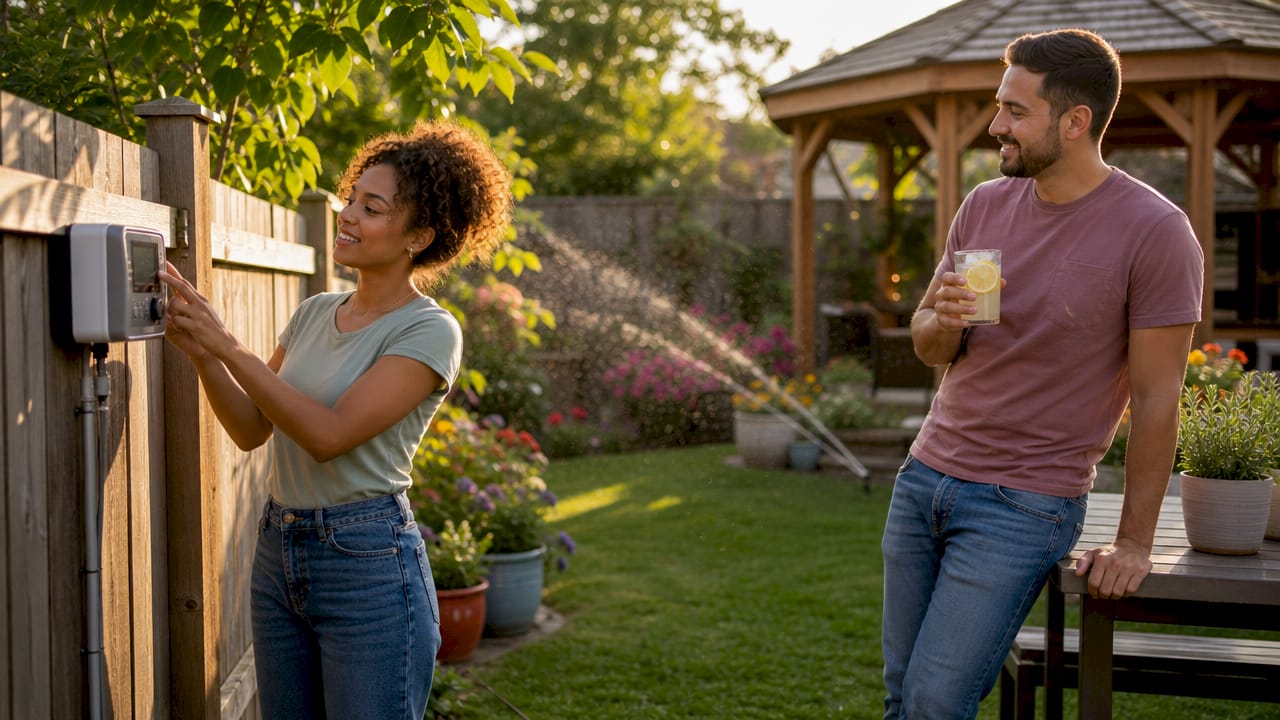
- Smart controllers. These devices adjust watering schedules based on weather data, soil moisture, and seasonal changes without manual input.
- Rain shutoff sensors. Correct programming and rain sensors prevent irrigation from running during or after rainfall, eliminating one of the most common sources of water waste.
Pro Tip: Program your irrigation controller to water in the early morning, between 4 a.m. and 8 a.m. Evaporation rates are lowest at that time, so more water reaches the root zone instead of the air.
Consistent root-zone watering also reduces plant stress, disease, and pest vulnerability. Healthier plants require fewer chemical treatments, which lowers maintenance costs and supports a cleaner local environment.
3. What cost savings do sprinkler systems offer property owners?
Sprinkler systems reduce costs in three distinct ways: lower insurance premiums, reduced water bills, and avoided fire damage expenses. Each benefit compounds over time, making the initial installation cost easier to justify.
Insurance companies frequently offer premium discounts to homeowners and commercial property owners with certified, functional automatic fire sprinkler installations. The discount reflects the insurer’s lower risk exposure. For facility managers overseeing large properties, those annual savings can be substantial.
On the irrigation side, automated systems eliminate the water waste that comes from hand watering or poorly timed manual systems. A property that saves 25,000 gallons per year pays less every billing cycle. Over a five-year period, those savings often offset a significant portion of the installation cost.
Avoided fire damage is the largest potential saving. A fire in an unprotected building can result in structural losses, temporary relocation costs, lost rental income, and legal liability. A certified fire sprinkler system reduces all of those risks in one installation.
Key cost factors to track:
- Annual insurance premium changes after installation
- Monthly water bill reductions from automated irrigation
- Maintenance costs for annual inspections and winterization
- Avoided emergency repair costs from fire or water damage
4. How do sprinkler systems enhance property value and curb appeal?
Sprinkler systems are viewed as desirable features by property buyers and commercial tenants. A building with a certified fire suppression system signals safety, code compliance, and lower operating risk. That perception directly affects marketability and lease rates.
Automated irrigation systems save property owners time by managing watering schedules even under changing weather conditions. For busy facility managers, that means one less operational task to monitor. For residential owners, it means a consistently green and healthy landscape without daily effort.
Healthy landscaping increases curb appeal, which is one of the first things prospective buyers or tenants evaluate. A well-maintained lawn and garden signals that the property is cared for. That impression carries real weight in competitive real estate markets like Houston.
For commercial properties, a fire-protected building also reduces liability exposure. Tenants and business operators are increasingly aware of fire safety requirements. A building that already meets or exceeds NFPA standards is a stronger leasing proposition than one that requires upgrades.
5. What factors influence sprinkler system efficiency and effectiveness?
Sprinkler system performance depends on installation quality, programming accuracy, and ongoing maintenance. A poorly zoned irrigation system wastes as much water as no system at all. A fire sprinkler system with corroded heads or low pressure fails when it matters most.
Proper zoning based on plant type and sunlight exposure is the single most important factor in irrigation efficiency. Grouping plants with similar needs prevents both overwatering and underwatering. It also allows the system to adapt to seasonal changes without manual reprogramming.
Soil type matters as much as plant type. Sandy soils drain quickly and need shorter, more frequent watering cycles. Clay soils retain moisture longer and can become waterlogged with the same schedule that works for sandy ground. Tailoring sprinkler zones to local soil conditions and municipal water restrictions keeps costs down and keeps the system compliant.
| Factor | Impact on performance |
|---|---|
| Zoning by plant and soil type | Prevents overwatering and reduces water waste |
| Smart controller programming | Adjusts schedules automatically for weather changes |
| Rain shutoff sensors | Stops irrigation during rainfall, eliminating waste |
| Annual inspection and maintenance | Catches pressure drops, leaks, and corroded components |
| Winterization in cold climates | Prevents pipe damage and maintains fire safety readiness |
Pro Tip: Walk your property after the first irrigation cycle of the season. Look for uneven spray patterns, pooling water, or dry patches. These are early signs of clogged heads or misaligned zones that are cheap to fix now and expensive to ignore.
For fire sprinkler systems, the sprinkler maintenance workflow includes pressure testing, head inspections, and valve checks. Skipping annual maintenance is the most common reason systems fail during an actual fire event.
6. How do automatic sprinklers support compliance and liability management?
Compliance with NFPA standards is a legal requirement for most commercial and multi-family residential properties in the United States. Automatic sprinkler systems are the primary tool for meeting those requirements. A property that falls out of compliance faces fines, failed inspections, and potential liability in the event of a fire.
For facility managers, the fire sprinkler compliance workflow includes documentation of installation specs, inspection records, and maintenance logs. Insurers and local fire marshals request these records during audits. Keeping them current protects the property owner from legal exposure.
Liability reduction is a concrete financial benefit. A property owner who can demonstrate that a certified system was installed, inspected, and maintained according to NFPA standards has a significantly stronger legal position after a fire incident. That documentation can affect the outcome of insurance claims and litigation.
The benefits of fire sprinklers for Houston properties include compliance with Texas state fire codes and local Houston Fire Department requirements. Properties in Houston’s commercial districts face regular inspection cycles. A certified system that is properly maintained passes those inspections without surprises.
Key Takeaways
Automatic sprinkler systems reduce fire fatalities, cut water bills, lower insurance premiums, and increase property value, making them one of the highest-return safety investments available to property owners and facility managers.
| Point | Details |
|---|---|
| Fire safety impact | Certified systems reduce fatalities by 90% and property damage by 70%. |
| Water efficiency | Well-designed irrigation systems save 20%–50% more water than manual methods. |
| Insurance savings | Certified fire sprinkler installations qualify for premium discounts from most insurers. |
| Compliance protection | NFPA-compliant systems reduce legal liability and pass local fire inspections. |
| Maintenance is non-negotiable | Annual inspections and winterization prevent system failure when it matters most. |
What I’ve learned after years of watching sprinkler decisions play out
Property owners consistently underestimate two things: how fast a fire moves and how much water a poorly programmed irrigation system wastes. Both problems have the same solution. A well-designed, properly maintained sprinkler system handles both.
The cost-benefit math on fire sprinklers is straightforward. The upfront installation cost is real. The insurance discount, the avoided damage, and the compliance protection are also real. The owners I’ve seen hesitate on installation almost always cite cost. The ones who’ve experienced a fire in an unprotected building never hesitate again.
On the irrigation side, the biggest mistake is treating installation as a set-it-and-forget-it decision. A system without rain sensors and correct zoning can waste more water than hand watering. The technology works, but only when it’s configured correctly and checked annually.
For mixed-use properties, the case for both systems together is even stronger. Fire protection covers the building. Irrigation covers the grounds. Both systems, maintained properly, reduce operational costs and increase the property’s appeal to buyers and tenants. That combination is hard to argue against.
— Results
Reliable-fire-protection: your sprinkler system partner in Houston
Reliable-fire-protection serves residential and commercial property owners across Houston with certified fire sprinkler installation, inspection, and maintenance services.
The team at Reliable fire protection works to NFPA standards on every project, from new installations to compliance audits on existing systems. Whether you manage a single-family home or a multi-building commercial campus, the right sprinkler system starts with a professional assessment. Reliable-fire-protection also supports clients with fire alarm system integration to create a complete, layered fire safety plan. Contact Reliable-fire-protection for a consultation and find out exactly what your property needs to meet code and stay protected.
FAQ
How much can a fire sprinkler system reduce property damage?
Homes and buildings with certified automatic fire sprinkler systems experience 70% less property damage during fires compared to unprotected properties. That reduction covers structural damage, contents loss, and recovery costs.
Do irrigation sprinkler systems actually save water?
Yes. Well-designed irrigation systems use 20% to 50% less water than conventional methods and can save over 25,000 gallons per household annually. Savings depend on correct zoning, smart controllers, and rain shutoff sensors.
Will a fire sprinkler system lower my insurance premium?
Insurance companies frequently offer discounts for properties with certified, functional automatic fire sprinkler installations. The discount amount varies by insurer and property type, so confirm specifics with your provider.
How often should sprinkler systems be inspected?
Fire sprinkler systems require at least annual professional inspection to check pressure, valve function, and head condition. Irrigation systems benefit from a seasonal check at startup and a winterization service before the first freeze.
What is the most common reason sprinkler systems underperform?
Incorrect programming and missing rain sensors are the leading causes of irrigation waste. For fire systems, skipped annual maintenance is the primary reason systems fail to perform during an actual fire event.