
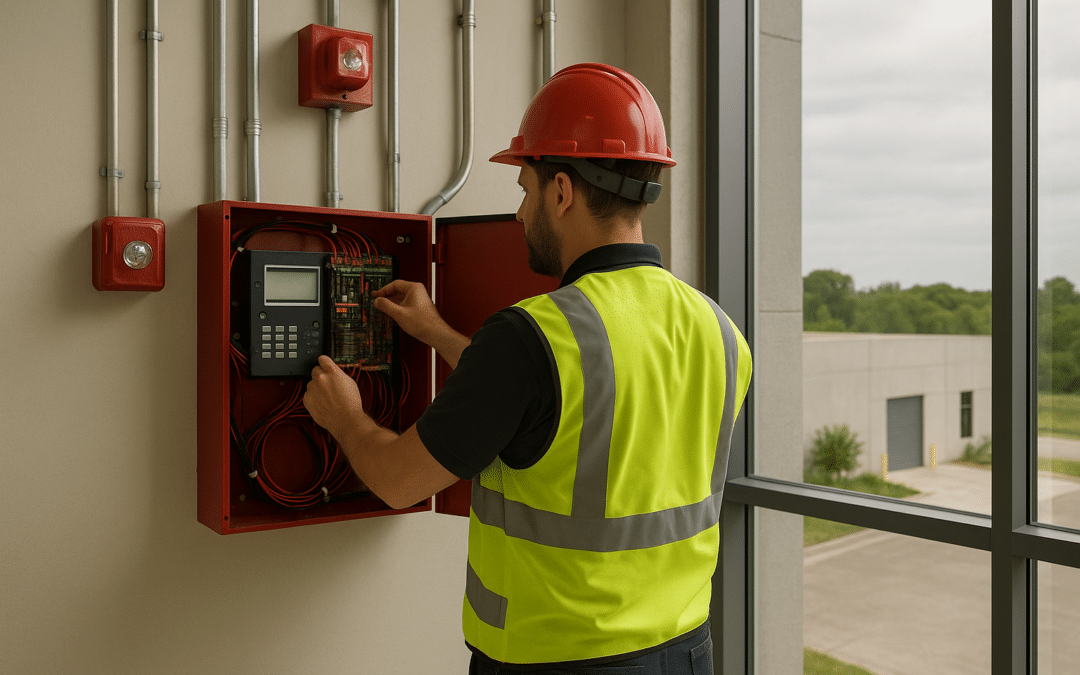
TL;DR: Commercial fire alarm installation in Houston typically runs $1–$7 per square foot for standard new-construction systems, rising to $4–$12 per square foot for retrofits in older buildings. Total project cost ranges from roughly $2,000 for small suites to well over $50,000 for large or complex facilities. Houston adds local permit fees, AHJ plan review, annual monitoring requirements, and mandatory annual inspections under NFPA 72—costs every budget should include from day one.
If you manage or own a commercial property in Houston, a fire alarm system is not optional—it is a code requirement. But "how much does it cost?" is a question that deserves a straight answer, not a vague range pulled from thin air.
This guide breaks down real 2026 pricing for commercial fire alarm installation in the Greater Houston area: equipment, labor, permits, monitoring, and the recurring costs most contractors bury in the fine print.
The Bottom Line: What You Should Budget
New construction: $1–$7 per square foot installed for a standard system, or roughly $2,000–$50,000+ for most commercial buildings.
Retrofits and older buildings: $4–$12 per square foot, because running new wiring through finished walls and ceilings adds significant labor time.
Large or high-hazard facilities (industrial plants, warehouses, hospitals) can exceed $200,000 depending on complexity, device count, and special suppression integration.
These figures align with national pricing data. Understanding NFPA 72 requirements upfront helps you anticipate which tier your building falls into before a contractor even walks through the door.
What Drives the Cost Up (or Down)
1. Building Size and Layout
More square footage means more detection devices, more notification appliances, and more wire. A complex floor plan—think irregular corridors, multiple stairwells, or a split-level—takes longer to design and install than a simple open-floor office.
2. New Construction vs. Retrofit
New construction sits at the low end of the per-square-foot range because conduit and wiring are roughed in before drywall goes up. Retrofitting an occupied or finished building costs more—often significantly more—because crews must fish wire, patch walls, coordinate tenant shutdowns, and work in occupied spaces.
3. Occupancy Type and Local Code Requirements
Houston commercial buildings are held to the Houston Fire Code (based on the International Fire Code 2021), which references NFPA 72 as the adopted installation standard. High-hazard occupancies—industrial facilities, restaurants, healthcare, hotels, high-rise buildings—carry stricter device placement, notification, and redundancy requirements, all of which add cost.
4. System Type: Addressable vs. Conventional
Conventional systems are less expensive upfront but identify only the zone where an alarm triggered, not the specific device. Addressable systems identify the exact device, simplifying troubleshooting and pinpointing the location of a fire faster—a meaningful safety and maintenance advantage for larger buildings. Addressable panels cost more initially but often reduce long-term service costs.
5. Device Count and Component Costs
Every device has its own price tag. Here is a general breakdown of common components:
- Fire Alarm Control Panel (FACP): $2,500–$6,000 depending on zone capacity and networking features
- Smoke detectors: $50–$150 per unit installed
- Heat detectors: $60–$200 per unit
- Manual pull stations: $40–$100 per unit
- Notification appliances (horns, strobes, speakers): $45–$300 per unit
The number of devices required is determined by NFPA 72 spacing rules and your local AHJ—not by the contractor’s preference.
6. Labor
Labor is one of the biggest line items in any commercial fire alarm project. Fire alarm work requires skilled technicians to route and terminate cable, install conduit, program panels, test every connected device, support AHJ inspections, and produce final documentation—not just mount boxes on walls. A low estimate that does not account for all of this labor will grow once the real scope of work becomes clear.
Houston-Specific Costs and Requirements
Permits and Plan Review
Houston requires a fire alarm permit for any system capable of automatically summoning the Houston Fire Department. The permit costs $111.81 for new systems and $83.86 for annual renewals. Plans must be submitted through the Houston Permitting Center, and fire alarm contractors must be licensed and registered with both the Texas Department of Insurance–State Fire Marshal’s Office and the City of Houston.
Budget an additional $200–$500 for plan review fees on top of the base permit fee. Your contractor should handle the permit application—but confirm it is explicitly included in your quote before signing anything.
AHJ Inspections
After installation, the Houston Fire Department must inspect and accept the system before it is considered compliant. The Harris County Fire Marshal and the City of Houston Fire Prevention Bureau can also request inspection documentation during business permit renewals. Tenant improvements—even seemingly minor ones like adding or removing walls—often require a fire alarm permit and system modification, because changes can affect smoke detector coverage zones.
Monitoring Requirements
Most commercial occupancies in Houston that require a fire alarm system are also required to have that system monitored. Buildings with an occupant load of 50 or more, any building over three stories, and high-hazard occupancies (including warehouses with high-piled storage) must connect to a UL-listed or FM-approved central station.
Professional central station monitoring for commercial buildings typically runs $50–$100 per month, often bundled with annual service agreements. Look for providers using a UL-listed central station with redundant communication infrastructure—not all monitoring contracts meet NFPA 72 supervision requirements for commercial occupancies, so verify the UL listing before signing.
Recurring Annual Costs to Budget For
The installation invoice is not the end of the financial picture. Plan for these ongoing costs every year:
- Annual inspection and testing: $200–$1,000+ depending on device count and system complexity. Annual inspection is required for all commercial fire alarm systems in Texas under NFPA 72, and must be performed by a contractor licensed by the Texas State Fire Marshal’s Office.
- Central station monitoring: $600–$1,200 per year ($50–$100/month)
- Permit renewal: $83.86/year in Houston
- Repairs and device replacement: Variable; smoke detectors should be replaced approximately every 10 years as sensors lose sensitivity, even when the panel is still serviceable
Real-World Cost Scenarios for Houston Buildings
| Building Type | Approx. Size | Estimated Install Cost | Est. Annual Recurring |
|---|---|---|---|
| Small office suite | 1,000–3,000 sq ft | $4,000–$12,000 | $900–$1,800 |
| Mid-size retail or restaurant | 3,000–10,000 sq ft | $10,000–$35,000 | $1,200–$2,500 |
| Multi-tenant office or strip center | 10,000–30,000 sq ft | $25,000–$80,000 | $1,500–$4,000 |
| Industrial facility or warehouse | 30,000–100,000 sq ft | $50,000–$200,000+ | $2,500–$8,000+ |
Note: Retrofit jobs in older or finished buildings will sit at the higher end of each range. New-construction projects will generally sit lower.
Why Code Compliance Is Non-Negotiable in Houston
NFPA 72 is the national standard that governs the design, installation, inspection, testing, and maintenance of fire alarm systems. In Houston, it is not just a best practice—it is the adopted code. The Houston Fire Code mandates that fire alarm systems be installed and maintained per NFPA 72, that a state-licensed fire alarm company perform all inspections, and that all installed systems hold a valid permit accepted by the Houston Fire Department.
Failing to maintain a compliant, permitted system creates real financial exposure: fines, failed inspections, permit-renewal problems, and liability in the event of a fire. Many commercial insurers also reduce premiums for monitored, code-compliant systems—confirm the specific discount with your broker, as it varies by carrier and occupancy type.
It is also worth knowing that under Houston city ordinance, operating an alarm system that can automatically summon the Houston Fire Department without a valid permit is unlawful. Responders may not respond to an unpermitted system.
What to Look for in a Houston Fire Alarm Contractor
Not all contractors are equal. Before signing a contract, confirm:
- State licensing: The contractor must be licensed by the Texas Department of Insurance–State Fire Marshal’s Office and registered with the City of Houston.
- Transparent, itemized quotes: Equipment, labor, permits, and monitoring should all be line items—not bundled into a single number.
- Non-proprietary equipment: Proprietary systems lock you into one service provider for life. Non-proprietary equipment keeps you free to choose your service and monitoring provider.
- AHJ familiarity: Your contractor should know Houston Permitting Center requirements, the Houston Fire Department inspection process, and Harris County Fire Marshal expectations cold.
- Post-installation support: Annual inspections, 24/7 emergency response, and a clear warranty on parts and labor are as important as the installation itself.
Reliable Fire Protection is a state-licensed, family-owned company based in Houston that designs, installs, inspects, and monitors commercial fire alarm systems across Greater Houston—from the Energy Corridor and Midtown to Katy, Sugar Land, Cypress, and Pasadena. We use non-proprietary equipment, offer free quotes with transparent pricing, provide 24/7 emergency response, and back every installation with a 24-month satisfaction guarantee on all parts, materials, and labor. Call us or request a free quote today.
Recommended Reads
- NFPA 72 Fire Alarm Testing Requirements Explained for Houston Commercial Properties
- TCEQ Backflow Preventer Testing Requirements Every Houston Property Owner Should Know
- How to Get Your Backflow Preventer Certified in Texas (Step-by-Step)